

Have you ever noticed a little pink in the sink after brushing? You might dismiss it, but it could be an early warning sign of gum disease. You are not alone—nearly half of American adults over 30 have some form of it (Source: Centers for Disease Control and Prevention).
Gum disease, also called periodontal disease, can lead to serious issues like tooth loss if left untreated. But there is good news. When you catch it early, you can often reverse the damage and protect your smile.
At Cedar Dental Group in Renton, WA, we believe in empowering you with knowledge. This guide will walk you through the top warning signs of gum disease & treatment in Renton. Understanding these signs helps you take control of your dental health with confidence. To learn more about what a full care plan might include, you can explore various gum disease treatment options.
1. Persistent Bad Breath (Halitosis)
If you constantly reach for mints but the bad breath won't go away, it might be more than your lunch. Persistent bad breath, or halitosis, is a common early sign of gum disease. It is a strong odor that lingers even after you brush and floss.
This smell is often caused by bacteria building up below your gum line. As these bacteria feed on food particles, they release smelly sulfur compounds. When gum disease creates deep pockets around your teeth, the problem gets harder to manage at home. Paying attention to this sign is a key step in treating gum disease in Renton before it gets worse.
What You Can Do About It
If you think your bad breath is a sign of something more, here are a few steps you can take:
- Track Your Symptoms: Note when your bad breath seems to get worse. Is it after certain meals, or is it there all day?
- Keep a Hygiene Log: For one week, write down your oral hygiene routine. This helps your dentist at Cedar Dental Group see if the issue is a habit or a deeper problem.
- Schedule a Dental Exam: A professional evaluation is the most important step. An exam in our Renton office will check for any pockets around your teeth and signs of infection.
Key Insight: Mouthwash only masks the odor; it doesn't fix the cause. Bad breath from gum disease needs professional treatment to remove the bacteria-filled plaque. Learn about the hidden connection between bad breath and gum disease to see why professional care is vital.
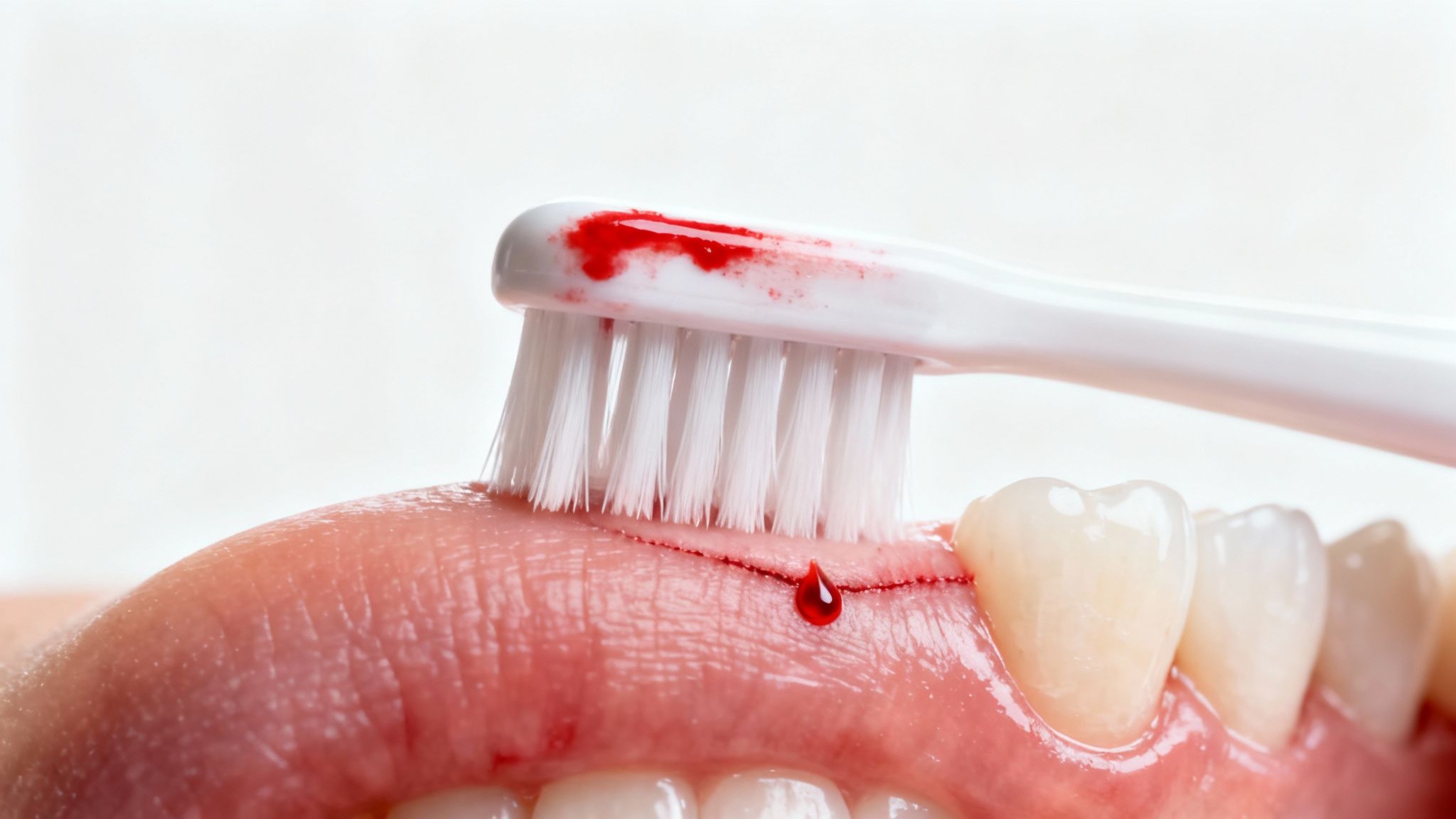
2. Bleeding Gums During Brushing or Flossing
Seeing blood after you brush or floss is a very common sign of gum disease, but it's often ignored. Healthy gums are firm and shouldn't bleed from normal cleaning. Bleeding gums are a clear signal of inflammation, a condition called gingivitis, which is the earliest stage of gum disease.
The bleeding happens because plaque has built up along the gum line, irritating the tissue. Your body's response makes the gums fragile and likely to bleed. It may seem strange to keep cleaning a bleeding area, but stopping only makes the problem worse. Recognizing this symptom is key to getting early treatment for gum disease in Renton.
What You Can Do About It
If your gums bleed regularly, it's time to act. This condition is often reversible with the right steps.
- Don't Stop Cleaning: Keep brushing and flossing gently. Stopping lets more plaque build up, which is what causes the inflammation.
- Improve Your Technique: Use a soft-bristled toothbrush and gentle, circular motions. Avoid harsh scrubbing that can irritate your gums more.
- Schedule a Professional Cleaning: The best way to fix the problem is to have a dental professional in Renton remove the hardened plaque (tartar) that you can't remove at home.
Key Insight: Bleeding gums are a sign of an active infection. Ignoring it allows bacteria to cause more damage over time. Understanding what dental plaque is and how it forms is the first step to getting rid of it and restoring your gum health.
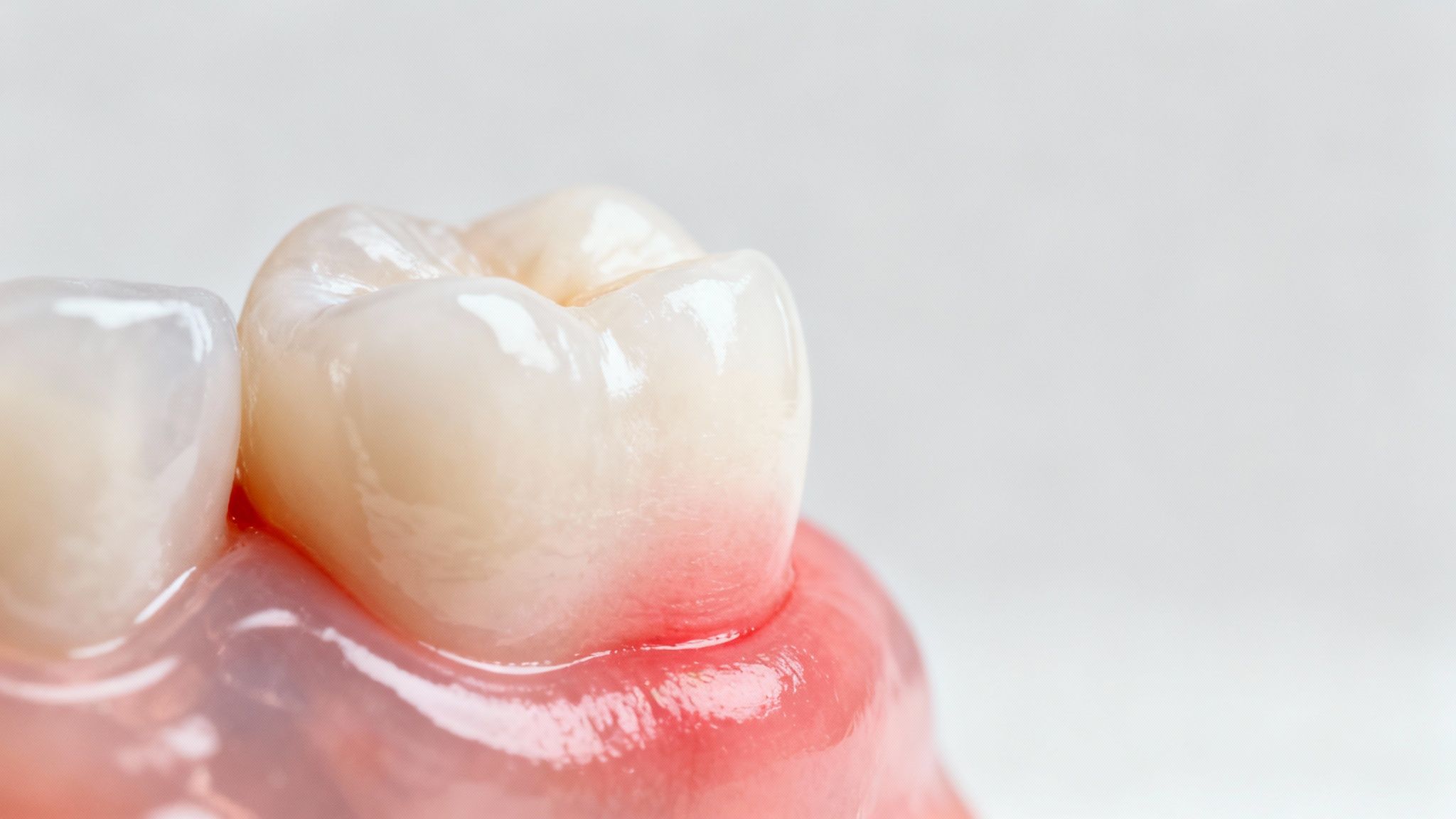
3. Swollen or Tender Gums
If your gums look puffy, red, or feel sore, your body is sending a clear signal. Swollen and tender gums are a classic sign of gingivitis. This inflammation is your body’s response to plaque buildup along the gum line. The tissue gets puffy as more blood flows to the area to fight the infection.
Swollen gums often appear after the first sign of bleeding. This means the gingivitis is getting worse. For our patients in Renton, treating this swelling quickly is key to preventing the condition from turning into severe periodontitis, where damage can be permanent.
What You Can Do About It
If your gums are swollen and tender, it's important to be gentle. Here are the steps you can take to get relief:
- Rinse with Warm Salt Water: Gently rinse your mouth 2-3 times a day with a half teaspoon of salt mixed in a glass of warm water. This can help soothe your sore gums.
- Adjust Your Brushing: Be gentle. Use a soft-bristled toothbrush and focus on carefully cleaning along the gum line without causing more irritation.
- Schedule a Professional Cleaning: The best step is to see your dentist. A professional cleaning removes the plaque and tartar causing the swelling.
Key Insight: Swollen gums are a sign of an active infection. While home remedies can help you feel better, they can't remove the hardened plaque (tartar) causing the problem. Professional treatment in our Renton office is needed to get rid of the bacteria and let your gums heal.
4. Receding Gums and Exposed Tooth Root
If your teeth look longer than they used to, it’s likely because of receding gums. This is a serious symptom where the gum tissue pulls away from the tooth, exposing the sensitive root. It is a clear sign that gum disease has progressed, causing a loss of the tissue and bone that hold your teeth in place.
When tooth roots are exposed, you may feel sharp pain when eating or drinking hot and cold things. These exposed roots are also more likely to get cavities. For many Renton patients, this is an alarming sign because the damage is visible. It is very important to address gum recession quickly to prevent more tissue loss and protect your teeth.
What You Can Do About It
If you notice your gums receding, take immediate action. Here are the most effective steps:
- Use a Gentle Brushing Technique: Brushing too hard can make gum recession worse. Switch to a soft-bristled toothbrush and use gentle, circular motions.
- Get a Professional Evaluation: Don't wait. Schedule a dental exam with your Renton dentist to see how much recession there is and find the cause.
- Discuss Treatment Options: Your dentist may suggest special treatments. These can range from a deep cleaning to stop the problem from getting worse, to procedures like gum grafting to restore your gum line.
Key Insight: Gum recession is a gradual process that signals a serious problem. Gum tissue does not grow back on its own, so professional treatment is needed to stop it. Learning what causes receding gums helps you understand why being proactive is so important.
5. Non-Invasive Treatment: Scaling and Root Planing
When your at-home routine is not enough to stop gum disease, your Renton dentist may suggest a non-invasive treatment called scaling and root planing. This is a deep cleaning that goes below the gum line where your toothbrush can't reach. It is the best treatment for early-to-moderate gum disease.
During the procedure, your hygienist removes plaque, tartar, and bacteria from your tooth and root surfaces. The roots are then smoothed to help prevent bacteria from sticking again. This allows your gums to heal and reattach to your teeth. One patient at Cedar Dental Group, Mark, had early signs of gum recession. After a comfortable scaling and root planing treatment, his gum inflammation went down, and we were able to stop the disease from progressing, saving his teeth from further damage.
What You Can Do About It
If your dentist recommends this treatment, it’s an important step in stopping gum disease. Here is how you can prepare:
- Discuss Comfort Options: If you are anxious, ask your Renton dentist about local anesthetic. We want you to be comfortable.
- Plan for After Care: You may have some minor sensitivity for a few days. Plan to eat soft foods and follow all care instructions from your dentist.
- Commit to Follow-Up Care: The success of this treatment depends on good follow-up care. Be sure to schedule your recommended maintenance appointments.
Key Insight: Scaling and root planing is a therapeutic treatment to stop infection and help your gums heal. It is a key part of effective non-surgical gum disease & treatment in Renton. You can learn more by reading our guide on gum disease treatment in Renton.
6. Enhanced Oral Hygiene Protocol and Home Care
Professional treatments are important, but your daily habits are just as crucial. Your at-home routine is the foundation of your oral health. It protects your gums between dental visits. An enhanced hygiene plan is more than just brushing twice a day; it is a dedicated approach to removing plaque.
Inadequate home care is a primary reason gum disease can return after treatment. In Renton, we stress that what you do every day has a huge impact. Patients who commit to a good home care plan see big improvements.
What You Can Do About It
Upgrading your daily routine is the most powerful step you can take. Here’s how to create an effective plan:
- Improve Your Brushing: Hold your toothbrush at a 45-degree angle to your gums and use gentle, circular motions. Consider an electric toothbrush, as they can remove more plaque.
- Commit to Daily Flossing: Flossing is necessary for cleaning between your teeth. To learn about effective daily habits, you can consult a detailed guide on how to reverse periodontal disease.
- Ask for a Demonstration: Ask your hygienist at Cedar Dental Group in Renton to show you the best way to brush and floss. This ensures you are cleaning effectively.
Key Insight: Your home care routine is a partner to professional treatment. Consistency is key. By making small, daily changes, you take control of your oral health and improve the success of your gum disease treatment in Renton. Learn how to floss properly for the best results.
7. Periodontal Maintenance and Recall Therapy
Successfully treating gum disease is a great achievement, but the journey isn't over. Since periodontitis is a chronic condition, ongoing care is key to prevent it from coming back. Periodontal maintenance is a special care plan for patients who have had gum disease treatment. These appointments are usually scheduled every three to four months.
These frequent visits are needed to manage your gum health long-term. During a maintenance appointment in our Renton office, our team cleans below the gum line where harmful bacteria can grow back. This proactive approach is one of the best ways to prevent the disease from returning and to protect the results of your treatment.
What You Can Do About It
If you have completed active gum disease treatment, switching to a maintenance schedule is your most important next step. Here's how to stay on track:
- Pre-Schedule Your Appointments: Before you leave our Renton office, schedule your next 3 or 4-month visit. This ensures you don't fall behind.
- Maintain Excellent Home Care: Your efforts at home are just as important. Keep up with your diligent brushing and flossing.
- Report New Symptoms Right Away: If you notice a return of symptoms like bleeding or swelling, don't wait for your next appointment. Contact Cedar Dental Group immediately.
Key Insight: Shifting to a consistent maintenance schedule is essential for long-term success. Patients who stick to their recommended 3-month schedule have a much higher success rate in preventing the disease from returning.
8. Advanced Periodontal Treatment and Surgical Referral
When gum disease becomes advanced, non-surgical treatments may not be enough. If you have deep pockets between your gums and teeth or significant bone loss, your dentist may suggest surgery. This is a critical step to stop the disease, prevent tooth loss, and restore the health of your gums and jawbone.
This level of care involves a referral to a periodontist, a dental specialist in advanced gum treatments. Surgical options can include cleaning the roots thoroughly or grafting to restore lost bone and gum tissue. While surgery can sound scary, these procedures are often the best way to fix severe damage and create a stable foundation for your long-term oral health. This is a key part of finding complete treatment for gum disease in Renton.
What You Can Do About It
If you need advanced periodontal treatment, being proactive can ensure the best outcome. Here is what you can do:
- Request a Specialist Referral: Ask your dentist at Cedar Dental Group for a referral to a trusted periodontist in the Renton area. We work with top specialists to ensure you get great care.
- Prepare for Your Consultation: Write down any questions you have about the procedure and recovery. Feeling confident in your treatment plan is important.
- Plan for Recovery: Surgical treatments require a recovery period. Plan to take time off work and stock up on soft foods.
Key Insight: Surgery is not a cure but a way to control advanced gum disease. The success of these treatments depends on your commitment to follow-up care and ongoing maintenance appointments.
FAQs About Gum Disease
1. Can gum disease be completely cured?
Gingivitis, the earliest stage, is often completely reversible with a professional cleaning and good home care. More advanced periodontitis is a chronic condition that can be managed and controlled with treatment, but not cured.
2. Is gum disease treatment painful?
We prioritize your comfort at Cedar Dental Group. Non-invasive treatments like scaling and root planing are done with local anesthetic to ensure you don't feel pain. You might have mild soreness for a day or two afterward.
3. What happens if I ignore the warning signs?
Ignoring gum disease can lead to serious consequences, including receding gums, bone loss, loose teeth, and eventually tooth loss. It has also been linked to other health problems like heart disease and diabetes.
4. How much does gum disease treatment cost in Renton?
The cost varies depending on the severity of the disease and the treatment needed. A professional cleaning for gingivitis is less expensive than surgical treatment for advanced periodontitis. We will provide a clear treatment plan and discuss all costs with you beforehand.
5. How can I prevent gum disease?
The best prevention is a consistent daily routine of brushing twice a day, flossing once a day, and seeing your dentist for regular checkups and cleanings. Avoiding smoking and eating a balanced diet also help.
Take the First Step Towards Healthy Gums in Renton
Recognizing the warning signs of gum disease is a powerful first step. But taking action is what truly protects your smile. We have covered the key symptoms, from bleeding gums to more advanced signs like recession. Understanding these signs empowers you to act before small problems become big ones.
We have shared how non-invasive treatments offered in our Renton office can reverse early issues. For example, Sarah, a patient who was worried about her bleeding gums, felt immediate relief after a gentle deep cleaning. With a new home care routine, she reversed the damage and regained her confidence. These success stories show that a proactive approach works.
Your Health, Your Smile, Your Partner in Care
The journey to healthy gums is about adopting a proactive mindset. At Cedar Dental Group, we have seen many patients in Renton reclaim their oral health. You do not have to manage this alone. We are here to build a partnership with you to restore your confidence and control over your health.
Ignoring symptoms can lead to more complex problems later. The value of addressing these signs early is huge. A dental evaluation provides peace of mind and a clear path forward.
Ready to improve your gum health? If you have noticed any of the top warning signs of gum disease, our team in Renton is here to help. Contact Cedar Dental Group today to schedule your consultation and build a foundation for a healthy, confident smile.
