

Have you ever run your tongue over your teeth and felt a fuzzy, slimy film? That’s dental plaque. It’s a soft, sticky layer of bacteria that is always forming on your teeth.
While this film is a normal part of life, it's also the main cause of most common dental problems if it isn't managed well. Understanding what it is and how to control it is the first step toward a healthy smile.
What Is This Sticky Film on My Teeth?
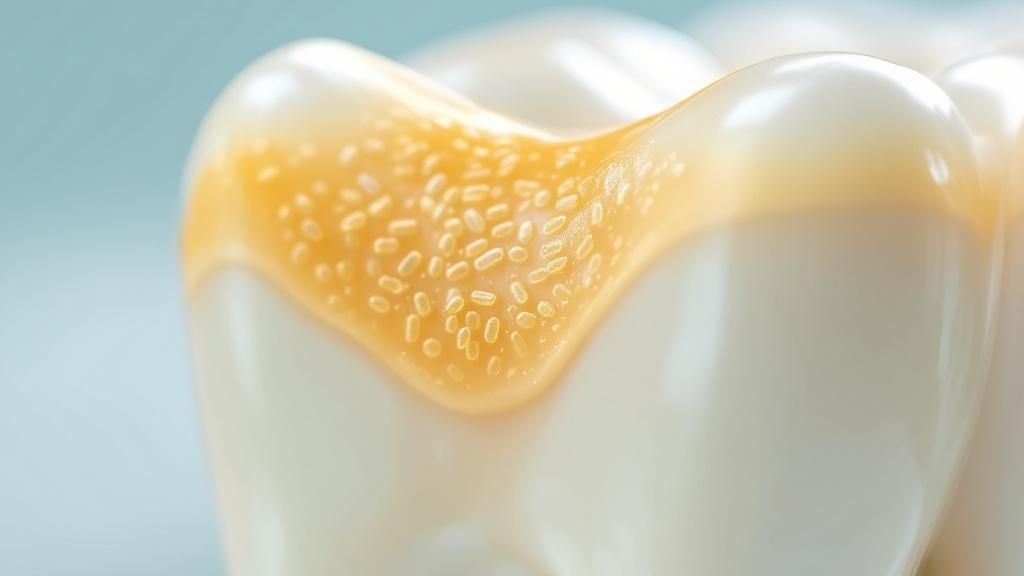
Dental plaque is what dentists call a biofilm—a well-organized community of bacteria living together. This pale yellow or colorless film builds up on your teeth, especially along the gumline.
Think of it as a tiny, living city of germs. This city is built from your saliva and food particles left behind after you eat. These bacteria love to feast on sugars and starches from your food and drinks. As they eat these sugars, they release acids. These acids are the real troublemakers.
When plaque is not removed, these acids attack your tooth enamel. Over time, this can lead to cavities and other serious issues.
Dental Plaque at a Glance
This table breaks down the key facts about dental plaque.
| Characteristic | Description |
|---|---|
| What It Is | A soft, sticky film made of bacteria, saliva, and food bits. It’s a living colony of germs. |
| Appearance | Usually colorless to pale yellow, which makes it hard to see until a lot has built up. |
| Where It Forms | Mostly on teeth, especially in hard-to-reach spots like between teeth and along the gumline. |
| Primary Danger | The bacteria in plaque make acids after eating sugar. These acids wear away tooth enamel, leading to tooth decay and cavities. |
| Growth Rate | Plaque starts forming on teeth just 4 to 12 hours after brushing. That's why cleaning your teeth every day is so important. |
| What It Becomes | If not removed, plaque can harden into tartar (calculus) within 24 to 72 hours. Once it hardens, only a dental professional can remove it. |
| Health Impact | Plaque is the main cause of cavities and gum disease (gingivitis and periodontitis). It also causes bad breath. |
| Best Defense | Brushing well twice a day, flossing daily, and getting regular professional dental cleanings. This breaks up the film before it can cause damage or harden into tartar. |
Why Plaque Matters for Your Oral Health
Understanding dental plaque is your first line of defense in protecting your smile. It’s more than just a minor issue; its presence is directly linked to the most common oral health problems we see at Cedar Dental Group in Renton, WA.
The daily fight against plaque is the foundation of preventive dental care. Removing this bacterial film every day is the best thing you can do at home to prevent cavities and gum disease.
When plaque builds up, it can trigger inflammation in your gums. This irritation can lead to several problems that affect your health, comfort, and confidence.
- Tooth Decay (Cavities): The acids from plaque dissolve the hard, protective outer layer of your tooth, called enamel. Over time, this creates weak spots and eventually the small holes we know as cavities.
- Gingivitis: This is the earliest stage of gum disease. It causes red, swollen, or bleeding gums and is your body's warning sign against the bacteria in plaque.
- Bad Breath (Halitosis): The bacteria in plaque release bad-smelling compounds. This is what causes lasting bad breath that mints can't fix.
The good news is that managing plaque is possible with the right daily habits. By brushing twice a day and flossing every day, you can remove plaque before it causes harm.
How Plaque Forms on Your Teeth
Have you noticed that fuzzy feeling on your teeth just a few hours after brushing? That’s dental plaque, and it starts forming right after you clean your teeth.
It all begins with something called the pellicle. This is a very thin, invisible film of protein from your saliva that coats your teeth. The pellicle itself isn't harmful, but it creates a sticky surface that bacteria can attach to.
The First Bacteria Arrive
Once the pellicle is in place, bacteria quickly stick to it. The first bacteria to arrive are usually harmless. But they send signals to other, more harmful bacteria, letting them know it's a good place to live.
This process is fast. Within just a few hours, a lot of bacteria can gather. From here, they start to multiply and build a more structured community.
Building a Bacterial City on Your Teeth
As more bacteria join, they create a slimy, protective shield around themselves. This shield is the biofilm, and it protects them from your saliva and immune system.
This biofilm is what makes plaque feel sticky. To grow, these bacteria need fuel, which they get from the food you eat.
- Sugars and Starches: These are the favorite foods for plaque bacteria. Every time you eat a cookie or drink a sugary soda, you're feeding them.
- Acid Production: As the bacteria eat these sugars, they produce acid. This acid is what causes cavities because it removes important minerals from your tooth enamel.
This picture shows how a clean tooth can develop hardened tartar.
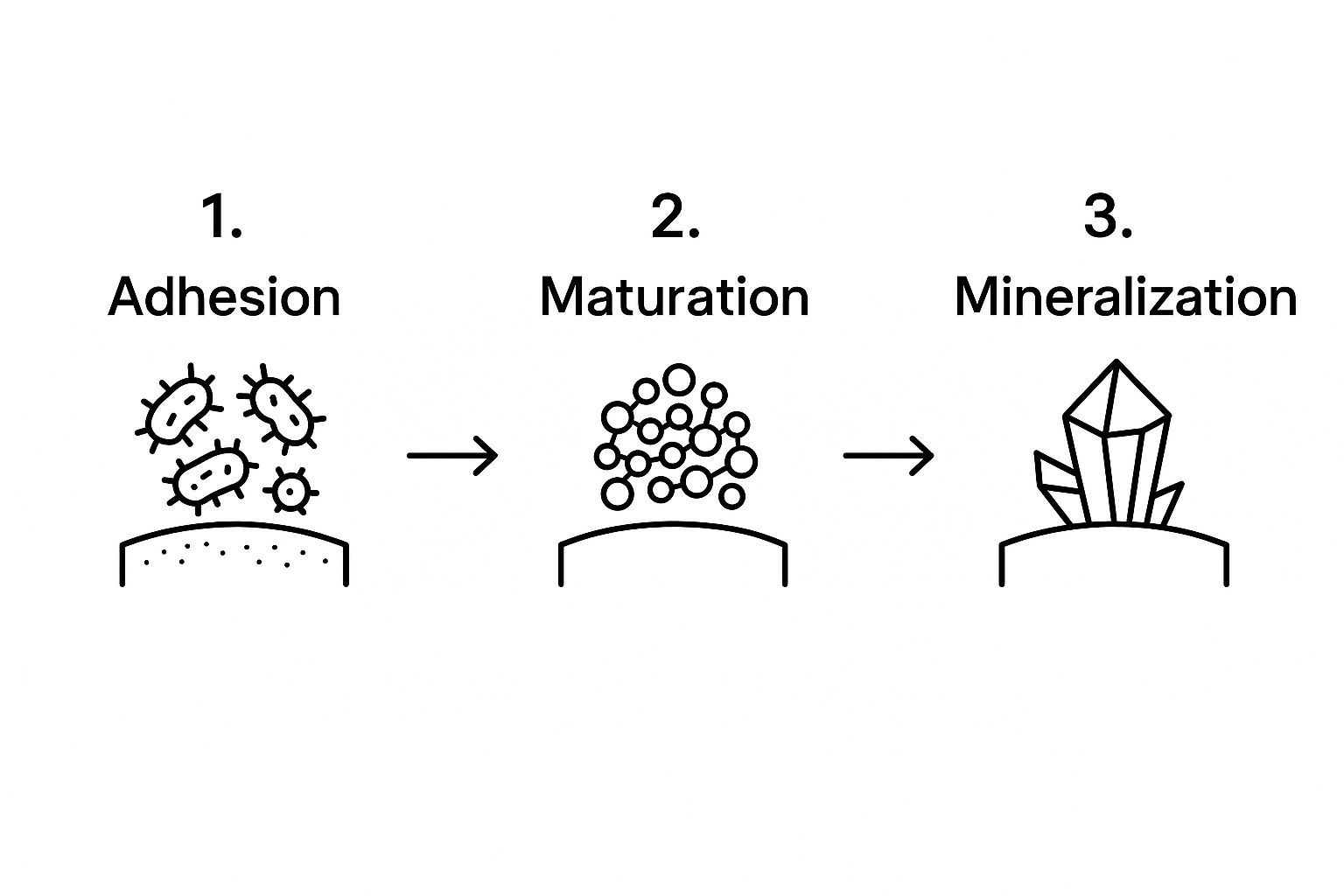
As you can see, what begins as a few bacteria can quickly turn into a problem.
From Soft Plaque to Hard Tartar
If this bacterial city isn't removed by brushing and flossing, it continues to grow. In as little as 24 to 72 hours, the plaque can start absorbing minerals from your saliva.
This process turns the soft, sticky plaque into a rough, crusty deposit called tartar, or calculus. Once tartar forms, it’s stuck to your teeth and can't be removed with a toothbrush at home.
This hardened tartar creates an even rougher surface for more plaque to stick to. It's a cycle that makes cleaning your teeth harder. By brushing and flossing every day, you break down this bacterial city before it can cause lasting damage.
Plaque vs. Tartar: Understanding the Difference
You may have heard the words "plaque" and "tartar" used to mean the same thing, but they are two different stages of the same problem. Knowing the difference helps you understand why daily oral hygiene is so important.
Think of it this way: plaque is the problem you can solve at home. Tartar is what brings you to the dental hygienist.
A good comparison is wet cement. Plaque is like wet cement—it’s soft, sticky, and you can easily wipe it away with your toothbrush and floss. But if you leave cement to sit, it hardens into concrete. That’s tartar.
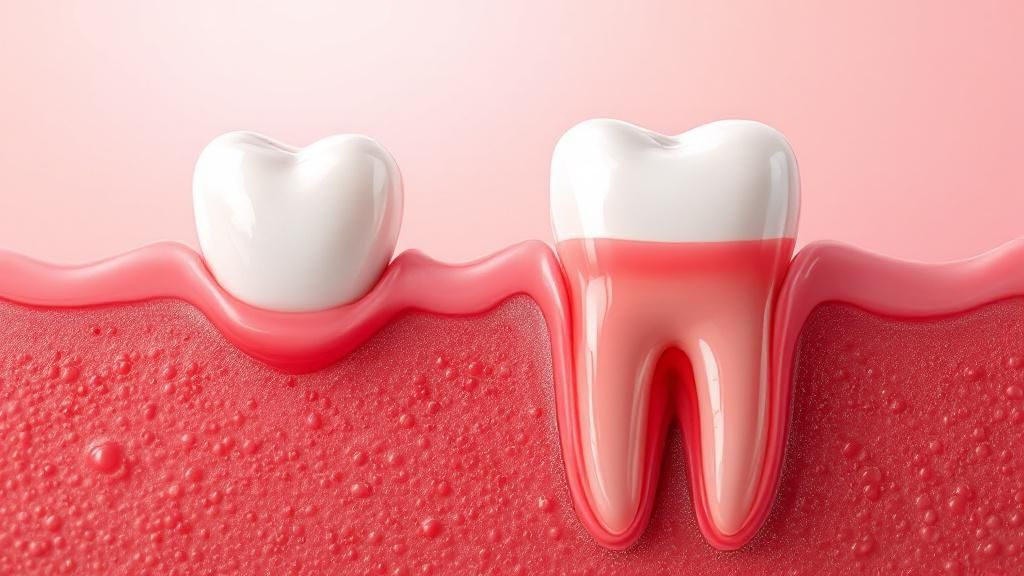
This hardening happens fast. If plaque isn't removed, it can begin to harden in as little as 24 to 72 hours.
What Is Dental Tartar?
Tartar, which your dentist calls calculus, is what plaque becomes when it is left on your teeth. It’s a hard, crusty deposit that sticks to your teeth, both above and below the gumline.
While plaque is mostly invisible, tartar has a yellow or brown color that is easier to see. Its rough surface is the perfect place for even more plaque to attach, making brushing and flossing less effective.
Tartar gives bacteria a protective shield. It helps them stick around longer and cause more serious damage, like cavities and gum disease. This is why professional cleanings are essential.
Seeing tartar on your teeth is a sign that plaque has been there for too long.
How Plaque and Tartar Differ
To understand why daily brushing and flossing is a must, it helps to see a direct comparison of plaque and tartar. The table below breaks down the key differences.
Plaque vs. Tartar Key Differences
| Feature | Dental Plaque | Dental Tartar (Calculus) |
|---|---|---|
| Composition | A soft, sticky film of live bacteria, saliva, and food particles. | Hardened plaque that has absorbed minerals from your saliva. |
| Texture | Soft and filmy. You can often feel it with your tongue. | Hard, rough, and crusty. It feels like a solid deposit on the tooth. |
| Color | Usually colorless to a pale yellow. | Yellow or brown. It can get darker from coffee, tea, or smoking. |
| Removal | Can be removed at home with good brushing and daily flossing. | Cannot be removed at home. It requires special tools used by a dental professional. |
| Health Impact | The active source of acid that leads to cavities and early gum irritation (gingivitis). | Worsens gum irritation and provides more space for new plaque to grow. It can lead to advanced gum disease. |
The most important takeaway is that you are in control of plaque.
By sticking to a daily routine, you can stop plaque before it ever turns into tartar. This proactive care is a key part of the preventive dentistry we practice in Renton.
The Health Risks of Plaque Buildup
It can be easy to think of dental plaque as just a minor problem. But that sticky film is the main cause of the most common oral health issues. These problems can impact your comfort, confidence, and even your overall health.
When you understand the link between plaque and its potential damage, your daily routine changes. Brushing and flossing become powerful tools for prevention. The good news is that these risks are almost entirely preventable with the right habits and a partnership with our team at Cedar Dental Group.
From Plaque to Cavities
The most direct danger from plaque is acid. The bacteria in plaque eat the sugars from your food and drinks. As they do, they release acids that attack your tooth enamel.
Think of your enamel as armor for your teeth. Each time you eat something sugary, the bacteria launch an "acid attack" that weakens that armor. Normally, your saliva helps repair the enamel, but when plaque is always present, your teeth are under constant attack.
Eventually, these attacks can create a permanent weak spot. A small hole forms, and that’s what we call a cavity. Untreated cavities can cause pain and lead to more serious dental work.
This is a widespread problem. According to the World Health Organization, untreated dental cavities affect an estimated 2.5 billion people, making it the most common health condition in the world (Source: World Health Organization). This shows how important it is to control plaque. You can discover more insights from the WHO on global oral health.
The Connection to Gum Disease
Plaque doesn't just attack your teeth; it also harms your gums. When plaque builds up along the gumline, your body's immune system reacts with inflammation.
Plaque buildup is like having a constant splinter in your gums. Your body’s natural reaction is to become inflamed as it tries to fight off the bacteria.
This early stage of inflammation is known as gingivitis. It is the first form of gum disease, and its warning signs are important to notice.
Common signs of gingivitis include:
- Red, Swollen Gums: Healthy gums are usually firm and pink. Inflamed gums look puffy and red.
- Bleeding When You Brush: Seeing blood in the sink after brushing or flossing is a classic sign of irritated gums.
- Persistent Bad Breath: The bacteria in plaque can cause a bad taste or odor that mouthwash can't fix.
The great thing about gingivitis is that it's completely reversible with better daily hygiene and a professional cleaning. But if it's ignored, the inflammation gets worse.
The Progression to Periodontitis
When gingivitis is not treated, it can turn into a more serious condition called periodontitis. At this stage, the ongoing inflammation causes your gums to pull away from the teeth, forming pockets. These pockets are a perfect hiding place for more plaque.
This deeper infection starts to destroy the bone that holds your teeth in place. Unlike gingivitis, the damage from periodontitis is permanent. If it continues, teeth can become loose and may be lost.
At Cedar Dental Group, we take gum health very seriously. If you have noticed any signs of irritation, it’s important to get it checked. We provide gentle and effective gum disease treatment in Renton to stop the disease and protect your smile.
How to Effectively Remove Plaque at Home
Winning the daily battle against plaque is the most important thing you can do for your oral health. Your daily habits are what stop plaque from hardening into tartar. It all comes down to a few simple techniques.
Think of your at-home routine as your daily defense plan. It's about being thorough and consistent. By spending just a few minutes each day, you can break up bacteria before they cause damage.
Master Your Brushing Technique
Most of us learned to brush as kids, but improving that technique makes all the difference. The goal is to clean every surface, especially where your teeth meet your gums.
To get the most out of brushing, keep these tips in mind:
- The 45-Degree Angle: Angle your toothbrush at 45-degrees toward your gums. This lets the bristles gently sweep under the gumline to remove plaque.
- Gentle, Short Strokes: Use gentle, short, back-and-forth or circular motions. Brushing too hard can damage your enamel and gums.
- Brush for Two Full Minutes: The recommendation of two minutes, twice a day, is key. It gives you enough time to clean every tooth surface. Use a timer if it helps.
A soft-bristled brush is usually the best choice. Whether you use a manual or electric toothbrush, the right technique is what matters most.
The Importance of Daily Flossing
Brushing cleans the main surfaces of your teeth, but it can't get into the tight spaces between them. These areas are where plaque loves to hide. This is why daily flossing is so important for a complete clean.
Flossing is the only way to remove plaque and food from between your teeth. It cleans below the gumline and prevents tartar from forming in these hidden spots.
Skipping flossing is like cleaning only two-thirds of your house. You're leaving a large area untouched, which is where problems often start.
For flossing to work well, use the "C-shape" technique.
The C-Shape Flossing Method
- Use about 18 inches of floss. Wrap most of it around one middle finger.
- Gently guide the floss between two teeth. Don't snap it into your gums.
- Curve the floss into a C-shape against one tooth.
- Slide it gently into the space between your gum and the tooth.
- Move the floss up and down along the side of that tooth, then do the same for the next tooth.
Learning this technique ensures you are cleaning the areas most at risk for decay and gum disease. For a more detailed guide, check out our post on how to floss properly.
Consider Adding an Antiseptic Mouthwash
While brushing and flossing are the most important steps, adding an antiseptic mouthwash can provide extra defense. Think of it as a helpful addition, not a replacement for brushing and flossing.
An antimicrobial mouthwash can help by:
- Reducing the number of bacteria in your mouth.
- Reaching spots that are hard to clean with a brush or floss.
- Slowing down the growth of new plaque.
Look for a mouthwash with the ADA Seal of Acceptance, which shows it is safe and effective. Swishing for 30 to 60 seconds after brushing and flossing can help rinse away any leftover debris.
Why Professional Dental Cleanings Are Essential
Even if you are great at brushing and flossing, plaque is sneaky. It gets into tiny spaces your brush can't reach. Over time, that plaque can harden into tartar, a tough deposit that is impossible to remove on your own.
This is why visiting a dental professional is so important for a healthy smile. Think of it like maintaining your car. You do the daily upkeep, but you need a skilled mechanic for the bigger jobs. A professional cleaning is the expert service that prevents major problems.
What Happens During a Professional Cleaning
If you feel nervous about a dental cleaning, we want to put your mind at ease. It’s a gentle and simple process. Our hygienists at Cedar Dental Group are experts at making you feel comfortable while giving your teeth the deep clean they need.
During your visit, our hygienist will use special tools to carefully remove all plaque and tartar. This step is called scaling. After the tartar is gone, we will polish your teeth to remove surface stains, leaving them feeling smooth and fresh.
A professional dental cleaning is a vital investment in your long-term oral health. It removes the tartar that causes gum disease and gives you a clean start to maintain at home.
This routine visit is one of the most powerful preventive steps you can take for your health.
The Benefits of a Truly Deep Clean
Regular professional cleanings offer benefits that go beyond just a clean feeling. They are essential for your oral and overall health.
Here’s what you gain from these appointments:
- Preventing Gum Disease: Removing tartar is your best defense against gingivitis and more serious gum disease.
- Catching Problems Early: Your cleaning is also a chance for us to spot small issues before they become bigger problems.
- A Brighter Smile: Polishing removes surface stains from coffee and tea, giving you a brighter smile.
- Peace of Mind: You will leave our office feeling refreshed and confident that your mouth is healthy.
Having the right dental team makes a big difference. To learn more, read our guide on how to choose a dentist.
Answering Your Questions About Dental Plaque
Even after learning about plaque, you might still have questions. At Cedar Dental Group, we want you to feel confident about your oral health.
Here are answers to some of the most common questions we hear from our patients in Renton.
Can I ever permanently get rid of plaque?
No, you can't. Plaque is made of bacteria that are always in your mouth, so it starts forming again right after you clean your teeth. The goal isn't to get rid of it forever, but to manage it every day with good hygiene and regular professional cleanings.
Are some people more likely to get plaque than others?
Yes. Some factors can make a person build up plaque faster. These include genetics, a diet high in sugar, and crowded teeth that are harder to clean. Dry mouth can also be a factor, since saliva helps rinse away bacteria.
Do any foods help reduce plaque?
No food can replace brushing and flossing, but some can help. Crunchy foods like apples and carrots can help scrape plaque off your teeth as you chew. Dairy products like cheese can also help neutralize acids from bacteria. Drinking plenty of water is also great for rinsing away food particles.
How can I tell if I have too much plaque?
The main sign is that fuzzy feeling on your teeth. You might also see a dull, yellow film near your gumline. Other signs that plaque is building up include lasting bad breath or gums that are red, swollen, or bleed when you brush.
Is an electric toothbrush better for removing plaque?
Many people find them more effective. Electric toothbrushes have a consistent brushing motion and often include a timer to ensure you brush for a full two minutes. However, a manual toothbrush used with the right technique can be just as good. The best toothbrush is the one you will use correctly every day.
Ready to take control of your oral health? The expert and compassionate team at Cedar Dental Group is here to help you with personalized care in a comfortable environment.
Contact our Renton, WA office today to schedule your consultation at https://cedardentalgroup.com.
