

Hearing the phrase ‘root canal’ can often bring a wave of anxiety. However, modern dentistry offers a range of sophisticated treatments to address deep tooth decay or infection, and we want you to feel comfortable and informed about all of them.
While root canal therapy is a highly effective procedure for saving a natural tooth, it’s not always the only path forward. Understanding the full spectrum of options other than root canal empowers you to have a more informed, confident conversation with your dentist. This helps you choose the best treatment for your specific situation.
At Cedar Dental Group, we believe patient-centered care starts with clear, compassionate education. In this guide, we’ll explore several viable alternatives, from conservative procedures that preserve tooth vitality to advanced replacement solutions. We’ll detail each option, explain who makes a good candidate, and describe what you can expect, helping you navigate your dental health journey with confidence and peace of mind.
1. Dental Implant
When a tooth is severely damaged or infected to the point where it can’t be saved, a dental implant offers a comprehensive and durable solution. Instead of trying to preserve a compromised tooth, this approach involves removing the failing tooth and replacing it entirely, from root to crown. It stands as a premier choice among options other than root canal for its strength, longevity, and natural appearance.
The procedure begins with the gentle extraction of the damaged tooth. Then, a small, biocompatible titanium post is surgically placed into the jawbone where the original tooth root was. This post acts as a new, artificial root. Over the next few months, a remarkable process called osseointegration occurs, where the jawbone fuses with the titanium post, creating an incredibly stable foundation. Once fully healed, a custom-crafted dental crown is attached, perfectly matching your natural teeth.
When to Choose a Dental Implant
A dental implant is an excellent choice in several scenarios:
- Failed Root Canal: If a previous root canal has failed or become re-infected, extracting the tooth and placing an implant is often the most predictable long-term solution.
- Severe Tooth Fracture: When a tooth is cracked or fractured below the gumline, it typically cannot be saved. An implant provides a complete and reliable replacement.
- Extensive Decay: For teeth with decay so widespread that there isn’t enough healthy structure left to support a crown, an implant is a superior alternative.
The following infographic provides a quick reference on the key data that make dental implants a leading restorative treatment.
These figures, including a 95-98% success rate (Source: American Association of Oral and Maxillofacial Surgeons), highlight why implants are considered the gold standard in tooth replacement. They offer exceptional reliability and can last a lifetime with proper care, often making them a more cost-effective solution over time.
2. Tooth Extraction with Bridge
When a tooth is compromised beyond repair, a dental bridges on cedardentalgroup.com is another effective, time-tested solution. This approach involves removing the damaged tooth and literally “bridging” the gap left behind. Unlike a dental implant that replaces the root, a bridge uses the neighboring teeth as anchors to support a new, artificial tooth, restoring both function and aesthetics to your smile.
The process starts with the careful extraction of the failing tooth. The adjacent teeth, known as abutment teeth, are then meticulously prepared by removing a small amount of enamel to allow for the placement of dental crowns. These crowns serve as the strong foundation for the bridge, which includes the pontic (the replacement tooth) fused between them. Once crafted, the entire fixed bridge is cemented into place, seamlessly closing the gap.
When to Choose a Dental Bridge
A dental bridge is an excellent and often faster alternative in several situations:
- When a Dental Implant Isn’t Feasible: If a patient has insufficient jawbone density for an implant or prefers to avoid a surgical procedure, a bridge offers a non-surgical option.
- Faster Treatment Timeline: The entire process for a dental bridge can often be completed in just a few weeks, making it a much quicker solution compared to the months required for an implant.
- Patient Preference: Some patients may simply prefer a less invasive, non-surgical approach to tooth replacement, and a bridge meets that need perfectly.
Proper maintenance is key to the longevity of a bridge. We recommend using specialized cleaning aids like water flossers or floss threaders to clean underneath the pontic, ensuring the health of the supporting teeth. Regular professional cleanings will help protect your investment and maintain your oral health for years to come.
3. Pulp Capping
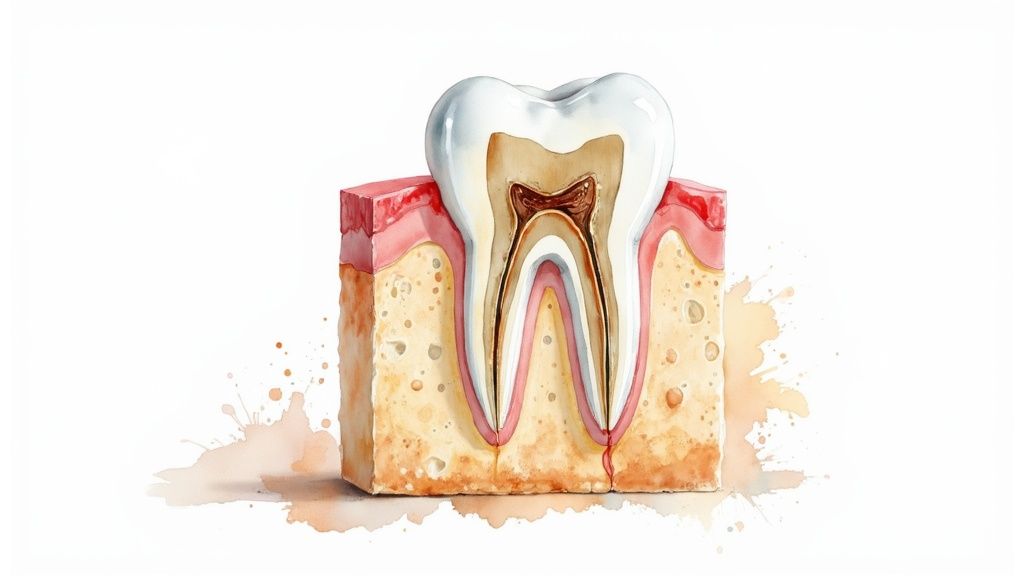
Pulp capping is a highly conservative restorative treatment designed to preserve a tooth’s vitality when decay gets very close to, or slightly exposes, the inner pulp chamber. Instead of removing the nerve as in a root canal, this procedure involves placing a medicated liner over the vulnerable area. This material encourages the tooth to heal itself by forming a new layer of protective dentin, thereby saving the natural tooth and avoiding more invasive measures.
The procedure requires meticulous care from your dentist. After the decay is removed, a specialized biocompatible material, such as mineral trioxide aggregate (MTA) or calcium hydroxide, is applied directly to the vulnerable pulp. This agent acts as a barrier against bacteria and stimulates healing. A final filling or crown is then placed on top to seal and restore the tooth’s function, with the goal of keeping the nerve tissue alive and healthy.
When to Choose Pulp Capping
Pulp capping is an ideal solution under specific, favorable conditions:
- Small, Accidental Pulp Exposure: If the pulp is inadvertently exposed during routine cavity preparation on an otherwise healthy, symptom-free tooth, pulp capping can prevent the need for a root canal.
- No History of Spontaneous Pain: The tooth should not have a history of severe, lingering, or unprovoked pain, which often indicates the pulp is irreversibly damaged.
- Minor Traumatic Injuries: In cases of minor tooth trauma that results in a tiny pulp exposure, this treatment can be successfully used to maintain the tooth’s vitality.
Successful pulp capping has a high success rate, often between 70% and 90% depending on the specific case (Source: Journal of Endodontics). This relies heavily on a sterile environment and careful monitoring. At Cedar Dental Group, we take every precaution, including using a rubber dam to isolate the tooth and prevent contamination, giving your tooth the best chance to heal.
4. Pulpotomy
A pulpotomy is a specialized procedure designed to save a damaged tooth by treating only the affected part of the pulp. Unlike a root canal that removes all pulp tissue, a pulpotomy removes only the infected or inflamed pulp from the tooth’s crown (the visible part). This approach preserves the healthy, living pulp tissue within the root canals, allowing the tooth to remain vital. It is a more conservative choice among options other than root canal for specific cases.
The procedure involves accessing the pulp chamber, carefully removing the diseased tissue, and placing a medicated material directly over the remaining healthy pulp to promote healing. The tooth is then sealed with a durable filling or a crown to restore its function and protect it from future damage. This technique effectively resolves pain and infection while keeping the tooth’s root system intact and alive.
When to Choose a Pulpotomy
A pulpotomy is an ideal treatment in carefully selected situations where the pulp inflammation is confined to the crown and has not spread to the roots. Key applications include:
- Young Permanent Teeth: For permanent teeth where the root tips are not yet fully formed, a pulpotomy can maintain vitality and allow the root to complete its development, making the tooth stronger.
- Reversible Pulpitis in Adults: In certain cases, an adult tooth may have trauma or decay affecting only the coronal pulp. If tests confirm the root pulp is healthy, a pulpotomy can be a viable alternative to a full root canal.
- Emergency Pain Relief: A pulpotomy can be used as an emergency procedure to relieve severe pain from pulpitis before a definitive treatment is performed.
The success of a pulpotomy is highly dependent on precise technique and proper case selection. At Cedar Dental Group, we perform thorough pulp vitality tests to confirm the health of the remaining tissue. Regular follow-ups after the procedure are crucial to monitor the tooth’s health and ensure the restoration remains functional.
5. Apicoectomy (Root-End Surgery)
An apicoectomy, also known as root-end surgery, is a precise microsurgical procedure designed to save a tooth that has already undergone a root canal but continues to have a persistent infection at its tip. Instead of re-doing the entire canal from the crown down, this approach targets the problem directly at the source—the root’s apex. It is a sophisticated option that can resolve infection while preserving the natural tooth and its existing crown.
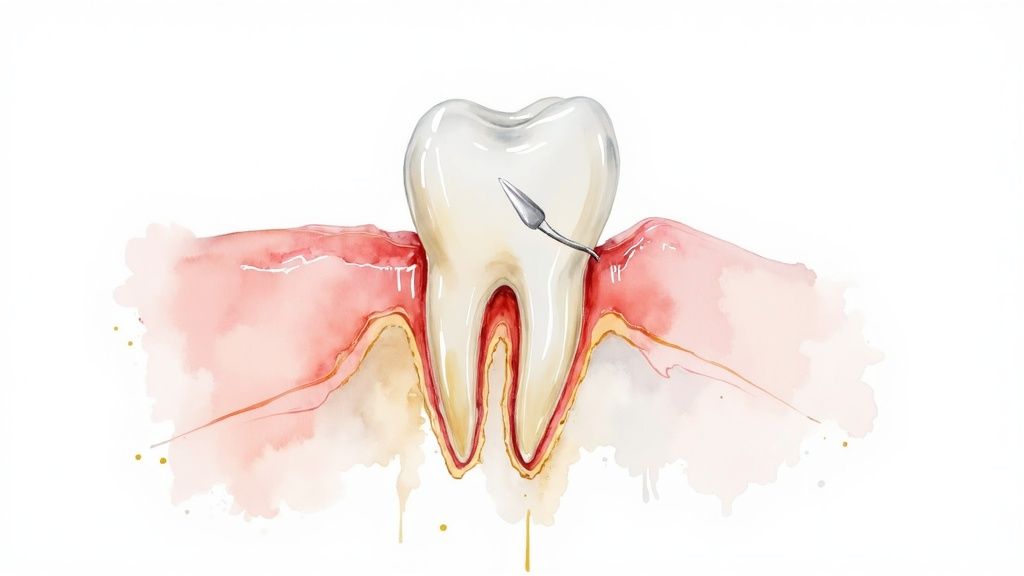
This procedure is typically performed by a specialist. It involves making a small incision in the gum tissue to expose the infected root tip. The very end of the root is removed along with the surrounding infected tissue. A small, biocompatible filling is then placed at the end of the root to seal it and prevent future infection. The gum tissue is then sutured, allowing the area to heal naturally.
When to Choose an Apicoectomy
An apicoectomy is generally recommended in specific situations where a conventional root canal retreatment is not feasible or has already failed.
- Failed Root Canal with Persistent Infection: If pain or infection continues months after a root canal, an apicoectomy can clean out the root tip where bacteria may still be lingering.
- Calcified or Blocked Canals: Sometimes, canals inside the tooth become too narrow or blocked for instruments to reach the tip during a standard retreatment.
- Complex Root Anatomy: A tooth may have a sharp curve at the root tip that prevents complete cleaning during a non-surgical procedure.
- Protecting Existing Dental Work: If the tooth has a well-fitting crown and a sturdy post, removing them could risk fracturing the tooth. An apicoectomy avoids this risk by accessing the root from the side.
Successful post-operative care is crucial for healing. Following a soft diet, using ice packs, and attending all follow-up appointments will ensure the best possible outcome. This targeted surgical solution can often be the last resort to save a natural tooth, preventing the need for extraction and replacement.
6. Regenerative Endodontic Procedures (REPs)
Regenerative Endodontic Procedures (REPs) represent a groundbreaking biological approach, offering a sophisticated alternative to traditional root canals, particularly for younger patients with immature teeth. Instead of filling the canal with artificial material, REPs aim to regenerate damaged pulp and encourage the natural development of the tooth’s root structure. This cutting-edge treatment focuses on healing from within, making it an excellent choice for specific cases.
The procedure leverages the body’s own healing potential. It starts with meticulous disinfection of the root canal system, using gentle irrigants to preserve vital stem cells. The clinician then intentionally stimulates bleeding inside the tooth, creating a natural scaffold rich in growth factors. This scaffold is sealed, creating an environment where new, living tissue can form, allowing the root to continue maturing and strengthening over time.
When to Choose Regenerative Endodontics
REPs are a highly specialized treatment and are most successful in specific clinical situations:
- Immature Permanent Teeth: The primary indication is for a young permanent tooth with an open apex (an undeveloped root tip) that has suffered pulp death due to trauma or deep decay.
- Traumatized Front Teeth: A teenager who has experienced an injury to a front tooth is a classic candidate, as regeneration can restore vitality and complete root formation, making the tooth stronger.
- Saving a Young, Necrotic Tooth: This procedure is focused on saving teeth that would otherwise be lost or require more invasive treatments in young patients.
These procedures are complex and highlight the importance of seeking care from a specialist experienced in advanced endodontic techniques. In cases of sudden dental injury where this treatment might be applicable, understanding your options for immediate care is crucial. You can learn more by exploring our emergency dentistry services.
Choosing the Right Path for Your Smile
Navigating your dental health can feel overwhelming, especially when faced with a diagnosis that might require a root canal. Understanding that there are numerous options other than root canal is the first step toward making an empowered decision for your long-term oral wellness. The best path forward is deeply personal and depends on your unique circumstances, including the specific tooth affected and your overall health goals.
Key Takeaways for Your Dental Health Journey
Modern dentistry offers tailored solutions for nearly every scenario:
- Preservation First: Pulp capping and pulpotomy are your front-line defenses. They focus on preserving the vital pulp tissue, helping you avoid more extensive treatment.
- Specialized Solutions: Regenerative endodontics and apicoectomy offer a second chance for complex cases, targeting the problem with precision to save a tooth that might otherwise be lost.
- Reliable Replacements: When a tooth is beyond saving, tooth extraction with a bridge or a dental implant provides durable, functional, and beautiful replacements. An implant is a permanent solution that protects jawbone health, while a bridge quickly restores your bite and smile.
The most critical takeaway is that you are not alone in this decision. A thorough examination at Cedar Dental Group, complete with digital X-rays and a one-on-one conversation, is the only way to determine which treatment is truly right for you.
Your Actionable Next Steps
Feeling empowered with this knowledge, your next step is to seek a professional consultation. At Cedar Dental Group, we believe in a collaborative approach. We listen to your concerns, assess your clinical situation with state-of-the-art technology, and walk you through every viable option. Our commitment is to demystify the process, ensuring you feel comfortable and confident.
Don’t let uncertainty or dental anxiety hold you back. We are here to create a treatment plan that not only resolves your immediate dental issue but also aligns with your vision for a healthy, confident smile.
Frequently Asked Questions (FAQs)
1. Is a root canal always necessary if my tooth hurts?
Not always. Tooth pain can stem from various issues, like reversible pulpitis or a deep cavity that hasn’t infected the nerve. A thorough exam at Cedar Dental Group can determine if a less invasive option, like pulp capping, is appropriate.
2. What is the most durable alternative to a root canal?
If a tooth must be extracted, a dental implant is the most durable and long-lasting replacement. With success rates over 95% and the ability to last a lifetime, it functions just like a natural tooth and preserves jawbone health.
3. Can I just have the tooth pulled and leave the space empty?
We strongly advise against this. Leaving a gap can cause adjacent teeth to shift, leading to bite problems, crooked teeth, and potential jaw issues. It’s always best to replace a missing tooth with a bridge or implant.
4. Are these alternatives covered by insurance?
Coverage varies widely by plan. Many insurance plans cover a portion of procedures like extractions, bridges, and implants. Our team at Cedar Dental Group will help you understand your benefits and provide a clear cost estimate before any treatment begins.
5. How do I know which option is right for me?
The best way to know is by scheduling a consultation. Your dentist will evaluate the health of your tooth, review X-rays, and discuss your personal health goals to recommend the ideal treatment plan for your specific needs.
Ready to improve your smile? Contact Cedar Dental Group in Renton, WA today to schedule your consultation. We’re here to help you explore all your options and find the perfect solution for your dental health.
