

Did you know that the health of your gums can affect your heart, blood sugar, and even your brain? It’s a connection many people miss, but it’s vital for your well-being. Your mouth is a doorway to the rest of your body. When it’s filled with harmful bacteria, those problems can travel and cause serious health issues.
At Cedar Dental Group, we believe understanding this connection is the first step toward true health. Many dental offices focus on cleanings or cosmetic work, but we go deeper. We want to close the gap in patient education about how your oral health impacts your entire body.
Why Your Gums Are a Window to Your Overall Health
Most people think of gum disease as just a mouth problem—maybe some bleeding gums or bad breath. While those are red flags, the real danger is what you can’t see. The inflammation and bacteria from infected gums can escape into your bloodstream and affect your entire system.
This relationship between your mouth and body is called the oral-systemic link.
When your gums are inflamed from gum disease (periodontitis), the barrier between your mouth and bloodstream weakens. This allows harmful bacteria to enter your circulation. Once in the bloodstream, these bacteria can fuel inflammation in your organs and arteries, contributing to many serious chronic diseases.
The True Impact of Gum Health
Ignoring your gum health means you’re overlooking a major risk factor for other illnesses. Protecting your gums isn’t just about saving your teeth; it’s a powerful way to protect your total wellness. For adults managing chronic conditions, this connection is especially important.
This link changes how you should view dental care. It’s not a separate task on your to-do list—it’s a central part of your health strategy. The bacteria behind this process start as a sticky film on your teeth. Learning more about what dental plaque is helps you understand how it all begins.
Your mouth is a mirror of your overall health. Addressing inflammation in your gums can help reduce inflammation throughout your body, supporting your efforts to manage chronic conditions and improve your well-being.
Uncovering the Hidden Dangers
Unfortunately, the full impact of oral health is often missed in standard medical care. Special tests can reveal the true state of your mouth, including important oral health tests and how bacterial infections can cause other health issues. This is why specialized care is so vital.
Here at Cedar Dental Group, this connection is at the core of our approach. We’ve seen that for many patients, controlling gum disease is the missing piece of their health puzzle. With nearly half of all adults over 30 having some form of gum disease (Source: CDC), this is a widespread problem. By focusing on advanced periodontal care, we help you protect more than just your smile—we help protect your life.
How Gum Inflammation Travels Through Your Body
To understand the powerful link between gum disease and chronic illness, we need to look at what happens on a microscopic level. Gum disease is a persistent bacterial infection that creates constant, low-grade inflammation in your mouth.
Think of your gums as gatekeepers to your bloodstream. When they’re healthy, that gate is sealed. But when harmful bacteria build up, they find ways into your circulation.
The inflammation from gum disease creates tiny gaps in the blood vessels of your gum tissue. This allows oral bacteria and their inflammatory byproducts to enter your bloodstream. From there, they can travel to your heart, brain, and other crucial organs.
This infographic gives you a clear visual of how bacteria from your gums can spread and affect the rest of your health.
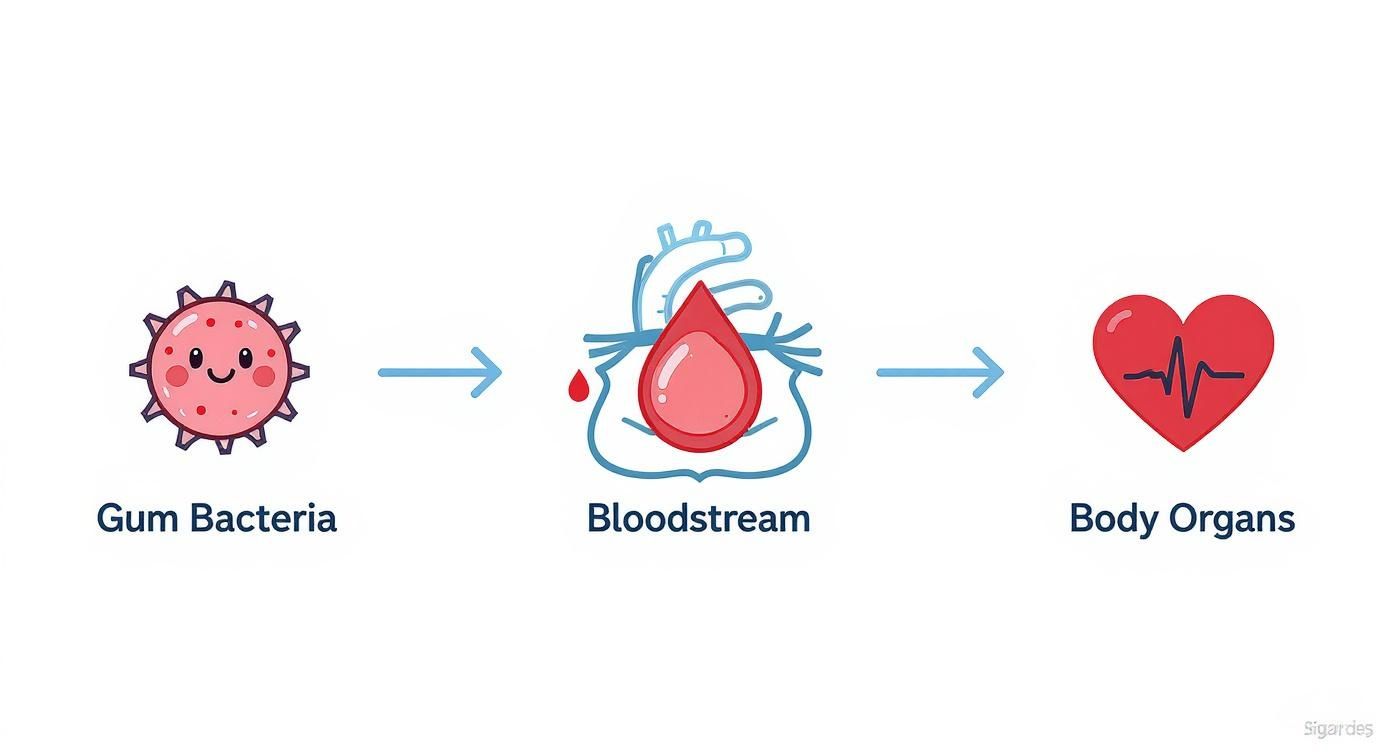
As you can see, it’s a direct path from a mouth infection to a body-wide problem. This is why an issue that starts in your gums rarely stays there.
The Role of Systemic Inflammation
This traveling inflammation is the main culprit linking gum disease to other serious health conditions. It’s a process called systemic inflammation, meaning it affects your entire body.
Imagine your body’s immune system is an emergency response team. When it detects bacteria in your gums, it sends out inflammatory “first responders.” But with a chronic infection like gum disease, that emergency call never stops. Your body stays on high alert 24/7.
This constant state of emergency causes damage over time. The inflammation can roughen the lining of your blood vessels, making it easier for plaque to build up—a key factor in heart attacks. It can also interfere with how your body manages blood sugar, which is a major problem for people with diabetes.
“When your gums are constantly inflamed, your body is in a perpetual state of defense. This low-grade, chronic inflammation is the spark that can ignite or worsen serious health problems far from your mouth.”
Understanding what causes high white blood cells provides a window into this process. A nagging infection in your gums can keep these cell counts high, signaling a continuous battle inside your body.
From Gums to Your Greater Health
The bacteria themselves are also a big part of the problem. Scientists have found oral bacteria in places they don’t belong, like inside the fatty plaques clogging heart arteries. They’ve even been found in the brains of Alzheimer’s patients. This provides direct evidence of the pathway from an oral infection to a systemic disease.
The physical signs of this process often start small, like your gums pulling away from your teeth. Learning about what causes receding gums can help you recognize these early warnings.
The takeaway is simple: your gum health is tied to your overall health. By controlling the infection in your gums, you take a major step toward lowering your risk for a range of chronic diseases.
Protecting Your Heart Starts with Your Gums

The link between gum disease and heart health is one of the most well-researched connections. What starts in your gums can have a serious impact on your heart and blood vessels.
This is why we are so passionate about periodontal health. Taking care of your gums is a powerful, proactive step you can take to protect your heart. For anyone with risk factors like high blood pressure or a family history of heart disease, this is essential.
How Gum Disease Affects Your Arteries
Think of your arteries as smooth pipes that carry blood. The constant inflammation from gum disease acts like a corrosive agent, roughing up the inner lining of those pipes.
This damage creates sticky spots where fatty deposits (plaque) can build up. This process is called atherosclerosis, or hardening of the arteries. As plaque builds up, it narrows the arteries and restricts blood flow to your heart and brain.
It’s a startling fact, but the very same harmful bacteria found in infected gum pockets have been discovered inside the arterial plaque of patients with heart disease. This is direct evidence that the infection can literally travel from your mouth to your heart.
This isn’t just a theory. Research shows that gum disease can increase the relative risk of cardiovascular disease by 44% in adults over 65. You can discover more insights about these cardiovascular findings to see just how critical managing gum health is.
The Ripple Effect on Your Heart
Atherosclerosis can lead to serious cardiovascular events. If the plaque in an artery ruptures, your body forms a blood clot to heal the injury.
Here’s how that can cause a catastrophe:
- Heart Attack: If a clot blocks an artery supplying blood to the heart, it can trigger a heart attack.
- Stroke: If that clot breaks loose and travels to the brain, it can cause a stroke.
- High Blood Pressure (Hypertension): The body-wide inflammation from gum disease can also damage blood vessels, which can lead to or worsen high blood pressure.
This shows that the link between gum disease and chronic illness is a real biological process with severe consequences.
Taking Proactive Steps for a Healthier Heart
The good news is that you have a lot of control over your gum health. When you treat the infection in your gums, you reduce the inflammatory burden on your entire body.
This is where professional periodontal care and a solid preventive routine make all the difference. Every time you floss or get a professional cleaning, you are investing in your cardiovascular wellness. Learn more about building a routine by reading our guide on what preventive dental care is.
At Cedar Dental Group, we help patients in Renton, WA, understand this critical connection. Our periodontist, Dr. Jaewon Kim, specializes in treating the root causes of gum disease, helping you protect not just your smile, but your heart, too.
Diving Deeper: Other Major Health Risks
The reach of gum disease doesn’t stop with the heart. The bacteria and inflammation in your gums can cause serious trouble elsewhere in your body.
When you understand these other connections, the message is clear: your mouth is deeply connected to your total well-being. This is why we see the link between gum disease and chronic illness as a matter of whole-body health, not just dental care. Controlling the infection in your gums helps shut down a major source of inflammation.
The Two-Way Street: Diabetes and Gum Disease
The relationship between gum disease and diabetes is a nasty one. Each condition makes the other worse, creating a dangerous cycle.
For someone with diabetes, high blood sugar creates an environment where infections can thrive. This makes them more likely to develop severe gum disease. On the other hand, the inflammation from gum disease makes it harder for the body to use insulin properly. This can cause blood sugar levels to become unstable and difficult to control.
Think of it as a vicious cycle:
- High blood sugar makes your gums vulnerable to severe infection.
- Gum infections and inflammation make it harder to manage your blood sugar.
Breaking this cycle requires a team effort between you, your doctor, and your dentist. Successfully treating gum disease can often lead to better blood sugar control, making it an essential part of any diabetes management plan.
Respiratory Health: When Bacteria Are Inhaled
Your mouth is the main entryway to your lungs, so the health of one affects the other. Harmful bacteria in infected gums don’t just enter the bloodstream; they can also be breathed in.
When you inhale these bacteria, they can cause serious respiratory infections. This is a big risk for older adults or anyone with a weaker immune system. Research has drawn a line between poor oral hygiene and a higher risk of conditions like:
- Pneumonia: Bacteria from the mouth are a known cause of bacterial pneumonia.
- Bronchitis: Oral bacteria can also fuel inflammation in the bronchial tubes.
- Chronic Obstructive Pulmonary Disease (COPD): While gum disease doesn’t cause COPD, the added inflammation can make the condition worse.
Keeping your mouth clean is a simple but powerful defense for your lungs.
New Frontiers: Arthritis and Cognitive Decline
Scientists are constantly discovering new ways oral health impacts the body. Two of the most concerning areas of research are the links to rheumatoid arthritis and cognitive decline, including Alzheimer’s disease.
Researchers are finding the same inflammatory markers and bacteria from gum disease in the joints of people with rheumatoid arthritis and in the brains of those with Alzheimer’s. This points to a direct path where problems in the mouth can travel to distant parts of the body.
For rheumatoid arthritis (RA), the body-wide inflammation from gum disease can worsen the painful joint inflammation. Some studies have found that treating gum disease can help reduce the pain and swelling of arthritis.
The potential link to cognitive decline is even more alarming. The theory is that years of chronic inflammation from your gums can slowly contribute to inflammation in the brain. This neuroinflammation is a key factor in diseases like Alzheimer’s. This gives us one more profound reason to protect our gum health for a lifetime of wellness.
Recognizing the Warning Signs of Gum Disease
It’s one thing to understand the risks of gum disease, but it’s another to know how to spot it. Many people assume a problem isn’t real until it hurts. But with your gums, pain is a late-stage alarm bell—the early signs are much quieter.
You can’t afford to wait for discomfort. The best way to protect your body is to learn the subtle clues and be proactive. A check-up at Cedar Dental Group is a supportive, no-judgment way to find out what’s going on.
Common Symptoms to Watch For
If you notice any of these signs, your body is telling you something is wrong. They are clear indicators of a bacterial infection in your gums.
- Red, Swollen, or Tender Gums: Healthy gums should look pale pink and feel firm. If yours are bright red, puffy, or sore, that’s a classic sign of inflammation.
- Bleeding When You Brush or Floss: This is often the first and most common symptom. It’s never normal for your gums to bleed from basic cleaning.
- Gums That Have Pulled Away From Your Teeth: Do your teeth look longer than they did before? This is a sign of gum recession, a key marker of gum disease.
- Persistent Bad Breath: If you have a foul taste or odor that won’t go away, it could point to a deeper infection. You can find out more about what causes bad breath in our guide.
- Pus Between Your Teeth and Gums: This is an unmistakable sign of infection. If you see this, it’s time to call a dentist right away.
- Changes in Your Bite or Loose Teeth: In advanced stages, gum disease destroys the bone holding your teeth in place. This can make them feel loose or cause your bite to feel “off.”
The most dangerous thing about gum disease is that it often progresses without pain. By the time you feel discomfort, significant damage may have already occurred. This makes regular dental check-ups essential.
Catching these signs doesn’t mean it’s too late—it just means it’s time to act. Getting professional care is a powerful step toward halting the disease and protecting yourself from the link between gum disease and chronic illness.
Your Path to Health with Advanced Periodontal Care

Knowing the risks of gum disease is one thing. Taking action to protect yourself is what matters. At Cedar Dental Group, our advanced periodontal care is designed to stop gum disease and lighten the inflammatory load on your body.
You don’t have to figure this out alone. Our team, led by board-certified periodontist Dr. Jaewon Kim, specializes in the treatments needed to get your gums healthy again. A periodontist is a dentist with extra years of training focused on saving gums and the bone that supports your teeth.
Specialized Care for a Body-Wide Problem
When you work with a specialist like Dr. Kim, you get an expert who understands the link between gum disease and chronic illness. We don’t just treat the symptoms you see; our mission is to improve your overall wellness by getting rid of the source of chronic inflammation.
We use targeted treatments to gently clear out the bacterial infection below your gumline. We always put your comfort first, making sure you feel supported and informed at every step. We know that 72.6% of adults report some level of dental fear (Source: NCBI), so we are committed to providing gentle, judgment-free care.
Your Treatment Options for Better Health
The right treatment plan is always tailored to you, but the goal is the same: stop the disease and restore your health.
Here are a few of the solutions we might recommend:
- Scaling and Root Planing: This is a therapeutic deep cleaning. We carefully remove plaque and tartar from deep inside the gum pockets and smooth the tooth roots to help your gums heal.
- Gum and Bone Grafting: If gum disease has led to tissue or bone loss, these procedures can rebuild that foundation. This helps save your teeth and restores the natural shape of your gum line.
- Dental Implants: When a tooth can’t be saved, a dental implant offers a permanent, stable, and natural-looking replacement. It fully restores your ability to eat and speak with confidence.
Your comfort is our priority. With gentle techniques and a compassionate approach, we ensure that getting the care you need is a positive, stress-free experience.
We believe that top-tier care should also be easy to understand. You can learn more by exploring our guide on what periodontal disease treatment involves.
Taking care of your gums is one of the most proactive steps you can take for your long-term health. At Cedar Dental Group in Renton, WA, Dr. Kim and our team are ready to provide the expert, gentle care you deserve.
FAQs: Your Questions About Gum Health Answered
Learning about the serious link between gum health and your body can bring up a lot of questions. We’ve put together some common questions we hear from our patients in Renton, WA, to give you clear, straightforward answers.
What is the oral-systemic link?
The oral-systemic link is the scientifically proven connection between your oral health and your overall health. It shows how bacteria and inflammation from gum disease can enter the bloodstream and contribute to serious chronic illnesses like heart disease, diabetes, and even Alzheimer’s.
Can gum disease be cured?
The early stage, called gingivitis, is reversible with excellent home care and professional cleanings. However, the more advanced stage, periodontitis, cannot be cured but can be managed. With professional treatment and ongoing maintenance, you can stop its progression and prevent further damage to your gums, bone, and overall health.
How do I know if I need to see a gum specialist (periodontist)?
Your general dentist can manage early gum disease. However, you should see a specialist like Dr. Jaewon Kim if you have moderate to severe gum disease, notice your gums are receding, have loose teeth, or have a chronic health condition like diabetes or heart disease that is linked to gum health.
Is gum disease treatment painful?
Your comfort is our top priority. We use local anesthesia to ensure you feel no pain during procedures like deep cleanings. Our team at Cedar Dental Group is known for its gentle touch and compassionate approach, helping even anxious patients feel at ease.
How does Cedar Dental Group help patients who are afraid of the dentist?
We understand dental fear is real. We provide a calm, judgment-free environment and take the time to listen to your concerns. Our team uses gentle techniques, explains every step of the process, and ensures you are comfortable and in control throughout your visit. Your peace of mind is as important to us as your dental health.
Understanding that gum disease is more than a dental issue—it’s a health risk—is the first step. Cedar Dental Group encourages you to schedule a personalized consultation to explore our advanced periodontal care options in a welcoming, supportive setting.
