

We all worry about our breath sometimes. But what if that worry sticks around, and mints or mouthwash don't help?
Often, ongoing bad breath (called halitosis) is more than just a sign of what you ate. It can be one of the first and most common red flags for gum disease. This guide explores the important link between your breath and the health of your gums.
Is Your Bad Breath a Sign of Something More?

If you're always trying to fix bad breath but the odor keeps coming back, it's time to look for the real cause. The unique, unpleasant smell tied to gum disease doesn't come from food. It's actually made by harmful bacteria living in hidden spaces between your teeth and gums.
This guide will help you see the connection between bad breath and gum health, without any judgment. Here at Cedar Dental Group, we know that understanding the "why" is the first step toward a solution. We see patients from all over Renton, WA with these exact worries, and our job is to give clear, reassuring answers.
Why Your Gums Could Be the Problem
Healthy gums fit tightly around your teeth, like a protective seal. But when plaque builds up, it causes swelling and makes the gums pull away from the teeth.
This creates tiny pockets. These pockets are the perfect home for bacteria that release bad-smelling sulfur compounds. That’s where the odor comes from.
Key Takeaway: Think of chronic bad breath as an alarm bell. It’s often a sign that your gums need professional help before the problem gets worse.
Once these bacteria settle in, regular brushing and flossing might not be enough to get rid of them. To learn more about other causes, you can read our guide on what causes bad breath.
We will show you how to spot the early signs and understand the professional treatments we offer at our Renton dental office. Our team focuses on preventative care and creating personalized gum treatments to restore both your health and your confidence.
The Bacterial Link Between Your Gums and Breath
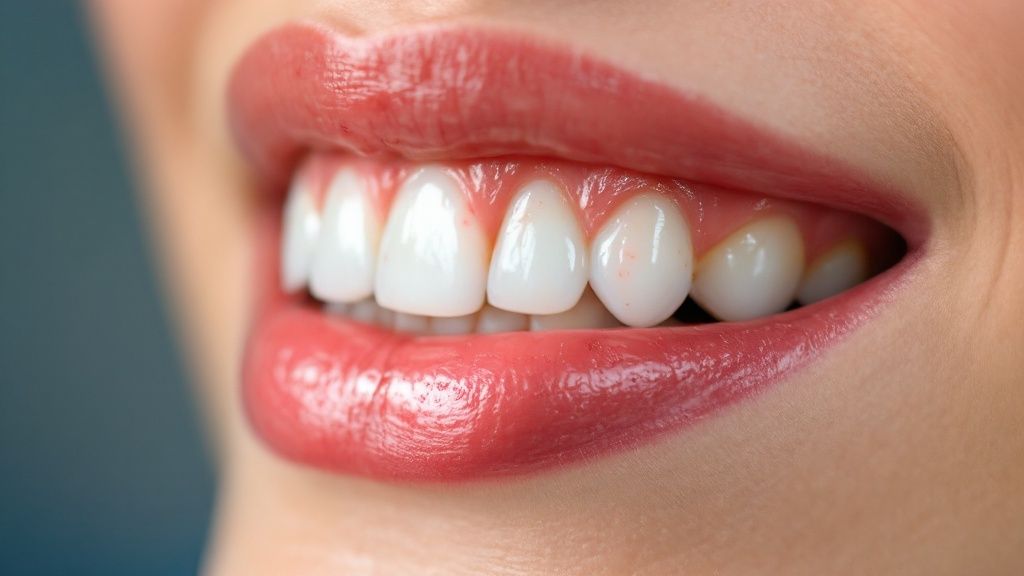
So, why do unhealthy gums cause bad breath? It all comes down to bacteria. In a healthy mouth, your gums create a tight seal around each tooth. This keeps harmful germs from getting underneath.
But when dental plaque—a sticky film of bacteria—builds up, your body responds with swelling. This is the first stage of gum disease, called gingivitis. It makes your gums look red and puffy.
How Gum Pockets Create Bad Breath
As the swelling gets worse, your gums start to pull away from your teeth. This creates tiny gaps called periodontal pockets. These pockets are the perfect hideout for some of the worst oral bacteria.
Specifically, these pockets become home to anaerobic bacteria—germs that don’t need oxygen to live. Hidden from your toothbrush, they can multiply easily.
These are the bacteria that cause chronic bad breath. They feed on proteins in your saliva and gum tissue, releasing smelly byproducts called volatile sulfur compounds (VSCs). These VSCs create that distinct odor that mints can't cover up.
Think of these gum pockets as tiny trash cans along your gumline. No matter how well you brush, you can't empty them yourself. They keep making odors until a professional cleans them out.
The depth of these pockets is a major sign of your gum health. Research shows a clear link: as pockets get deeper, the chance of having bad breath goes up. One study found that patients with pockets deeper than 3 millimeters had an 81.7% chance of having halitosis (Source: National Institutes of Health). If you want to dive into the science, you can read the full research on halitosis and gum disease.
It All Starts With Plaque
This whole cycle starts with something simple: plaque. If you don't remove this sticky film daily, it hardens into tartar, which only a dental professional can remove. The first step to stopping this is knowing what dental plaque is and how to manage it.
At Cedar Dental Group, we help our Renton patients see that this is more than just "bad breath"—it's a sign of a bacterial infection that needs treatment. For more details on these germs, this oral health masterclass on detecting and fixing bacterial infections is a great resource.
Our goal isn't just to mask the symptom. It's to get rid of these bacterial hideouts, let your gums heal, and restore your breath to a natural, healthy state.
How to Spot Gum Disease Warning Signs Yourself
Bad breath is often the first thing people notice, but it's rarely the only sign of gum trouble. Knowing what else to look for is key. By checking your own oral health, you can catch problems early. I see these exact signs in my Renton patients every day, and they are often easier to spot than you might think.
Seeing these signs isn't a reason to panic. It's an empowering first step. If you notice one or more of these symptoms with stubborn bad breath, your body is telling you it's time to see a dentist.
This infographic shows how that odor is directly tied to what's happening in your gums.
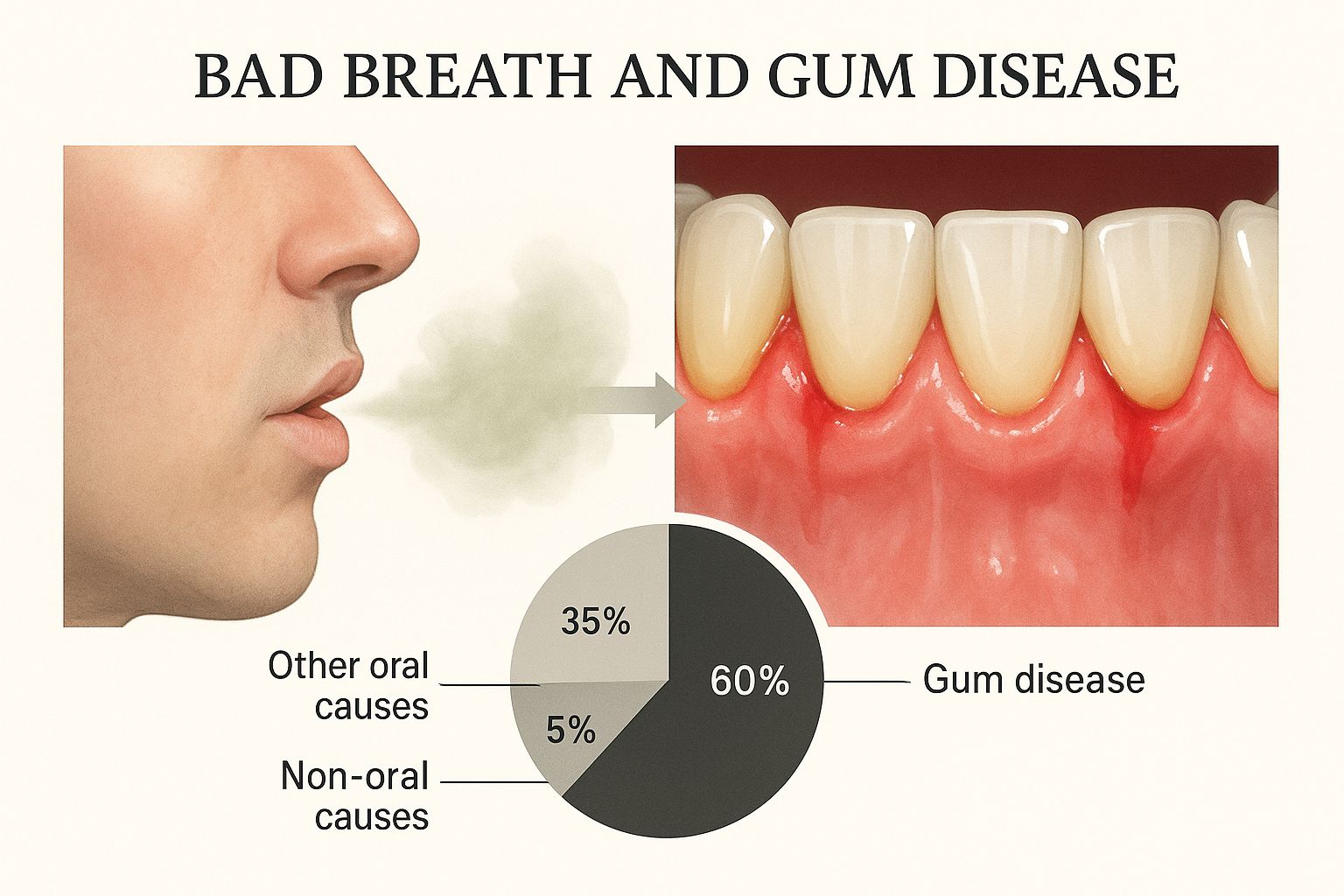
As you can see, the smell you’re noticing is a direct result of the bacterial irritation happening below your gumline.
Gum Disease Early Warning Checklist
Use this checklist to check your gum health. If you see one or more of these signs along with lasting bad breath, it's a strong signal to schedule a dental visit.
| Symptom | What It Looks or Feels Like | What It Could Mean |
|---|---|---|
| Bleeding Gums | Seeing pink in the sink after brushing or flossing. | Healthy gums shouldn't bleed. This is a classic sign of swelling (gingivitis). |
| Swollen, Red Gums | Gums look puffy, tender, or have a dark red color. | Your body is sending cells to fight a bacterial infection. |
| A Persistent Bad Taste | A constant sour or metallic taste in your mouth. | The taste comes from the same sulfur compounds that cause bad breath. |
| Gum Recession | Your teeth start to look longer than they used to. | The gum tissue is pulling away from the teeth, showing the root. |
| Tooth Sensitivity | New sensitivity to hot, cold, or sweet things. | Exposed tooth roots from gum recession are much more sensitive. |
Don't ignore these signals! Even one symptom is worth checking to protect your long-term oral health.
More Subtle Clues You Shouldn't Ignore
Beyond the obvious, some signs are quieter but just as important. For instance, changes in how your teeth look or feel can point to issues with your gums and bone.
Gum recession is a big one. It happens when your gum tissue pulls back from the teeth, showing the sensitive roots. It's a slow process, but one day your teeth might just look longer. This also often leads to new sensitivity. You can learn more in our guide on what causes receding gums.
An estimated 75–85% of all persistent bad breath cases start in the mouth, with gum disease being a top cause (Source: Journal of Natural Science, Biology and Medicine). Spotting these signs yourself is the most important first step toward a healthier mouth.
Your First Line of Defense: A Strong At-Home Routine
While a dentist is needed to treat gum disease, your daily habits are your most powerful tool. Your at-home routine is the frontline defense against the bacteria that cause both gum swelling and bad breath. It's about doing it right.
Here at Cedar Dental Group, we’ve seen how consistent care can stop problems before they start. This is where you take control of your oral health.
Mastering the Basics
Brushing twice a day is a great start, but technique matters. First, always use a soft-bristled toothbrush. This protects your enamel and gums from damage.
We often remind our Renton patients to brush in gentle circles for a full two minutes. This method is great at breaking up plaque without irritating your gums.
Expert Insight: It's a common myth that brushing harder cleans better. In reality, rough brushing can damage gum tissue and even cause it to pull back, creating more pockets for odor-causing bacteria. Gentleness is much more effective.
Flossing: The Step You Can't Skip
If you only brush, you're missing more than a third of your tooth surfaces. Flossing is the only way to get into the tight spaces between your teeth and under the gumline. This is where the bacteria that cause gum disease and bad breath love to hide.
Making flossing a daily habit is critical for gum health. It removes the plaque and food your toothbrush can't reach. If you need help with your technique, our guide on how to floss properly can make a big difference.
Beyond Brushing and Flossing
A truly solid routine goes a bit further. These simple habits help create a mouth where bad bacteria can't thrive.
- Use an Antiseptic Mouthwash: Rinsing with an ADA-approved antiseptic mouthwash can reduce bacteria in your mouth.
- Stay Hydrated: Drinking plenty of water helps wash away food and bacteria. It also prevents dry mouth, a condition where bacteria multiply quickly.
- Limit Sugary Foods: Bacteria love to eat sugar. By cutting back, you reduce the plaque that forms.
- Avoid Tobacco: Smoking is a huge risk factor for gum disease. Quitting is one of the best things you can do for your gums and your breath.
How We Treat Gum Disease at Cedar Dental Group
When you've done everything right at home and bad breath still won't go away, it's time for a professional to step in. At Cedar Dental Group, our first step is always to get a full picture of what's happening in your mouth. We diagnose with precision and care.
Your visit will start with a gentle exam at our Renton office. We will carefully measure the small pockets between your teeth and gums. This quick, painless step tells us everything we need to know to build the best treatment plan for you.
Personalized Plans for Lasting Results
Every patient is unique, so a one-size-fits-all approach doesn’t work. Based on your exam, we will create a personalized gum disease treatment plan. The goal is not just to treat the infection, but to stop it from coming back.
Our team is dedicated to your comfort and will always explain everything. We want you to feel confident and in control of your care.
For many patients, the most effective first treatment is a procedure called scaling and root planing.
Expert Insight: Think of scaling and root planing as a deep cleaning for your gums. It goes beyond a standard cleaning by removing the hardened plaque—tartar—that's hiding below the gumline. This is where the bacteria causing the infection and bad breath are living.
This procedure has two goals:
- Scaling: We carefully remove all plaque and tartar from above and below your gumline.
- Root Planing: After cleaning, we smooth out the roots of your teeth. This helps your gums reattach firmly, closing those pockets where bacteria hide.
A Gentle and Stress-Free Experience
We understand that any dental procedure can be stressful. Your comfort is our top priority. During scaling and root planing, we use a local anesthetic to numb the area, so you won't feel any discomfort. Our Cedar Dental Group team creates a calm, reassuring atmosphere.
You can learn more in our detailed guide on what is periodontal disease treatment.
Tackling gum disease with professional help is vital for your health. Surveys show that halitosis affects up to 50% of adults (Source: American Dental Association). When gum disease is the cause, professional care is the solution. You can discover more insights about halitosis and gum disease on pureperio.com.
Our goal is simple: eliminate the infection, break the bad breath cycle, and give you the tools for a healthy, confident smile.
FAQs: Your Questions About Gum Disease and Bad Breath
It's normal to have questions when you're worried about your oral health. Here are answers to common questions we hear from our patients in Renton, WA.
1. If I treat my gum disease, will my bad breath go away?
Yes, in most cases. Since the bad breath is caused by bacteria trapped by gum disease, treating the disease gets rid of the source. With professional treatment and good daily care at home, you should see a big, long-lasting improvement in your breath.
2. I'm nervous about gum disease treatment. Is it painful?
We understand dental anxiety. Your comfort is our top priority. Treatments like scaling and root planing are done with a local anesthetic to completely numb the area. You should not feel pain during the procedure. Our team at Cedar Dental Group is here to ensure you have a gentle, stress-free experience.
3. Can mouthwash alone cure bad breath from gum disease?
No. While antiseptic mouthwash can help reduce bacteria on the surface, it cannot reach the hardened plaque and tartar deep in the gum pockets. It’s a helpful tool for daily care but not a cure for the underlying infection.
4. How often should I get checked for gum disease?
We recommend a full gum evaluation at least once a year during your regular check-up. If you have risk factors like smoking or diabetes, we may suggest more frequent checks. If you notice any signs like bleeding gums or bad breath, please schedule a visit right away.
5. What happens if I ignore the signs of gum disease?
Ignoring the signs allows the infection to get worse. Over time, the bacteria can destroy the bone that supports your teeth, leading to loose teeth or tooth loss. Research has also linked long-term gum disease to other health problems, like heart disease (Source: American Academy of Periodontology). Early treatment protects both your smile and your overall health.
Some patients also ask about how nutrition fits in. Certain minerals can support your immune system and healing. You can learn more about how zinc and magnesium supplements contribute to general wellness.
Ready to improve your smile? Contact Cedar Dental Group in Renton, WA today to schedule your consultation. We are here to help you get to the root of the problem and achieve a healthy, fresh smile. https://cedardentalgroup.com
