

Have you ever felt self-conscious about a cracked tooth or dealt with the nagging discomfort of a cavity? Maybe a missing tooth has made you hesitant to smile freely. If any of this sounds familiar, we want you to know there are gentle, effective solutions available, and it all falls under an area of care called restorative dentistry.
At its heart, restorative dentistry is the area of dental care focused on repairing and replacing teeth that are damaged or missing. The goal is to bring your smile back to its full strength, function, and natural beauty. It's about restoring both your oral health and your confidence, and we're here to help you every step of the way.
Rebuilding Your Smile with Compassion and Expertise

We like to think of restorative dentistry as a partnership. It's a compassionate and collaborative effort between you and your dentist to get your smile to a place where it feels comfortable, works properly, and looks fantastic. We understand that dental issues can be a source of anxiety, and our first priority is to make you feel at ease.
This field of dentistry is about creating durable, long-term solutions that prevent future problems. Its importance is recognized worldwide; the global restorative dentistry market was valued at over $22 billion in recent years, reflecting how many people are successfully reclaiming their smiles with these treatments (Source: Grand View Research).
The Core Goals of Restorative Dentistry
Restorative care is designed to deliver tangible benefits that improve your daily life. Here’s a quick summary of what we aim to achieve for our patients in Renton, WA.
| Goal | How It Helps You |
|---|---|
| Repair Damage | We fix issues like cavities, cracks, and chips, stopping them from getting worse and relieving discomfort. |
| Restore Function | Our treatments ensure you can chew, speak, and smile comfortably without pain or difficulty. |
| Replace Missing Teeth | We fill gaps to maintain proper tooth alignment, support your jaw health, and complete your smile. |
| Improve Oral Health | By strengthening your bite, we help prevent future dental problems from developing. |
By focusing on these key areas, we help you return to a smile that isn't just beautiful, but one that's strong, healthy, and built to last.
A Look at Common Restorative Treatments
When a tooth is damaged, cracked, or missing, it can affect everything from your comfort to your confidence. The great news is that you don't have to live with it. Modern restorative dentistry offers a wonderful toolkit to repair damage and get your smile back to feeling and looking its best.
At Cedar Dental Group, we have several ways to approach this, depending on your specific needs. Think of it like a personalized treatment plan—we carefully select the right solution to bring your smile back into harmony.
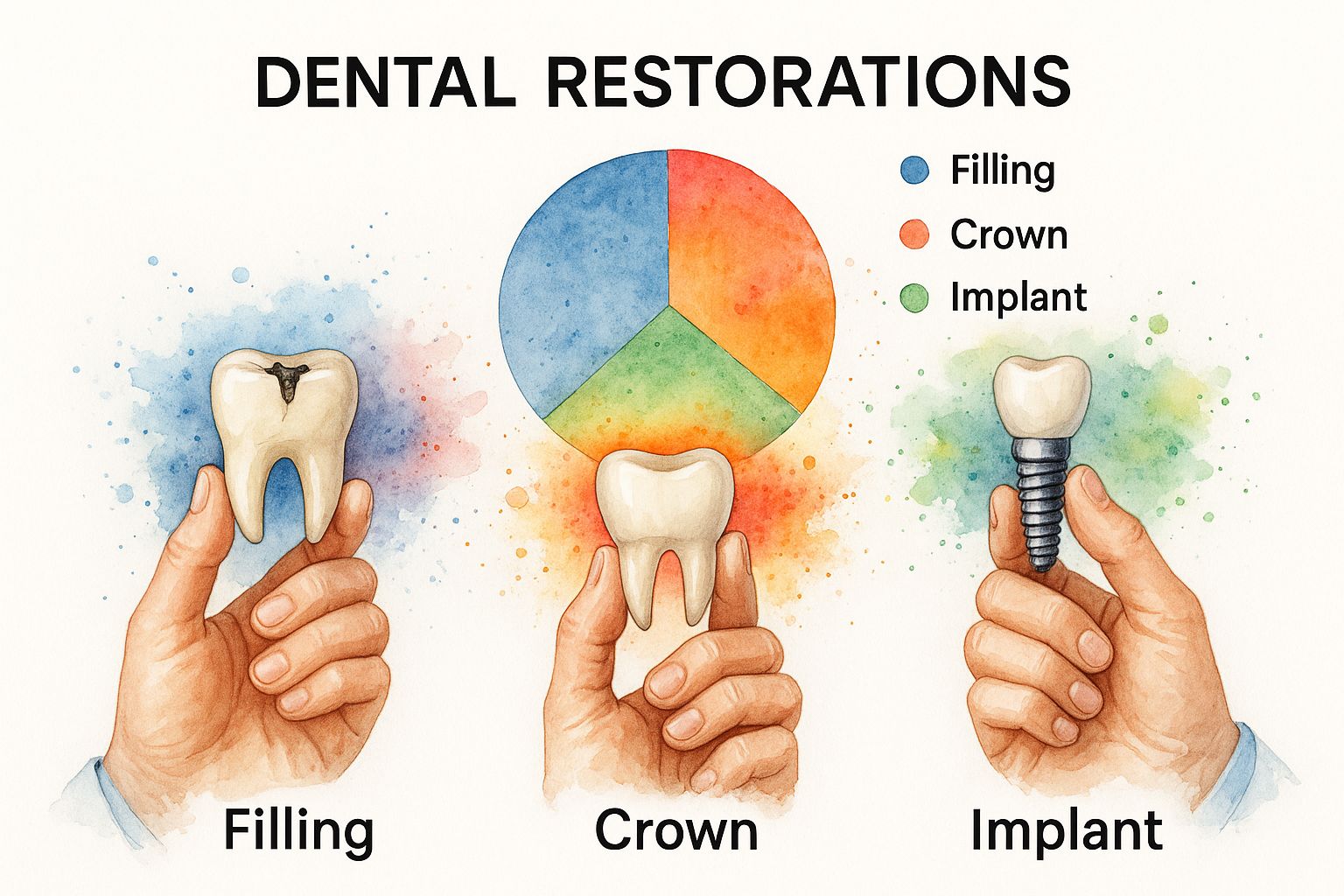
From a simple filling to a durable implant, each solution is designed to restore a tooth’s natural function and appearance, so you can get back to your life without dental worries.
Dental Fillings: The Go-To for Minor Repairs
A dental filling is often the first line of defense against tooth decay. When a cavity creates a small hole in your tooth, we gently clear out the decay and "fill" that space. This simple, crucial step stops the decay in its tracks and restores the tooth's original strength for biting and chewing.
Gone are the days of noticeable metal fillings. Today, most are made from a tooth-colored composite material, so they blend seamlessly with your natural smile. It’s a very common need—cavities affect the permanent teeth of about 90% of adults in the United States, and roughly one in four has untreated decay right now (Source: National Institutes of Health). This highlights how vital this straightforward procedure is.
Dental Crowns: A Protective Shield for Weakened Teeth
When a tooth has more significant damage, a filling may not be enough. That’s where a dental crown comes in. A crown is a custom-made, durable cap that fits over the entire visible part of your tooth, much like a helmet providing 360-degree protection and strength.
We often recommend crowns in a few key situations:
- A tooth has a very large filling and is becoming unstable.
- A tooth is cracked or badly broken, and we need to hold it together.
- A tooth has undergone a root canal and needs protection from fracture.
- A tooth has significant cosmetic flaws, such as being misshapen or deeply stained.
Dental Bridges: Filling the Gaps
If you're missing one or more teeth in a row, the gap can cause a cascade of other problems. A dental bridge is a time-tested solution that literally "bridges" the empty space. It uses an artificial tooth (or teeth) anchored securely by crowns on the healthy teeth on either side.
A bridge does more than just complete your smile. It restores your chewing ability and, just as importantly, prevents neighboring teeth from drifting into the empty space. This is crucial for keeping your bite aligned and healthy. You can see how this and other treatments fit into the bigger picture by exploring our restorative dental services.
Which Restorative Treatment Is Right for You?
With several options available, comparing them side-by-side can help clarify which might be right for you. This table breaks down common treatments to guide your conversation with our dental team.
| Treatment | Best For | Main Benefit |
|---|---|---|
| Filling | Minor decay or small cavities. | Stops decay from spreading and restores tooth strength quickly and discreetly. |
| Crown | A severely cracked, broken, or weakened tooth. | Provides full coverage, long-term protection, and a natural appearance. |
| Bridge | One or more missing teeth in a row. | Fills the gap to restore function and prevents other teeth from shifting out of place. |
Ultimately, the best choice always comes down to your unique dental needs, which a thorough, gentle examination will reveal. This is a great starting point for your consultation with us.
How Restorative Dentistry Can Genuinely Change Your Life

It's one thing to understand the treatments, but it’s another to grasp how restorative dentistry can truly improve your day-to-day life. This isn't just about fixing a tooth; it’s about regaining your comfort, your ability to eat what you love, and the confidence that comes with a healthy smile you're proud to share.
Think of it as a direct investment in your overall well-being. When we repair or replace a tooth, we aren't just filling a space. We're actively protecting your long-term oral health and preventing a domino effect of other issues, like jawbone loss or neighboring teeth shifting out of place.
A healthy smile is a cornerstone of daily confidence. Restorative care isn’t just a dental procedure; it's a way to reclaim your ability to eat, speak, and interact without hesitation or discomfort.
Get Your Comfort and Confidence Back
For many of our patients, the biggest change is the return of life’s simple joys. Can you imagine biting into a crisp apple or enjoying a meal without a second thought about a weak tooth or an awkward gap? That renewed function is fantastic, but the emotional benefits are just as profound.
We know from experience that dental problems can cause anxiety and self-consciousness. A restored smile can lift that burden, freeing you up to laugh openly and feel more like yourself. Here at Cedar Dental Group, we've seen it time and again—a restored smile brings genuine happiness and self-assurance to our Renton, WA patients.
Many restorative options also provide a permanent foundation for your oral health. For example, dental implants are an incredible solution for missing teeth because they fuse directly with your jawbone, offering unmatched stability with success rates often exceeding 95% (Source: American Academy of Implant Dentistry). You can learn more about dental implants and see how they are designed to function just like natural teeth.
Is Restorative Dentistry What You Need?
How can you tell if restorative dentistry is the right path for you? Sometimes, the signs are easy to miss at first, but they often point to a problem that a compassionate dentist can fix. Knowing what to look for is the first step toward getting your healthy, confident smile back.
Many people who visit our Renton office are dealing with specific, nagging symptoms. These aren't just minor annoyances; they're signals from your body that a tooth needs attention. Your smile should feel as good as it looks, and catching these issues early is the best way to keep them from turning into bigger problems.
Telltale Signs You Should See a Dentist
If any of these sound familiar, it may be time to schedule a consultation. We’re here to help you find answers in a comfortable, no-pressure environment.
- A Persistent Toothache: A nagging, dull ache or a sharp, throbbing pain is a classic sign of decay or an infection that needs attention.
- Sensitivity to Hot or Cold: Does a sip of coffee or a spoonful of ice cream send a jolt through your tooth? This often means your enamel is worn or a root is exposed.
- Visible Chips or Cracks: Even tiny cracks can compromise a tooth's strength and create a pathway for bacteria, leading to more serious damage.
- Discomfort When Chewing: If you find yourself chewing on one side of your mouth or avoiding certain foods, a damaged or missing tooth could be the culprit.
Feeling anxious about these symptoms is completely normal. Please know that we have gentle, effective ways to get you back to feeling comfortable. For instance, what feels like a minor toothache might just be a cavity that needs a straightforward fix. You can learn more about tooth fillings and see how they stop decay. The most important thing is to not ignore these signals.
What to Expect on Your Restorative Dentistry Journey with Us
Taking the first step toward restoring your smile is a significant decision, and we believe the journey should feel as positive as the final result. At Cedar Dental Group, we understand that visiting the dentist for restorative work can bring up some nerves. That’s exactly why we’ve designed our process to be clear, supportive, and centered entirely around your comfort and needs.
Our promise is simple: from the moment you walk into our Renton, WA office, you’ll feel heard, respected, and genuinely cared for. We’re here to build trust and ensure you feel comfortable every step of the way.
Your First Visit: The Consultation
It all starts with a conversation. Your first appointment is a chance for us to get to know you and for you to get to know our team. We’ll sit down and talk about what’s on your mind, what you’d like to change about your smile, and your ultimate goals. We take our time to listen because your perspective is the most important part of building the right plan.
After our chat, we’ll conduct a gentle but thorough examination using modern diagnostic tools. This helps us get a complete and accurate picture of your oral health so we can identify the root cause of any issues.
Designing Your Treatment Plan, Together
With a clear understanding of your needs, we’ll sit down with you again to map out a personalized treatment plan. We see this as a partnership. We’ll explain our findings in simple, easy-to-understand language, walk you through all the possible solutions, and patiently answer every question you have. Our goal is for you to feel completely informed and confident about the path forward.
We will never move forward with any treatment until you feel 100% comfortable and confident in the plan we’ve built together. Your peace of mind is our top priority.
When it's time for your procedure, our entire team is focused on making your experience as comfortable and stress-free as possible. We combine professional expertise with a gentle, compassionate touch to ensure you're in the best of hands.
FAQs: Your Restorative Dentistry Questions Answered
It’s completely natural to have questions when you're considering dental work. We've gathered some of the most common questions our Renton, WA patients ask to provide you with clear, helpful answers right away.
Is restorative dentistry painful?
Your comfort is our number one priority. We use effective local anesthetics to ensure the area is completely numb before we begin any procedure. We also understand dental anxiety is real, and we offer options to help you relax. Our goal is to make your visit as calm and pain-free as possible.
How long do dental restorations last?
Modern dental materials are impressively durable. With proper care, including good oral hygiene and regular check-ups, your restorations can last for many years. For instance, dental crowns can last 10-15 years or more, while dental implants are designed to last a lifetime.
Will my dental restoration look natural?
Absolutely. We use high-quality, tooth-colored materials like ceramics and composite resins that are meticulously matched to the shade and translucency of your natural teeth. Our goal is for your restoration to blend in so perfectly that no one can tell it’s there—they'll just see your beautiful, healthy smile.
What is the difference between restorative and cosmetic dentistry?
That’s a great question, as there is some overlap. The primary goal of restorative dentistry is to repair damage and restore the health and function of your teeth. Cosmetic dentistry, on the other hand, focuses mainly on improving the appearance of your smile. The good news is that many restorative treatments, like tooth-colored crowns, achieve both goals at once!
How do I care for my new restoration?
Caring for a restoration is just like caring for your natural teeth. We recommend brushing twice a day, flossing daily, and attending regular dental check-ups and cleanings at our Renton office. This simple routine is the best way to protect your investment and maintain your overall oral health for years to come. For more helpful articles, you can always explore the Cedar Dental Group Blog.
Ready to improve your smile and regain your confidence? Contact Cedar Dental Group in Renton, WA today to schedule your consultation. We are here to help you at https://cedardentalgroup.com.
