

When you're considering veneers, one of the first questions on your mind is probably, "How long will they actually last?" It's a fantastic question, and we're happy to share that the answer is very reassuring. With dedicated care, you can expect your beautiful new smile to last for 10 to 15 years, and often even longer.
Veneers are a significant investment in your confidence and well-being, so we want you to feel completely comfortable with the process. Let's explore what their lifespan really means for you.
How Long Can You Expect Your Veneers to Last?
Think of dental veneers as a long-term solution, not a temporary fix. They are expertly crafted restorations designed to give you a smile you can be proud of for well over a decade. We understand that dental work can feel daunting, but knowing what to expect can bring peace of mind.
Of course, how long your veneers last truly comes down to two main things: the material they're made from and how well you look after them. The two most common types, porcelain and composite, have different lifespans.
- Porcelain veneers are the gold standard for a reason. They're incredibly strong, look completely natural, and resist stains beautifully. With proper maintenance, a set of porcelain veneers can easily last 15 years or more. (Source: Journal of Prosthetic Dentistry)
- Composite resin veneers are a more budget-friendly alternative. They still look great but aren't quite as durable, typically lasting around 5 to 7 years before they may need to be touched up or replaced. You can learn more about veneer longevity from trusted dental health resources.
Here at Cedar Dental Group, we believe in patient-centered care. Feeling informed and confident is our top priority for you. Knowing what to expect from the start helps you make the best decision for your smile's future.
Veneer Lifespan at a Glance
This table offers a quick, side-by-side comparison to help you see the differences at a glance.
| Veneer Type | Average Lifespan | Best For |
|---|---|---|
| Porcelain | 10-15+ years | Maximum durability, stain resistance, and a natural, translucent appearance. |
| Composite | 5-7 years | A more affordable, quicker option for fixing minor cosmetic issues. |
As you can see, the material you choose plays a big role in how long you can expect your results to last.
This chart really puts the average lifespan of different veneers into perspective.
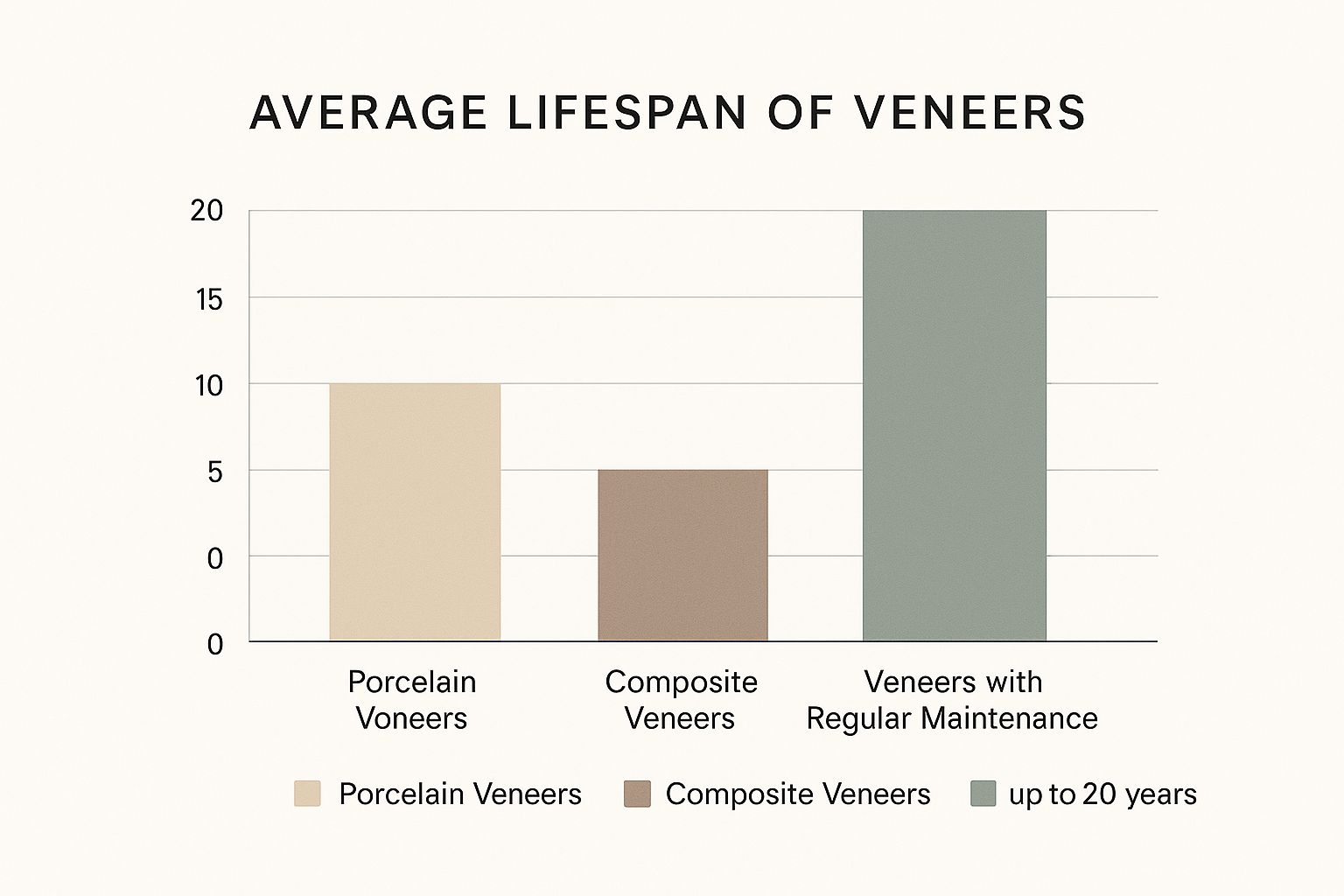
The key takeaway? Consistent care can make a huge difference. With the right habits, some patients enjoy their porcelain veneers for up to 20 years.
What to Remember About Veneer Longevity
To sum it all up, keep these three points in mind:
- The Material is Key: Porcelain is the champion of durability and aesthetics, giving you the longest-lasting results.
- Your Habits Matter: How you treat your veneers every day—along with regular dental visits—is the single biggest factor in maximizing their lifespan.
- They Aren't Forever: Veneers will eventually need to be replaced. But when that time comes, it's a routine and straightforward process with a team you trust.
Our team in Renton, WA, is here to provide the expert, compassionate care you need to keep your veneers looking fantastic for years.
Porcelain Versus Composite: A Deeper Look at Durability
When you're considering veneers, the single biggest decision you'll make is the material. This choice is the foundation for how long your new smile will last, so understanding the real-world differences between porcelain and composite resin is key to feeling confident in your investment.
The Two Main Players: Porcelain and Composite
Think of porcelain veneers like custom-made, fine ceramic artwork for your smile. They aren't made in the chair; instead, they are meticulously crafted in a dental lab from a block of high-grade, incredibly tough ceramic. This material is non-porous, making it exceptionally resistant to stains from coffee, tea, and red wine. The artistry involved allows them to mimic the subtle translucency of natural tooth enamel, delivering a stunningly realistic result.
On the other hand, composite resin veneers are more like a sculpture your dentist creates directly on your tooth. Using a tooth-colored, putty-like material, your dentist skillfully applies, shapes, and polishes it layer by layer, often in a single appointment. This approach is quicker and more budget-friendly, but the resin material itself is not as dense or durable as lab-fired porcelain.
How Your Choice Impacts Longevity
The core difference in how long your veneers will last comes down to the raw strength of the material and its ability to stand up to daily life.
Porcelain’s dense, glass-like composition makes it significantly tougher and far less likely to chip or stain compared to composite resin. It’s this built-in resilience that allows porcelain veneers to reliably last 10 to 15 years—sometimes even longer—while composite veneers typically need replacing within 5 to 7 years.
Ultimately, the best material depends entirely on your goals. For a major, long-term smile transformation, porcelain is the gold standard. If you’re exploring what a complete smile makeover could look like, understanding the full scope of cosmetic dentistry can help you see all the possibilities. For smaller fixes or more immediate results, composites remain a valuable and effective choice.
What Affects How Long Veneers Last?

Think of your new smile as a team effort. The longevity of your veneers is a partnership between your dentist's skilled work and the care you provide every single day. Several key factors come into play, determining whether your new smile lasts for just a few years or for decades.
It all starts with your dentist. A perfect, seamless bond between the veneer and your natural tooth is absolutely essential for long-term success. An experienced cosmetic dentist in Renton, WA, knows how to create this seal, which prevents bacteria from getting underneath and causing decay. A healthy foundation is the key.
Your Daily Routine Makes All the Difference
Once your veneers are beautifully in place, the baton is passed to you. How you care for them day-in and day-out has a massive impact on their durability. Great oral hygiene, for example, isn't just a suggestion—it's a requirement for a lasting smile.
- Brushing and Flossing: Gentle, consistent cleaning is your first line of defense. It prevents gum issues and decay from forming at the edges of the veneers, which is a common reason they might need to be replaced.
- Teeth Grinding (Bruxism): This is a major factor. Many people grind or clench their teeth without realizing it, especially while sleeping. This habit puts immense force on your veneers and can easily lead to chips and cracks over time.
- Your Diet and Habits: Veneers are tough, but they aren't invincible. Biting down on things like ice, hard candy, or even fingernails can cause them to fracture. Our advice is simple: treat them with the same care you would your natural teeth.
Making a few small adjustments to your habits can mean the difference between replacing your veneers early and enjoying a flawless smile for well over a decade. If you clench your jaw or grind your teeth, a custom nightguard is a simple, comfortable solution. You can learn more about protecting your smile by exploring our restorative dentistry options.
The Impressive Success Rate of Porcelain Veneers
It’s completely normal to ask, "Will my veneers actually last?" While we can talk about averages, the real story is in their success rate. When you see how rarely veneers fail with proper care, it gives you a whole new level of confidence in your decision.
Thinking about how long veneers last isn't just a guess; it's backed by years of clinical studies. Dentists have been tracking these restorations for a long time, and the results are consistently fantastic. This isn't just marketing—it's solid proof that a veneer smile is built for the long haul.
What the Numbers Say About Veneer Longevity
So, what does the research actually show? A landmark study followed veneers for over a decade, and the findings speak for themselves. This isn't a fluke; it's the standard of care we've come to expect.
- After 5 years, an incredible 96% of veneers are still going strong.
- By the 10 to 11-year mark, that number is still exceptionally high at 93%.
- Even after 15 to 16 years, a solid 73% of veneers are still in great shape. You can read more about the research behind these numbers on veneer longevity.
These aren't just statistics; they represent years of confident smiles. This data shows that veneers aren't a temporary patch but a durable, beautiful solution that you can enjoy for years and years.
Of course, veneers aren’t the right fit for every situation. If a tooth has significant damage or decay, it might need more support than a veneer can offer. In those cases, we would look at other restorations. You can learn more about those options in our guide to dental crowns and bridges. At Cedar Dental Group, our priority is always to recommend the treatment that sets you up for the best long-term oral health.
Protecting Your Investment: Simple Habits for Veneer Care

Once your beautiful new veneers are in place, you’ll be happy to know that keeping them pristine is surprisingly straightforward. Protecting your investment doesn't mean adopting some complicated, time-consuming routine. It’s really just about being mindful and consistent.
Think of caring for your veneers the same way you’d care for your natural teeth—only with a little extra attention. The goal is to keep them clean and avoid unnecessary stress, especially along the gum line where the veneer meets your tooth. This area is key.
Your Daily Veneer Care Checklist
Making these simple actions a part of your daily life is the secret to keeping that brilliant smile strong for years.
-
Brush Gently with the Right Tools: Steer clear of abrasive toothpastes, particularly those with harsh whitening ingredients or baking soda. Instead, choose a soft-bristled toothbrush and a non-abrasive gel toothpaste to clean effectively without scratching the polished porcelain surface.
-
Floss Every Single Day: This is non-negotiable. Carefully flossing around each veneered tooth clears away plaque from the veneer's edges. This not only protects your gums but also prevents decay from starting on the parts of your natural tooth that aren't covered.
-
Guard Against Grinding: If you know or suspect you grind your teeth at night—a common condition called bruxism—a custom-fit nightguard is essential. This simple device acts as a cushion, absorbing intense pressure that could otherwise chip, crack, or dislodge your veneers over time.
-
Be Smart About What You Bite: While porcelain is incredibly durable, it's not invincible. Try to avoid biting directly into extremely hard things like ice, jawbreakers, or nutshells with your front teeth. A good rule of thumb is: if it could chip your natural tooth, it can chip your veneer.
The most effective strategy for protecting your veneers is combining these daily habits with consistent professional oversight. Your regular dental check-ups are what truly ensure their long-term success.
These small habits are your first line of defense against damage and wear. When you pair them with professional maintenance, you give your smile the best chance to last for well over a decade. Our team is always here to help you maintain those beautiful results, starting with your regular exam and cleaning appointments.
How to Tell When It’s Time for a Replacement
Even though veneers are incredibly tough, they aren't a "forever" solution. Sooner or later, you'll likely need to have them replaced to keep your smile looking its best and, more importantly, to protect the health of your teeth underneath.
The good news is that veneers don’t suddenly fail overnight. They usually provide clear warning signs that they’re nearing the end of their lifespan. Learning to spot these clues puts you in control and makes the entire process feel much less daunting.
Key Signs Your Veneers Need an Update
It helps to think of your veneers like a high-quality investment. With great care, they last for years, but eventually, they show signs of wear. If you start to notice any of the following, it’s a good idea to schedule a visit with us.
- Visible Wear and Tear: This is the most straightforward sign. If you can see or feel chips, cracks, or deep scratches, it's time to consider a new veneer.
- Stains Along the Edges: Porcelain itself resists stains well, but the bonding material used to attach it can darken over the years. This often looks like a faint, dark line where the veneer meets the tooth.
- A Gap at the Gum Line: If you notice a small space opening up between the top of your veneer and your gum line, the veneer might be lifting. This can create a hiding spot for bacteria and lead to decay.
- Decay Underneath the Veneer: Sometimes, the issue isn't with the veneer at all. A cavity can develop on the natural tooth behind it, and we would need to remove the veneer to treat the decay properly.
Knowing how long veneers last is just one part of the equation; recognizing when they’ve served their purpose is the other. Seeing these signs isn't a dental emergency, but it is your cue to schedule a consultation at our Renton office. We can take a look and walk you through what comes next, with no pressure.
FAQs: Your Veneer Questions Answered
We know you have questions, and we believe in providing clear, straightforward answers. Here are some of the most common queries we hear from patients in Renton about veneer longevity.
1. How long do porcelain veneers last compared to composite?
Porcelain veneers are the most durable option, typically lasting 10 to 15 years or even longer with excellent care. Composite veneers have a shorter lifespan, usually around 5 to 7 years, before they may need replacement or repair.
2. Can a single chipped veneer be repaired?
It depends on the material. A small chip in a composite veneer can often be repaired by your dentist in the office. However, a porcelain veneer is a single, solid piece of ceramic; if it chips or cracks, the entire veneer must be replaced to restore its strength and appearance.
3. Will my dental insurance cover veneers?
In most cases, dental insurance considers veneers a cosmetic procedure and does not cover the cost. However, if a veneer is used to restore a tooth that is structurally damaged, your plan may offer partial coverage. We recommend checking with your provider, and our team at Cedar Dental Group is happy to discuss financing options.
4. What happens to the tooth underneath the veneer?
Your natural tooth remains alive and healthy underneath the veneer. We only remove a very thin layer of enamel (about 0.5 mm) to ensure a strong bond and seamless fit. This is why excellent oral hygiene is so crucial—you must protect the underlying tooth from decay to ensure your veneer's long-term success.
5. Does getting veneers hurt?
Patient comfort is our top priority at Cedar Dental Group. We use a local anesthetic to numb the area completely, so you should not feel any pain during the tooth preparation process. It's normal to feel some mild sensitivity for a few days afterward, but this is temporary and manageable.
Ready to improve your smile with a team that values your comfort and confidence? Contact Cedar Dental Group in Renton, WA, today to schedule your consultation. If you're new to our practice, you can find everything you need on our new patients page.
