

When you’re dealing with a damaged or missing tooth, understanding your options can feel overwhelming. At Cedar Dental Group, we believe in making dental care approachable and clear. The main difference between a crown and a bridge comes down to their purpose: a dental crown is a custom-fit cap designed to save and protect a single damaged tooth. In contrast, a dental bridge literally "bridges" a gap left by one or more missing teeth by using neighboring teeth for support.
Understanding Your Restorative Dentistry Options
If you have a tooth that's cracked, has a large filling, or just had a root canal, its structure is compromised. Protecting it is essential for comfortable chewing and your overall oral health. A missing tooth isn't just a cosmetic issue either; it can cause a domino effect of problems, like your other teeth shifting, a misaligned bite, and even bone loss.
We understand that dental procedures can cause anxiety, and our team is here to ensure you feel confident and informed about your choices. Both crowns and bridges are trusted solutions in restorative dentistry, and they have helped millions of people restore their smiles. These treatments are not only common but also highly successful. The global market for dental crowns and bridges is expected to reach $5.5 billion by 2032, a testament to how many people rely on these solutions (Source: GlobeNewswire).
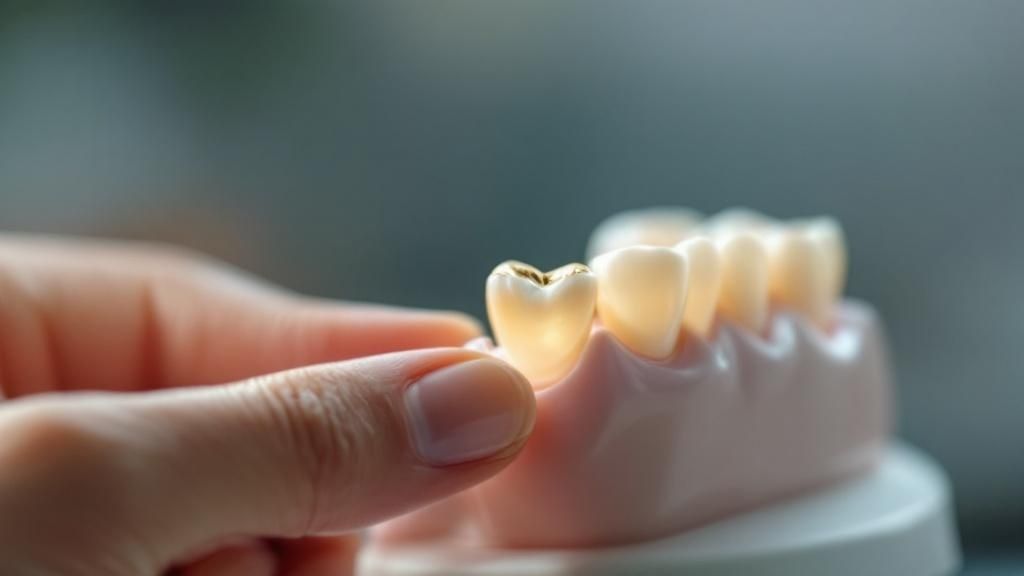
To make it even simpler, here is a quick side-by-side comparison.
Crowns vs. Bridges At a Glance
This table breaks down the core distinctions between these two go-to restorative treatments, focusing on patient benefits.
| Feature | Dental Crown | Dental Bridge |
|---|---|---|
| Purpose | To save and protect a single, existing but damaged tooth. | To fill a gap from one or more missing teeth. |
| How It's Made | A single, custom-molded cap for one tooth. | Two crowns fused to one or more false teeth. |
| Number of Teeth | Involves just one tooth. | Involves at least three teeth (two anchors, one replacement). |
| Common Scenarios | Cracked teeth, after a root canal, or to cover a large filling. | A space left by a lost tooth that needs to be filled. |
The best choice isn't about which one is "better" overall, but which is right for your smile. A crown fixes a problem with a tooth that’s still there, while a bridge solves the problem of a tooth that’s gone completely. In the next few sections, we'll dive deeper into each option so you know exactly what to expect.
Understanding the Role of a Dental Crown
Think of a dental crown as a custom-made cap that fits snugly over a single, damaged tooth. Its entire purpose is to restore that tooth to its original strength, shape, and appearance. It's the ideal solution when a tooth is too compromised for a simple filling but still has a healthy root structure. The crown covers the entire visible part of the tooth down to the gum line, acting like a protective shield.
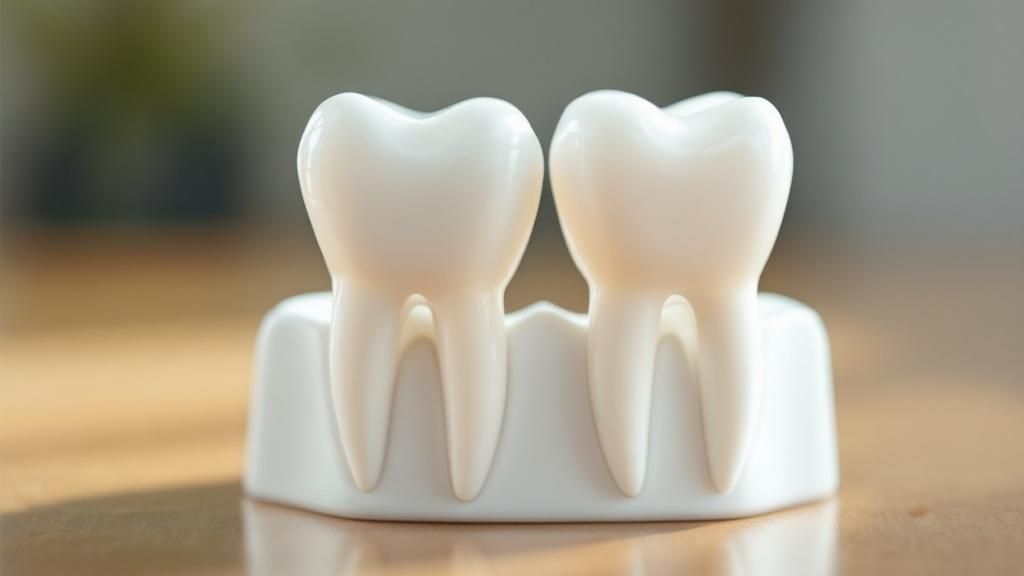
At Cedar Dental Group, we often recommend crowns to protect a weak tooth from fracturing, especially after a root canal has left it brittle. It’s also our go-to solution for restoring a badly broken tooth or one with a very large, old filling. By restoring the tooth, we restore your confidence in your bite.
Choosing the Right Material for Your Crown
Crowns aren’t one-size-fits-all. We work with you to choose the right material based on the tooth's location, your bite, and your aesthetic goals. We want you to be part of that decision so you feel confident in the outcome.
Here’s a quick rundown of the most common materials we use:
- Porcelain or Ceramic: This is the top choice for front teeth because we can perfectly match the color and translucency to your surrounding teeth, making it blend in seamlessly.
- Zirconia: Zirconia offers the best of both worlds. It’s a super-strong ceramic that can withstand heavy chewing forces on your molars while also providing a fantastic, natural look.
- Porcelain-Fused-to-Metal (PFM): A strong metal substructure provides incredible durability, while a porcelain layer on top gives it a tooth-like appearance. A potential downside is that a thin metal line can sometimes become visible at the gum line over time.
- Metal Alloys: Gold and other metal alloys offer unmatched durability and are very gentle on the opposing teeth they chew against. Due to their color, we almost always reserve them for molars in the back of the mouth.
A Note on Durability: A well-crafted and properly maintained dental crown is a long-term solution. With proper care, you can expect it to last 10 to 15 years or even longer, making it a fantastic investment in your oral health (Source: Cleveland Clinic).
What to Expect During Your Crown Procedure
We know that dental visits can be a source of anxiety, and our team at Cedar Dental Group makes your comfort our number one priority. Getting a crown is a straightforward process that typically takes two appointments at our Renton, WA office. We are here to support you every step of the way.
Your first visit is for preparation. We will gently reshape the tooth so the new crown can fit over it perfectly. Afterward, we take highly accurate digital impressions to send to our trusted dental lab, where your custom crown will be crafted. You won't leave with a prepped tooth exposed—we’ll place a temporary crown to keep it protected and comfortable.
When you return for your second appointment, we’ll remove the temporary crown and try in your final, permanent one. We take our time checking the fit, color, and how your bite feels before bonding it securely into place. You can find more details on our dedicated page: https://cedardentalgroup.com/dental-crowns-bridges/.
How a Dental Bridge Fills the Gap
While a crown saves a single damaged tooth, a dental bridge is used when one or more teeth are already missing. Its job is to "bridge" the gap, which is crucial for both appearance and function. When a tooth is missing, neighboring teeth can start to drift into the empty space, throwing off your bite and making chewing difficult.
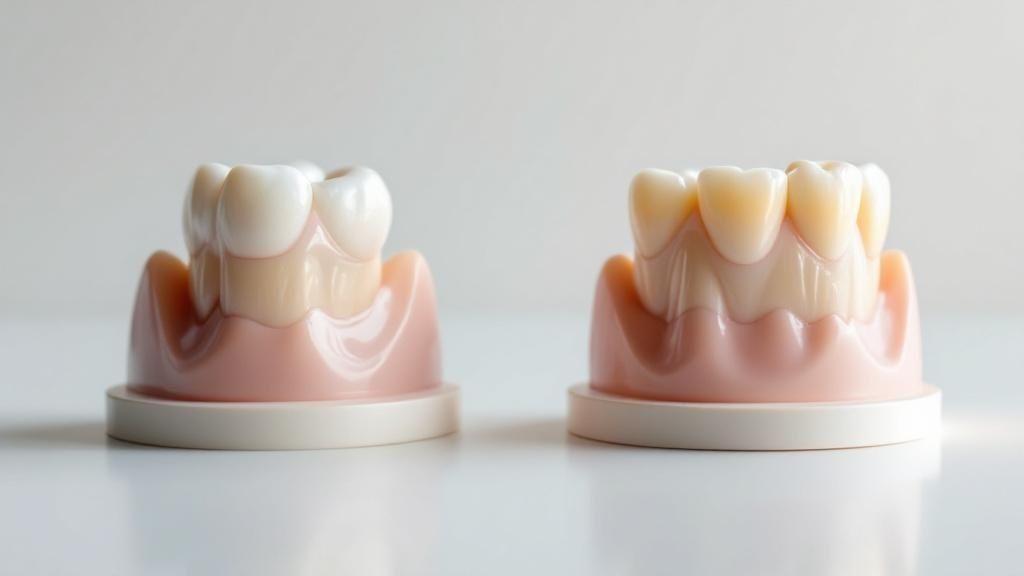
This can even lead to jaw problems down the road. A traditional dental bridge is a time-tested, reliable fix that prevents these issues. It consists of a pontic (the false tooth in the gap) and abutments (the healthy teeth on either side). We prepare these abutment teeth and fit them with dental crowns, creating strong anchors that hold the pontic securely in place.
Different Types of Dental Bridges
The traditional bridge is the most common option, but it’s not always the only one. At Cedar Dental Group, we assess your specific situation to determine which type of bridge will provide the most stable, natural-looking, and long-lasting result for your smile.
Beyond the traditional approach, a couple of other options exist:
- Cantilever Bridge: This is a unique solution for when you only have a healthy tooth on one side of the gap. The pontic is supported by a crown on just that single adjacent tooth. It’s not for every situation, but it works well in certain areas of the mouth.
- Maryland Bridge: This is a more conservative option. Instead of using full crowns, a Maryland bridge has a metal or porcelain framework that is bonded to the back of the neighboring teeth. Because it requires less alteration of the healthy abutment teeth, it’s a great choice for replacing front teeth where biting forces are much lighter.
Why Fill the Gap? A missing tooth is more than a cosmetic issue. It can trigger a cascade of dental problems, from shifting teeth and bite misalignment to a higher risk of gum disease. Restoring that space is a crucial part of our comprehensive https://cedardentalgroup.com/general-dentistry-services-renton/ and essential for long-term oral health.
The Patient Experience: Getting a Bridge
If you’ve had a crown, the process for a bridge will feel very similar, with the same focus on precision and patient comfort. It typically takes two visits to our Renton office to complete, and we’ll ensure you feel at ease throughout.
On your first visit, we will gently prepare the abutment teeth and take extremely accurate impressions. This is the blueprint our dental lab will use to craft your custom bridge. Before you leave, we'll place a temporary bridge to protect the area and ensure you can function comfortably.
When you come back, we’ll fit your permanent bridge. We take our time to make sure it aligns perfectly with your bite and blends seamlessly with your other teeth. Only after we’ve meticulously checked the fit and you’re happy with the feel do we permanently cement it into place, letting you eat, speak, and smile with renewed confidence.
A Head-to-Head Comparison of Crowns and Bridges
When deciding between a dental crown and a bridge, it all boils down to one simple question: are we trying to save a tooth or replace a tooth? A crown is a protective cap for a single, existing tooth that's been damaged. A bridge, on the other hand, steps in to fill the gap when a tooth is already gone.
This single difference influences every other aspect of the decision, from the procedure itself to the long-term effects on your other teeth. While both are fantastic, durable solutions, they are designed for two entirely different dental situations. Our goal is to find the one that best suits your needs.
Structural Purpose and Function
The primary job of a crown is to function like your natural tooth. It's a custom-made helmet for a tooth that's been cracked, has a large cavity, or is fragile after a root canal. It restores the tooth's original strength, shape, and function, preserving what you already have.
A dental bridge, however, is a prosthetic designed to replace something missing. Its purpose is to "bridge" the empty space using the teeth on either side as anchors. This keeps your other teeth from drifting out of place, lets you chew comfortably again, and helps maintain the natural contours of your face.
Impact on Adjacent Teeth
This is one of the biggest factors in the decision. A dental crown is a self-contained treatment; it only affects the one tooth that needs help. Your neighboring teeth are left completely untouched, which is always the ideal scenario. We want to preserve as much healthy tooth structure as possible.
A traditional bridge is a different story because it relies on the teeth next to the gap for support. To place a bridge, we must prepare those adjacent teeth—the "abutments"—by trimming them down and placing crowns on them to hold the new false tooth. This means we have to intentionally alter healthy teeth to solve the problem of the missing one.
Key Takeaway: The health of the teeth next to the gap is often the deciding factor. If those teeth are healthy with no fillings, a dental implant may be a better option to replace a missing tooth to avoid altering them. Our cosmetic dentistry services in Renton, WA are designed to find the most conservative and effective solution for you.
To make things clearer, let's break down the key factors patients weigh when considering these two common restorations.
Detailed Comparison: Crowns vs. Bridges
The table below offers a straightforward look at how these two options stack up against each other across several important criteria.
| Criteria | Dental Crown | Dental Bridge |
|---|---|---|
| Primary Use | To restore a single, damaged, or weak tooth. | To replace one or more missing teeth in a row. |
| Impact on Other Teeth | None. It only involves the tooth being restored. | Requires preparing (grinding down) healthy adjacent teeth to serve as anchors. |
| Longevity | 10-15+ years, often longer with good hygiene. | 5-15 years on average; depends heavily on the health of the anchor teeth. |
| Oral Hygiene | Relatively simple; brush and floss as normal. | More complex; requires special tools like floss threaders to clean underneath the bridge. |
| Procedure | 2 visits: preparation and temporary crown, then placement of the permanent crown. | 2 visits: preparation of anchor teeth and impressions, then placement of the final bridge. |
| Underlying Bone | Preserves the tooth root, which helps maintain jawbone stimulation. | Does not stimulate the jawbone in the gap, which can lead to bone loss over time. |
This comparison highlights that the "best" choice is entirely dependent on your specific dental situation—there's no one-size-fits-all answer.
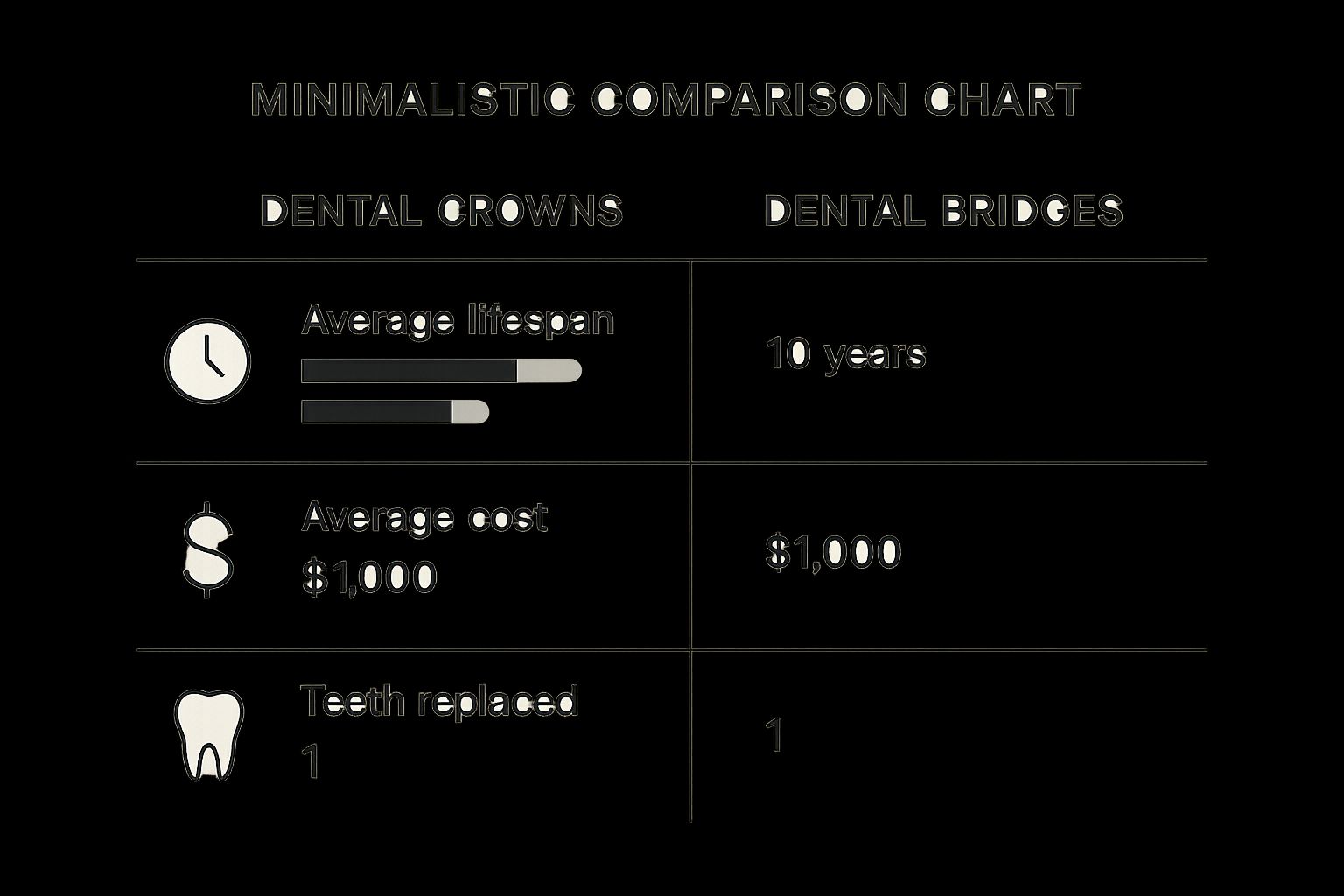
As you can see, a bridge can replace several teeth at once, but it may not last quite as long and can have a higher upfront cost because more teeth are involved. The demand for these treatments is massive and growing, with industry revenues projected to climb from US$ 4.55 billion in 2024 to an expected US$ 4.87 billion in 2025. This just goes to show how essential these restorations are in modern dentistry. You can discover more insights about this growing industry here.
How to Choose Between a Crown and a Bridge
Deciding on the right dental work can feel complicated, but it usually boils down to a simple question: are we trying to save a damaged tooth, or are we trying to replace a missing one? Your answer is the first step. At Cedar Dental Group, we cut through the jargon and walk you through real-world situations to make the choice clear, taking the anxiety out of building your treatment plan.
When a Dental Crown Is the Best Option
A dental crown is your best bet when the tooth's root is healthy and enough of the original tooth remains, but it’s too damaged or weak to function on its own. Think of it as a protective helmet for your tooth, restoring your ability to chew without worry.
Here are a few classic scenarios where a crown is the go-to solution:
- A Large Filling Has Failed: Over time, large fillings can create micro-cracks in a tooth. A crown holds the tooth together, preventing a fracture.
- After a Root Canal: This procedure saves the tooth but can leave it brittle. A crown restores its strength for chewing and protects it from breaking.
- A Severely Cracked or Worn Tooth: Whether from an injury or grinding, a crown rebuilds the tooth's original shape and function, stopping further damage.
In every case, the goal is preservation. We’re saving your natural tooth, which is always the ideal outcome in dentistry.
A Note on Materials: The material we use—whether it's porcelain, zirconia, or a metal alloy—is a huge factor. Modern materials like zirconia offer a fantastic combination of strength and natural looks. These advancements can influence whether a crown or bridge is the better choice for a specific spot in your mouth. You can discover more about these material advancements in dental restorations.
When a Dental Bridge Is the Right Fit
A dental bridge is the clear choice when you're missing one or more teeth completely and have strong, healthy teeth on both sides of the gap to serve as anchors. This solution is a cornerstone of cosmetic dentistry in Renton, WA.
Here’s a perfect example:
- You're missing a single tooth between two healthy ones: A traditional bridge "bridges" this gap. We place crowns on the two adjacent teeth, and these crowns support a new, artificial tooth (the pontic) in the middle. This restores your smile and bite and stops neighboring teeth from drifting.
That said, a bridge isn't the only way to fill a gap. In many situations, a dental implant might be a superior long-term solution. An implant replaces the missing tooth with a standalone post and crown, so we don't have to touch the healthy adjacent teeth at all.
The best decision always comes from a careful, personalized evaluation of your oral health. Having an expert you trust to guide you is invaluable. Our guide on how to choose a dentist offers practical tips for finding a professional who will work with you. A collaborative approach is key to feeling confident in your dental health journey.
Caring for Your New Crown or Bridge
Getting a new crown or bridge is a major step toward restoring your smile and confidence. Think of it as a long-term investment in your oral health. With the right routine, your new restoration can easily last 10-15 years, and sometimes even longer.
At Cedar Dental Group, we make sure you leave our office knowing exactly how to protect your new dental work. It’s not complicated, but it is crucial for keeping your restoration—and the teeth supporting it—in great shape for years to come.
Essential Hygiene for Dental Crowns
Caring for a dental crown is almost identical to caring for a natural tooth, but with extra attention on the margin. This is the fine line where the bottom edge of the crown meets your tooth, typically right at the gum line. This tiny seam is a magnet for plaque, which can lead to decay.
A few simple habits make all the difference:
- Mindful Brushing: Use a soft-bristled toothbrush and be thorough. Gently brush all around the crown, paying close attention to that all-important margin.
- Daily Flossing: Flossing is not optional. You need to clean the sides of the crown every day by sliding the floss down and wrapping it into a "C" shape against the tooth.
Specialized Care for Dental Bridges
A dental bridge is a bit different and needs some extra TLC. The artificial tooth, or pontic, sits right on top of your gums, creating a small space underneath where food and plaque can get trapped. Excellent hygiene is your best defense against problems.
Key Insight: The most common reason a bridge fails isn't a problem with the bridge itself. It's usually decay that forms in one of the anchor teeth holding it in place.
To clean under the bridge, you'll need a special tool like a floss threader. This looks like a small plastic needle and lets you thread floss through the gap to sweep away debris. Water flossers are also fantastic for flushing out that hard-to-reach spot. For a complete guide, you can find our detailed instructions on how to floss properly.
Frequently Asked Questions About Crowns and Bridges
It’s completely normal to have questions when considering dental work. Our goal at Cedar Dental Group is to provide clear, reassuring answers so you can feel confident in your decisions. Here are some of the most common questions we hear from our patients in Renton, WA.
1. How long do crowns and bridges last?
With proper care and regular dental check-ups, both crowns and bridges are designed to last a long time. You can typically expect them to last for 10 to 15 years, and often even longer. Your daily oral hygiene is the most important factor in their longevity.
2. Is getting a crown or bridge painful?
Patient comfort is our absolute top priority. We use local anesthetic to completely numb the area before we begin, so you shouldn’t feel any pain during the procedure. It's normal to feel some mild sensitivity for a few days afterward, but this is temporary and manageable.
3. What happens if the teeth next to my gap have fillings?
In many cases, you can still get a dental bridge. We will first carefully examine the neighboring teeth to ensure they and their existing fillings are strong enough to provide a stable foundation. If they are, a bridge remains an excellent option.
4. Are there alternatives to a dental bridge for a missing tooth?
Yes, the primary alternative is a dental implant. An implant is a standalone tooth replacement that includes a titanium post acting as a new root. The main benefit is that it doesn’t require us to alter the healthy teeth next to the gap, making it a more conservative treatment in many cases. Our dental implants in Renton are a popular and effective solution.
5. How do I clean underneath a dental bridge?
Cleaning under your bridge is essential for its success. You’ll need a special tool like a floss threader or an interdental brush to guide floss under the artificial tooth (pontic). This allows you to remove plaque and food particles that can get trapped against the gums.
Ready to restore your smile with confidence? Contact Cedar Dental Group in Renton, WA today to schedule your consultation. We are here to help you find the perfect solution for your needs.
