

It's a connection that surprises a lot of people: your gum health is a window into the health of your entire body. If you've ever wondered, "what health problems are linked to gum disease?", you might be shocked by the answer. The bacteria and inflammation from unhealthy gums don't just stay in your mouth—they can enter your bloodstream and may increase your risk for serious conditions like heart disease and diabetes.
Why Your Gums Are a Gateway to Your Overall Health

It’s easy to think of gum issues as just a mouth problem. A little blood in the sink after brushing might seem like something you can ignore or fix by brushing harder. But that’s a common misstep that misses the bigger picture—the crucial link between your mouth and your body.
Think of your gums as the gatekeepers for your bloodstream. When they're healthy, they form a tight seal that keeps harmful bacteria out. But when gum disease takes hold, that barrier weakens, creating tiny openings for bacteria to travel throughout your system.
The Mouth-Body Connection Explained
Years of research show strong links between periodontal (gum) disease and a number of major health conditions. The main problem is chronic inflammation. When your gums are constantly inflamed, it puts a low-grade but persistent strain on your entire immune system.
This isn't like the short-term swelling from a cut, which helps you heal. This is a constant, smoldering fire that can contribute to damage elsewhere in the body.
This ongoing inflammation is now seen as a major contributing factor in several serious health issues:
- Cardiovascular Disease: Bacteria from the mouth can travel to the arteries, potentially contributing to inflammation and plaque buildup that can lead to heart attack or stroke.
- Diabetes: Gum disease and diabetes have a two-way relationship. Gum disease can make blood sugar harder to control, while high blood sugar makes gum infections worse.
- Cognitive Decline: New studies are exploring the link between oral bacteria and inflammation in the brain, possibly increasing the risk of conditions like Alzheimer's.
- Adverse Pregnancy Outcomes: Research has associated active gum disease with a higher risk of premature birth and low birth weight.
This is why we at Cedar Dental Group are so passionate about gum health. Taking care of your gums isn't just about keeping your teeth—it's a fundamental part of staying healthy from head to toe.
At Cedar Dental Group, we believe that a healthy body starts with a healthy mouth. We partner with our patients to manage their gum health, viewing it as a cornerstone of their total well-being.
If you're in Renton and have noticed bleeding gums or other symptoms, it’s a sign to pay attention. A professional gum evaluation can give you clarity and help protect more than just your smile. This proactive mindset is the foundation of effective preventive dental care and is key to long-term wellness.
Understanding How Gum Disease Develops
To really grasp how your oral health can affect your entire body, we first need to look at what gum disease is and how it gets started. Think of your gums as the foundation holding your teeth securely in place. If that foundation becomes infected, it can allow problems to spread.
Gum disease isn't something that happens overnight. It's a progressive condition that starts out mild and can become seriously destructive if ignored.
Stage 1: Gingivitis
The first stage is gingivitis. This is the earliest, mildest form of gum disease, and it’s a direct response to plaque—that sticky, bacteria-filled film that builds up on your teeth. You might notice your gums look a bit puffy or red, and they may bleed when you brush or floss.
The good news? Gingivitis is completely reversible. At this point, the infection is still just on the surface of your gums. With a professional cleaning and good home care, you can typically get your gums back to perfect health.
Stage 2: Periodontitis
If gingivitis isn't treated, it can advance into a much more serious condition called periodontitis. The name itself means "inflammation around the tooth." At this stage, the infection has gone deeper, starting to destroy the bone and ligaments that anchor your teeth.
This process creates little pockets between your gums and teeth, which are perfect hiding spots for more bacteria. As the infection gets worse, the pockets get deeper, and you may start to experience:
- Receding Gums: Your gums pull away, making your teeth look longer.
- Persistent Bad Breath: A common sign of a deep infection.
- Loose Teeth: A major sign that the supporting bone is being lost.
- Pain While Chewing: Discomfort can set in as your teeth become unstable.
It's at this advanced stage that the risk to your overall health skyrockets. The deep pockets of infection essentially create an open door for harmful bacteria to enter your bloodstream. Being aware of the top warning signs of gum disease is key to stopping the progression before it gets out of hand.
The most important thing to remember is that bleeding gums, while common, are never normal. They're your body's early warning system. Listening to that signal can help you prevent irreversible damage and safeguard your total health.
Stages of Gum Disease At a Glance
Sometimes, seeing the two stages side-by-side makes the differences crystal clear. Here’s a quick breakdown to help you understand the progression from a mild warning to a serious health issue.
| Feature | Gingivitis (Early Stage) | Periodontitis (Advanced Stage) |
|---|---|---|
| Primary Symptom | Red, swollen gums that bleed easily | Gums pulling away from teeth, loose teeth, bone loss |
| Damage | Inflammation of the gums, no permanent damage | Permanent damage to bone and connective tissues |
| Reversibility | Completely reversible with proper care | Not reversible, but its progression can be managed |
| Treatment | Professional cleaning and improved home hygiene | Deep cleaning (scaling and root planing), sometimes surgery |
Understanding this progression is the first step toward taking control. A simple, painless evaluation here at Cedar Dental Group can tell you exactly where your gums stand and map out a plan to protect your health.
The Critical Link Between Gum Disease and Heart Health
Of all the health issues tied to gum disease, the connection to heart health gets the most attention from researchers. It can be surprising to hear that your gums could influence your risk for a heart attack or stroke, but the science behind this link is strong.
Think of an active gum infection as a constant, low-grade fire smoldering in your mouth. This fire releases waves of harmful bacteria and inflammatory signals into your bloodstream. These then travel everywhere, putting a quiet but persistent strain on your entire circulatory system.
How Oral Bacteria Can Impact Your Arteries
The core of the problem really boils down to one word: inflammation. When bacteria from infected gums find their way into your bloodstream, they can trigger inflammation far from your mouth, including the sensitive inner lining of your arteries.
This process is a key player in atherosclerosis, the medical term for the hardening of arteries. Bacteria act like tiny irritants that rough up the normally smooth surface of your blood vessels. Your body tries to patch these damaged spots, but the repair process can lead to the buildup of plaque, which chokes off blood flow.
This isn't just a guess; it's a connection backed by years of research. The takeaway is clear: getting gum inflammation under control is an important part of any heart-healthy lifestyle.
Looking after your gums is about so much more than just keeping your teeth. It’s about shutting down a major source of chronic inflammation that can have serious consequences for your heart.
The Numbers Tell a Serious Story
The statistics really drive home the reality of this risk. Did you know that having gum disease can significantly increase your chances of developing heart disease? According to the CDC, a staggering 47.2% of American adults over 30 have some form of gum disease (Source: CDC). Even more telling, some studies show that people with periodontal disease are up to twice as likely to have coronary artery disease as those with healthy gums (Source: American Academy of Periodontology).
This mouth-body connection is a central focus of modern dentistry. For a deeper look at the science, check out our article on the link between gum disease and chronic illness.
Protecting More Than Just Your Smile
Understanding this connection gives you the power to take meaningful action. When you treat gum disease, you aren't just saving your smile—you're actively reducing a major risk factor for cardiovascular problems.
Here’s a quick summary of how the gum-heart connection works:
- Bacteria Enter the Bloodstream: Harmful bacteria from deep gum pockets can slip into the bloodstream through inflamed gum tissue.
- Inflammation Spreads: Once in circulation, these bacteria provoke a body-wide inflammatory response that can contribute to plaque formation in arteries.
- Cardiovascular Risk Increases: This chronic, low-level inflammation is a well-established risk factor for heart disease, heart attacks, and strokes.
At Cedar Dental Group, this understanding of whole-body health shapes everything we do. Our team, which includes a board-certified periodontist, provides expert care that gets to the root cause of gum disease. If you’re in Renton and have any concerns, a periodontal evaluation is one of the most important steps you can take to protect both your smile and your heart.
How Gum Disease and Diabetes Affect Each Other
The link between gum disease and diabetes is a tough, two-way street where each condition can make the other worse. If you're living with diabetes, understanding this cycle is a game-changer for your health. Proactive gum care can become a powerful tool in your diabetes management plan.
When you have diabetes, high blood sugar affects your whole body, including your mouth. Your saliva can contain more sugar, which helps harmful bacteria thrive. This makes you far more likely to develop gum infections.
On top of that, diabetes can weaken your body's ability to fight infections. A minor gum problem that someone else might easily handle can quickly become much more severe for you. This is why people with diabetes face a significantly higher risk of advanced gum disease.
A Vicious Cycle of Inflammation
Here’s where it gets tricky: the connection flows in the other direction, too. An active gum infection is a constant source of low-grade inflammation. This can interfere with your body's ability to use insulin properly, a state known as insulin resistance. When your body is resistant to insulin, keeping your blood sugar in a healthy range becomes a real battle.
You can see how this creates a difficult cycle:
- High Blood Sugar: Feeds the bad bacteria in your mouth, increasing your risk of gum disease.
- Gum Disease Infection: Triggers chronic inflammation throughout your body.
- Chronic Inflammation: Worsens insulin resistance, making it harder to control blood sugar.
- Poor Blood Sugar Control: Fuels more gum infections, and the cycle repeats.
This dangerous partnership is backed by solid research. People with diabetes are more likely to have periodontal disease than people without diabetes (Source: National Institutes of Health). On the flip side, active gum disease can make managing diabetes more difficult.
Your Gums: A Key Part of Your Diabetes Care Plan
Breaking this cycle is essential for your long-term health. It all starts with a simple shift in mindset: your gum health isn't separate from your diabetes care—it's a critical piece of the puzzle. Taking charge of your oral health can make your blood sugar easier to manage.
Think of it this way: treating gum disease removes a major source of inflammation from your body. When you reduce that inflammation, you help your body respond better to insulin, which can lead to more stable blood sugar levels.
This is why we champion a whole-body approach at Cedar Dental Group. For our patients in Renton living with diabetes, a periodontal evaluation isn't just a dental cleaning; it's a vital part of your overall wellness strategy. Our team, which includes an on-staff board-certified periodontist, will work with you to create a personalized plan to get your gums healthy.
If you have diabetes, never ignore warning signs like bleeding, swollen, or tender gums. Getting these issues checked out promptly is about supporting your diabetes management and taking another powerful step toward better health.
Beyond the Obvious: Other Health Risks Linked to Gum Disease
The strong connections between gum health, heart disease, and diabetes are well known, but the story doesn't end there. The ripple effects of a chronic oral infection can travel throughout your entire body in some surprising ways. Your mouth isn’t separate from the rest of you—its health is deeply intertwined with your overall well-being.
The underlying problem is often the same. Harmful bacteria from infected gums sneak into your bloodstream, carrying inflammation with them. Let’s look at some of the other significant health issues that experts are now connecting to poor gum health.
Respiratory Infections
Your mouth is the front door to your respiratory system. If your gums are infected, you can inhale these tiny organisms directly into your lungs. This can lead to serious infections like pneumonia, especially for older adults or anyone with a weakened immune system.
Think of it this way: an unhealthy mouth is like a contaminated entryway. Every breath you take can pull those germs deeper into your body, potentially setting up an infection in your lungs.
Complications During Pregnancy
For expectant mothers, paying attention to gum health is critical. The hormonal shifts during pregnancy can make your gums extra sensitive and prone to swelling—a condition sometimes called "pregnancy gingivitis."
If that inflammation develops into periodontitis, it can create risks for the baby. Studies have found a link between active gum disease in pregnant women and a higher risk of:
- Premature birth (babies born before 37 weeks)
- Low birth weight (babies weighing less than 5.5 pounds at birth)
The theory is that the body-wide inflammation caused by gum disease can trigger labor too soon. Taking care of your gums is a simple, proactive step you can take to support a healthier pregnancy.
This diagram shows how interconnected gum disease and systemic health truly are, using the example of blood sugar control.
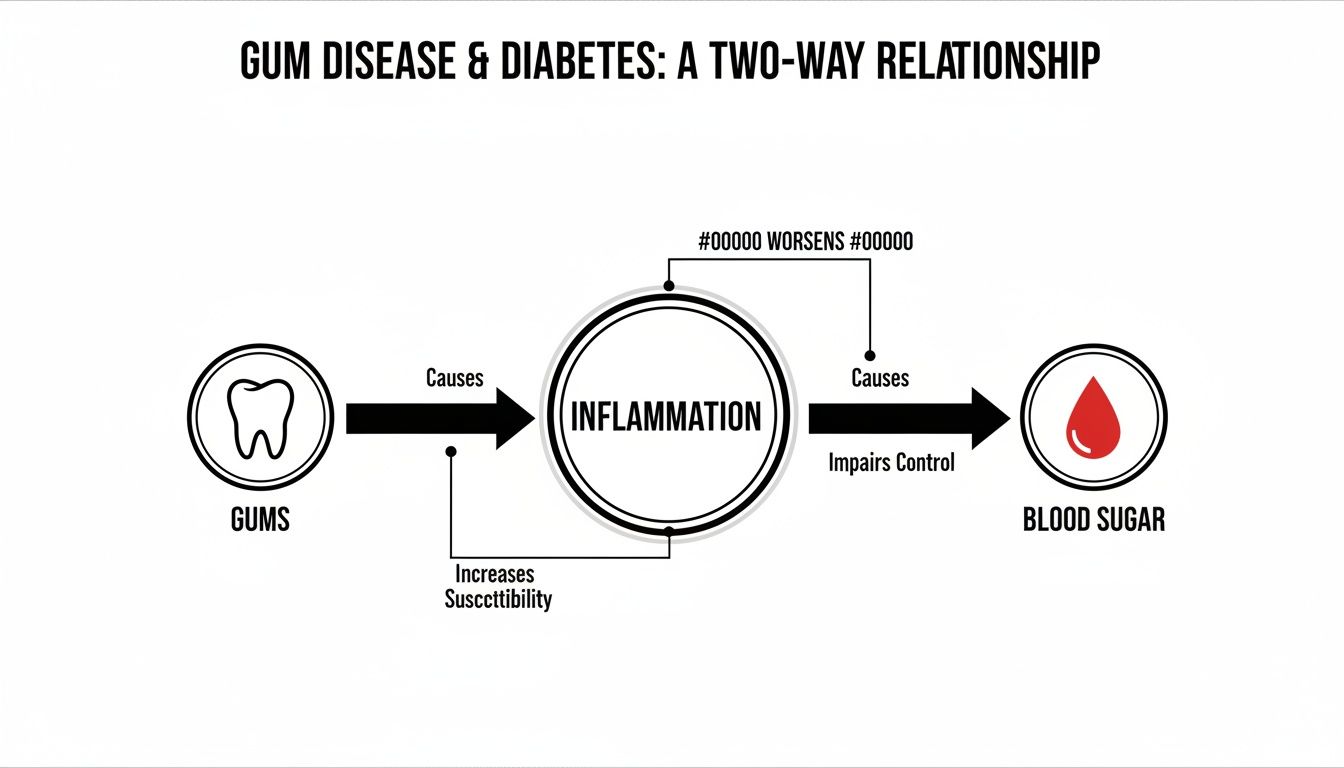
You can see how gum inflammation can make blood sugar harder to manage, and high blood sugar can, in turn, make gum disease worse. It’s a vicious cycle that highlights just how important it is to manage both.
Cognitive Decline and Dementia
Perhaps one of the most sobering areas of new research is the potential link between gum disease and brain health. Scientists are investigating how oral bacteria might travel from the mouth to the brain. The concern is that these bacteria could contribute to the kind of inflammation and plaque build-up seen in Alzheimer's disease.
Some studies suggest that people with periodontitis may have a higher risk of cognitive decline (Source: Journal of the American Geriatrics Society). This emerging connection underscores why maintaining good oral hygiene throughout your life is so important—it could be one more way to protect your brain as you age. Often, persistent bad breath is an early warning sign of a bacterial problem. You can learn more about how to spot the hidden connection between bad breath and gum disease in our other article.
If you live in the Renton area and are worried about your gum health, the team at Cedar Dental Group is here to help. Our board-certified periodontist can give you a thorough evaluation and discuss your personal risk factors to protect your whole-body health for years to come.
How to Protect Your Health with Professional Gum Care

Understanding the risks of gum disease is one thing, but taking action is what truly protects you. A common mistake people make when their gums bleed is to just brush harder. Unfortunately, that doesn't solve the real problem: an infection hiding deep below the gumline.
The only effective way to stop gum disease is with professional care that gets to the root of the issue. At Cedar Dental Group, our goal is to help you achieve lasting oral and systemic wellness.
What to Do: Get a Periodontal Evaluation
The journey back to healthy gums starts with a gentle, thorough periodontal evaluation. This isn't just a quick look around; it's a detailed assessment to get a clear picture of what's happening with your gums and the bone that supports your teeth.
During this evaluation, here's what our team will do:
- Measure Gum Pockets: We’ll gently measure the tiny spaces between your gums and teeth. Deeper pockets are often a sign of active gum disease.
- Check for Inflammation: We look for the classic signs of infection, such as redness, swelling, or bleeding.
- Assess Gum Recession: We'll examine your gumline to see if the tissue has started to pull away from the teeth.
- Evaluate Bone Health: Using digital X-rays, we can see the condition of the bone that holds your teeth in place.
This process is straightforward and gives us the information we need to map out a precise plan for getting your gums healthy again.
How Cedar Dental Group Helps
If we do find signs of gum disease, our immediate goal is to halt the infection and prevent any further damage. One of the most effective non-surgical treatments we use is scaling and root planing. You can think of it as a deep cleaning that goes where your toothbrush and floss simply can't.
Scaling and root planing is a cornerstone of periodontal therapy. It carefully removes tartar and bacteria from below the gumline and smooths the tooth roots to help your gums reattach.
Your comfort is our top priority during this procedure. We'll make sure the area is completely numb so you can relax while we carefully clean the infected areas. For anyone in Renton worried about their gum health, this treatment is often the key to stopping the disease and reducing inflammation throughout your body. You can learn more in our detailed guide to periodontal disease treatment.
Here at Cedar Dental Group, we’re proud to have a board-certified periodontist on our team. This means you get an expert level of care right in our office, from professionals who are your partners in protecting your whole-body health with a gentle, patient-first approach.
Your Questions Answered: Gum Disease & Your Health
It's completely normal to have questions about how the health of your gums can affect the rest of your body. We hear these same concerns from our patients all the time. Let’s walk through some of the most common ones with clear, practical answers.
Can Gum Disease Actually Be Reversed?
This is a great question, and the answer depends on the stage. Gingivitis, which is the very first stage, is absolutely reversible. A professional cleaning followed by consistent brushing and flossing at home is usually all it takes to get things back to normal.
Once the disease progresses to periodontitis, however, any bone that has been lost is gone for good. At that point, our focus shifts to management—we work to halt the disease to prevent further damage and protect your long-term health.
What Are the First Signs I Should Look Out For?
The earliest clues are often subtle. You might notice your gums look a bit redder or puffier than usual. A classic sign is seeing a little pink in the sink when you spit after brushing or flossing—healthy gums shouldn't bleed. Persistent bad breath can also be an early warning.
How Often Should I Get My Gums Checked?
A periodontal screening is a standard part of every regular dental check-up. For most adults, that means coming in every six months. However, if you have risk factors—like diabetes or a family history of gum disease—we might recommend more frequent visits to keep a closer eye on things.
If My Gums Don’t Hurt, Does That Mean I’m in the Clear?
Unfortunately, no. Gum disease is often called a “silent” disease because it can cause significant damage long before you ever feel any pain. That's why we stress paying attention to visual signs like bleeding or swelling. The only way to know for sure that your gums are healthy is to have them professionally evaluated.
How Does a Dentist Actually Treat Gum Disease?
Our approach is always based on how advanced the disease is. For early-stage gingivitis, a thorough professional cleaning is often enough. For periodontitis, the first line of defense is usually a deep cleaning procedure known as scaling and root planing to remove hardened plaque and bacteria from below the gum line.
In Renton and worried about your gum health? The team at Cedar Dental Group is here to offer expert, compassionate care. Contact us today to schedule your consultation and learn more about your risk factors. It’s a simple step that protects both your smile and your overall wellness. Learn more at https://cedardentalgroup.com.
