

Hearing you need “periodontal disease treatment” can sound complicated, but it’s just a personalized plan your dentist creates to stop gum disease. The goal is to get your gums healthy and prevent future problems.
The main goal is always to remove harmful bacteria from below your gumline. This allows your gums to heal and form a tight seal around your teeth again. We almost always start with non-surgical treatments. We only suggest surgery if it’s truly necessary.
Your Path to Healthier Gums
Getting a gum disease diagnosis can feel a little scary. That’s completely normal. The first step to feeling in control is understanding what comes next. Think of your gums as the foundation of your smile. If the foundation is weak, everything is at risk.
Your treatment plan is a partnership between you and your dental team. Here at Cedar Dental Group, we are committed to starting with the least invasive treatment that will work for your specific needs. We are here to support you with compassion and expertise.
Understanding the Stages and Solutions
Periodontal disease happens in stages. It usually starts as gingivitis, which is the earliest and most reversible phase. You might notice your gums are red, puffy, or bleed when you brush. If left untreated, it can turn into periodontitis. This is a more serious stage where the infection damages the bone and tissues holding your teeth in place.
This visual guide can help you see the bigger picture, from risk factors to different treatments.
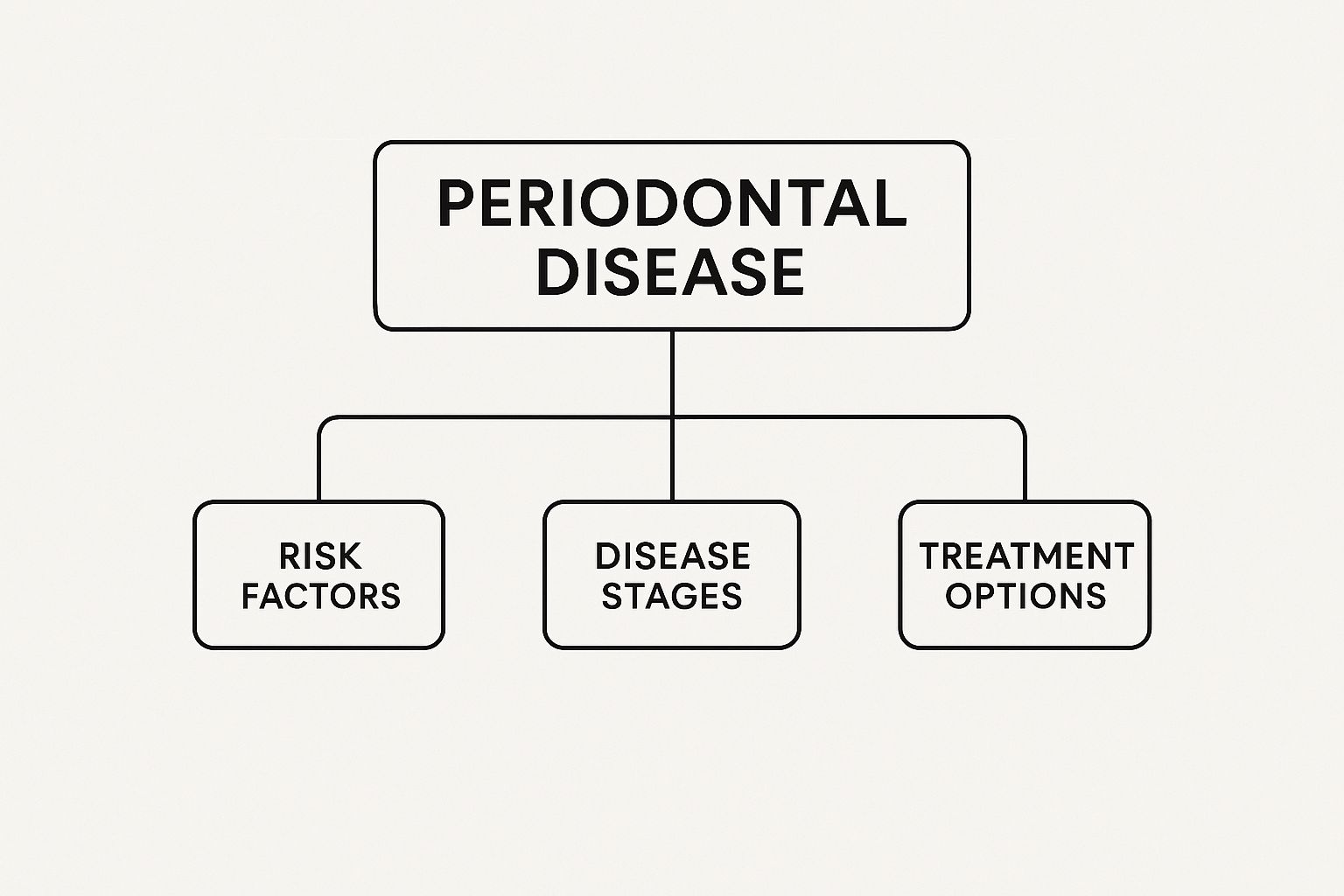
Knowing the stage of the disease and your own risk factors helps us choose the best path forward for you.
To give you a clear overview, here’s a look at the main treatment categories and what they do.
Periodontal Disease Treatment at a Glance
This table gives a quick snapshot of the journey to restore your gum health.
| Treatment Category | Primary Goal | Common Procedures |
|---|---|---|
| Non-Surgical | To remove plaque and tartar from below the gumline and smooth root surfaces. | Scaling and Root Planing (Deep Cleaning), Antibiotics. |
| Surgical | To access and clean deep pockets, regenerate lost bone and tissue, and reshape gums. | Flap Surgery (Pocket Reduction), Bone Grafts, Soft Tissue Grafts. |
| Maintenance | To prevent the disease from returning and maintain long-term gum health. | Regular professional cleanings, diligent at-home care. |
This structured approach helps us tackle the problem at its source and set you up for lasting success.
Why Treatment Is So Important
Ignoring gum disease can lead to serious problems that go far beyond your mouth. It’s a huge global health issue. In fact, a 2021 report estimated there were over 1 billion cases worldwide, showing just how common this condition is. (Source: The Lancet)
Taking care of your gums isn’t just about saving your smile—it’s about protecting your overall health.
Your treatment journey is all about stopping the disease, repairing the damage, and creating a healthy mouth that’s easy for you to care for at home. Ultimately, our goal is to save your natural teeth and give you back your confidence.
By working together, we can get the infection under control and protect your smile for years to come. You can learn more about our specific approach to gum disease treatment and how we create these plans for our patients in Renton, WA. We want to give you clear, reassuring information so you can feel confident moving forward.
Non-Surgical Treatments: Your First Line of Defense
When we diagnose gum disease, we almost always start with non-surgical treatment. For early to moderate stages, this is often all you need to get the infection under control. Think of it as the first step—we have to clear out the existing problem before we can move forward.
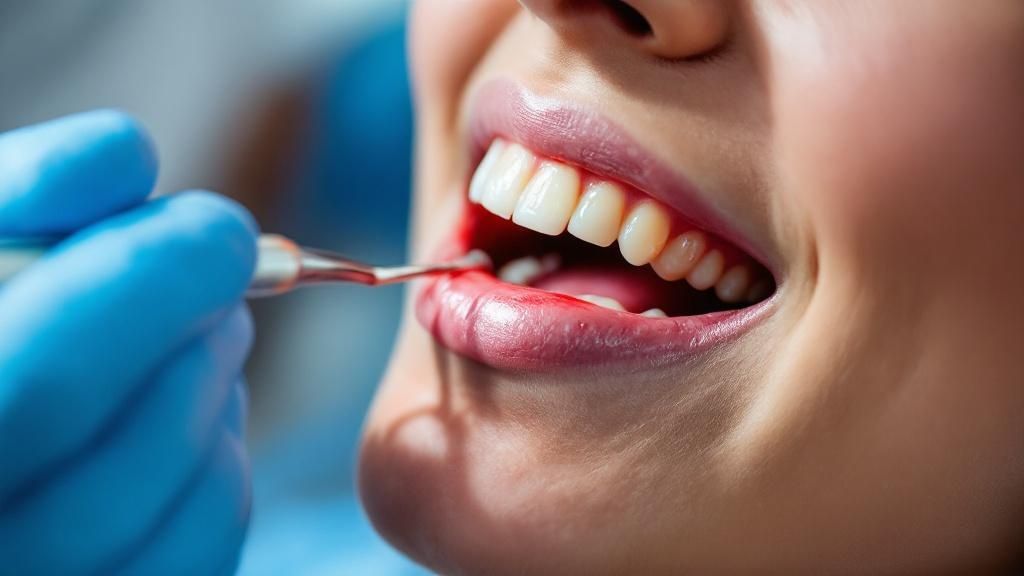
The main goal is simple: a deep, thorough cleaning of your tooth surfaces, both above and below the gumline. By getting rid of the bacteria-filled plaque and tartar, we give your gums the clean slate they need to heal and tighten back up against your teeth.
What is Scaling and Root Planing?
The main procedure for this is called scaling and root planing, but most people know it as a “deep cleaning.” It’s important to know this is much more than your regular six-month cleaning.
A regular cleaning polishes the parts of your teeth you can see. A deep cleaning goes further. It cleans the parts of the tooth below the gumline, where the harmful bacteria have gathered. We must clean this hidden surface to make the whole tooth stable again.
This procedure has two parts:
- Scaling: We carefully remove all the plaque and hardened tartar from your teeth. We pay special attention to the deep “pockets” that have formed between your teeth and gums.
- Root Planing: After the tartar is gone, we smooth out the surfaces of the tooth roots. This is a key step because bacteria love to stick to rough spots. Smoothing the roots makes it much harder for bacteria to attach and restart the infection.
Together, these two actions create a healthy environment where your gums can finally start to heal.
What to Expect During a Deep Cleaning
We understand that the term “deep cleaning” can sound a little intimidating. Your comfort is our absolute priority. We want to assure you this is a very common procedure designed to help you, not cause pain.
To make sure you’re comfortable, we’ll numb the area with a local anesthetic before we start. You won’t feel any discomfort during the procedure. Our team at Cedar Dental Group is known for being gentle and thorough, so you can relax knowing you’re in good hands.
The purpose of scaling and root planing is to stop gum disease in its tracks. It’s a very effective way to prevent the infection from getting worse and hopefully avoid the need for surgery.
The Role of Targeted Antibiotics
Sometimes, a deep cleaning needs a little help. In certain cases, we might use targeted antibiotics to give your gums an extra healing boost.
This isn’t like taking a pill for a sinus infection. Instead, we often apply the antibiotic medication directly into the gum pockets right after your cleaning. This delivers medicine exactly where it’s needed to knock out any stubborn bacteria left behind.
Once your non-surgical treatment is finished, the healing begins. You’ll notice less swelling and your gums will form a healthier, tighter seal around your teeth. This is a huge step toward getting your oral health back on track.
When It’s Time for Surgical Periodontal Treatment
We always start with the most conservative approach to treating gum disease. But sometimes, the condition has advanced, and a deep cleaning just can’t reach deep enough to solve the problem. That’s when we need to talk about surgical options.
Hearing the word “surgery” can be a little unnerving, and we get it. We promise to walk you through this process with total transparency, making sure you feel confident and comfortable. Surgical treatment is simply the most effective next step when the pockets between your gums and teeth are too deep to clean properly.
The goal of these procedures is to get your gums back to a healthy state. We want to stop the disease, save your teeth, and make it much easier for you to keep everything clean at home.
Why Surgery Might Be Recommended
Imagine the small space between your gums and teeth. In a healthy mouth, this “pocket” is shallow, usually between 1 and 3 millimeters deep. When gum disease takes hold, bacteria cause swelling, and these pockets get deeper.
Once those pockets reach 5 millimeters or more, it becomes nearly impossible to clean them with non-surgical tools. This is the point where surgery becomes the best path forward to restore your gum health.
Surgical periodontal treatment isn’t about being aggressive; it’s about being effective. It allows us to directly access and clean the deep, hidden areas of infection, giving your gums the best possible chance to heal.
Flap Surgery: A Deeper Clean for Your Roots
One of the most common procedures we perform is flap surgery, sometimes called pocket reduction surgery. The name sounds technical, but the idea is simple.
We gently lift the gum tissue back, creating a small “flap.” This gives us a direct view of the root surfaces and the bone underneath. It lets us get in there and carefully remove all the hardened tartar that has been hiding in those deep pockets.
Once everything is clean, we will smooth any damaged bone and then snugly secure the gum tissue back into place. As you heal, your gums will tighten around your teeth, making the pockets much shallower and easier for you to clean at home.
Bone Grafts: Rebuilding the Foundation
Periodontal disease doesn’t just affect the gums; it can destroy the bone that holds your teeth in place. If there’s been significant bone loss, we might recommend a bone graft to help rebuild that critical foundation.
A bone graft places new material in the area where bone has disappeared. This encourages your body to grow its own new bone over time. This procedure is great for:
- Stabilizing teeth that have become loose.
- Creating a solid base for future dental work, like an implant.
- Restoring the natural shape of your jawline.
Soft Tissue Grafts: Restoring Your Gumline
Gum recession is another common problem caused by periodontal disease. This is when the gum tissue pulls away from the teeth, leaving the roots exposed. A soft tissue graft is the solution for this.
We take a tiny piece of tissue—often from the roof of your mouth or a donor source—and carefully place it over the exposed root. This brings your gumline back to a healthy position, protects the root from decay, and gives you a more confident smile.
These surgical treatments are powerful tools in our fight against advanced gum disease. They lay the groundwork for long-term health and help you keep your own teeth for a lifetime. After these procedures, most people find their oral health is not just stabilized but truly transformed, which is the ultimate goal of any [restorative dentistry](https://cedardentalgroup.com/what-is-restorative- dentistry/).
Advanced Therapies to Regenerate and Restore Your Gums
When periodontal disease has taken a serious toll on your gums and jawbone, it’s easy to think the damage is permanent. But modern dentistry has come a long way. We can now actively rebuild the very tissues you’ve lost by working with your body’s own healing power.

At Cedar Dental Group, we are passionate about using these innovative techniques to give our patients the best possible results. These restorative procedures can often be the difference between losing a tooth and saving it.
Guided Tissue Regeneration
One challenge with bone loss is that your soft gum tissue grows much faster than bone. When bone is gone, the gums rush in to fill the space, blocking the slower-growing bone from regrowing. Guided Tissue Regeneration (GTR) is a smart way to solve this.
During the procedure, after we’ve cleaned out the infection, we place a tiny, biocompatible membrane between the gum tissue and the area of bone loss. This little barrier acts as a shield. It holds the gums back and creates a protected space where new bone can grow.
This remarkable process gives your body the time and space it needs to rebuild the natural structures that hold your teeth firmly in place.
Bone Grafting to Rebuild Your Foundation
Significant bone loss is one of the most serious results of advanced periodontitis. A bone graft is a procedure designed to rebuild this critical framework, creating the strong support your teeth depend on.
We introduce special grafting material into the areas where bone has dissolved. This material acts as a scaffold, encouraging your body to grow new, healthy bone cells over time.
A solid jawbone is crucial. Rebuilding it can:
- Stabilize loose teeth by reinforcing their support system.
- Stop further bone loss and prevent changes in your facial structure.
- Create a sturdy foundation for future procedures, like our specialized dental implants in Renton, WA, which need a certain amount of bone to be successful.
These advanced therapies represent a major shift in how we manage severe gum disease. Instead of just removing damaged tissue, we can now actively regenerate and restore it, giving you a second chance at a truly healthy smile.
The field is always moving forward. The global market for periodontal disease treatment shows the growing need for better solutions and the new technologies we use to help our patients.
Keeping Your Gums Healthy For The Long Haul
Finishing your periodontal treatment is a huge accomplishment. Think of it as hitting the reset button on your gum health. But the long-term success of everything we’ve done is a partnership. Our work in the office gets you back to a healthy starting point. Your daily habits at home protect that investment in your smile.
This next phase is all about maintenance. Let’s walk through the simple, practical steps you can take to keep your gums strong.
Your New At-Home Care Playbook
After treatment, your daily oral hygiene routine is more important than ever. Your gums are healed, but the bacteria that caused the problem can come back. Our goal is to be gentle but very thorough to keep them away.
Here’s what your daily routine should look like:
- Brush Twice a Day, The Right Way: Use a soft-bristled toothbrush. Angle the brush at 45 degrees where your teeth meet your gums. Use short, gentle strokes to clean effectively without causing irritation.
- Daily Flossing is Non-Negotiable: This is the most important thing you can do to maintain your gum health. Flossing is the only way to remove plaque from between your teeth and just under the gumline.
- Add a Water Flosser: Many of our patients love using a water flosser with traditional string floss. It’s a great tool, especially if you have dental bridges, implants, or deeper gum pockets that are tricky to clean.
Learning the proper flossing technique can make all the difference. To help you master this, we put together a guide on how to floss properly that breaks it down step-by-step.
Why Your Follow-Up Appointments Are So Important
A common question is, “Do I still need to come in for regular cleanings?” The answer is a definite yes, but these visits will be a bit different. From now on, you’ll be on a periodontal maintenance schedule.
These aren’t just standard cleanings. They are specialized appointments designed specifically to stop gum disease from coming back.
Think of periodontal maintenance as proactive protection for your health. It lets us keep a close eye on your gums and catch any small issues long before they become big problems again.
We’ll typically schedule these visits every three to four months. During your appointment, we will:
- Measure Your Gum Pockets: We’ll gently check the pocket depths around each tooth to make sure everything is staying stable.
- Perform a Deep Cleaning: We’ll clean your teeth thoroughly, both above and below the gumline, removing any new plaque or tartar.
- Review Your Home Care: We’ll chat about how things are going at home and offer personalized tips to help you.
Periodontal disease is a chronic condition, like diabetes. It can’t be “cured,” but it can be managed with consistent care. Sticking to your maintenance schedule is your best defense and the key to enjoying a healthy smile for years to come.
Answering Your Questions About Periodontal Treatment
Starting any new treatment can bring up a lot of questions. The more you know, the more confident you’ll feel. We’ve put together some of the questions we hear most often to give you clear, straightforward answers.
Is Periodontal Disease Treatment Painful?
We know this is a big concern, and your comfort is our #1 priority. Most periodontal treatments, including deep cleanings, are done after we’ve used a local anesthetic to numb the area. You shouldn’t feel discomfort during the procedure. After the anesthetic wears off, you may feel some mild soreness, which is easily managed with over-the-counter pain relievers.
Can Periodontal Disease Be Completely Cured?
Periodontal disease is a chronic condition, similar to diabetes. While there isn’t a one-time “cure,” it can be successfully managed for life. Through professional treatment and your commitment to great home care, we can stop the disease from causing more damage and keep your gums healthy. Regular maintenance appointments are crucial to prevent the disease from coming back.
How Much Does Periodontal Treatment Cost?
The cost of treatment depends on your specific situation, including the severity of the disease and which procedures are needed. Non-surgical treatments like scaling and root planing are less expensive than surgical procedures. Many dental insurance plans cover periodontal therapy, and our team will help you understand and maximize your benefits.
How Long Is Recovery After Periodontal Surgery?
Recovery time varies, but most patients feel ready to return to their usual activities within a day or two. You can expect some mild swelling and discomfort for a few days as your body heals. We will provide you with specific post-op instructions to ensure your recovery is as smooth and quick as possible.
Do I Really Need Treatment If My Gums Don’t Hurt?
Yes, absolutely. One of the tricky things about periodontal disease is that it’s often painless in its early stages. You might see warning signs like red or bleeding gums, but pain isn’t always one of them. Waiting until you feel pain often means the disease has already become more serious. Catching and treating it early is the best way to protect your teeth and overall health. If you do have sudden dental pain, please see our guide to emergency dental services in Renton, WA.
It’s Time to Take That First Step
If you’ve noticed your gums are bleeding or you have bad breath that won’t go away, it’s easy to ignore it. But ignoring the early signs of gum disease can lead to serious problems that affect your whole body. We now know there are clear links to health issues like heart disease and diabetes. (Source: American Academy of Periodontology)
The good news? You’re not alone. Nearly 42% of American adults over 30 have some form of periodontal disease. (Source: Centers for Disease Control and Prevention) This has pushed the dental community to develop incredibly effective treatments. If you’re curious about new innovations, you can explore the data behind the periodontal therapeutics market on datamintelligence.com.
The hardest part is often just picking up the phone. But making that first appointment is a huge step toward protecting your smile and your overall health for years to come.
Here at Cedar Dental Group, we get it. We’ve created a practice where you can feel comfortable and supported, never judged. Our entire focus is on helping you get your oral health back on solid ground.
Ready to feel confident about your smile again? Contact Cedar Dental Group in Renton, WA today to schedule your consultation. You can book your appointment by visiting us at https://cedardentalgroup.com.
