

When a dental disaster strikes—that sudden, blinding pain or the sickening crunch of a broken tooth—your first thought might be to rush to the nearest emergency room. Before you grab your keys, let us share some advice: the best first step is almost always calling your dentist. It's a simple move that can save you time, money, and frustration, getting you the right care from the start.
Most advice you find online simply tells you to call a dentist or go to the ER. But what do you do in the meantime? This guide fills that gap by giving you practical, step-by-step help for handling a dental crisis the moment it happens.
Why Your Dentist Is Your Best First Call
We get it. In a moment of panic, a hospital seems like the obvious answer. But while the ER is a lifesaver for major medical trauma, it's often a costly and ineffective detour for dental problems. Knowing the difference between a general medical crisis and a true dental emergency is key to making the right call for your health and your wallet.
The ER Can't Fix the Real Problem
Hospital emergency rooms are staffed with brilliant medical professionals, but they aren’t set up for dental care. They don't have the specialized tools or training to treat the root cause of your tooth problem.
They can help manage the immediate symptoms, like pain and swelling. You might get a prescription for painkillers or antibiotics. But you'll walk out with the very same cracked tooth or abscess that brought you there, which means the pain will come back.
The Financial Cost of the Wrong Choice
Going to the ER for a dental issue isn't just ineffective; it's incredibly expensive. The system is billed for major medical events, and the price tag reflects that.
The average ER visit for a dental issue costs $2,437—a huge expense for care that doesn't actually fix the underlying problem. (Source: American Dental Association). Patients often leave with a huge bill but no actual solution.
At Cedar Dental Group, we focus on providing targeted, definitive care that resolves the issue, often for a fraction of what an ER visit would cost.
Getting the Right Care, Right Away
When you call our office at Cedar Dental Group, you're connected with a team that can fix the problem for good. We specialize in dental emergencies and have the tools and treatment options ready to go.
Here’s why a dedicated dental practice is always the better choice:
- Specialized Expertise: Our dentists have the specific training to accurately diagnose and treat everything from a deep abscess to a knocked-out tooth.
- Proper Equipment: We have digital X-rays, restorative materials, and surgical instruments on-site—things you won't find in an ER.
- Dedicated Time: We deliberately keep appointment slots open every single day for urgent situations. Our patients in Renton don't have to suffer while they wait.
- Long-Term Solutions: We don't just put a bandage on the pain. We perform the root canal or repair the tooth to prevent it from becoming an emergency again.
If you live in or near Renton, WA, think of our number as your first line of defense. A quick call to us bypasses the high costs and long waits of the ER, getting you straight to the compassionate, expert care that will bring you lasting relief.
Dental Crisis Triage: ER vs. Urgent Dental Care
It can be tough to decide where to go when you're in pain. This quick reference table breaks down the key differences between a hospital ER and a dedicated urgent dental care provider like Cedar Dental Group.
| Concern | Hospital ER | Urgent Dental Care (Cedar Dental Group) |
|---|---|---|
| Services Offered | Manages pain, swelling, and bleeding; prescribes antibiotics or painkillers. | Provides comprehensive dental treatment, including extractions, root canals, fillings, and repairs. |
| Expertise | General medical doctors and nurses. No dental specialists on staff. | Experienced dentists and dental assistants specializing in oral health. |
| Equipment | Medical equipment for general emergencies. No dental tools (drills, X-rays, etc.). | Fully equipped with specialized dental technology for accurate diagnosis and treatment. |
| Outcome | Temporary relief of symptoms. You'll be referred to a dentist for definitive care. | A permanent solution to the underlying dental problem, often in a single visit. |
| Cost | Typically very high due to emergency room facility fees. | Significantly more affordable, with transparent pricing and focus on targeted dental care. |
| Best For | Uncontrolled bleeding, facial swelling affecting breathing, or jaw fracture from trauma. | Knocked-out teeth, severe toothaches, abscesses, broken crowns, or lost fillings. |
Ultimately, the ER is for life-threatening medical conditions. For nearly every other dental crisis, an urgent care dentist is faster, more affordable, and will actually fix the problem.
How to Handle Common Tooth Crises at Home
When a dental emergency hits, that first jolt of panic is completely normal. But what you do in the next few moments can make a big difference. Take a deep breath, pause, and let's walk through how to take control of the situation until you can get to our office.
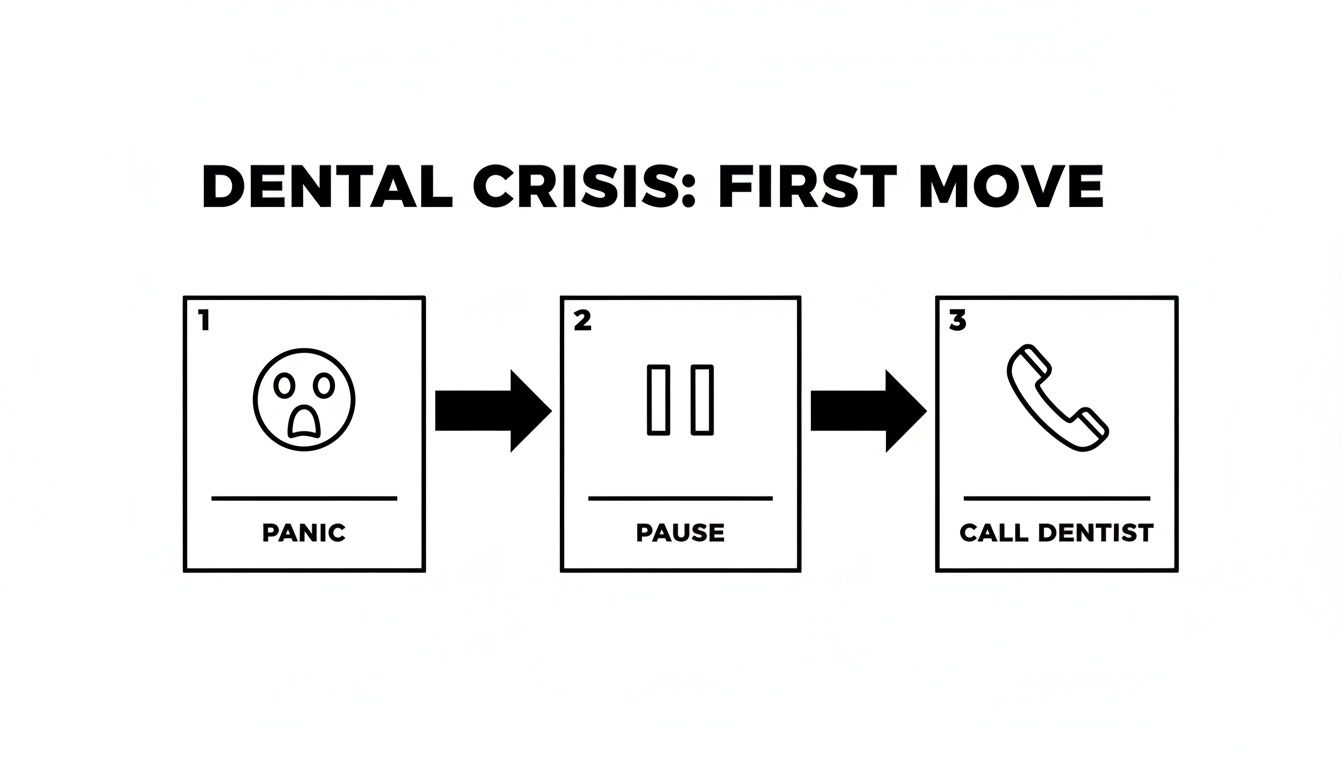
This simple flow is key. It shifts you from shock to a clear plan of action: calling your dentist. That's the core of handling any tooth crisis effectively.
What To Do With a Knocked-Out Tooth
This is one of the most time-sensitive dental emergencies. Acting fast and doing the right things dramatically improves the odds of saving the tooth. You have a window of just 30 to 60 minutes for the best chance of successful reimplantation.
First, find the tooth. When you pick it up, be very careful to only touch the crown—the white, chewing part. Never touch the root. If it's dirty, gently rinse it with milk or water for a few seconds. Do not scrub it or use soap.
The best place for the tooth is back in its socket. If you can, gently guide it into place and hold it there by biting down on clean gauze. If that's not possible, place it in a small container of milk or tuck it safely inside your cheek. Then call our Renton office immediately for an emergency appointment.
How to Manage a Severe Toothache
A deep, throbbing toothache is your body's alarm system that something is seriously wrong, like an infection or deep decay. While you're waiting to see us, there are a few things you can do to manage the pain.
A warm salt water rinse (one teaspoon of salt in a glass of water) is a great first step. It helps reduce swelling and keeps the area clean. You can also gently floss around the sore tooth to remove any trapped food. A cold compress on the outside of your cheek for 20 minutes at a time can also bring relief.
Expert Tip: Never put aspirin or another painkiller directly on the gums near the aching tooth. This is an old myth that can cause a painful chemical burn on your gum tissue.
If you notice facial swelling, a fever, or a small, pimple-like bump on your gums, you may have an abscess. This is a serious infection that requires immediate dental care. For more information, read our guide on what to do before you call the dentist for a tooth emergency.
First Aid for a Broken or Chipped Tooth
The sharp crack of a breaking tooth can be startling. Your first priority is to protect your mouth from sharp edges and save any pieces you can find.
Gently rinse your mouth with warm water. Keep any broken fragments in a small container with milk or a bit of your own saliva. If a sharp edge is cutting your tongue or cheek, you can temporarily cover it with a piece of sugar-free gum or some dental wax.
A major break that causes intense pain likely means the tooth's nerve is exposed—that's an urgent situation. A minor chip is less critical, but you should still book an appointment soon to prevent further damage. Sometimes even a small chip is a sign of a bigger problem, and you can learn more about what causes tooth sensitivity in our article.
When You Lose a Filling or a Crown
Losing a filling or crown exposes the sensitive, vulnerable parts of your tooth. It can be uncomfortable and leaves the tooth open to more damage.
If a crown falls off, find it and put it in a safe place. You can try to temporarily slip it back on with dental cement from the pharmacy. Never use household glues like superglue—they are toxic and can cause serious problems. For a lost filling, temporary dental cement can be used to cover the hole until you can see us.
These are just temporary measures. Call Cedar Dental Group as soon as it happens so we can get you in for a professional repair.
Smart Pain Management While You Wait
Dental pain can make it impossible to think, work, or sleep. While you're waiting to see us, getting that discomfort under control is your top priority. It's about using smart, safe strategies to get temporary relief.
The Right Way to Use Over-the-Counter Pain Relief
Your first instinct might be to reach for a pain reliever. For most dental pain, ibuprofen is your best bet. It is a non-steroidal anti-inflammatory drug (NSAID), so it reduces the swelling that often causes pressure and throbbing.
Always follow the dosage instructions on the bottle. Taking more than recommended won't speed up relief, but it can be dangerous.
Home Remedies That Genuinely Help
You don't always have to look in the medicine cabinet. There are a few time-tested home remedies that can provide effective, short-term relief.
Here are a few you can trust:
- Cold Compress: Wrap an ice pack in a light towel and hold it against your cheek for 15-20 minutes at a time. The cold helps reduce swelling and numb the area.
- Clove Oil: Clove oil contains a natural anesthetic. Put a tiny drop on a cotton ball and gently apply it to the aching tooth. Try to keep it off your gums and tongue, as it can cause irritation.
- Salt Water Rinse: Dissolve a teaspoon of salt in a glass of warm water and swish it around your mouth for 30 seconds. It acts as a natural antiseptic and can soothe inflamed gums.
A Critical Warning: What Not to Do for a Toothache
Knowing what to avoid is just as important as knowing what to do. The most dangerous myth is placing an aspirin directly on your tooth or gum.
Never do this. Aspirin is an acid. Placing it directly on your soft gum tissue will cause a painful chemical burn. Pain medication should always be swallowed as directed.
These home-care tips are your bridge to professional treatment—they provide comfort, but they don't solve the root cause. For a more detailed look at handling tooth discomfort, our guide on comprehensive tooth pain relief is a great resource.
Building Your Own Dental First-Aid Kit
Being prepared can turn a dental crisis into a manageable hiccup. Having a dedicated dental first-aid kit on hand is one of the smartest things you can do.
Putting one together is simple. The point is to have the right tools ready to address common issues long enough to get to a professional.
Your Essential Dental Emergency Kit Checklist
A well-stocked kit focuses on controlling bleeding, preserving a lost tooth, protecting damaged areas, and managing pain. Here’s what every home should have.
| Item | Purpose in a Dental Emergency | Pro Tip |
|---|---|---|
| Sterile Gauze Pads | Essential for applying gentle pressure to stop bleeding from a lip, gum, or tooth socket. | Roll a piece up and bite down on it to maintain steady pressure. |
| Small, Sealed Container | A non-negotiable for a knocked-out tooth. It keeps the tooth safe and allows you to submerge it in milk or saliva. | A small, clean pill bottle or a contact lens case can work in a pinch. |
| Ibuprofen | Your go-to for managing pain and reducing inflammation. Never place aspirin directly on the gums. | Stick to anti-inflammatory pain relievers unless a doctor advises otherwise. |
| Dental Wax | A lifesaver for a chipped tooth. It creates a soft barrier over sharp edges, protecting your tongue and cheeks. | Warm it slightly between your fingers to make it easier to apply. |
| Temporary Filling Material | Found at most drugstores, it can cover a lost filling, protecting the sensitive inner tooth. | This is strictly a temporary fix to get you out of pain until you can see us. |
| Our Contact Info | A waterproof card with our office name, address, and phone number. | In a moment of panic, you won't want to search for our number. Have it right in the kit. |
Keep Your Kit Where You'll Need It
Once assembled, the location of your kit is critical. We recommend having a few kits in key places:
- In your home: The bathroom cabinet or with your main first-aid supplies is a great spot.
- In your car: A dental emergency can happen anywhere. A kit in the glove compartment is a smart move.
- In your luggage: When you travel, pack a smaller, travel-sized version.
For more information on what constitutes an emergency, you can learn more about our emergency dental care services in Renton.
Knowing When to Call Your Dentist Immediately
At-home first aid is just a bridge to get you to professional care. The most important part of handling a tooth crisis is knowing when to pick up the phone. Certain signs are your body’s way of screaming that a problem has become a true dental emergency.
Ignoring these red flags almost always leads to more severe complications, more pain, and more complex treatments.
Red Flags That Demand an Immediate Call
If you're dealing with any of the following, it’s time to contact our Renton office right away. These aren't "wait-and-see" symptoms.
- Severe, Unrelenting Pain: This is pain that over-the-counter medication can't touch. It often points to a deep infection or an exposed nerve.
- Facial Swelling: Any puffiness in your cheek, jaw, or around your eye is a major warning sign that an infection is spreading.
- A Pimple-Like Bump on Your Gum: This small, often painful bump is a sign that a serious abscess is trying to drain.
- A High Fever with Tooth Pain: A fever with a toothache is a clear signal that an infection has become more serious and requires professional help.
- Uncontrolled Bleeding: If bleeding doesn't stop after applying firm, steady pressure for 10-15 minutes, you need to be seen right away.
To understand why a dental-specific provider is best, check out resources that explain the difference between general medical facilities like this guide on Urgent Care vs Emergency Room.
Why Calling Cedar Dental Group Is Your Best Move
When you're facing one of these red flags, a trip to the hospital usually ends with a prescription for painkillers and instructions to "see a dentist"—after you've waited for hours and received a massive bill.
At Cedar Dental Group, we do things differently. We solve the root of the problem. We intentionally reserve appointment slots every day just for urgent cases like yours. For our community in Renton, this means you can bypass the long waits and runaround you'd get at the ER.
Instead of temporary relief, you get definitive care from a team you trust. We can perform the root canal, repair the broken tooth, or treat the abscess right here. Our approach brings you lasting relief while saving you significant time, stress, and money. Learn more about our approach to emergency dental services here.
Your Dental Emergency Questions Answered
When a dental crisis hits, it’s natural to feel overwhelmed. To cut through the confusion, we've put together straightforward answers to the questions we hear most often from our Renton patients.
What counts as a true dental emergency?
A true dental emergency is any situation that needs immediate attention to relieve severe pain, stop bleeding, save a tooth, or deal with a serious infection. Key examples include a knocked-out tooth, bleeding that won't stop, or a swollen face from an abscess. A lost filling is urgent, but may not require a middle-of-the-night call. When in doubt, call our office.
Can I use superglue to fix a broken crown?
No, absolutely do not use superglue or any other household adhesive. These products contain toxic chemicals that can poison the tooth's nerve, burn your gums, and make it impossible for a dentist to fix the crown properly. Put the crown in a safe container and call us so we can re-cement it professionally.
How do I know if my toothache is a serious infection?
A severe, throbbing toothache that keeps you awake is a huge red flag. Other signs of a serious infection, or abscess, include swelling in your face or jaw, a pimple-like bump on your gum, a fever, or a persistent bad taste in your mouth. An abscess is a serious medical condition that needs immediate care.
Is it okay to use leftover antibiotics for a toothache?
No, never self-prescribe old antibiotics. Different infections require specific medications, and taking the wrong one can be ineffective or harmful. It also contributes to antibiotic resistance. A dentist must diagnose the issue to prescribe the right treatment. We understand cost can be a concern, and guides on how to negotiate medical bills without insurance can offer helpful strategies.
What if my dental emergency happens after hours?
Dental emergencies don’t keep business hours. At Cedar Dental Group, we have a system for after-hours care. Your first step, regardless of the time, should be to call our main office number. Our voicemail will give you clear instructions on how to reach our on-call staff. We are here to get you the care you need, whenever you need us.
Ready to get the compassionate, expert dental care you deserve? Contact Cedar Dental Group in Renton, WA, today to schedule your consultation. https://cedardentalgroup.com
