

For most people, a dental check-up is all about looking for cavities and getting a good cleaning. But what if the most important thing we check has less to do with your teeth and more to do with your heart? New data shows why healthy gums could be your health lifeline this year, playing a key role in protecting your entire body from serious illness.
The Surprising Link Between Your Gums and Your Heart

For a long time, many saw gum care as just about looks—a way to keep breath fresh and smiles bright. That entire view is changing, and fast. Patients no longer see gum disease as just a cosmetic issue. It is now a whole-body health priority.
A New Understanding of Whole-Body Health
Medical research has found a powerful connection between what happens in your mouth and the health of your entire body. We call this the oral-systemic link.
Think of your mouth as a gateway to the rest of your body. When it's full of harmful bacteria that cause gum disease, that gateway is left open for trouble to spread.
And this isn't a small problem. New data shows that untreated periodontitis (the advanced form of gum disease) raises heart attack risk by around 30%. It also increases stroke risk by 2.5 times (Source: American Heart Association). Patients and doctors are realizing that ignoring these connections is not an option for long-term health.
Why Renton Patients Are Taking Notice
Here in Renton, WA, health-conscious patients are asking more questions about the link between gum health and heart risk. They understand that proactive care is about preventing serious health scares before they ever start.
This change in awareness puts gum health right where it belongs: as a critical part of your overall wellness plan. You can learn more about what health problems are linked to gum disease right here on our site.
At Cedar Dental Group, we are ready with answers and expert care. We believe an informed patient is an empowered one. Our goal is to help you see the urgency and value of taking care of your gums—improving both your oral and overall wellness.
Understanding How Gum Disease Quietly Develops
Gum disease is sneaky. It doesn't appear overnight with a flashing red light. It is a slow problem that often starts without any pain, making it easy to ignore until it becomes serious. It all begins with something we deal with every day: dental plaque.
Plaque is that sticky, clear film of bacteria that is always on your teeth. When you eat, the bacteria in plaque feed on sugars, producing acids that attack your tooth enamel. But the real damage starts at your gumline.
If you don't remove that plaque with regular brushing and flossing, it hardens into a tough deposit called tartar. You can't brush tartar off at home—only a dental professional can remove it. To learn more, check out our guide on what dental plaque is.
The First Warning Stage: Gingivitis
The first stage of gum disease is called gingivitis. This is when plaque and tartar buildup start to irritate your gums, causing inflammation. Think of it as your body's early warning system.
The signs are often small, but they are there if you know what to look for:
- Red, Swollen Gums: Your gums might look puffier than normal or have a deeper red color.
- Bleeding When You Brush: Seeing pink in the sink is a big red flag. Healthy gums should not bleed from basic cleaning.
- A Little Tenderness: They might just feel a bit sore when you touch them.
The great news about gingivitis is that it is 100% reversible. A professional cleaning here at Cedar Dental Group, along with good home care, can get your gums back to perfect health. But if you ignore these signs, the problem gets worse.
When Gingivitis Becomes Periodontitis
If gingivitis is not treated, it can turn into periodontitis. This is the advanced stage where the trouble really starts, and the connection to your overall health becomes clear. The name "periodontitis" means "inflammation around the tooth."
At this point, the inflammation is no longer just on the surface. Your gums start to pull away from your teeth, creating small openings called "pockets." These pockets become a safe place for bacteria, too deep for your toothbrush to reach.
The Silent Damage of Periodontitis
As these pockets get deeper, the bacteria grow below the gumline. Your immune system fights the infection, but the battle itself is destructive. The mix of bacterial toxins and your body's own response begins to destroy the bone that holds your teeth in place.
It's like the foundation of a house slowly falling apart. That is what is happening to the support system for your teeth, often without much pain until the damage is severe.
The results of untreated periodontitis can be serious:
- Constant bad breath that won’t go away
- Pain when you chew
- Teeth that feel loose or start to shift
- And finally, tooth loss
This is not just a dental issue anymore. As the gums break down, they create an open door, letting harmful oral bacteria slip into your bloodstream and travel throughout your body.
How Does a Problem in Your Gums Affect Your Whole Body?
You might wonder how a gum infection could cause trouble for your heart or lungs. It all comes down to a direct path that researchers call the oral-systemic link. Think of it as a highway for inflammation that starts in your mouth and has exits to every other part of your body.
When your gums are healthy, they create a tight seal around your teeth. This acts as a guard to keep harmful bacteria out of your bloodstream. But when gum disease starts, that barrier breaks down, creating tiny openings in the gum tissue.
This breakdown is like leaving a fortress gate wide open. It gives harmful oral bacteria a free pass to escape the mouth and enter your circulatory system. Once in the bloodstream, they can travel anywhere—your heart, your brain, your lungs, and even your joints.
The Inflammation Highway in Action
Once these bacteria are on the move, they can set off a chain reaction of inflammation far from where they started. Your body's immune system goes on high alert to fight these invaders. The problem is, this constant, low-level alarm can damage healthy tissues over time.
This is how health issues that seem unrelated become connected. The fire that started in your gums can spread to other systems in your body.
- Cardiovascular Disease: Bacteria from your mouth can attach to fatty plaques in your heart's arteries. This can lead to hardened arteries and increase your risk of a heart attack.
- Stroke: The same inflammation can make blood clots more likely to form. If a clot travels to the brain, it can cause a stroke.
- Diabetes: Inflammation from gum disease can make it harder for your body to control blood sugar levels, which complicates diabetes management.
- Respiratory Health: It is also possible to breathe in these oral bacteria, which can lead to lung infections like pneumonia.
This diagram shows how simple plaque buildup can lead to gingivitis, the stage where this whole inflammatory process begins.
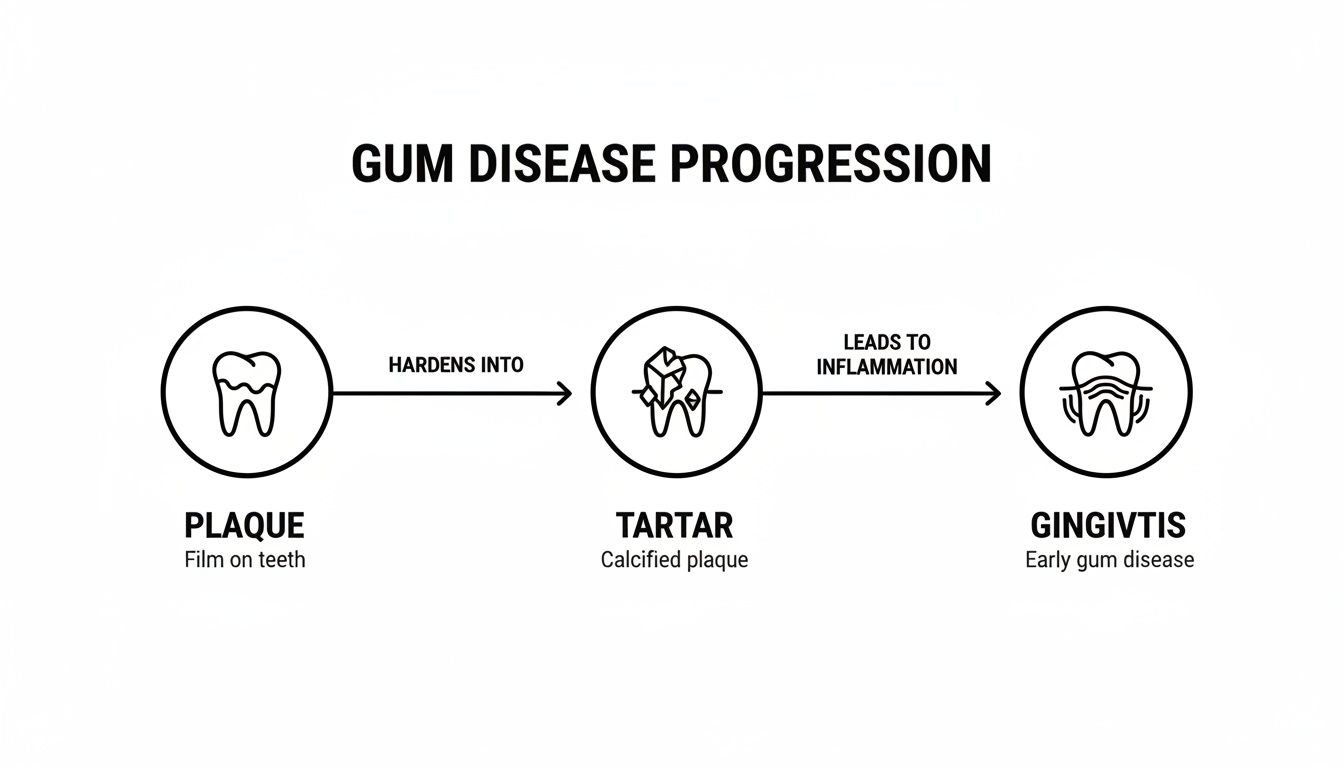
As you can see, what starts as a film of bacteria can become a serious gateway for body-wide health problems.
Why Proactive Gum Care Is More Urgent Than Ever
This oral-systemic connection is a growing public health concern. As more people in Renton and across the country understand this link, the demand for proactive gum care is rising. Patients now see periodontal therapy as the essential medical care it is.
Dental providers who overlook these medical links risk losing trust with health-conscious patients. People are no longer willing to take a chance with their gum health. You can read more about the link between gum disease and chronic illness on our blog to explore these connections more.
At Cedar Dental Group, we are passionate about helping our Renton patients understand these important connections. We offer more than just dental treatments; we provide education around oral-systemic health. With periodontal therapy guided by our board-certified specialist, we help you close the gate on inflammation and protect your entire body.
Spotting the Early Warning Signs of Gum Disease
Your body has its own alarm system, and your gums are a key part of it. The tricky thing about gum disease is that it often starts quietly. Learning to spot the first small hints is your best defense.
One of the first things people notice is a little pink in the sink when they brush or floss. This is a big one. Healthy gums are tough and shouldn't bleed from simple daily cleaning. If they do, it's a clear signal that inflammation has started.
Look for These Telltale Clues
Beyond bleeding, a few other changes can tell you something is wrong. Keep an eye out for gums that look red, swollen, or feel tender. Healthy gums should be a calm, pale pink and fit snugly around your teeth.
Another common sign is bad breath that just won't go away. If you have a bad taste or smell that stays even after you've brushed, it could be a sign of the bacteria that cause gum disease.
When the Signs Get More Serious
If early gum disease (gingivitis) is not treated, it can become a much more serious stage called periodontitis. At this point, the signs are harder to ignore.
You might start to feel a new sensitivity in your teeth. This often happens when your gums pull back, or recede, from the teeth. This exposes the root surfaces, which are much more sensitive.
You might also see your gums receding, making your teeth look longer. This is a sign that the underlying bone is being damaged. In advanced stages, you may even notice that your teeth feel loose. We take a deeper dive into these symptoms in our guide on the top warning signs of gum disease.
Are You at a Higher Risk?
Plaque is the main cause of gum disease, but some things can increase your risk. Knowing if you have any of these risk factors means you can be extra careful.
- Smoking or Tobacco Use: This is one of the biggest risk factors. It weakens your immune system and makes it harder for your gums to heal.
- Genetics: Some people are just more likely to develop gum problems due to their genes.
- Diabetes: Uncontrolled blood sugar can make gum infections worse, and a serious gum infection can make it harder to control blood sugar.
- Stress: Long-term stress makes it harder for your body to fight infections, including in your mouth.
Catching these signs and knowing your risks is your best first step. When you spot them, you know it’s time to team up with a professional to get things back on track.
A Proactive Plan for Healthy Gums and a Healthier Body

Knowing the risks is one thing, but taking action is what keeps you safe. Let's build a proactive plan that turns your healthy gums into a lifeline for your overall health. This plan combines simple daily habits with expert care from a dedicated dental team.
Your Daily At-Home Care Routine
A good at-home routine is the foundation of preventing gum disease. The goal is simple: be consistent with brushing and flossing to break up plaque before it can harden into tartar.
To get the most out of your efforts, focus on these key habits:
- Brush Twice a Day: Always use a soft-bristled toothbrush. Hold the brush at a 45-degree angle to your gumline and use gentle, circular motions.
- Don't Forget to Floss: Flossing is the only way to clean the tight spaces between your teeth and just under the gumline.
- Consider a Mouthrinse: Adding an antimicrobial mouthwash to your routine can help reduce bacteria and plaque.
These small daily actions are more powerful than you might think. They are your personal commitment to protecting the gateway to your bloodstream.
The Essential Role of Professional Dental Care
While your home care is critical, it is only one half of the partnership. Professional cleanings at Cedar Dental Group are where we step in to remove the stubborn, hardened tartar that brushing can't get rid of.
During a routine check-up, our hygienists will give your teeth a thorough cleaning. This visit is also our chance to screen for early warning signs of trouble that you might not see on your own.
Periodontal diseases affect more than 1 billion people globally (Source: The Lancet). This statistic highlights a global health crisis that makes your proactive care more important than ever. Your twice-yearly cleanings are a crucial medical appointment that helps manage inflammation and protect your whole body.
When You Need More Than a Routine Cleaning
If we find signs that gum disease has moved beyond gingivitis, we have gentle and effective treatments. This is where periodontal therapy, guided by our specialist, comes into play. One of the most common treatments is scaling and root planing.
- Scaling: We carefully remove all the plaque and tartar from above and below your gumline.
- Root Planing: After that, we smooth out the tooth root surfaces. This helps your gums reattach firmly to your teeth and makes it harder for new bacteria to grow.
At Cedar Dental Group, we perform these procedures with great care to make sure you are comfortable. Our goal is to stop the disease and give your gums the chance to heal. We can also discuss how nutrition plays a role; for instance, you can learn more about the benefits of Vitamin K2 for dental health.
Why Renton Trusts Cedar Dental Group for Gum Health
Finding a dental team you trust to manage your gum health is important. Here at Cedar Dental Group, we provide compassionate, expert care that makes you feel safe, heard, and in control.
Dental anxiety is a real concern for many people. That is why our patient-first approach guides everything we do. We take the time to listen, explain your options clearly, and make sure you are comfortable. Our team is dedicated to creating a warm, reassuring atmosphere.
We Focus on Education and Empowerment
We believe an informed patient is a healthier one. We focus on explaining the why behind our recommendations. We’ll show you exactly how caring for your gums is a powerful way to protect your whole body.
This partnership approach helps you see the real value in your treatment. We use modern dental technology to make your care both precise and easy to understand. You can learn more about our unique approach to compassionate dental care in Renton on our website.
Making Expert Care Accessible
Great dental care should never feel out of reach. We are committed to making top-tier periodontal treatments available and affordable for our Renton community. At Cedar Dental Group, your well-being is our main focus.
That's why we accept most PPO insurance plans and offer flexible financing options. Our team is always ready to help you understand your benefits and find a practical solution. We want you to get the essential care you need without financial stress.
Your Gum Health Questions Answered
It is normal to have questions when you connect the dots between your gums and your body. We have put together some clear answers to common questions we hear from our patients in Renton.
Is gum disease reversible?
Yes, in its early stage. Gingivitis is 100% reversible with professional cleanings and good home care. However, once it becomes periodontitis, the damage to the bone is permanent. At that point, our goal is to manage the disease and prevent it from getting worse.
Does periodontal treatment hurt?
Your comfort is our top priority. For procedures like scaling and root planing, we use local anesthetic to numb the area completely. You should not feel any pain during the treatment. Our gentle team will check in with you to make sure you are comfortable.
How often should I get a dental cleaning to protect my gums?
For most adults with healthy gums, a professional cleaning every six months is recommended. If you already have gum disease or other risk factors like diabetes, we will likely recommend cleanings more often, such as every three to four months. This helps keep the condition under control.
Can I have gum disease even if my teeth don't hurt?
Yes, absolutely. Gum disease is often called a "silent" disease because it can cause significant damage without any pain in its early stages. This is why regular dental check-ups are so important. We can spot the subtle signs long before you would feel anything.
My gums bleed a little when I floss. Is that a big deal?
Yes, it is a sign you should not ignore. Healthy gums don't bleed. Even a little pink on your floss is an early warning sign of inflammation, or gingivitis. It is your body’s signal that bacteria are causing irritation. This is the perfect time to call us so we can help before it becomes a bigger problem.
Ready to improve your smile and your health? Contact Cedar Dental Group in Renton, WA today to schedule your consultation. We are here to provide the expert, compassionate care you deserve. Contact us today to schedule your consultation in Renton, WA.
