

When you're looking at different dental crown materials, it boils down to three key things: how it looks, how strong it is, and how long it lasts. Some materials, like all-ceramic porcelain, are fantastic for creating a perfectly natural look.
Others, like zirconia and gold, offer incredible toughness that can stand up to heavy chewing. These are perfect for back teeth. The right choice always depends on which tooth needs the crown and what matters most to you.
Your Guide to Choosing the Perfect Dental Crown
Picking a dental crown might feel like a big decision, but it's a great step toward restoring your tooth's strength and your smile's confidence. We designed this guide to make the process straightforward and easy to understand. Here at Cedar Dental Group, our patient-first approach means we always take the time to walk you through every single option.
Think of us as your partners in this process. We’ll work together to find the solution that fits your smile perfectly. Let's break down the most common crown materials and explain why a careful comparison is so important for a beautiful, long-lasting result.
Understanding Your Options at a Glance
A dental crown is simply a custom-fit cap that covers a tooth. It restores the tooth's original shape, size, and function. The material used to make that cap is one of the biggest factors in its long-term success. For a deeper dive, you can learn more about smart questions to ask before getting a crown in our detailed guide.
To get started, here’s a quick overview of the most common materials and their key features.
Quick Comparison of Dental Crown Materials
This table gives you a high-level look at the pros and cons of each option. This helps you see the differences side-by-side.
| Material Type | Aesthetics | Durability | Best Tooth Location | Biocompatibility |
|---|---|---|---|---|
| All-Ceramic | Excellent | Good | Front Teeth | Excellent |
| Zirconia | Very Good | Excellent | Front & Back Teeth | Excellent |
| PFM | Good | Very Good | Back Teeth | Good |
| Gold Alloy | Poor | Excellent | Back Teeth | Excellent |
After you've had a look, we can talk through the finer details to see which one makes the most sense for you.
At Cedar Dental Group, we believe an informed patient is an empowered patient. We are dedicated to explaining these differences, ensuring the material you choose aligns perfectly with your health needs, aesthetic goals, and lifestyle.
Why Material Matters So Much
The location of the tooth plays a huge role in which material we’ll recommend. A front tooth, for example, is front-and-center in your smile, so looks are everything. An all-ceramic or zirconia crown is usually the top choice here because they copy the natural look and color of real teeth so well.
On the other hand, a molar in the back of your mouth takes a beating from all the chewing you do. For these teeth, strength is the top priority. Zirconia and gold alloy crowns are incredibly tough, making them ideal for restoring function for years to come.
A Detailed Comparison of Modern Crown Materials
Choosing the right material for a dental crown can feel overwhelming. But it really boils down to matching the right material to the right tooth for your specific situation. Every option offers a unique mix of looks, strength, and lifespan.
Here at Cedar Dental Group, our job is to walk you through this decision. We want you to feel completely confident in the final result. Let's break down the most popular materials used today to help you understand why one might be a better fit for your smile than another.
All-Ceramic or All-Porcelain Crowns
When the goal is a restoration that’s almost impossible to tell apart from a natural tooth, all-ceramic (or porcelain) crowns are the clear winner. Their best quality is how great they look.
Porcelain is amazing at mimicking the slightly see-through quality of natural tooth enamel. The way light passes through it is very lifelike. This is why it’s our go-to choice for visible front teeth.
But that stunning appearance comes with a trade-off. While modern porcelain is quite strong, it isn't as tough as zirconia or metal. This makes it a bit more likely to chip under the heavy chewing forces that our back molars handle every day.
- Best For: Front teeth, where appearance is the top priority.
- Aesthetics: Unmatched. This is as close as you can get to a natural tooth.
- Durability: Good, but not as chip-resistant as other materials under heavy chewing.
- Biocompatibility: Fantastic. Porcelain is extremely gentle on gum tissue and won't cause allergic reactions.
A perfect example for an all-ceramic crown is fixing a chipped front tooth. The goal is a seamless blend with the rest of your smile, and porcelain delivers that flawlessly.
Zirconia: A Modern Powerhouse
Zirconia is a type of ceramic that hits the sweet spot between incredible strength and great looks. This makes it one of the most versatile materials we have. It's tough enough for back molars yet can be crafted to look natural enough for teeth in your smile line.
One of zirconia's biggest selling points is its powerful resistance to chipping and cracking. It can handle intense chewing forces. This makes it an excellent choice for patients who grind their teeth (a condition called bruxism) or just need a super-strong solution for a molar.
Early versions of zirconia were a bit chalky, but modern formulas look much more natural. Today, we can even layer zirconia crowns with porcelain to create a result that rivals the beauty of an all-ceramic crown but with far more strength. For a deeper dive, check out our guide on advanced crown and bridge solutions.
This diagram breaks down the key factors we consider when helping you choose the perfect crown.
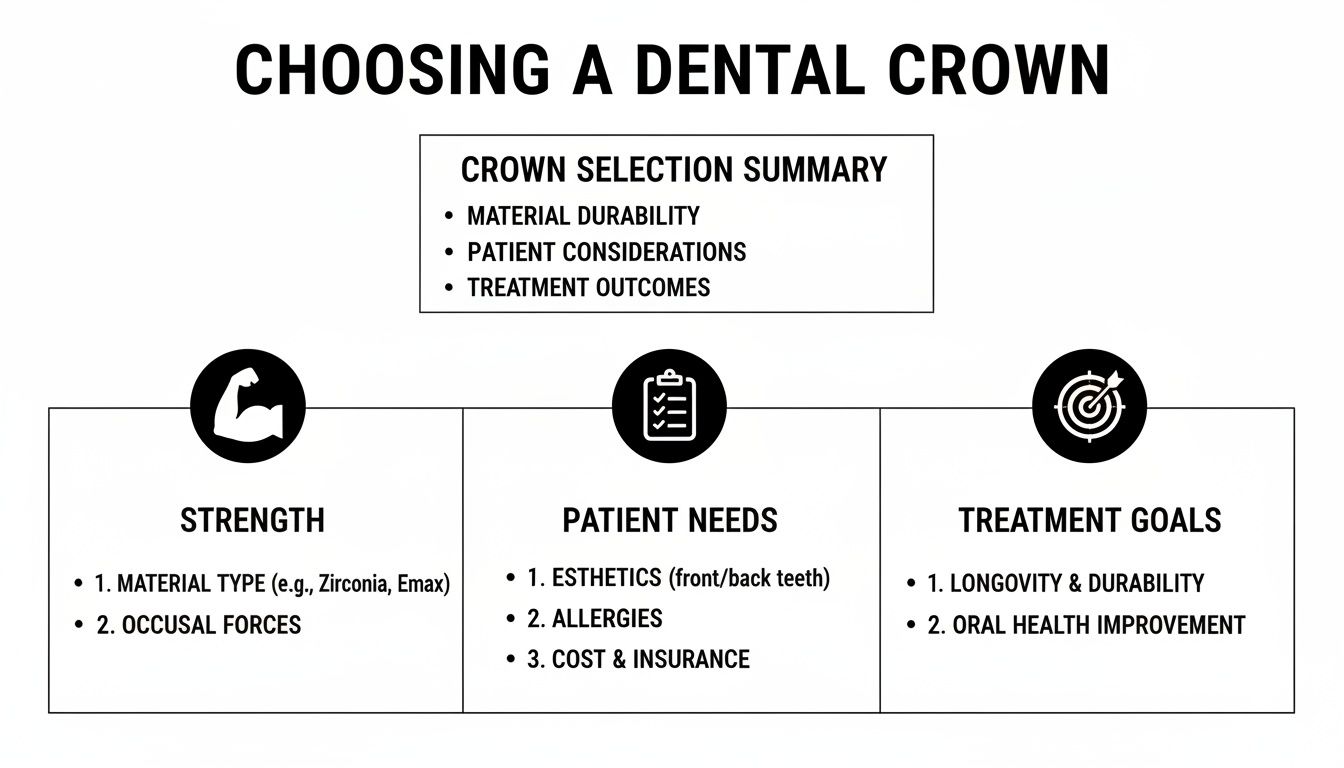
As you can see, the best choice always balances the strength needed for that specific tooth, your dental needs, and what you want your smile to look like.
Porcelain-Fused-to-Metal (PFM) Crowns
For decades, porcelain-fused-to-metal (PFM) crowns have been a reliable option in dentistry. They’re built with a strong metal base that’s completely covered by a layer of tooth-colored porcelain.
This design gives you the best of both worlds: serious strength from the metal core and a decent look from the porcelain exterior. They have a long and successful track record, especially for back teeth that need to be durable.
The main downside of PFM crowns is cosmetic. Over the years, your gum line can recede slightly. This can expose the dark metal edge at the base of the crown, which isn't ideal for highly visible front teeth.
- Best For: Back teeth, dental bridges, and times when a balance of strength and cost is key.
- Aesthetics: Good, but a dark line can sometimes appear at the gumline.
- Durability: Very good. The metal structure makes them tough.
- Biocompatibility: Generally good, though a small number of patients might have sensitivities to the metals used.
Think of a PFM crown as a time-tested, dependable option. It’s a solid and often more budget-friendly choice for teeth that aren't in the front of your smile.
Gold Alloy Crowns
When it comes to pure toughness and long life, gold alloy crowns are in a class of their own. While their metallic look makes them a poor choice for visible teeth, their performance on back molars is unmatched.
The main advantage of gold is its incredible strength. These crowns almost never chip, crack, or break. Better yet, gold wears down at a rate that is very similar to natural tooth enamel. This means it’s very gentle on the opposing teeth it chews against.
Gold is also very compatible with your body and creates an excellent seal against bacteria. This helps protect the tooth underneath from future decay. For anyone who puts function above all else for a back tooth, a gold crown is still the best choice.
Gold crowns can easily last for decades, and many patients have them for a lifetime. Their long-term reliability often makes them the most cost-effective choice over time for restoring back molars.
The Rise of Ceramic Materials in Dentistry
There's no question the dental industry has shifted toward metal-free options, with ceramic materials leading the way. Today, ceramics are the most common choice for crowns. This is because they look great, are safe for your body, and are impressively durable.
The global dental crowns market was valued at USD 3.19 billion and is projected to reach USD 5.10 billion by 2032. This trend shows how materials like zirconia and advanced porcelains meet the modern patient's desire for restorations that are not just strong, but also look and feel completely natural.
At Cedar Dental Group, we’re committed to using materials that give our Renton, WA patients the best possible combination of function, beauty, and health. We'll discuss all of these options with you to find that perfect fit that leaves you feeling healthy and confident.
Understanding Zirconia: The High-Performance Choice
Zirconia has quickly become a top material in dentistry, and for good reason. It brings together near-metal levels of strength with surprisingly good looks. This makes it a great choice for almost any tooth in the mouth.
Unlike a traditional all-porcelain crown, zirconia is incredibly tough. This makes it highly resistant to chipping and cracking, which is a huge plus for restoring molars that take a beating from daily chewing. Here at Cedar Dental Group, we often recommend zirconia for patients who need a really strong, long-lasting fix.
Blending Unbeatable Strength with Natural Beauty
One of the biggest improvements with zirconia is how much better it looks now. The first versions were strong but also chalky and opaque. They missed that translucent quality of real enamel. Today's modern zirconia, however, is engineered to be much more lifelike.
This improvement means we can now confidently place zirconia crowns on front teeth without hurting your smile's appearance. You get a crown that looks completely natural but has the toughness to give you peace of mind. It really is the best of both worlds in our dental crown materials comparison.
It's also worth noting that zirconia is biocompatible. This just means it gets along very well with your gum tissue, making it a fantastic metal-free option.
Zirconia is a game-changer for patients who grind their teeth (bruxism) or have a history of breaking other crowns. Its resilience provides a level of security that other materials simply can't match.
The Rise of Zirconia in Modern Dentistry
The shift toward zirconia is not just a passing trend. It's driven by solid performance and happy patients. The market for these dental products is expected to grow by 9.8% annually between 2025 and 2030, which is faster than many other materials. (Source: Precision Business Insights).
This growth shows how dental technology is always pushing forward to give patients better options. We talk more about how these advancements improve patient care in our article about the future of dentistry.
Is a Zirconia Crown Right for You?
A zirconia crown could be the perfect fit if you're looking for:
- Exceptional Durability: For a back tooth that needs to stand up to intense chewing.
- Aesthetic Appeal: A strong, beautiful, tooth-colored option for a tooth that shows when you smile.
- Longevity: A long-term solution that’s highly resistant to wear and stains.
- A Metal-Free Option: A biocompatible choice that is gentle on your body.
When you come see us at Cedar Dental Group in Renton, WA, we’ll take a close look at your specific situation. Our goal is always to provide personalized care that balances function, beauty, and your long-term oral health.
When Metal-Based Crowns Are a Smart Option
With all the buzz around modern ceramic materials, it's easy to forget about metal-based crowns. But options like Porcelain-Fused-to-Metal (PFM) and classic gold alloys still have a key role in dentistry. They are often the smartest choice when pure strength is what matters most.
At Cedar Dental Group, we believe in walking you through all your choices in our dental crown materials comparison. Metal-based crowns bring a proven track record of durability, making them an excellent solution for the heavy-lifting teeth in the back of your mouth.
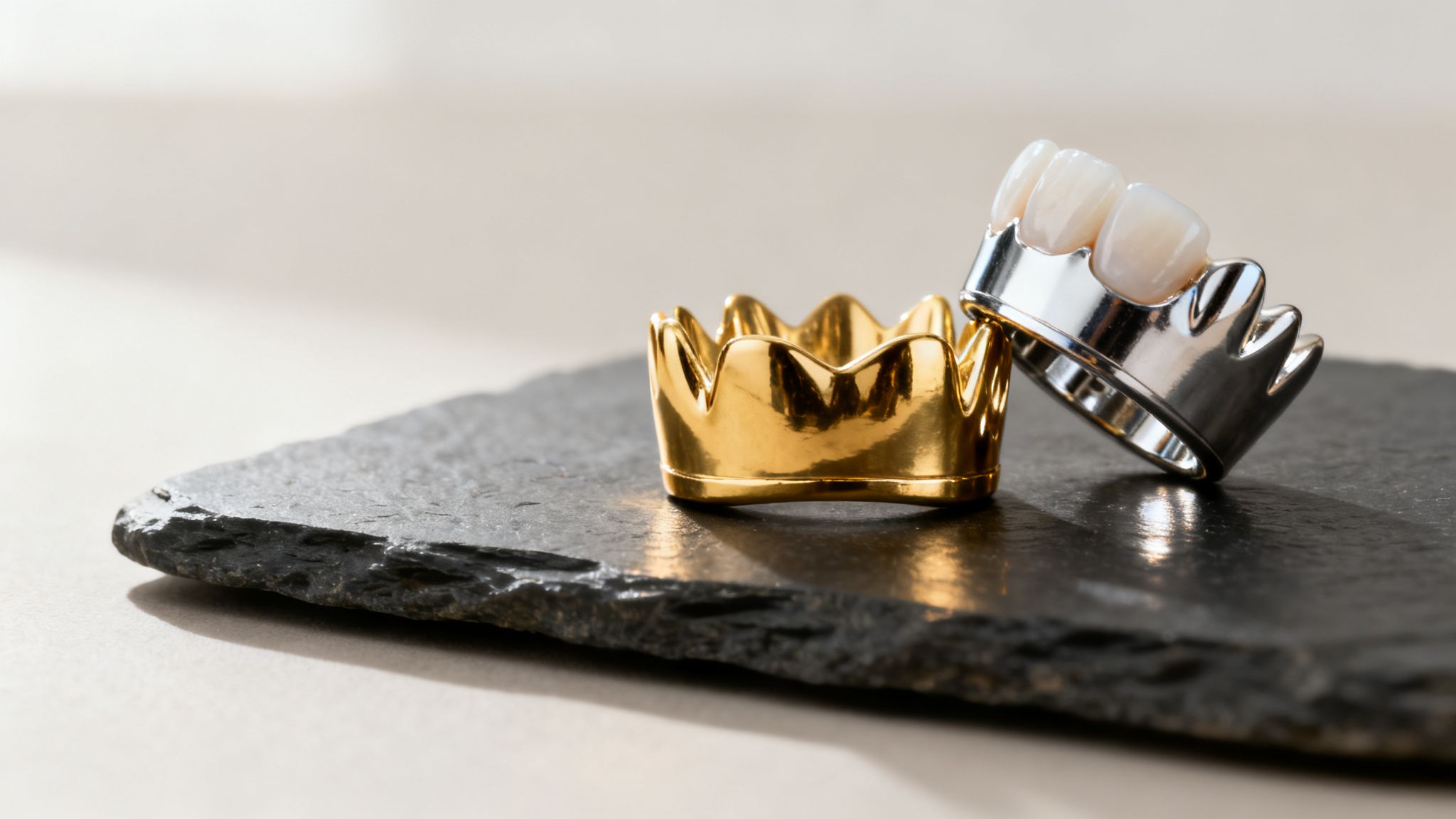
Porcelain-Fused-to-Metal (PFM): The Reliable Workhorse
For decades, PFM crowns were the standard for creating strong, tooth-colored restorations. The design is smart: a sturdy metal base is covered with a layer of natural-looking porcelain. This approach gives you strength from the metal core and good looks from the porcelain shell.
This combination makes them very durable. That is why they’re so often recommended for molars. They also tend to be a more cost-effective option that delivers solid, long-term results.
The main trade-off with PFMs is cosmetic. Over time, the gum line can recede, sometimes showing the dark metal margin at the base of the crown. While this is rarely an issue for a back molar, it's why we typically don't use them for front teeth anymore.
Gold Alloy Crowns: Unmatched Longevity and Kindness
When it comes to pure, uncompromised durability, nothing outlasts a gold alloy crown. While their metallic look makes them a poor choice for your smile line, their performance on back molars is legendary. These crowns are incredibly strong and almost never chip or break.
One of the most unique benefits of gold is how it interacts with your bite. Gold wears down at a rate almost identical to natural tooth enamel, making it very gentle on the opposing tooth it chews against. No other material is as kind to the rest of your teeth.
We see patients with gold crowns that have lasted for decades—often for a lifetime. This makes them a wise long-term investment in your oral health. They're also very safe for your body and create a great seal that protects the tooth from decay.
So, when does a metal-based crown make the most sense?
- For back molars: You need maximum strength to handle the intense forces of chewing.
- For proven longevity: You want a solution that is built to last for many years.
- For kindness to your bite: Gold is the perfect choice to protect opposing teeth from wear.
The "best" material always comes down to your specific situation. During your consultation at Cedar Dental Group in Renton, WA, we’ll explore whether one of these reliable, metal-based options is the perfect fit for your tooth.
So, How Do You Choose the Right Crown for Your Smile?
After learning about the different crown materials, you probably have a better idea of what's out there. But picking the right one isn't just a technical decision. It’s about finding the perfect fit for your smile, your life, and your long-term health.
The best choice always comes from a conversation between you and your dentist. Here at Cedar Dental Group, we help you by focusing on a few key factors. This ensures your new crown not only looks fantastic but also functions perfectly for years to come.
The Deciding Factors We'll Discuss Together
Choosing the best crown really boils down to balancing four main things. We’ll walk through each one with you during your visit.
Where the Tooth Is: A crown for a front tooth has a different job than one for a molar. Up front, looks are everything. In the back, it's all about strength for chewing.
Your Personal Aesthetic Goals: What do you want your smile to look like? Are you aiming for a flawless match that blends in perfectly? Or is durability the top priority for a back tooth?
Your Budget: We believe in being upfront about costs. Our team will explain the price for each option and help you understand your insurance benefits to ensure you can get the care you need.
Your Habits: Things like grinding your teeth at night (bruxism) can be tough on crowns. If you're a grinder, we might recommend a super-strong material like zirconia that can handle that extra force.
At Cedar Dental Group, Dr. Susan Chu sees this as a partnership. She’ll take the time to listen, explain your options clearly, and answer every question. The goal is to create a plan that’s built just for you, so you feel confident every step of the way.
Ultimately, picking the right dentist is just as important as picking the right material. If you're still looking for the right partner in your dental health, our guide on how to choose a dentist offers some practical advice.
FAQs: Your Dental Crown Questions, Answered
Getting a dental crown is a big decision, and it’s normal to have questions. Here are some straightforward answers to common questions we hear from our patients at Cedar Dental Group.
How long does a dental crown last?
A crown's lifespan depends on the material used and how well you take care of it. Generally, you can expect a crown to last anywhere from 5 to 15 years, but many last much longer with great care. Materials like gold and zirconia are known for their incredible longevity.
Will my dental crown look natural?
Yes. Today’s materials, especially all-ceramic porcelain and zirconia, are fantastic at matching the exact shade and shape of a natural tooth. Our team takes great care in color-matching your crown so it blends in perfectly with your smile.
Is getting a dental crown painful?
We make sure it isn't. Your comfort is our top priority. We use a local anesthetic to completely numb the tooth and surrounding area, so you won’t feel any pain during the procedure. Some people feel mild sensitivity for a day or two after, but this is temporary.
How much does a dental crown cost?
The cost of a crown depends on the material you and your dentist choose. Gold alloys, for example, tend to be more expensive upfront than PFM or all-ceramic crowns. Most dental insurance plans cover a portion of the cost. Our team can help you understand your benefits.
How do I care for my new dental crown?
It’s simple: treat your new crown just like your other teeth. Good brushing twice a day and flossing daily is all it takes. Also, keeping up with your regular cleanings and exams here at our office is very important. For more tips, check our guide on how to care for dental crowns.
Ready to improve your smile with a crown that looks and feels great? Contact Cedar Dental Group in Renton, WA today to schedule your consultation at https://cedardentalgroup.com.
