
Direct Answer: A sharp jolt when you bite or release, with no pain in between, usually points to a crack rather than a cavity. Standard X-rays often miss hairline fractures, so a bite test is needed.
Here is the call I take more often than almost any other: a tooth that feels completely normal all day, then sends a sharp jolt through your jaw the second you bite into something. By the time you swallow, it is quiet again.
So you wonder if you imagined it. Then it happens again two days later on a tortilla chip, and you start chewing on the other side without even deciding to.
That pattern is worth paying attention to. A cracked tooth behaves very differently from a cavity, and the way you describe the pain does more for the diagnosis than how bad it feels. I want to walk you through what to watch for, why a clean X-ray does not close the case, and what actually decides the treatment.
What a Tooth Is Telling You When It Only Hurts on the Bite
Timing is the giveaway. A cavity tends to ache in a steady, nagging way, often worse at night or with sweets. A crack tends to stay silent until pressure hits it a certain way, then jolts, then goes quiet.
One detail I always ask about: does it sting when you press down, or when you let go? Pain on release is a classic sign of a crack, because the two halves of the tooth flex apart under pressure and snap back together when you lift off.
Before your visit, try to notice:
- Which side of your mouth, and roughly which tooth
- Whether the jolt comes on pressure or on release
- Whether cold water or air sets it off, and how long the zing lasts
- Whether certain foods trigger it, like nuts, crusty bread, or ice
- Whether the tooth is tender when you touch it with your tongue
- Whether you clench or grind at night
One patient wrote to us this summer describing exactly this kind of ambiguity: “Mild but persistent pain coming from my 1. Tender if i touch it with my tongue.” That is a useful message. It tells me location, intensity, and trigger before the patient ever sits down.
And if you are unsure whether this even counts as something to call about, it does. A tooth that only speaks up when you chew is handing you information while the problem is still small.
Why the X-Ray Came Back Clean and the Tooth Still Hurts
This is the part that makes people feel dismissed, so I want to be plain about it. An X-ray is a flat image of a three dimensional tooth, and it reads differences in density.
That is why decay shows up as a dark shadow and why bone loss is easy to measure. But a hairline fracture that runs the same direction as the X-ray beam may not change the density on the film at all. The two halves are still pressed together. Nothing casts a shadow.
Research on cracked tooth syndrome and endodontic outcomes describes the same problem: incomplete fractures are hard to detect with standard methods, and they can progress to nerve inflammation when they are not caught early.
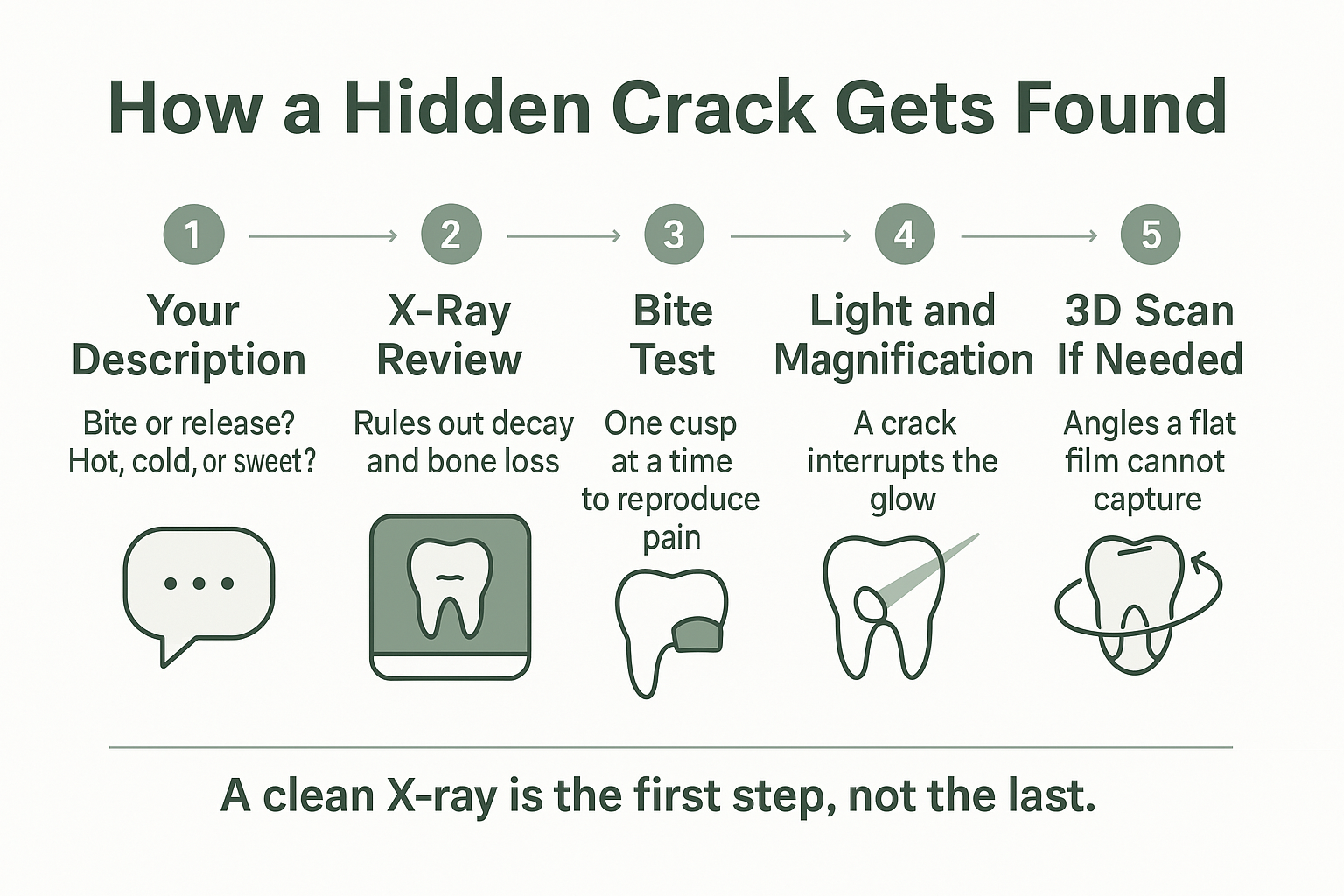
So a clean X-ray is the first step of the investigation, not the end of it. Here is what the exam adds:
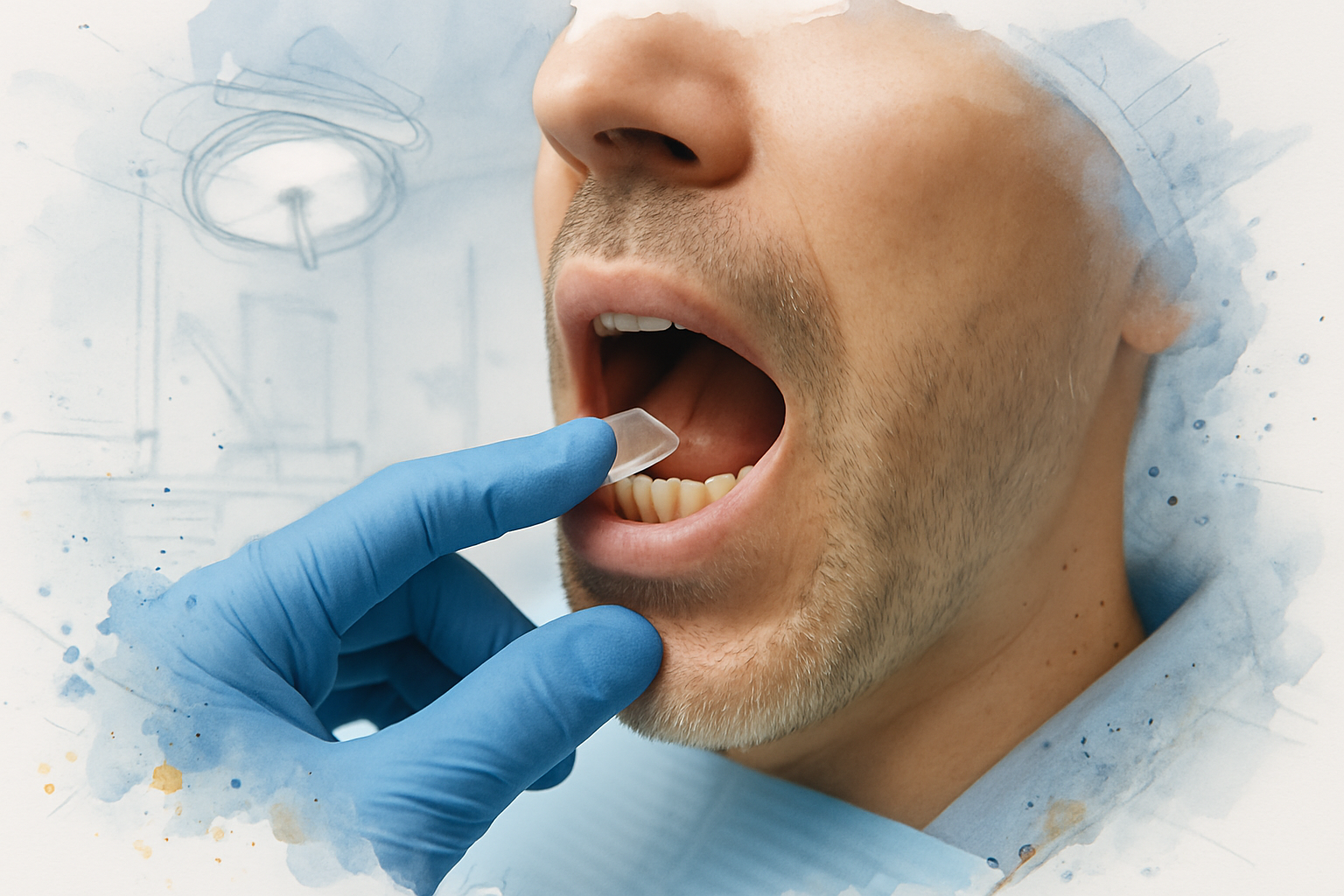
- Bite testing, where you bite on a small plastic tester one cusp at a time until we reproduce your exact pain and know which corner of the tooth is flexing
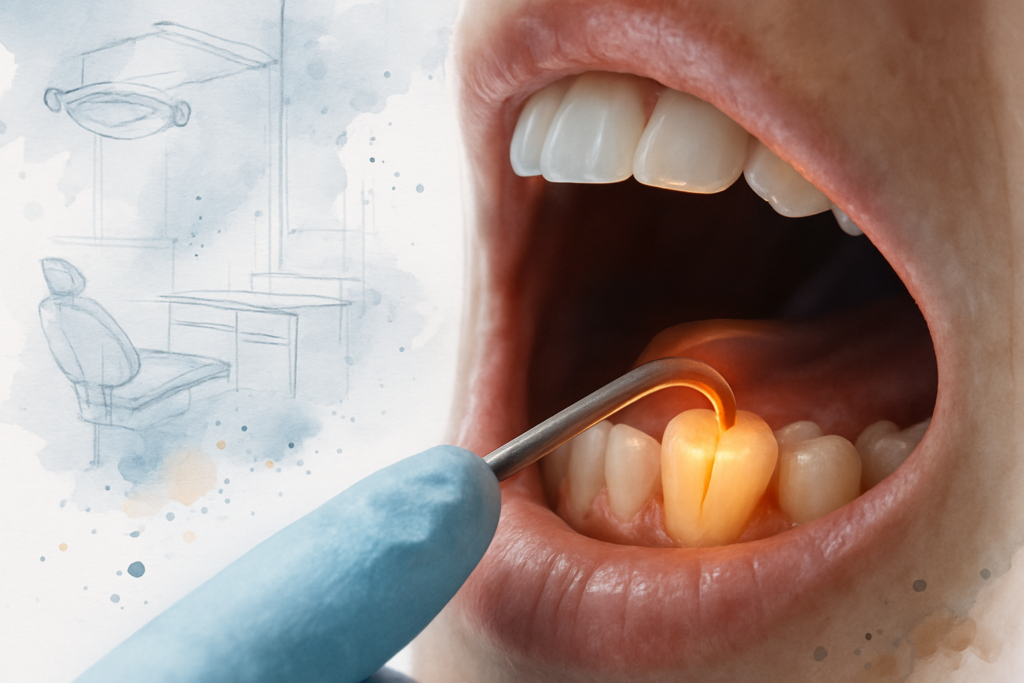
- Transillumination, holding a bright fiber optic light against the tooth so a crack interrupts the glow and shows up as a dark line
- Magnification, because many of these lines are finer than a hair
- Staining dye, which seeps into a fracture and outlines it
- A 3D scan when the picture still is not clear, which captures the tooth from angles a flat film cannot
One more thing worth knowing: teeth refer pain. Upper and lower teeth on the same side share nerve pathways, and patients point at the wrong tooth all the time. That is not a failure on your part. It is why we test tooth by tooth instead of taking the first guess.
How a Hidden Crack Actually Gets Found
When film comes back clean, the exam shifts to tests that find flex and light leaks instead of density changes. Here is the usual order.
Depth Decides the Treatment, Not How Much It Hurts
Most people assume a bad jolt means a bad crack. It does not work that way. What sets the treatment is how deep the crack runs and which direction it travels.
There are three broad categories, and the difference between them matters more than anything else in this article.
A crack limited to enamel and outer dentin. The tooth flexes, the nerve is irritated, but the pulp is healthy. Covering the tooth so it stops flexing usually settles it, which in practice means a crown. Our guide on when a filling is enough and when it is not goes deeper on that choice.
A crack that has reached the pulp. Once the nerve is inflamed, capping the tooth does not calm it down. Root canal therapy comes first, then the crown goes on top. If that sounds daunting, it helps to read what the appointment actually feels like before you decide anything.
A vertical fracture running down the root. This is the one case where saving the tooth is usually not realistic, and I would rather tell you that honestly than soften it. The good news is that this is the least common finding among people whose tooth still only hurts on chewing.
The quiet fear I hear behind most of these calls is that any crack means losing the tooth. In my experience, teeth caught while the only symptom is bite pain almost always land in the first two groups.
Crack Depth, Symptoms, and the Usual Path Forward
This is a general map, not a diagnosis. Your exam decides where your tooth actually falls.
| How deep the crack runs | What you typically feel | Usual treatment path |
|---|---|---|
| Enamel only (craze lines) | Nothing at all, visible as faint surface lines | Monitored, often no treatment needed |
| Enamel into dentin | Sharp jolt on bite or release, quiet in between | Crown to stop the tooth from flexing |
| Into the pulp (nerve) | Lingering ache after the jolt, sensitivity to cold or heat that hangs on | Root canal therapy first, then a crown |
| Vertical fracture into the root | Dull constant discomfort, gum tenderness or swelling near the tooth | Usually extraction, with replacement options discussed |
How Soon Should You Actually Be Seen?
The honest answer is not “drop everything” and it is not “wait and see.” It is somewhere in between, and you get to own the decision.
Here is the logic I use. Cracks travel a little with every bite, so the window where a crown alone solves the problem does not stay open forever. A tooth that hurts only on chewing is still a tooth we can usually fix in the simplest way available.
The form submissions we get say this better than I can. People write in about a broken or painful tooth and specifically note that it is not an emergency, but they would like to be seen soon. That is the right instinct.
Two practical notes for people working around a Renton or South King County schedule:
- Most dental plans run on a calendar year, and unused annual maximums typically expire December 31. Holiday eating also happens to be when a marginal tooth finally announces itself.
- What a plan pays toward a crown or root canal varies a lot by policy, and costs depend on the tooth, the material, and whether the nerve is involved. It is worth having the office verify your specific benefits before anything gets scheduled rather than relying on a general number.
If you are still weighing it, this piece on when to wait and when to call breaks the timing down further.
Do Half the Diagnostic Work Before You Sit Down
No other common dental diagnosis depends this heavily on what the patient reports. You are the only one who has felt the jolt.
Bring these answers with you:
- Which side, and the closest you can get to which tooth
- Bite or release, and which food or motion sets it off
- Hot, cold, or sweet, and whether the zing lingers or vanishes
- How long it has been happening, in weeks or months
- What you were eating the first time you noticed it
- Whether you clench or grind, or wear a night guard
- Whether that tooth has a large existing filling or previous work on it
That last one matters more than people expect. Teeth that have been restored before crack more often than untouched teeth, because a large filling leaves thinner walls of natural tooth around it.
One theme that comes up again and again in our reviews is patients being shown their own X-rays and walked through what the clinician is looking at, rather than just handed a verdict. You should expect that. Ask to see the images, ask which cusp reproduced the pain, and ask what the plan is if the crack turns out to be deeper than it looks. A good exam should leave you understanding your own tooth better than when you walked in. If imaging comes up, this explainer on what a 3D scan shows covers why the extra angles help.
Frequently Asked Questions About a Tooth That Hurts When Biting Down
My X-ray was clean. Does that mean nothing is wrong?
No. An X-ray is excellent at finding decay and bone loss because those change density. A hairline crack running parallel to the beam often leaves no shadow at all. Bite testing, light, and magnification are what find those.
Can a cracked tooth heal on its own?
Tooth structure does not regrow or knit back together the way bone does. The symptoms can come and go, which makes it feel like it healed, but the fracture is still there and still flexing every time you chew on it.
Why do I only feel it with certain foods?
Because it takes a specific direction and amount of force to wedge the crack open. Hard or fibrous foods like nuts, crusty bread, and raw vegetables load one cusp at an angle. Soft food spreads the pressure and never triggers it.
Does a cracked tooth always need a root canal?
Not at all. If the crack is confined to enamel and outer dentin and the nerve is still healthy, a crown that stops the flexing is often enough. Root canal therapy enters the picture when the crack has reached the pulp and the nerve will not settle.
Should I keep chewing on the other side until my appointment?
Yes, that is a reasonable thing to do. Avoiding hard and chewy foods on that side reduces how much the crack gets worked open. It is a holding pattern, not a fix, but it buys you some comfort in the meantime.
Want a Second Look at a Tooth That Only Hurts When You Chew?
If a crack turns out to have reached the nerve, the next step here does not mean a referral across town. Dr. Joe Dutner, a board-certified endodontist and President of the American Board of Endodontics, handles root canal care in-house, and Dr. Susan Chu places the crown that follows, so the diagnosis and the treatment stay inside one plan. As one patient in Renton put it, “I feel because of their care that they saved a tooth that I would’ve otherwise lost.” Cedar Dental Group is at 280 Hardie Ave. SW near downtown Renton, serving patients across South King County, and you can reach us at 425-430-0400 or at cedardentalgroup.com when you are ready to have it looked at.
