
Direct Answer: No. A root canal relieves pain rather than causing it. Once the tooth is fully numb, you should feel pressure and vibration instead of pain, and the numbness fades within a few hours.
If you found this page while holding an ice pack to your jaw, start here: the throbbing you feel right now is the infection talking, and the appointment is the part that turns it off.
I get this question more than almost any other at our Renton office, usually from someone who has already been awake half the night. They are not really asking about pain in general. They are asking whether sitting in the chair will feel worse than what they are already living with.
The short answer is no. Below, I will walk through what actually happens, from the first numbing shot to the soreness a few days later, so you are not filling in the blanks with your imagination.
The Pain That Brings You In Is Not the Pain of the Treatment
People describe it to us in almost identical words, whether they are calling from downtown Renton, Kent, or Newcastle on their way up I-405.
- A deep throb that shows up at night
- Pressure that gets worse when you lie down
- A sharp catch when you bite on that one spot
- Sometimes a tooth that is just tender when your tongue touches it
All of that comes from the nerve and blood supply inside the tooth, called the pulp. When bacteria reach the pulp, it swells inside a hard chamber that cannot expand, and that pressure is the pain.
A root canal removes that inflamed tissue, cleans and shapes the narrow canals inside the root, and seals them. The American Dental Association describes the goal the same way we do with patients: save the natural tooth and end the source of the pain.
So the treatment is not more of what you are feeling. It is the thing that stops it. The part people brace for, honestly, is the numbing, and that deserves a real explanation.
Getting Numb Is the Real Question Hiding Inside “Does a Root Canal Hurt”
Here is how it usually goes. A topical gel goes on the gum first and sits long enough to dull the surface. Then the anesthetic is delivered slowly, because speed is what makes an injection sting more than the needle itself.
One patient put it better than I could in a review: “I really sweat when it comes to having to have needles when numbing is needed and Dr Chu is very good at what she does. I hardly felt anything.” (C. W.)
Now the part nobody tells you. A hot lower molar can be harder to numb. An inflamed nerve is chemically irritated, and standard block anesthesia sometimes does not fully quiet it on the first pass.
That is a known situation with known answers, not a reason to tough it out:
- A second injection from a different angle
- A supplemental technique that places anesthetic right next to the tooth or into the bone beside it
- Simply waiting a few more minutes before starting
What you should do is say something. If you feel anything beyond pressure, raise your hand. We would far rather add more anesthetic than have you white-knuckle the armrest.
Afterward, plan on roughly two to four hours of soft tissue numbness in the lip, cheek, and tongue. Skip hot coffee and chewy food until it fades, because a numb cheek is easy to bite.
What You Will Hear, Feel, and Be Able to Control
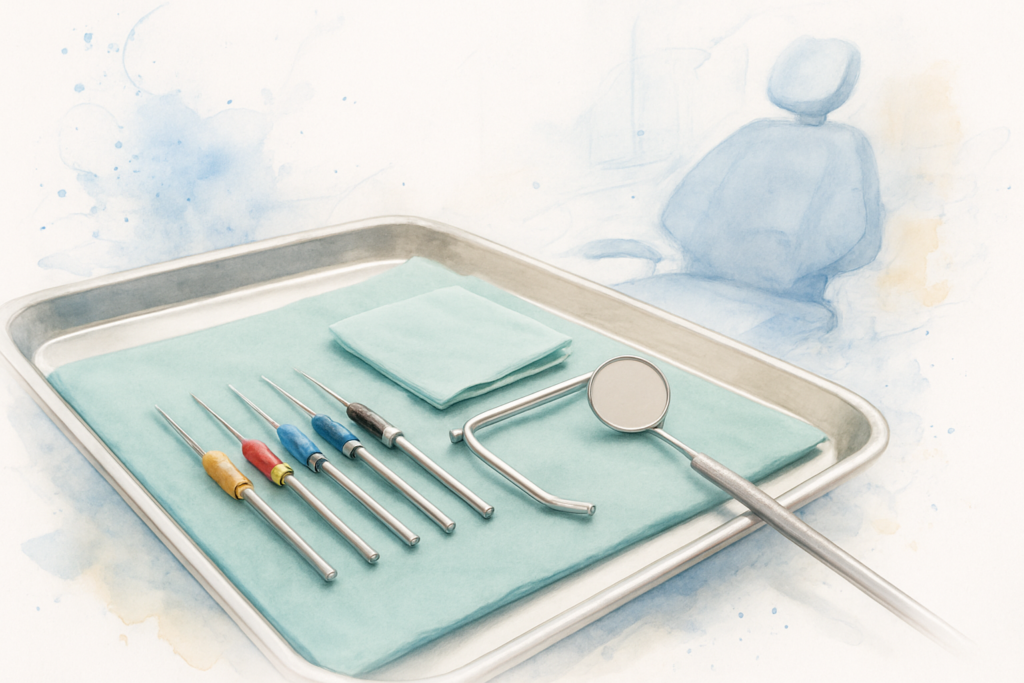
For a lot of people the fear is not pain at all. One person told us through our website form that they cannot stomach listening to what is happening, and start to panic at the sight of the tray of tools. That is more common than you think.
So here is the sensory version of the appointment.
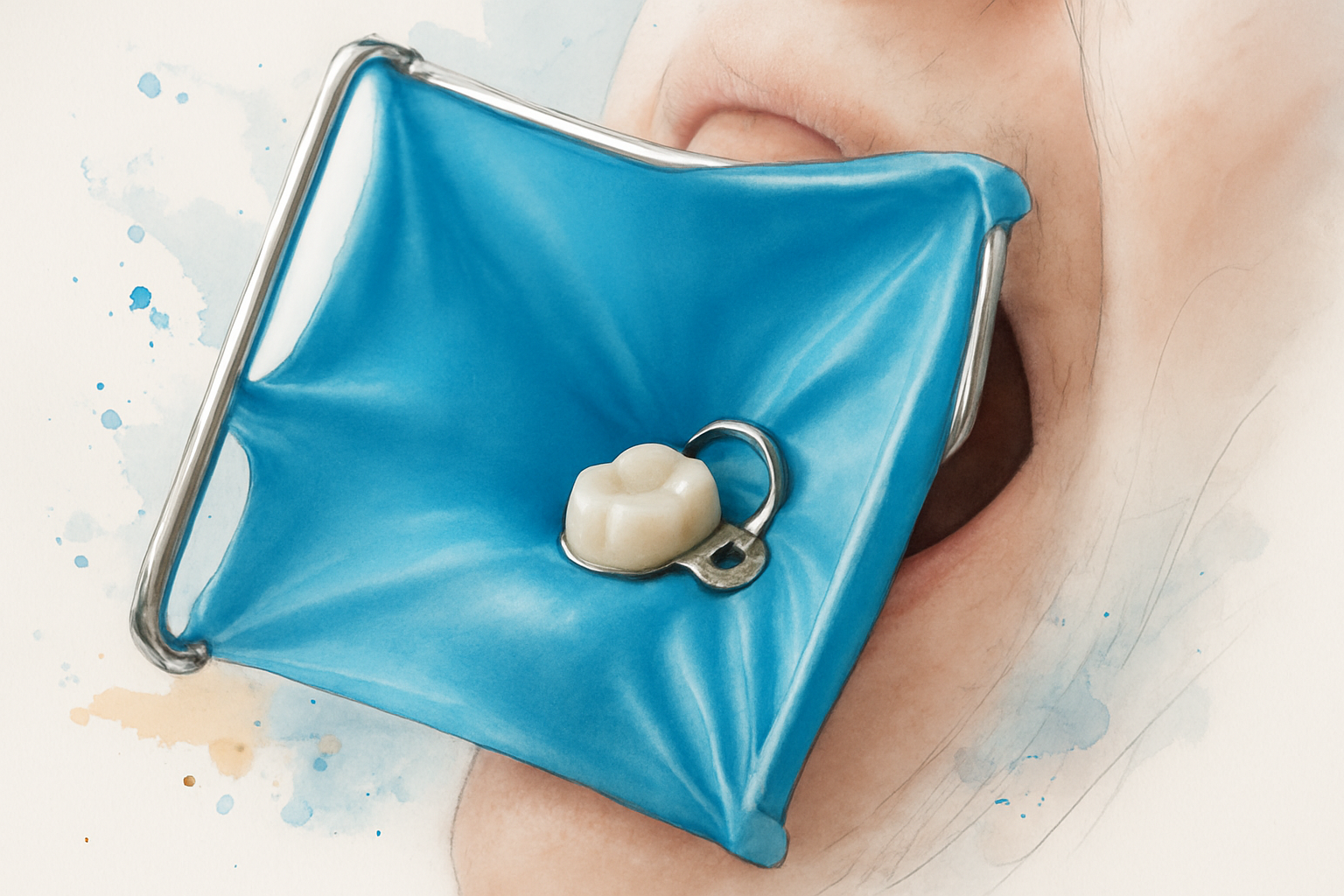
The rubber dam. A thin sheet of latex-free material goes over the tooth, held by a small clamp. It isolates that one tooth from the rest of your mouth. Most people are surprised by how much it helps: no water or debris in the throat, no need to swallow constantly, and far less of the mouth feels involved.
The sounds. There is a high-pitched handpiece for a minute or two to open the top of the tooth, then mostly quiet work with small files, plus the soft hum of suction. The long middle stretch is quieter than a filling.
What you feel. Pressure. Vibration. Your jaw being held open. Not pain.
Things you can ask for, and should:
- Headphones or your own music so the room is not the soundtrack
- A hand signal that means stop, with the agreement that we actually stop
- To be told before each step instead of after
- A blanket, a pillow behind the neck, or a short break to swallow and stretch your jaw
How Long You Will Actually Be in the Chair
Chair time depends mostly on how many canals the tooth has. These are general ranges, and your tooth may run shorter or longer.
| Tooth | Canals (typical) | Usual chair time | One visit or two? |
|---|---|---|---|
| Front tooth | 1 | About 45 to 60 minutes | Usually one |
| Premolar | 1 to 2 | About 60 to 75 minutes | Usually one |
| Upper or lower molar | 3 to 4 | About 75 to 110 minutes | One, sometimes two |
| Tooth with active swelling or infection | Varies | Varies | More likely two |
The Appointment, Step by Step
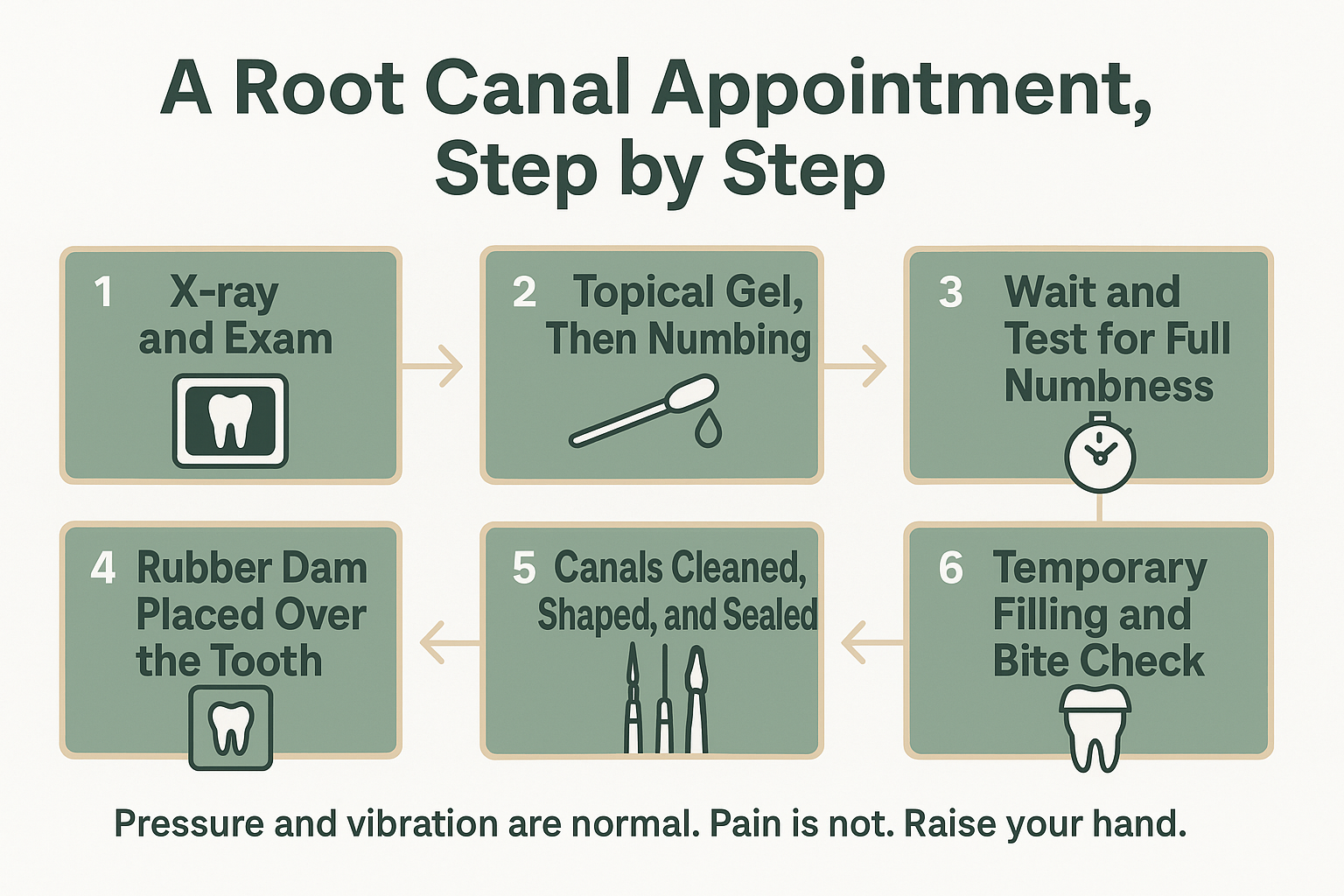
This is the order things happen in, from the moment you sit down to the moment you walk out.
The Days After: What Normal Soreness Feels Like
This is where people get caught off guard, and where a vague promise of comfort does the most damage.
Expect the tooth to be tender to bite on for a few days, sometimes up to a week. That soreness comes from the ligament that suspends the tooth in the bone, which gets irritated during treatment. It feels different from the original pain: more of a bruise than a throb, and it fades a little each day.
- Over-the-counter anti-inflammatories are usually enough, taken as directed on the label
- Chew on the other side until the tenderness settles
- Most people go back to work the same afternoon, which matters in a city where health care and manufacturing employ a big share of the workforce and the daytime population swells with commuters
A temporary filling holds the space until the tooth gets its permanent restoration. For back teeth that is often a crown, and there are real reasons for that, which I will not squeeze in here. We cover it separately in why a crown is recommended after a root canal.
Worth a phone call rather than waiting it out:
- Pain that is getting worse after day three or four instead of better
- Swelling in the face or gum, or a fever
- A bite that feels high or off when you close
- The temporary filling coming out
Who Does the Treatment Changes the Experience More Than You Expect
If you search root canal care around Renton, most of what comes back are standalone endodontic offices. That means the usual path here is a referral out: a second office, a second set of X-rays, a second intake form, and a wait in between while the tooth is still throbbing.
An endodontist is a dentist who completed extra years of training focused on the inside of the tooth and does this work all day. What that brings to the chair is practical:
- Magnification and strong lighting to find canals that are narrow, curved, or extra
- Experience that shortens the hunt, which means less time with your mouth open
- A straight read on whether the tooth can realistically be saved, which matters before anyone starts
At Cedar Dental Group that work happens in house, with Dr. Joe Dutner, who is board certified in endodontics and serves as President of the American Board of Endodontics. The diagnosis and the treatment live in the same chart and the same building.
For someone trying not to burn a second workday driving into Seattle, one office means one set of images and one conversation. We break down what that changes in what happens when an endodontist treats the tooth in house.
Frequently Asked Questions About Root Canal Pain
Can you even numb a tooth that is already badly infected?
Yes, though it sometimes takes more than the standard approach. An inflamed nerve can resist a routine block, especially on a lower molar, so a second injection or a supplemental technique placed right at the tooth is used. The important part is telling us the moment you feel anything, so we can add more before continuing.
Will I feel the drill?
You will hear it and feel vibration, but not the sensation people picture. Most of the appointment is quiet work with small hand and rotary files, not the sound you associate with a filling.
Can I drive myself home and go back to work?
Almost always, yes, if you had local anesthetic only. Your lip and cheek will be numb for two to four hours, so plan around talking on calls or eating lunch right after.
How much does a root canal cost around here?
It varies a lot by tooth, by how many canals it has, and by your plan, so a single number is not honest. Two offices can quote very different figures for the same tooth, and we walk through why in our root canal cost breakdown for Renton. For your own tooth, an exam and X-ray give you a real estimate.
What if a root canal I had years ago starts hurting again?
It happens, usually because a canal was missed, a seal broke down, or new decay reached the area. It does not automatically mean losing the tooth. Retreatment is often possible, and the first step is an X-ray to see what is actually going on.
Want to Talk Through What Your Tooth Needs?
We keep the specialist work in house in Renton, with an endodontist for root canal care and a board-certified periodontist for surgical gum and bone work, and the thing patients mention most is being told what is happening before it happens. Limited exams for a tooth that is hurting are typically available quickly. If you want to talk it through first, you can reach Cedar Dental Group at 425-430-0400 or read more at cedardentalgroup.com.
