

Let's be honest—we've all worried about having bad breath. It’s a universal experience, but that doesn't make it any less uncomfortable when you're leaning in for a conversation. If you're feeling anxious about your breath, please know that this is an incredibly common and solvable issue. So, what's really going on?
The truth is, the primary culprit in over 90% of cases is right inside your mouth. Millions of bacteria live on your tongue, between your teeth, and along your gums. Their job is to break down leftover food particles, and in doing so, they release smelly gases called volatile sulfur compounds (VSCs).
Getting to the Root of Bad Breath
If you've ever felt self-conscious about your breath, you are definitely not alone. Bad breath, known in the dental world as halitosis, is a very common issue that can create anxiety in social or professional situations. We want to reassure you that for most people, it's a completely solvable problem.
The first real step toward finding a lasting solution—and regaining your confidence—is to understand where it's coming from.
Halitosis is a much more widespread concern than you might think. Some studies estimate that between 35% and 45% of people worldwide deal with some level of bad breath (Source: dental health researchers). In the United States alone, that means over 80 million people suffer from chronic bad breath.
To help you pinpoint the cause, here's a quick rundown of the most common sources of bad breath and the types of odors they tend to produce.
Quick Guide to Common Bad Breath Sources
| Source of Odor | Primary Cause | Common Description |
|---|---|---|
| Oral Hygiene | Plaque & bacteria buildup from inconsistent brushing/flossing | A general "stale" or "unclean" smell. |
| Dry Mouth | Lack of saliva to wash away bacteria and food debris | Often described as "morning breath" or a musty odor. |
| Diet | Pungent foods like garlic, onions, or strong spices | A distinct food-related smell that comes from the lungs. |
| Gum Disease | Infection and inflammation of the gums (gingivitis/periodontitis) | A metallic or "rotten egg" (sulfur) smell. |
| Tonsil Stones | Trapped debris and bacteria in the tonsil crypts | A foul, pungent odor, sometimes described as mothball-like. |
| Underlying Illness | Medical conditions (e.g., sinus infections, diabetes, acid reflux) | Can range from fruity/sweet (diabetes) to sour (reflux). |
Understanding these different sources is the key to figuring out why your breath might not be as fresh as you'd like and, most importantly, what you can do about it.
The Main Culprits Behind Halitosis
At its heart, bad breath is usually a simple biological process. When you don't clean your mouth as effectively as you could, bacteria get a chance to throw a party. These tiny microorganisms feast on leftover food bits and dead cells, producing those foul-smelling VSCs as a byproduct.
This diagram breaks down the three most common pathways that lead to an environment where these bacteria can thrive.
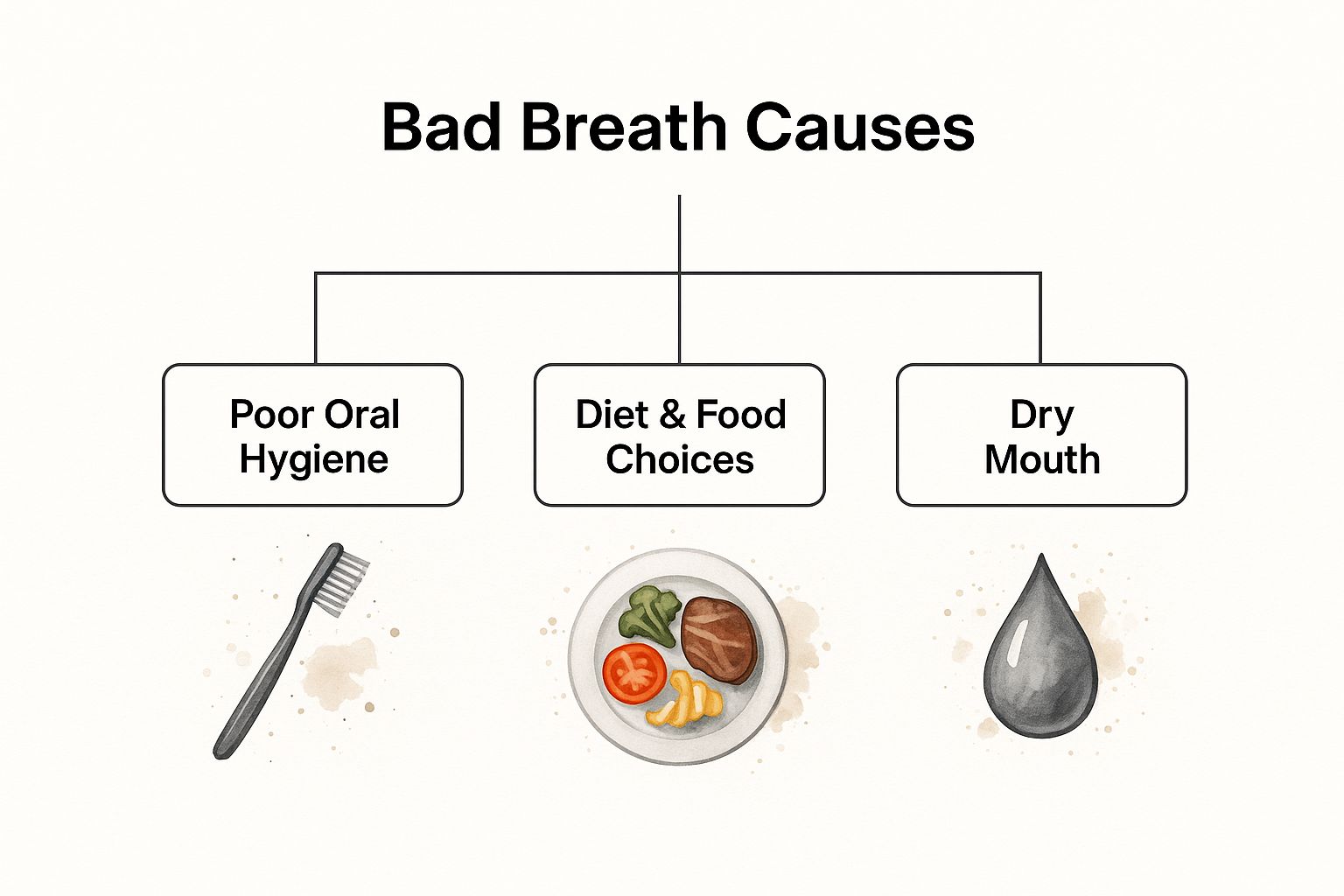
As you can see, poor hygiene, diet, and a dry mouth are the big three. Each one creates the perfect conditions for odor-causing bacteria to take over. Let’s take a closer look at these factors:
-
Inconsistent Oral Hygiene: This is, by far, the most common reason for bad breath. If you skip brushing and flossing, a sticky film of bacteria called plaque builds up on your teeth. Tiny food particles get trapped in it, essentially becoming a buffet for these bacteria and creating a persistent odor.
-
Dry Mouth (Xerostomia): Think of saliva as your mouth’s natural self-cleaning system. It’s constantly rinsing away food debris and neutralizing acids. When your mouth is dry—from medication, mouth-breathing, or dehydration—bacteria multiply much more quickly. This is what causes that classic "morning breath."
-
Dietary Choices: We all know this one. Foods like garlic and onions contain powerful oils that get absorbed into your bloodstream after digestion. From there, they travel to your lungs and are exhaled with every breath, causing a temporary but noticeable odor that brushing alone can't fix.
Common Oral Health Causes of Bad Breath

While what you eat certainly matters, the overwhelming majority of chronic bad breath cases—we're talking 90%—start right inside the mouth. It’s not just about last night's garlic bread. Specific oral health problems can create the perfect environment for bacteria to release those unpleasant odors.
The most common culprit? It’s often a lapse in daily oral hygiene. Forgetting to brush and floss leaves behind a buffet of tiny food particles for bacteria. This allows plaque, that sticky, invisible film, to coat your teeth and gums. If not removed, it hardens into tartar—a substance that only a dental professional can remove.
Think of it this way: Plaque is like a thriving city of bacteria. The bigger the city gets, the more waste it produces. In your mouth, that waste comes in the form of volatile sulfur compounds, the smelly gases that directly cause bad breath.
This bacterial buildup is often just the first domino to fall, leading to bigger dental issues notorious for causing halitosis.
How Cavities Create Foul Odors
A cavity is more than just a spot of decay; it's a literal hole in your tooth. Besides causing pain and sensitivity, these tiny caverns become perfect hiding places for food debris and smelly bacteria. No matter how well you brush, you simply can't clean them out on your own.
As bacteria flourish in these protected pockets, they not only speed up the decay but also release foul-smelling gases. If you've noticed a constant bad taste coming from one specific area, an untreated cavity is a likely suspect. Treating it doesn't just save your tooth—it shuts down a major odor factory in your mouth.
The Strong Connection Between Gum Disease and Bad Breath
Gum disease is a major cause of stubborn bad breath. It starts quietly as gingivitis, which is inflammation of the gums caused by plaque buildup. At this stage, you might just notice your gums look a bit red or bleed a little when you brush.
If ignored, gingivitis can escalate into periodontitis, a much more serious infection where the gums pull away from the teeth, forming deep pockets. These pockets are a huge problem. They become packed with plaque, tartar, and bacteria, creating a very distinct, often metallic or sulfur-like smell. The infection can destroy the bone that holds your teeth in place, making it a leading cause of tooth loss in adults.
Because the early signs are so subtle, many people have no idea there's a problem until the bad breath becomes impossible to ignore. If you have any concerns, learning about professional gum disease treatment is an essential next step.
At Cedar Dental Group, we handle these issues with genuine understanding and skill. We know that bringing up bad breath can feel awkward, but it's a common health concern we help patients in Renton, WA, solve every single day.
How Your Daily Habits Affect Your Breath
While the state of your teeth and gums is a huge piece of the puzzle, what you do every day directly impacts the freshness of your breath. Our lifestyle choices can either foster a healthy oral environment or, unfortunately, create the perfect storm for halitosis.
It's a common misconception that bad breath is strictly a mouth problem. The truth is, some of the most potent food and drink odors take a very different route. Understanding this process is the first step toward making small yet powerful adjustments to your routine.
The Food You Eat and The Air You Exhale
We've all been there—that lingering garlic or onion smell that just won't quit. But why does it stick around for hours, even after a thorough brushing? The reason is that the odor isn't just coming from food particles left in your mouth.
The process is a bit more complex. Here’s a look at what's really happening:
- Absorption: After you digest pungent foods, their odorous compounds are absorbed from your intestines into your bloodstream.
- Circulation: Your blood then acts like a delivery service, carrying these compounds throughout your body.
- Exhalation: When that blood reaches your lungs, the smelly compounds are released, and you exhale them with every breath.
This is why a mint or a quick brush only masks the problem temporarily. The odor will keep coming out until your body has completely finished processing the food, which can take hours.
Coffee, Alcohol, and The Problem of Dry Mouth
That morning cup of coffee or evening glass of wine might be a treasured part of your day, but both can be culprits behind bad breath. These beverages slow your saliva production, leading to xerostomia, or dry mouth.
Saliva is your mouth's natural self-cleaning system, constantly washing away bacteria and food debris. When your mouth gets dry, this cleaning process slows, giving odor-causing bacteria the green light to multiply. This results in that classic stale or musty smell.
Why Tobacco Use Is a Major Contributor
Using tobacco products, whether smoking or chewing, is one of the most significant lifestyle choices tied to persistent bad breath. Tobacco itself leaves a distinct, unpleasant odor that clings to your mouth.
But the issue goes far deeper. Tobacco use wreaks havoc on your oral health. It dramatically increases your risk for gum disease, stains your teeth, and hampers your body’s ability to fight off infections. Quitting is a non-negotiable step for truly fresh breath and a healthy mouth. Making meaningful changes to your daily habits is how you maintain your oral wellness between professional visits.
When Bad Breath Is a Sign of Something More
You’re doing everything right. You brush twice a day, floss diligently, and even use a tongue scraper. But that persistent bad breath just won't quit. It’s frustrating, and we understand you might be wondering what you’re missing.
While it’s true that over 90% of bad breath starts in the mouth, that stubborn odor can sometimes be your body’s way of flagging a different health issue. This isn’t a reason to panic, but it is a reason to pay attention. If you've got your oral hygiene on lockdown and the problem persists, it’s time to investigate further with your dental and medical teams.
Looking Beyond the Mouth
Sometimes, the culprit isn't your teeth or gums at all. The source might be nearby, in areas your toothbrush and floss can’t reach. This is called extraoral halitosis, and it can cause distinct odors that no amount of brushing will fix.
Here are a few common non-dental sources:
- Chronic Sinus Infections: If your sinuses are inflamed, mucus can drip down the back of your throat (post-nasal drip). This creates a perfect environment for bacteria to thrive, leading to a foul smell.
- Tonsil Stones (Tonsilloliths): The nooks and crannies in your tonsils can trap food particles, dead cells, and bacteria. Over time, this debris can harden into small "stones" that emit a potent odor.
- Acid Reflux (GERD): For those with Gastroesophageal Reflux Disease, stomach acid can travel back up the esophagus. This not only causes heartburn but can also leave a sour, acidic smell on your breath.
Your Health's Early Warning System: Think of persistent bad breath that doesn't improve with great oral hygiene as a helpful signal. It's your body giving you a nudge to look into potential underlying issues and be proactive about your overall health.
When to Consult Your Doctor
In rarer cases, your breath can offer clues about your systemic health. Certain metabolic disorders or problems with major organs can produce specific odors. Issues with the liver or kidneys, for instance, can sometimes manifest as distinct smells on the breath.
This is why a team approach to your health is so valuable. If your dentist at Cedar Dental Group has ruled out every possible oral cause—from cavities and gum disease to problems with old restorations—the next step is a visit with your family doctor. We are here to help you connect the dots.
Whether it’s a simple filling or a complex solution like dental implants in Renton, we consider ourselves part of your total wellness team. Your well-being is always our first priority.
Your Action Plan for Achieving Fresh Breath
Understanding what causes bad breath is one thing, but knowing how to fix it for good is what truly matters. The great news is that taking back control is absolutely achievable. The key is a two-pronged approach: mastering a powerful at-home routine and partnering with your dental professionals.
Many people get stuck in a cycle of masking the issue. Americans spend billions each year on mints and gums, which offer a quick fix but do nothing to solve the underlying problems (Source: World Health Organization). Let's focus on real solutions.
Mastering Your At-Home Oral Care
Your daily habits are the cornerstone of fresh breath. This is where you have the most power. A truly effective routine is all about consistency and cleaning the hard-to-reach places where odor-causing bacteria thrive.
To elevate your daily regimen, focus on these three critical steps:
- Floss Daily and Correctly: The spaces between your teeth and under the gumline are where plaque and food particles hide from your toothbrush. Flossing clears out this debris, which is crucial for stopping bacterial buildup.
- Clean Your Tongue: The bumpy surface of your tongue is a perfect breeding ground for bacteria. Gently cleaning your tongue each day with a tongue scraper or toothbrush can make a huge difference in how your breath smells.
- Choose the Right Mouthwash: Cosmetic rinses just mask odors. A therapeutic mouthwash contains active ingredients designed to kill bacteria and neutralize smelly compounds, offering a real solution.
Partnering with Professionals for Lasting Solutions
While excellent home care is your first line of defense, some situations require a professional touch. At Cedar Dental Group, we are your partners in health. We work with you to pinpoint the exact source of the problem and create a personalized plan to eliminate it for good.
Here are a few ways we can help:
- Professional Cleanings: During your regular exam and cleaning, we remove hardened plaque (tartar) that no amount of brushing can tackle. This immediately reduces the bacterial load in your mouth.
- Deep Cleaning (Scaling and Root Planing): If gum disease is the culprit, this procedure cleans below the gumline to clear out infection, helping your gums heal and close up the infected pockets where bacteria flourish.
- Restorative Treatments: An old, leaky filling or an untreated cavity can be a little odor factory. By providing expert cosmetic dentistry in Renton, WA, we can fix these issues and permanently remove the source of the problem.
If you're ready to stop masking symptoms and start building a plan for a healthy, confident smile, you can learn more about our full range of dental services.
Frequently Asked Questions About Bad Breath
We understand that talking about bad breath can be uncomfortable, but you’re not alone in your questions. Here are answers to some of the most common concerns we hear from our patients in Renton.
1. Why is my breath always worse in the morning?
This is completely normal and often called "morning breath." When you sleep, your body's saliva production slows down. Saliva is your mouth's natural cleanser, so with less of it, odor-causing bacteria multiply overnight. A good brush, a glass of water, and breakfast usually resolve it.
2. How can I tell if I have bad breath?
It’s surprisingly hard to smell your own breath. A reliable trick is to lick the inside of your wrist, let it dry for 10 seconds, and then sniff. The surest way to get a definitive answer is to ask a trusted friend or to come in for a professional, discreet assessment with us.
3. Do mouthwashes actually cure bad breath?
It depends on the type. Many over-the-counter rinses are cosmetic and just mask odors temporarily. For a real, lasting difference, look for a therapeutic mouthwash with ingredients that kill the bacteria causing the odor. It should be part of a solid routine that includes brushing and flossing.
4. When should I see a dentist for bad breath?
If you've been diligent with your oral hygiene for a week or two and the bad breath persists, it's time to make an appointment. Persistent bad breath often signals an underlying issue that home care can't fix, such as gum disease or a hidden cavity.
5. Can my dentist in Renton, WA, really help with bad breath?
Absolutely. As dental professionals, we are experts at diagnosing the root cause of bad breath. We can identify issues like gum disease, decay, or failing dental work that you might not be aware of and provide the exact treatment needed to restore your oral health and fresh breath. You can find more practical tips and insights on our Cedar Dental Group Blog.
Ready to put bad breath behind you for good? The compassionate team at Cedar Dental Group is here to help you find a lasting solution with expertise and patient-centered care. Contact our office in Renton, WA, today to schedule your consultation.
