

That throbbing, nagging pain in your tooth isn't just an annoyance. Think of it as your body's built-in alarm system, signaling that something is wrong. We understand how disruptive tooth pain can be, and our goal at Cedar Dental Group is to help you find lasting tooth pain relief. The first step is figuring out what’s triggering that alarm.
Ignoring the pain is like hitting the snooze button on a problem that is bound to get worse. We're here to provide the compassionate, professional care you need to feel better and protect your oral health.
Why Your Tooth Aches and What It Means
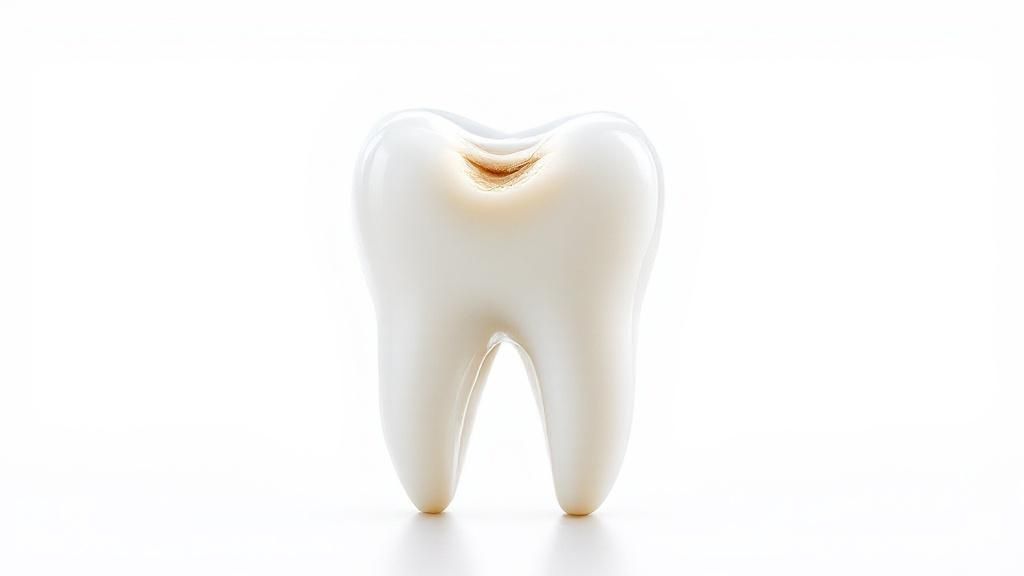
A toothache rarely happens out of the blue. It’s almost always the direct result of an underlying issue that has broken through your tooth's natural defenses. To truly understand this, it helps to know the basic structure of a tooth.
Imagine your tooth's outer layer, the enamel, as a suit of armor. It’s the hardest substance in your body, designed to shield the delicate inner parts from bacteria and extreme temperatures. Even the best armor, however, has its limits.
When the Shield Is Breached
When something damages that enamel armor—whether it's decay, a crack, or wear and tear—it exposes the layer underneath, called dentin. Dentin is much softer and is filled with thousands of microscopic tubes that lead straight to the tooth's nerve center.
This core is the pulp, a soft bundle of nerves and blood vessels that keeps the tooth alive. When things like hot coffee or ice cream hit the exposed dentin, those sensations travel down the tiny tubes and zap the nerve endings in the pulp. That’s the sharp, unmistakable pain you feel.
A toothache is your body's direct line of communication, alerting you that the protective barrier around the tooth's nerve has been compromised. Ignoring this signal allows the underlying problem to worsen, but we are here to help you address it with gentle, expert care.
This is why getting to the "why" behind your pain is so important for your well-being. A crack in the tooth creates a different pathway for pain than a cavity, and each one needs a different, professional solution.
Common Culprits Behind Tooth Pain
While the pain mechanism is similar, the reasons the enamel shield fails can vary. Pinpointing the likely cause helps our team in Renton determine the urgency of the problem and the best course of action for your comfort.
Here are the usual suspects when it comes to tooth pain:
- Dental Cavities (Caries): This is the number one cause. Bacteria in your mouth produce acid that eats away at the enamel, creating a hole that allows them to invade the deeper, more sensitive parts of the tooth.
- Cracked or Chipped Tooth: A sports injury, an accident, or even biting down on something hard can fracture a tooth. That crack becomes a superhighway for bacteria and external sensations to get right to the nerve.
- Gum Disease (Gingivitis or Periodontitis): As gums become inflamed, they can pull away from the teeth, exposing the sensitive roots that aren't protected by enamel. This can cause a dull, widespread ache.
- Tooth Abscess: This is a serious infection that creates a pocket of pus at the root of a tooth or in the gums. An abscess causes a severe, throbbing pain that won’t quit and is a true dental emergency requiring immediate care.
- Teeth Grinding (Bruxism): Many people grind or clench their teeth, often at night. Over time, this constant pressure wears down enamel, making teeth prone to cracks and sensitivity.
These problems are incredibly common. According to the CDC, over 25% of adults in the U.S. have untreated tooth decay, a leading cause of tooth pain (Source: Centers for Disease Control and Prevention). This statistic shows why so many people in Renton and beyond are searching for effective tooth pain relief.
Knowing these causes can help you understand the signals your body is sending. A little sensitivity might be early enamel wear, but a constant, severe ache with swelling is a major red flag for an infection. When pain is severe or won't go away, it's time to see a professional. Exploring your options for emergency dental services is the most important step toward getting real relief and protecting your health.
Finding Immediate Comfort with Home Remedies
When a toothache strikes, the pain can be all-consuming. Your first instinct is to find relief, and fast. While the only true fix is a trip to our Renton dental office, there are several things you can do at home to manage the pain until your appointment. These remedies are grounded in simple science that helps reduce inflammation and soothe irritated nerves.
Taking control of the situation with these practical steps can make a huge difference in your comfort level. They work by either calming swelling, numbing the sore spot, or cleaning out debris.
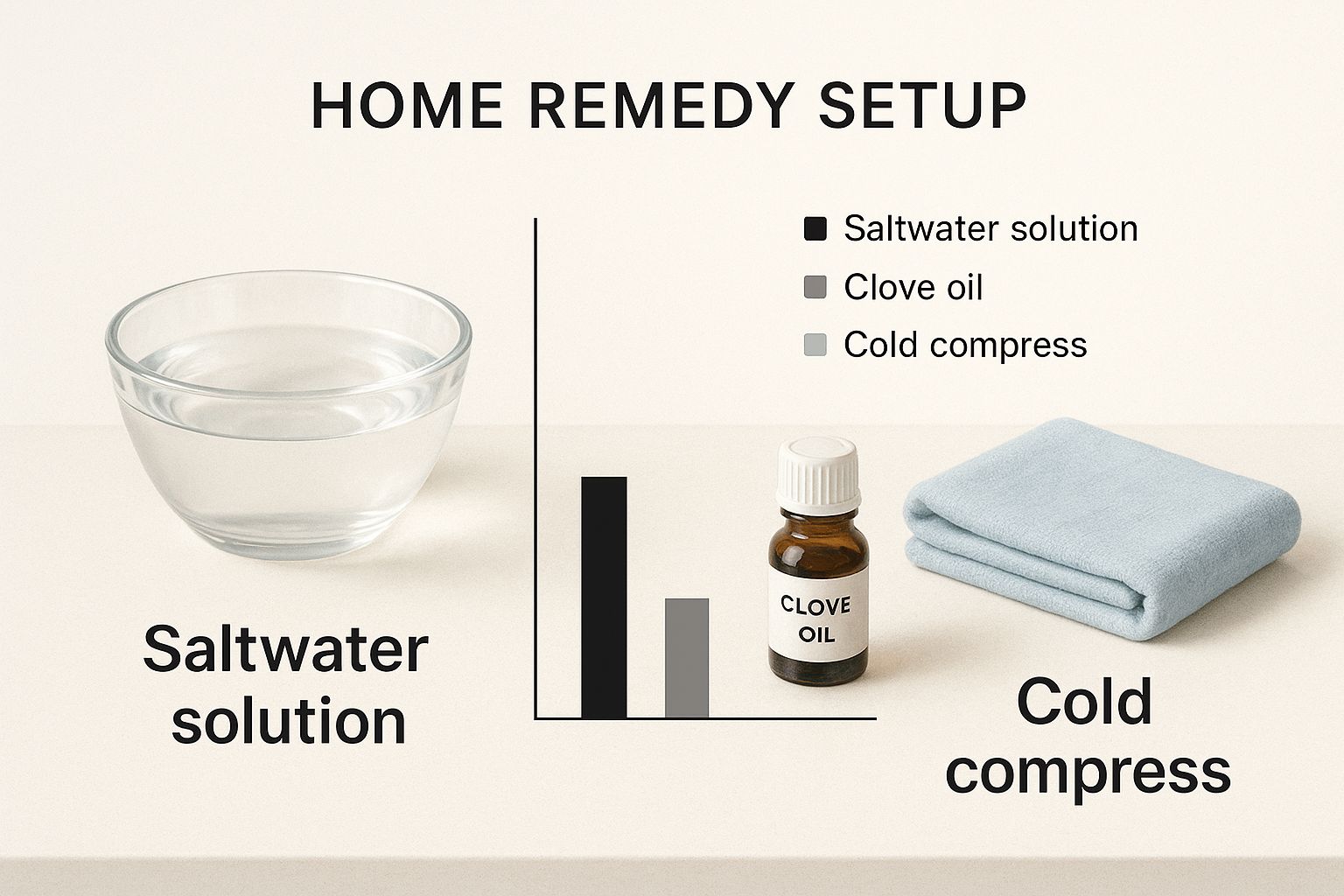
As the image shows, you don't need a complicated setup. Simple household items like salt, clove oil, and a cold pack can provide significant, albeit temporary, tooth pain relief.
A Warm Salt Water Rinse
A warm salt water rinse is one of the oldest and most trusted remedies. It’s incredibly simple, yet it works on a clever scientific principle. The salt helps draw excess fluid out from your swollen, inflamed gum tissues, which can dramatically reduce painful pressure around the aching tooth.
Here's how to do it right:
- Mix half a teaspoon of table salt into a glass of warm—not hot—water until it dissolves.
- Take a mouthful and swish it gently for about 30 seconds, making sure it washes over the sore area.
- Spit it out and repeat a few times a day, especially after meals.
This simple rinse also helps flush away food particles that might be trapped in a cavity or between teeth, removing another potential source of irritation.
The Power of a Cold Compress
If your toothache is sharp and throbbing, or if you notice swelling in your cheek, a cold compress is your best friend. Applying cold to the outside of your face constricts the blood vessels in the area, which slows blood flow and brings down inflammation. It also provides a welcome numbing sensation that helps dull the pain signals.
Think of it like icing a sprained ankle. Never apply ice directly to your skin or tooth, as this can cause more harm. Instead, wrap an ice pack in a thin towel and hold it to your cheek for 15-20 minute intervals.
Crucial Safety Tip: A persistent myth suggests placing an aspirin directly against the tooth or gums. Please do not do this. It can cause a painful chemical burn on your delicate gum tissue, creating a new problem.
Comparing At-Home Tooth Pain Relief Methods
When you're in pain, it helps to know which remedy is right for the job. This quick table breaks down the most common at-home options to help you choose the best temporary solution for your specific type of discomfort.
| Remedy | How It Works | Best For | Caution |
|---|---|---|---|
| Warm Salt Water Rinse | Draws out fluid from swollen gums (osmosis) and cleans the area. | General soreness, pain from trapped food, gum inflammation. | Use warm, not hot, water to avoid irritating the tooth. |
| Cold Compress | Constricts blood vessels to reduce swelling and numbs the area. | Sharp, throbbing pain, visible facial swelling, pain after trauma. | Never apply ice directly to skin or tooth. Use for 15-20 mins at a time. |
| Clove Oil | Contains eugenol, a natural anesthetic that numbs the nerve. | Sharp, localized pain from a specific cavity or cracked tooth. | Very potent. Apply only a tiny amount to the tooth, avoiding gums and tongue. |
Each of these methods offers a different type of relief. A salt water rinse is great for cleaning and soothing, a cold compress tackles swelling, and clove oil directly targets the nerve pain.
Using Clove Oil Carefully
For centuries, people have turned to clove oil for tooth pain. It contains a powerful natural compound called eugenol, which acts as both an anesthetic and an antiseptic. Scientific studies have confirmed that eugenol is genuinely effective at numbing pain and tamping down localized inflammation (Source: Journal of Dentistry).
However, because clove oil is so potent, you must use it with care to avoid irritating your mouth.
- Start by putting just one or two drops of clove oil onto a clean cotton ball or Q-tip.
- Carefully dab the oil directly onto the part of the tooth that hurts, doing your best to keep it off your tongue and gums.
- You should feel a gentle numbing sensation within moments.
Remember, these home remedies are a bridge to professional care. They address the symptoms, not the underlying cause. The most important step for lasting tooth pain relief is to book an appointment with us at Cedar Dental Group.
Choosing the Right Over-the-Counter Pain Relievers

When a toothache is severe, the pain reliever aisle at the pharmacy can feel overwhelming. Picking the right medication is a crucial first step toward getting temporary tooth pain relief. Think of over-the-counter (OTC) medications as a bridge to get you to your dental appointment, not a final destination.
They aren't all the same. It's like choosing the right tool for a job—one is designed to reduce swelling, while another simply blocks pain signals to your brain.
Anti-Inflammatories vs. Pain Blockers
The two main players on the OTC shelf are NSAIDs (nonsteroidal anti-inflammatory drugs) and acetaminophen. They both ease pain, but they work in completely different ways.
-
NSAIDs (Ibuprofen, Naproxen): Found in brands like Advil and Aleve, their specialty is fighting inflammation. If your toothache stems from an infection or swollen gums, an NSAID is usually your best bet because it attacks the swelling that’s creating painful pressure.
-
Acetaminophen: Better known as Tylenol, this medication is a pure pain blocker. It works on a neurological level to tell your brain to ignore pain signals. It won't reduce swelling, but it's fantastic at dulling the sensation of pain.
So, how do you choose? If you can see or feel swelling in your gum or cheek, an anti-inflammatory like ibuprofen is often the logical choice. If it's more of a sharp, nervy pain without obvious inflammation, acetaminophen might be sufficient.
How to Use OTC Medications Safely
Just because you can buy them without a prescription doesn't mean you can use them without care. Using these powerful drugs correctly is absolutely critical for your safety.
Your health is our number one priority. Always read the label and follow the dosage instructions to the letter. Never take more than the recommended amount or mix different pain relievers without talking to your dentist or doctor first.
Here are a few simple rules to keep in mind:
- Stick to the Dosage: Pay close attention to the maximum dose allowed in a 24-hour period and do not exceed it.
- Check for Hidden Ingredients: Many multi-symptom cold and flu products contain acetaminophen or ibuprofen. Always check the active ingredients list to avoid an accidental overdose.
- Know Your Health History: If you have kidney or liver problems, stomach ulcers, or are taking blood thinners, check with a doctor before taking any OTC pain reliever.
Remember, these medications are a temporary patch. They make life bearable but don't fix the underlying problem. Relying on them for too long can mask a serious issue that is only getting worse. While there are sometimes options other than root canal therapy, the only way to know for sure is to get a professional diagnosis from our team in Renton.
Professional Treatments for Lasting Pain Relief
While rinsing with salt water can get you through the night, it’s just a bandage. True, lasting relief from a toothache only happens when a dentist addresses the issue at its source. We know the idea of a dental procedure can be nerve-wracking, which is why we approach every treatment with compassion and professionalism.
At Cedar Dental Group, we see these treatments as incredible tools that restore your health and put a permanent end to your pain. Understanding what's involved can turn anxiety into a feeling of control. You're not just enduring a procedure; you're actively fixing what has caused so much misery.
Dental Fillings for Cavities
The number one culprit behind a nagging toothache is often a cavity. A filling is the most direct and effective fix, like patching a hole in your tooth's armor. A filling seals off the sensitive inner layers from bacteria and irritation.
The process is straightforward. Our dentist will gently clear out the decayed part of the tooth, clean the area, and then fill the space with a strong, durable material. This doesn't just stop the pain—it brings the tooth back to its original strength and shape.
Root Canal Therapy to Save an Infected Tooth
No other phrase in dentistry causes as much dread as "root canal." It’s a shame because its reputation is completely backward. A root canal doesn't cause pain; it's the cure for it. This treatment is for an infection that has reached the pulp—the nerve center of your tooth.
A root canal is one of the most effective pain-relieving treatments in all of dentistry. It removes the infected nerve tissue that's causing the agony and saves a tooth that would otherwise have to be extracted.
We simply remove the infected pulp, carefully clean and disinfect the inside of the tooth, then fill and seal it. Once the source of the infection is gone, so is the pain. A modern root canal is a comfortable procedure that lets you keep your natural tooth.
Dental Crowns to Protect Damaged Teeth
Sometimes, a tooth has sustained too much damage for a simple filling—perhaps from a large cavity, a bad crack, or after a root canal. In these situations, a dental crown acts like a custom-fit helmet, covering the entire tooth to shield it from further harm.
A crown restores the tooth's original size, shape, and strength. It not only relieves pain but also ensures the tooth can function properly for the long haul. You can learn more about how we restore function and beauty with our restorative dentistry services in Renton, WA.
Deep Cleaning for Gum Disease Pain
Not all "tooth" pain starts in the tooth. Often, the problem is in the surrounding gums. Gum disease can cause a constant, dull ache and serious sensitivity when gums pull away from the teeth and expose the roots. The solution is a specialized procedure called a deep cleaning, or scaling and root planing.
This isn't your average cleaning. We go below the gumline to meticulously remove the plaque and tartar buildup causing the inflammation. This process helps the gums reattach, which gets rid of the pain and stops the disease from progressing.
The need for these pain-relieving solutions is on the rise. The global oral care market was recently valued at USD 47.3 billion and is expected to climb to USD 80.8 billion by 2034, driven by an increase in oral diseases that often first appear as pain (Source: this market research on oral care). Our goal at Cedar Dental Group in Renton is simple: get you out of pain so you can get back to your life.
How to Prevent Future Tooth Pain
Once you’ve dealt with a toothache, you’ll do just about anything to avoid another one. The real secret to long-term relief is prevention. It all comes down to building solid habits that keep your teeth strong and fend off the usual suspects behind tooth pain.
Think of your daily routine not as a chore, but as an investment in your future comfort and confidence. You're building a fortress for your smile, and our team is here to support you.
Build a Strong Foundation with Daily Habits
Excellent, consistent oral hygiene is your first line of defense. This is about systematically removing the sticky film of bacteria, called plaque, that leads to cavities and irritated gums.
Here are the non-negotiables:
- Brush the Right Way, Twice a Day: Use a soft-bristled brush and fluoride toothpaste. Angle the bristles at 45 degrees toward your gums and use gentle, circular strokes for a full two minutes.
- Don't Skip Flossing: Flossing is your secret weapon. It clears out plaque and trapped food from between your teeth and under the gumline where your toothbrush can't reach.
- Consider an Antiseptic Mouthwash: A good antiseptic rinse can help reduce the overall bacteria count in your mouth, reaching all the nooks and crannies.
Together, these simple actions keep your enamel strong and your gums healthy, blocking the pathways that lead to pain. For more details, check out our guide on how to prevent cavities.
The Critical Role of Diet and Fluoride
What you eat has a direct effect on your teeth. Every time you sip a soda or eat a sugary snack, you’re feeding the bacteria that want to destroy your enamel.
Your diet is a powerful tool. By choosing tooth-friendly foods and limiting sugar, you're essentially starving the bacteria that cause cavities and pain.
Making smarter choices can be simple. Swapping sugary drinks for water is a game-changer. Reaching for crunchy veggies, cheese, or nuts instead of sticky sweets can make a massive difference. Fluoride is the other half of this equation, helping to rebuild and harden enamel against acid attacks.
Regular Dental Visits are Your Best Defense
Nothing beats having a professional in your corner. Regular dental check-ups are your most important preventative tool. During these visits, our team at Cedar Dental Group can spot tiny problems long before they have a chance to turn into a painful emergency.
Being proactive with your dental health is the best way to avoid discomfort and prevent problems before they need a serious fix.
Your Tooth Pain Questions Answered
When a tooth starts to hurt, it's normal to feel worried and have questions. We've gathered some of the most common questions we hear from patients at our Renton dental practice to provide clarity and peace of mind. Our goal is to empower you with good information so you feel confident about what to do next.
1. Can a toothache go away on its own?
If the pain is from minor gum irritation, it might fade. But pain that comes from a problem inside the tooth, like a cavity or infection, will not get better by itself. Ignoring it allows the underlying damage to worsen. It's crucial to have any persistent toothache checked by a professional to address the root cause.
2. Is tooth sensitivity the same as a toothache?
They are different. Sensitivity is usually a sharp, brief jolt of pain in response to a trigger like hot, cold, or sweet foods. A toothache is often a more constant, throbbing, or dull ache that can linger without a clear trigger. This persistent ache often signals a deeper issue that needs professional attention.
3. When is a toothache considered a dental emergency?
Any persistent tooth pain warrants a call to our Renton office. However, you should seek immediate emergency care if your pain is accompanied by:
- Severe, unbearable pain that OTC medication doesn't help.
- Swelling in your face, cheek, or jaw.
- A fever, which signals a spreading infection.
- A pimple-like bump on your gum (a sign of an abscess).
- Difficulty breathing or swallowing. This is a medical emergency.
4. Why does my tooth hurt more when I lie down?
This is a common experience. When you lie down, more blood flows to your head, increasing the pressure inside the inflamed pulp chamber of your tooth. This intensifies the throbbing sensation. Propping your head up with an extra pillow can sometimes provide minor relief.
5. Can stress make my teeth hurt?
Absolutely. Stress won't create a cavity, but it can contribute to tooth and jaw pain. Many people clench or grind their teeth (bruxism) when stressed, especially at night. This can wear down enamel, crack teeth, and strain jaw muscles, all of which cause pain. Managing stress is an important part of protecting your long-term oral health.
Are you tired of letting tooth pain run your life? The team at Cedar Dental Group is here to provide the compassionate, expert care you need to find lasting relief. Contact us today to schedule your consultation at our Renton, WA, office and take the first step toward a comfortable, healthy smile.
