

That sharp, sudden twinge of pain you feel when a cold drink or sweet snack hits your teeth has a name: tooth sensitivity. It’s also known in the dental world as dentin hypersensitivity. This common issue happens when the tough, protective outer layer of your tooth—the enamel—thins out, or your gums recede, uncovering the more delicate layer underneath called dentin.
At Cedar Dental Group, we understand that tooth sensitivity can be more than just an inconvenience; it can affect your daily comfort and confidence. We want to reassure you that getting to the bottom of what causes this discomfort is the first step toward finding real, lasting relief.
Why Your Teeth Hurt: A Guide to Tooth Sensitivity
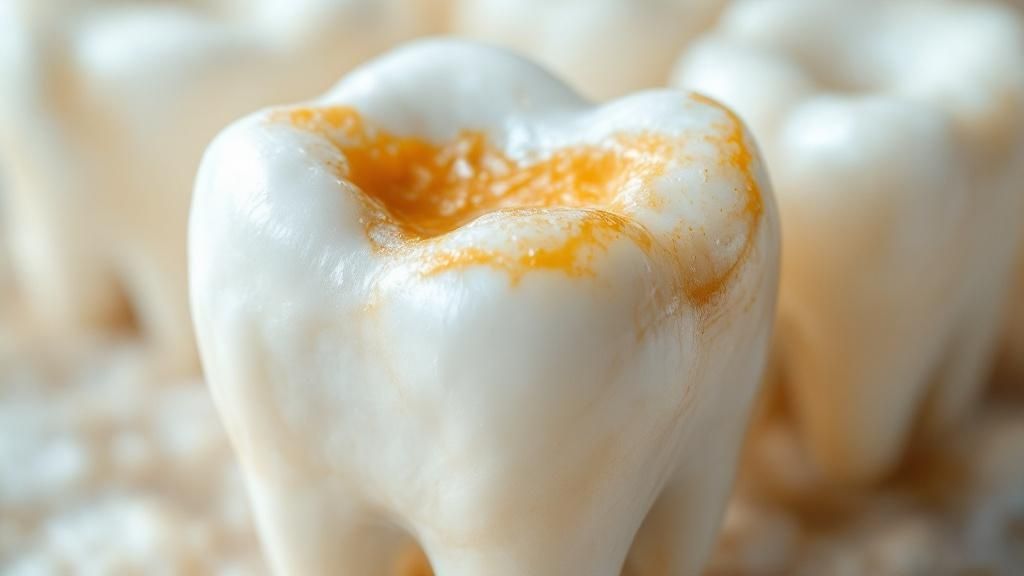
If you’ve ever winced after a sip of iced tea or a spoonful of ice cream, you’re in good company. That jolt is a direct signal from your teeth, telling you their natural defenses have been compromised. Tooth sensitivity is an incredibly common problem; some studies from the National Institutes of Health show that over 40% of adults have dealt with it at some point.
Here at Cedar Dental Group, we want you to know that tooth sensitivity isn’t a life sentence. It’s a treatable condition with clear causes and, most importantly, effective solutions that can bring you comfort and peace of mind. Our team is here to help you understand what’s happening and find a solution that works for you.
The Anatomy of a Sensitive Tooth
To really get what’s happening, it helps to visualize your tooth’s layers. The hard, white part you see is the enamel, which is like a shield protecting the inner tooth. Just beneath it is the dentin, a softer, more porous layer filled with thousands of microscopic, hollow channels.
These tiny tubes, or tubules, act like little straws leading straight to the tooth’s nerve center, the pulp. When your enamel is thick and your gums are healthy, they form a protective barrier over the dentin. But if the enamel erodes or your gums pull back, those tiny tubules are left exposed to everything that enters your mouth.
This exposure creates a direct pathway for external triggers—like hot coffee, cold air, or sugary foods—to travel down the tubules and stimulate the nerve. The result is that unmistakable, sharp pain.
Think of it this way: your house has well-sealed windows to keep the cold out. As long as the seals are intact, you stay warm and comfortable inside. But if a seal cracks, a frigid draft can rush in and give you a chill. Exposed dentin works the same way, allowing sensations to bypass your tooth’s natural defenses and send a shockwave straight to the nerve.
Common Triggers and Their Underlying Causes
To help you connect what you’re feeling with what’s happening inside your mouth, here’s a quick look at the most common triggers and the dental issues behind them. Understanding these connections is the key to identifying the source of your discomfort.
| Immediate Trigger (What You Feel) | Underlying Cause (Why You Feel It) |
|---|---|
| Hot/Cold Foods & Drinks | Temperature changes travel through exposed tubules to the nerve. |
| Sweet or Acidic Foods | Sugars and acids irritate the nerve via the same exposed pathways. |
| Cold Air | A sudden blast of cold air can hit exposed dentin and trigger pain. |
| Brushing/Flossing | The pressure or friction directly stimulates the exposed nerve endings. |
| Dental Procedures | Professional cleanings or treatments can temporarily increase sensitivity. |
Once we know the “why,” our team at Cedar Dental Group can work with you to find a lasting solution and get you back to enjoying your favorite foods without fear.
Understanding Your Tooth’s Natural Defenses
To get to the bottom of tooth sensitivity, it helps to understand your tooth’s built-in defense system. Picture each tooth like a small, incredibly tough fortress. The outer wall of that fortress is the enamel.
This is the hard, white layer you see when you smile. Enamel is actually the hardest substance in your entire body—even stronger than bone! Its main job is to take the brunt of everything you throw at it, from daily chewing to protecting the sensitive parts inside from extreme temperatures.
What Lies Beneath the Surface
Right under that tough enamel shell is a layer called dentin. Unlike enamel, dentin is much softer and has a texture more like a sponge, filled with thousands of tiny, microscopic tubes. Think of these as little secret tunnels that lead directly to the very center of your tooth, where the nerve, or pulp, lives.
As long as your enamel is strong and your gums are healthy, these little tunnels are completely sealed off. But when the enamel wears down or your gums pull back (recede), those dentin tubules are left wide open.
This is where the trouble starts. Suddenly, things like a cold drink or a spoonful of hot soup have a direct, express lane to the nerve. That sharp, sudden zing you feel? That’s your tooth’s alarm system, warning you that its defenses have been breached.
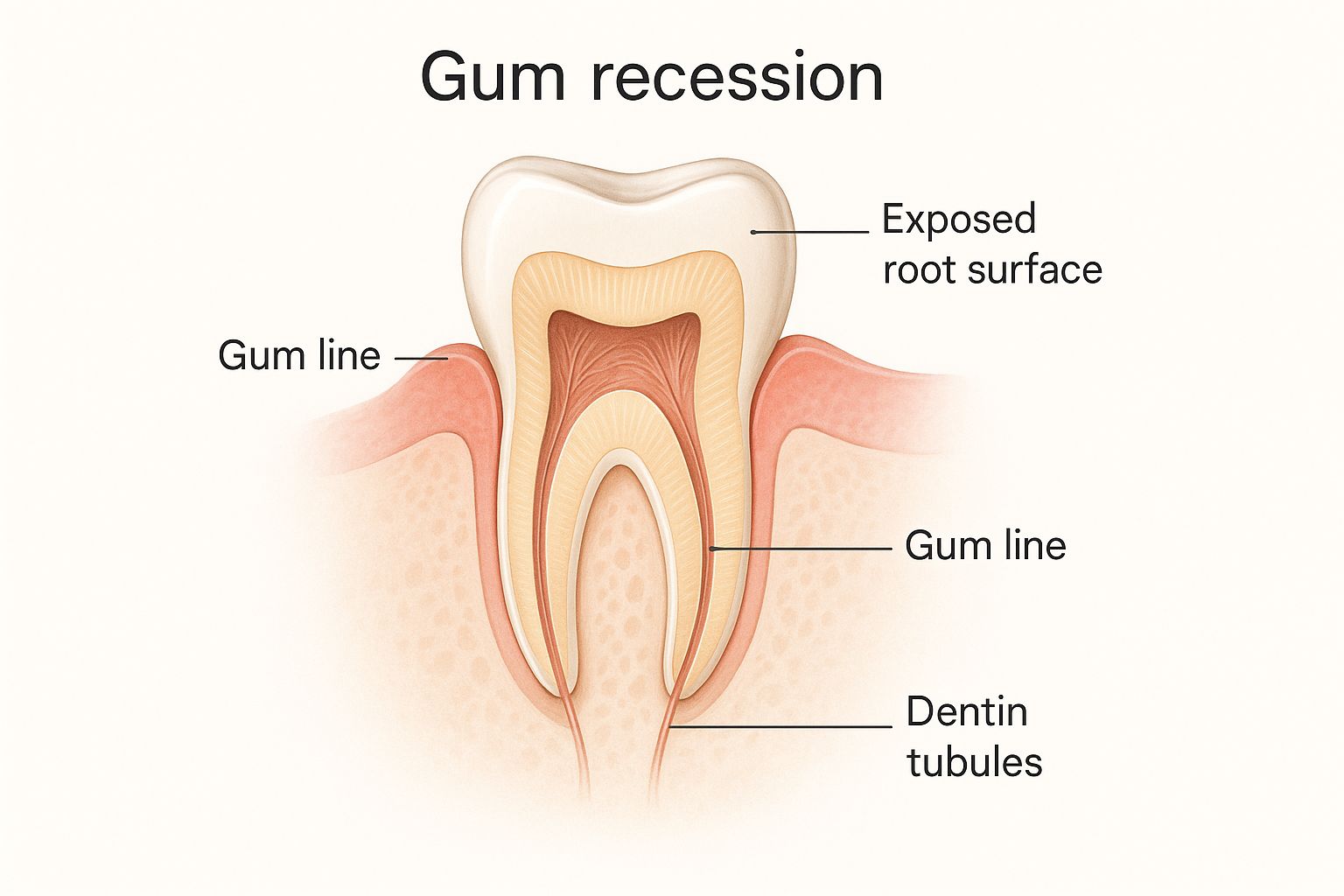
This image really drives the point home. You can see how, once the gum line recedes and the dentin is exposed, there’s nothing left to block sensations from hitting the nerve. Keeping your enamel and gums healthy is the key to keeping those pathways sealed and preventing that jolt of pain.
Why Enamel and Dentin Are So Different
The contrast between enamel and dentin is what truly explains sensitivity. They’re built for completely different jobs.
- Enamel is almost pure mineral, which is what makes it so incredibly durable. It has no nerves, so it can’t feel anything itself. Its sole purpose is to be the shield.
- Dentin, on the other hand, is living tissue. Those tubules are what allow it to transmit sensations from the outside world straight to the nerve.
- The Pulp is the tooth’s command center. This is where the blood vessels and nerves reside, and it’s where the pain signals actually come from when they get triggered.
The bottom line is that tooth sensitivity isn’t a problem with the nerve itself. It’s an exposure problem. It’s a sign that your tooth’s natural armor has been worn down, leaving the delicate inner nerve unprotected.
Here at Cedar Dental Group, our whole approach is about reinforcing those natural defenses. By figuring out exactly why your enamel or gums are compromised, we can build a personalized plan to protect your teeth, stop the pain at its source, and get you back to feeling comfortable and confident in your smile.
Everyday Habits That Damage Tooth Enamel
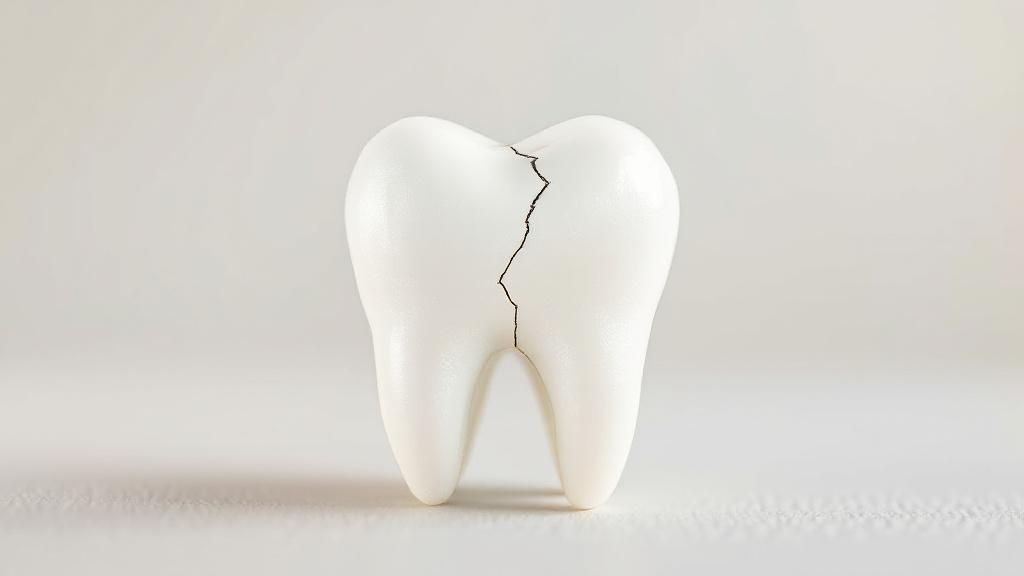
Your tooth enamel is the hardest substance in your body, but that doesn’t make it invincible. Many of us have daily habits, things we do without a second thought, that are slowly wearing away this crucial protective layer. This gradual damage is often the direct cause of that sharp, sudden pain we know as tooth sensitivity.
The good news is that understanding what causes the damage is the first step to stopping it. These habits generally fall into two main buckets: chemical erosion (dissolving enamel) and physical abrasion (scrubbing it away). Either way, the result is the same—tiny openings that expose the sensitive dentin underneath.
Chemical Erosion From Foods and Drinks
By far, the most common threat to your enamel is acid. When you eat or drink something acidic, it temporarily softens the mineral surface of your teeth, leaving it weak and vulnerable. Repeated over time, this acid attack can permanently thin out your enamel.
You’d be surprised how many common items are on the acidic list:
- Sodas and Sports Drinks: These are often loaded with phosphoric and citric acids.
- Citrus Fruits and Juices: Your morning orange juice or lemon in your water packs an acidic punch.
- Wine: Both red and white wines contain acids that can wear on enamel.
- Coffee: That essential morning cup contributes to acid exposure over time.
This isn’t a minor issue. A 2020 study found that 42.2% of people surveyed had sensitive teeth, and drinking acidic sodas was a major factor. (Source: Journal of Clinical and Experimental Dentistry)
Actionable Takeaway: Wait at least 30 minutes before brushing your teeth after consuming something acidic. Brushing while your enamel is in that softened state can actually scrub away the weakened surface. Swishing with plain water is a great way to help neutralize the acid while you wait.
Physical Abrasion and Forceful Habits
Physical abrasion is exactly what it sounds like—damage from friction or force. This can be just as harmful as acid, literally grinding away your enamel and setting the stage for tooth sensitivity.
Believe it or not, one of the biggest culprits is brushing your teeth too hard. Many people attack their teeth with a hard-bristled brush, thinking a good scrub is what’s needed. But aggressive brushing acts like sandpaper on your enamel and can damage your gums. This is a core part of any good oral hygiene routine, which you can learn more about in our guide on how to prevent cavities.
Another major source of physical wear is bruxism, the clinical term for teeth grinding. Many people clench or grind their teeth without even knowing it, especially at night. The sheer force from this habit can chip, crack, and wear down your enamel at an alarming rate.
Protecting your teeth from this kind of damage often just takes a few small tweaks:
- Switch to a soft-bristled toothbrush and focus on gentle, circular motions.
- Stop scrubbing. Think of it more as massaging your teeth and gums.
- If you suspect you grind your teeth, let us know. A custom-fitted nightguard from our Renton office is a simple and effective way to protect your smile while you sleep.
The Critical Link Between Gum Health and Sensitivity
Worn enamel often takes the blame for sensitive teeth, but there’s another major player: your gums. Picture your gums as a protective turtleneck, wrapped snugly around the base of each tooth. Their main job is to cover the tooth roots, which are much more sensitive than the crowns you show off when you smile.
The tops of your teeth are covered in tough enamel, but the roots have a softer coating called cementum. When your gums are healthy, this delicate root surface stays completely protected. But if your gums start to pull back—a condition we call gum recession—they expose the cementum and the vulnerable dentin layer beneath it.
This is a huge reason for tooth sensitivity, especially that sharp, zinging pain you might feel right at your gumline when something cold touches it.
Why Do Gums Recede?
Gum recession isn’t something that happens overnight. It’s usually the result of long-term habits or conditions that need to be addressed. Pinpointing the cause is the first step toward protecting your gums and preventing that uncomfortable zing from exposed roots.
Here are the most common culprits:
- Gum Disease (Gingivitis and Periodontitis): This is the number one cause. Bacteria create inflammation that slowly eats away at gum tissue and even the bone that holds your teeth in place.
- Aggressive Brushing: Brushing too hard or using a stiff-bristled brush can literally scrub your delicate gum tissue away over time.
- Genetics: Some of us are just born with thinner gum tissue, which makes us more prone to recession.
- Teeth Grinding (Bruxism): Clenching and grinding puts tremendous force on your teeth, and that stress can cause your gums to recede.
Think of sensitivity as an early warning flare from your body. A 2023 study by Haleon revealed just how common this is, showing that over 50% of adults in Europe experience sensitive teeth. More importantly, the research drew a direct line between this pain and conditions like gum recession. You can read more about tooth sensitivity and its connection to other dental conditions in the study’s findings.
Healthy gums are the unsung heroes of a comfortable smile. They form a crucial seal that protects the most sensitive parts of your teeth from the outside world.
At Cedar Dental Group, we focus on getting ahead of gum problems. Catching recession early is the key to stopping sensitivity in its tracks. Our team can help figure out what’s causing your gum recession and map out the right plan, like our compassionate gum disease treatment in Renton, WA.
Hidden Causes Behind Sudden Tooth Pain
While worn enamel and receding gums are the usual suspects, sometimes the real reason for your tooth pain is hiding in plain sight. This sensitivity can be your body’s way of flagging an underlying issue that needs a professional eye to catch. Getting to the bottom of these less obvious causes is the first step toward finding real, lasting relief.
It’s completely normal to feel a temporary jolt of sensitivity after certain dental procedures. Think of it like a sprained ankle—your tooth is a living part of you, and it just needs a little time to heal.
- After a New Filling or Crown: The work needed to place a restoration can sometimes stir up the nerve inside the tooth. This sensitivity is usually mild and should disappear within a few weeks as everything settles down.
- Following Teeth Whitening: Professional whitening treatments can temporarily make your teeth more porous, which dials up the sensitivity to hot and cold. This is a common side effect that typically goes away shortly after you’ve finished the whitening process.
Deeper Issues That Need Attention
Sometimes, that sudden, sharp pain is pointing to a more specific problem inside the tooth. These issues create a direct pathway for hot, cold, or sweet triggers to hit the nerve, resulting in a surprising and often intense zing. If the pain is severe or comes on without warning, it could be a sign you need our emergency dental services in Renton.
A tiny, nearly invisible crack or chip can be all it takes to expose the delicate dentin layer. This can happen from something as simple as biting down on an ice cube or from the long-term stress of grinding your teeth.
Why a Professional Diagnosis Matters: Unlike a cracked phone screen, a cracked tooth isn’t just a cosmetic problem. It’s a breach in the tooth’s defense system that can get worse over time, potentially leading to a serious infection if it’s not treated.
When It’s Not a Cavity
Another hidden culprit is something dentists call a noncarious cervical lesion (NCCL). It sounds complex, but it’s just a small notch or groove that appears right at the gumline, and it isn’t caused by decay. These little divots are usually the result of a one-two punch: aggressive toothbrushing habits combined with the heavy forces of teeth grinding.
Recent research underscores just how big of a deal these factors are. A 2023 study in BMC Oral Health found a powerful connection between thermal sensitivity—pain from hot or cold—and the presence of these exact lesions and gum recession. You can read more about these findings on tooth sensitivity triggers to dig into the science behind the sensation.
Your Guide to At-Home and Professional Solutions
The good news is you don’t have to just live with tooth sensitivity. There are plenty of ways to manage and treat that sharp, sudden discomfort, ranging from simple changes you can make today to professional treatments we offer right here at our Renton dental office. The key is working with your dentist to find the right approach for you.
For most people, relief starts at home with a few small but impactful tweaks to their daily routine. The most common first step is switching to a desensitizing toothpaste. These special toothpastes work in a couple of different ways. Some use compounds like potassium nitrate to gradually soothe the nerve inside your tooth, while others use stannous fluoride to plug up those tiny, microscopic tubes in your dentin.
You can think of it like this: some toothpastes turn down the volume on the nerve’s “pain” signal, while others patch the little holes that let the painful sensations get through in the first place. The most important thing is to use it consistently—that’s when you’ll really see a difference.
Simple Steps for Daily Comfort
Beyond your toothpaste, a few other daily habits can go a long way in keeping sensitivity at bay. These adjustments are all about minimizing irritation and giving your enamel and gums the protection they need.
- Use a Soft-Bristled Brush: A soft brush is a must. It cleans your teeth perfectly well without contributing to gum recession or wearing down your enamel. Always use gentle, circular motions—no aggressive back-and-forth scrubbing!
- Make Smart Dietary Choices: Cutting back on highly acidic foods and drinks (like soda, citrus fruits, and wine) gives your enamel a fighting chance. When you do enjoy a treat, swishing with plain water right after helps wash away the acids.
- Maintain Excellent Oral Hygiene: This is the foundation of everything. Brushing twice a day and flossing daily removes the plaque that can lead to gum disease and cavities, both of which can cause sensitivity. If you need a refresher, our guide on how to floss properly can help.
Professional Treatments for Lasting Relief
Sometimes, at-home care isn’t enough to get rid of persistent or severe sensitivity. When that’s the case, our team at Cedar Dental Group can step in with more targeted, powerful solutions tailored to your needs.
We might apply a professional-grade in-office fluoride varnish, which helps strengthen weakened enamel and block those sensitive tubules. If sensitivity is coming from an exposed root surface, we can use dental bonding to cover the vulnerable area with a durable, tooth-colored resin. For significant gum recession, a gum graft might be the best option to surgically restore the protective gum tissue around the tooth root, providing a long-term fix.
FAQs: Your Questions About Tooth Sensitivity Answered
We understand that dealing with tooth sensitivity can be a confusing and sometimes worrying experience. To provide clarity and reassurance, here are answers to some of the questions we hear most often from our patients here in Renton, WA.
1. Can tooth sensitivity go away on its own?
Sometimes, mild sensitivity after a dental cleaning may fade in a few days. However, persistent sensitivity is often a symptom of an underlying issue like enamel wear or gum recession, which won’t resolve on their own. Ignoring it can allow the real problem to worsen, so it’s always best to have it professionally evaluated.
2. Is my tooth sensitivity definitely a cavity?
While sensitivity is a classic symptom of a cavity, it’s not a guarantee. Exposed dentin from gum recession, a cracked tooth, or even aggressive brushing can cause the exact same feeling. A professional dental exam is the only way to know for sure what’s causing your discomfort and to rule out decay.
3. Will teeth whitening make my sensitivity worse forever?
This is a common concern, but you can rest assured it’s almost always temporary. Whitening agents can briefly increase tooth porosity, leading to heightened sensitivity. This effect typically disappears shortly after the treatment is complete. If you’re prone to sensitivity, let us know—we can discuss gentle whitening options to ensure your comfort.
4. How can I tell if I’m brushing too hard?
Look at your toothbrush bristles. If they appear splayed out or frayed after just a few weeks of use, you are likely applying too much pressure. Other signs include receding gums or visible notches at the gumline. Remember, a gentle touch with a soft-bristled brush is all you need for effective cleaning.
5. When is it time to see a dentist for sensitivity?
You should schedule an appointment if your sensitivity is severe, lasts for more than a week, or prevents you from enjoying everyday foods and drinks. It’s completely understandable to feel anxious, especially when in pain. Our compassionate team is here to help, and you can explore our tips on how to overcome dental anxiety for a more comfortable experience.
Ready to put sensitivity behind you and enjoy life comfortably again? Contact Cedar Dental Group in Renton, WA, today to schedule your consultation. We are here to help you find a lasting solution. Visit us online at https://cedardentalgroup.com.
