

When a dental emergency hits, it's easy to feel a surge of panic. Most advice you'll find says the same thing: "Call your dentist immediately." While that's true, it skips over the crucial first steps you can take to manage pain, protect your tooth, and prepare for your visit.
Taking a moment for a few key actions can make a world of difference. Think of it as dental first aid. These steps can help keep things from getting worse while you prepare to call us, especially if your emergency happens after hours.
Your First Response to a Dental Emergency
A cracked tooth or a sudden, throbbing ache can be jarring. The key is to stay calm and take control. Knowing what to do in those first critical moments provides relief and helps you give our team the clear information we need to help you fast. Your immediate goal is to stabilize the situation, ease your discomfort, and protect the area from more damage.
These first steps are incredibly important. They can often manage symptoms well enough to avoid a stressful and expensive trip to the hospital. Many people don't realize how often this happens. Dental issues are responsible for nearly two million emergency department visits each year in the U.S. (Source: American Dental Association). In most cases, a visit to a well-equipped dental office like ours would have been a better, faster solution.
Taking Control with Simple At-Home Care
Before anything else, your priority should be to gently clean the area and get any pain or swelling under control. A warm salt water rinse is one of the oldest and most effective tricks for a reason.
- How it helps: Mix half a teaspoon of table salt into eight ounces of warm (not hot!) water. Swish it in your mouth for about 30 seconds, focusing on the sore area, then spit it out. This simple solution cleans away debris, reduces bacteria, and soothes inflamed gums.
- What to avoid: Stay away from hot water. If a nerve is exposed, heat will only make the pain worse.
After rinsing, grab a cold compress to tackle any swelling. A small bag of frozen peas or a cold pack wrapped in a thin towel works perfectly. Apply it to the outside of your cheek for 15-20 minutes at a time. This helps shrink the blood vessels, which numbs the pain and brings down inflammation. By taking these small but powerful actions, you’re actively managing the situation with a calm and confident approach.
To give you a quick reference, here’s a simple table outlining what to do for the most common issues we see.
Immediate Actions for Common Dental Emergencies
| Symptom | Immediate Action To Take | What To Avoid |
|---|---|---|
| Knocked-Out Tooth | Handle by the crown only. Gently rinse with milk or water (do not scrub). Try to reinsert it into the socket. If not possible, store it in a small container of milk. | Touching the root, using harsh cleaners, letting the tooth dry out. |
| Severe Toothache | Rinse with warm salt water. Apply a cold compress to your cheek. Use over-the-counter pain relievers like ibuprofen (if you can safely take them). | Placing aspirin directly on the tooth or gums (this can burn the tissue). |
| Cracked/Chipped Tooth | Rinse your mouth with warm water. Save any large pieces of the tooth you can find. Apply a cold compress to reduce swelling. | Biting down on the damaged tooth or eating hard/sticky foods. |
| Bleeding Gums/Tongue | Apply gentle but firm pressure to the area with a clean piece of gauze or a damp tea bag for 10-15 minutes. A cold compress can also help. | Rinsing vigorously, which can dislodge any forming clots. |
This table is your go-to for immediate triage, but it's not a substitute for professional care. Once you've stabilized the situation, your next step should always be to call our office.
How to Handle Specific Dental Injuries
Not all dental emergencies are the same. A sharp pain from a cracked molar is very different from the frantic rush of a knocked-out tooth. Knowing how to react in those first moments can make all the difference. It can manage your pain, protect the tooth, and give our team at Cedar Dental Group the best chance to save it once you get to our Renton office.
This flowchart is a great starting point, walking you through the first questions to ask yourself.
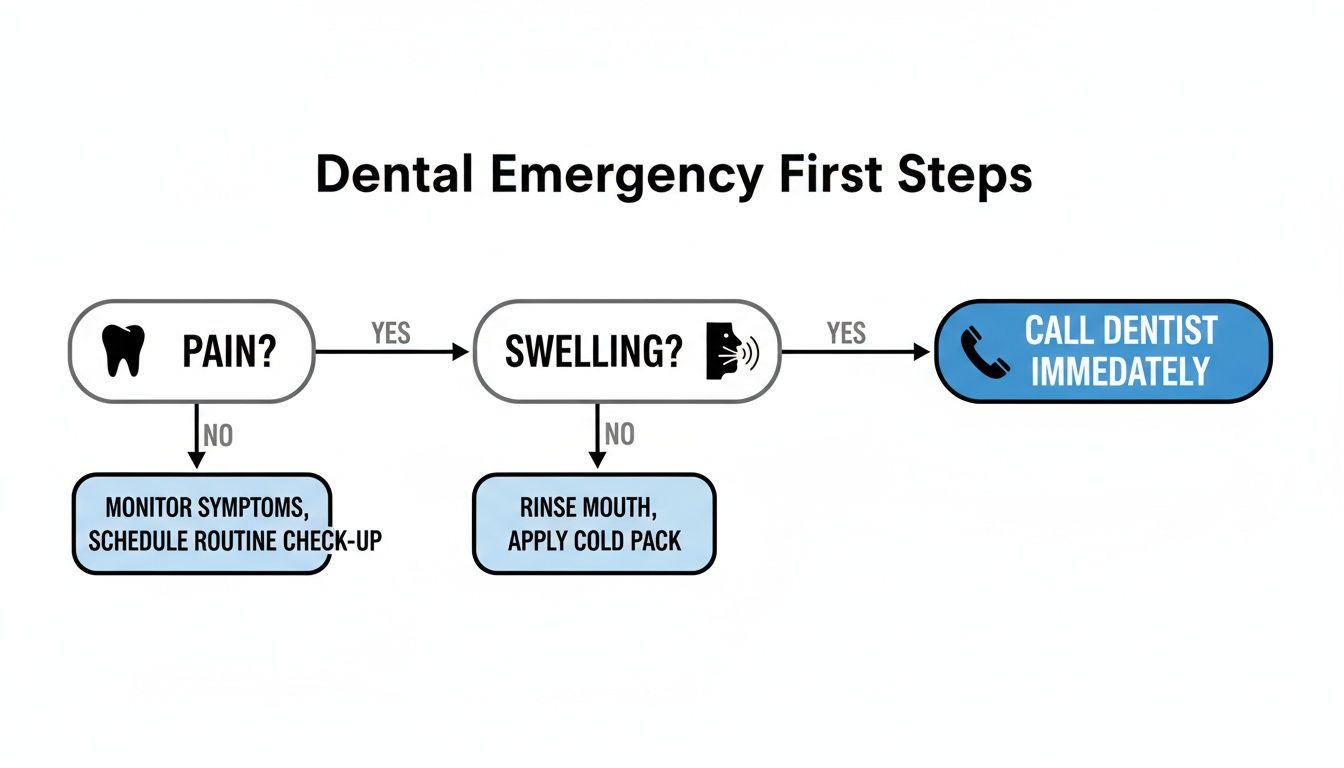
As you can see, severe pain and swelling are major red flags. If you're experiencing either, it's time to call a professional for immediate guidance.
Handling a Knocked-Out Tooth
When a permanent tooth gets knocked out, the clock starts ticking immediately. We have a very small window, often just 30-60 minutes, where the chances of successfully replanting the tooth are highest.
Your first move is to find the tooth and pick it up by the crown—the white, visible part you chew with. Whatever you do, do not touch the root. The root is covered in delicate tissues that are vital for reattachment.
If the tooth is dirty, give it a quick, gentle rinse with milk or a saline solution. Don't use soap or scrub it. If you feel comfortable, try to gently slide the tooth back into its socket. Hold it in place with your finger or by biting down softly on gauze. If that's not possible, place the tooth in a small container of milk to keep it from drying out.
Key Takeaway: A knocked-out tooth must stay moist. Keeping it in milk or safely back in its socket is the most important thing you can do to give us a fighting chance to save it.
Responding to a Chipped Tooth or Lost Filling
A chipped tooth or lost filling might not feel as alarming, but it still requires prompt attention. If you've chipped a tooth, rinse your mouth with warm water and gather any pieces you can find. A cold compress on your cheek can help with swelling and pain.
For a lost filling or crown, the goal is to protect the exposed area. You can find temporary dental cement at most drugstores. In a pinch, a small piece of sugar-free gum can cover the sensitive tooth surface. This simple step keeps food out and reduces sensitivity until you can see us.
When a Toothache Becomes an Emergency
A deep, throbbing toothache that won't quit is your body sending a serious signal. It often points to an infection or an abscess deep inside the tooth. This isn't average sensitivity—it's pain that often gets worse at night and doesn't respond to over-the-counter pain relievers.
A dental abscess might look like a small, pimple-like bump on your gums near the painful tooth. This is a pocket of infection that can damage bone and tissue. If left untreated, the infection can spread. Rinsing with warm salt water can give some temporary relief, but an abscess is a serious condition that requires immediate dental care.
After any procedure, proper healing is crucial. You can learn more about avoiding complications after tooth extraction to better understand the importance of aftercare.
Why Your Dentist Is a Better Choice Than the ER
When a tooth cracks or a severe ache flares up, your first thought might be to go to the nearest emergency room. It feels like the right move, but for a dental problem, it's often a frustrating and expensive detour.
ER doctors are great at what they do, but they aren't dentists. They can't perform a root canal, re-attach a crown, or fix a broken tooth. They can manage the immediate pain with medication or prescribe antibiotics for an infection. You'll get a temporary fix but will still need to see a dentist to solve the problem.
The Cost of Choosing the Wrong Door
Going to the hospital for a dental issue doesn't just waste time—it hits your wallet hard. ER dental visits now cost an average of $2,437 (Source: American Dental Association). That's nearly three times more than what you'd pay at a dental office for treatment that actually fixes the cause.
At Cedar Dental Group, you avoid unnecessary ER visits and get same-day relief. Calling us first means getting the right treatment from the start, saving you a costly, frustrating trip to the hospital.
For anyone in the Renton area, knowing this difference can save you a lot of grief. When you call us, you're getting in touch with a team that has one goal: to diagnose and treat the source of your pain, often on the same day.
Expertise and Equipment Make All the Difference
A dentist's office is designed for your oral health. We have diagnostic tools, like digital X-rays, that let us see exactly what’s going on. More importantly, we have the specialized instruments and materials needed to save a tooth and get you out of pain for good.
An ER isn't set up that way. Their focus is on stabilizing patients with life-threatening conditions. A dental emergency, while painful, requires a completely different set of skills.
- What an ER offers: Temporary pain relief and maybe antibiotics.
- What your dentist provides: An accurate diagnosis, targeted treatment, and a permanent solution.
At Cedar Dental Group, we provide comprehensive emergency dental care to make sure you get the right treatment when you need it most. We also accept most PPO insurance plans to make that care accessible. Before you rush to the hospital, make the call that will solve your dental problem for good.
Have This Information Ready Before You Call Us
Once you’ve managed the immediate pain or bleeding, gathering a few key details can make a world of difference. When you’re prepared, our team can understand your situation quickly and figure out the best way to help you right away.
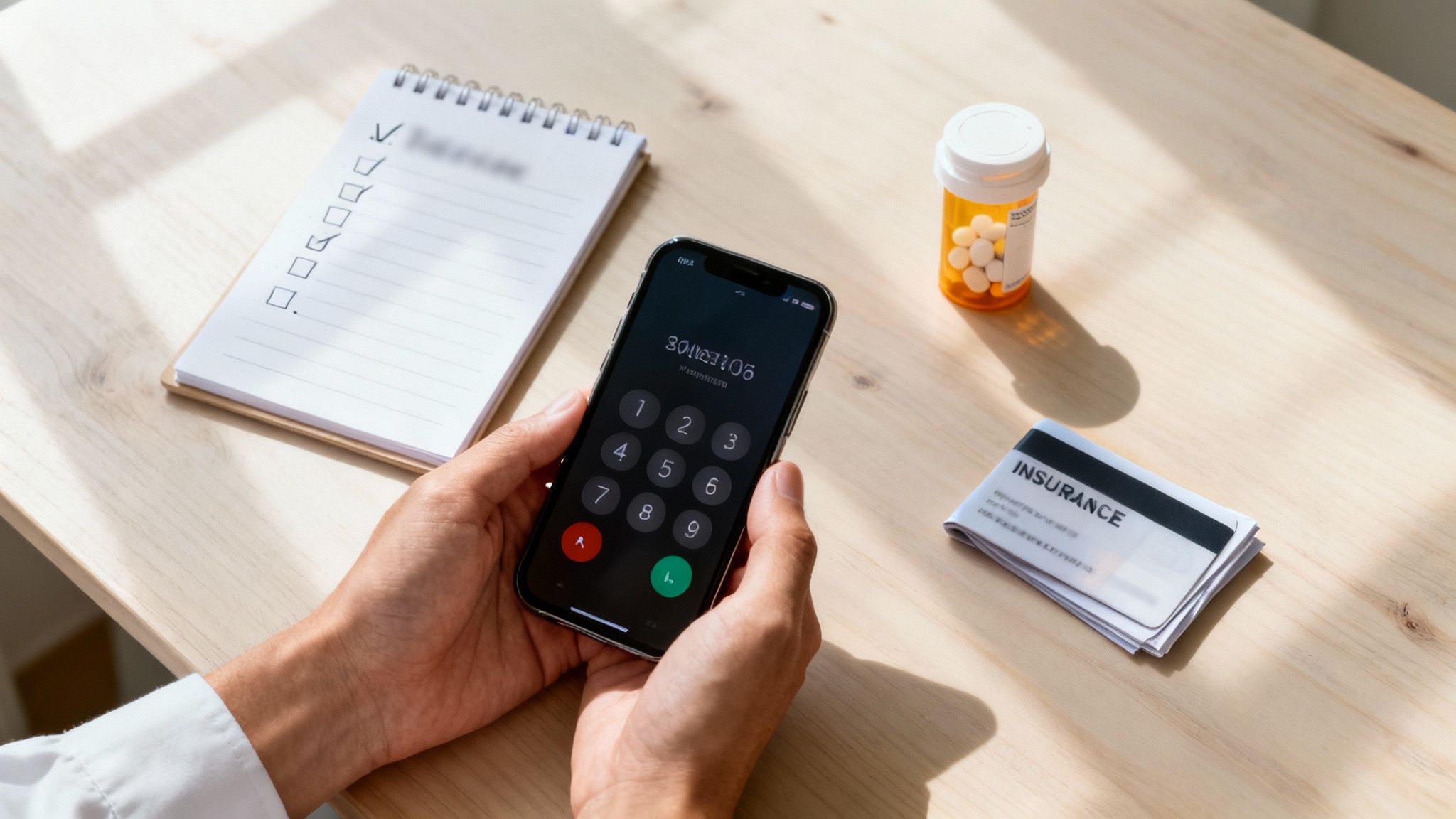
When you call our Renton office, our first priority is understanding what's wrong so we can determine how fast you need to be seen. Having clear answers ready helps us find you the earliest possible spot, which often means same-day emergency care.
Your Dental Emergency Checklist
Before you pick up the phone, try to have this information ready. Don't worry about getting it perfect—even a few quick notes will help us immensely.
- Tell Us What It Feels Like: Be ready to describe the pain. Is it a sharp, jabbing feeling, or a dull, constant throb? Does it flare up when you bite down? Is it sensitive to hot or cold?
- Pinpoint the Problem Area: Let us know exactly which tooth is giving you trouble. When did the pain start? Did it happen suddenly, or has it been nagging you for a few days?
- List Your Medications: Have a list of any medications you’re taking. This includes prescriptions, over-the-counter pain relievers, and even daily vitamins. This is a critical safety step.
- Grab Your Insurance Card: If you have a PPO insurance plan, have your card handy. This lets us look up your benefits and give you a clear idea of your coverage for emergency care.
Taking a minute to gather these details turns a frantic call into a productive first step toward relief. You're not just telling us there's a problem; you're actively helping us solve it faster.
This little bit of prep work makes the entire process smoother, from the first phone call to the moment you’re in our chair. For clinics looking to streamline initial patient interaction and guide them on what information to prepare, a relevant resource on building an efficient system is a guide to a healthcare chatbot. Being ready puts you in control and helps us deliver the prompt, compassionate care Cedar Dental Group is known for.
Red Flags That Mean You Cannot Wait to Call

While you can manage many dental issues at home for a short time, some situations are absolute emergencies. These red flags signal a serious problem that can't wait. Ignoring them can cause the problem to snowball into a much bigger health issue.
If any of the following symptoms sound familiar, your next move should be to call our Renton office right away.
Severe and Unrelenting Pain
This isn't a little sensitivity or a dull ache. This is severe, throbbing pain that stops you in your tracks, keeps you up at night, and doesn't respond to over-the-counter pain relievers. This kind of pain is your body screaming for help. It often points to a deep infection or nerve inflammation that must be dealt with immediately.
A toothache that over-the-counter medication can't touch is a clear sign the problem has moved beyond simple irritation. It's a giveaway that there's a serious underlying issue that only a dentist can properly diagnose and treat.
Swelling in Your Face, Gums, or Jaw
Swelling is a classic sign of infection. If your cheek, jaw, or gums start looking puffy, consider it a major red flag. This almost always points to a dental abscess, which is a pocket of infection trapped around the root of a tooth.
An abscess isn't just a tooth problem; it's a serious infection that can spread. If it’s not treated, the bacteria can travel to other parts of your body. Swelling demands a quick dental visit to drain the infection and treat the tooth causing it.
Signs of a Spreading Infection
A dental infection that starts to spread will begin to affect your whole body. It’s critical to recognize these signs, as they turn a dental problem into a much more serious medical concern.
Never ignore these symptoms, especially if they appear alongside a toothache:
- Fever: Your body raises its temperature to fight infection. A fever with dental pain or swelling is a strong hint the infection is no longer contained to your mouth.
- Difficulty Swallowing or Breathing: Any swelling in the mouth or jaw that makes it hard to swallow or breathe is a true medical emergency.
- A Foul Taste in Your Mouth: A constant salty or foul taste can mean an abscess has burst and is draining.
If you're experiencing any of these red flags, stop what you're doing and call Cedar Dental Group. These are not "wait-and-see" situations. Our Renton team is ready to provide the immediate care you need.
Your Partner for Emergency Dental Care in Renton
When a dental emergency hits, the last thing you want is to scramble to find a dentist. At Cedar Dental Group, we are your go-to resource in these tough moments. We've built our practice around a simple idea: treat patients with the compassion and urgency we'd want for our own families. We provide a calm, reassuring space when everything else feels chaotic.
We know that emergencies don’t wait for a convenient time. That’s why we prioritize same-day emergency appointments and accept most PPO insurance plans to remove barriers between you and the relief you need.
For anyone living in the Renton area, having a plan is your best tool. You can get a better feel for our approach to fast, compassionate emergency dentistry in Renton on our website.
The best advice we can give is to save our number in your phone right now. It’s a simple step that ensures you have a clear plan for getting expert care the moment you need it. Renton-area patients: Save our number now so you’re not scrambling during a dental emergency. We’re here with prompt care and a clear plan—when you need it most.
FAQs: Your Dental Emergency Questions Answered
What if my dental emergency happens after hours?
We know that emergencies don't stick to a 9-to-5 schedule. If you have an urgent problem after our normal business hours, call our office number. Our voicemail will give you clear instructions on how to get in touch with our on-call staff for immediate guidance. We're here to help our Renton patients get the care they need, whenever they need it.
Is a chipped tooth an emergency?
It depends. A minor chip with no pain is less urgent but should be checked soon. However, if the chip is large, has sharp edges cutting your tongue, or is causing significant pain, you should treat it as an emergency and call us for advice.
Should I go to the ER for a dental emergency?
For most dental issues, it's better to call your dentist first. An ER can provide temporary pain relief but can't fix the underlying dental problem. This often leads to a second bill when you see a dentist anyway. Call us first to save time and money and get the right treatment from the start.
What should I do for a severe toothache?
Rinse your mouth with warm salt water and apply a cold compress to your cheek. You can take over-the-counter pain relievers like ibuprofen if you are able to. If the pain is severe, keeps you up at night, or comes with swelling or a fever, call us immediately.
How can I prepare for a future dental emergency?
The best preparation is regular preventive care to stop problems before they start. It's also smart to create a small dental emergency kit with gauze, a container for a knocked-out tooth, and our office phone number. The simplest step? Save our contact information in your phone right now so you have a direct line to our team when you need it most.
If you're dealing with a dental concern or simply want to find a trusted dental home before an emergency strikes, don't wait. Contact Cedar Dental Group in Renton, WA, today to schedule your consultation. https://cedardentalgroup.com
