

When you have sudden, bad mouth pain, it's easy to panic. Is this a real emergency? Can it wait until the morning? Knowing the difference can save you a lot of pain and maybe even your tooth.
A true dental emergency is more than just feeling uncomfortable. It involves situations that need immediate help to stop bleeding, ease severe pain, or treat a serious infection. This includes things like a tooth getting knocked out or an injury that won't stop bleeding.
How to Know If You Need Emergency Dental Care

It can be hard to know how bad your pain is, but there are some clear warning signs. Is the pain so bad that over-the-counter medicine doesn't help? Do you see or feel major swelling in your face, jaw, or gums? These are your body's signals that something is seriously wrong, and you shouldn't wait to get help.
Many of us try to "tough it out," hoping the problem will go away on its own. At Cedar Dental Group, we see this often, and it almost always makes things worse. For example, a throbbing pain that keeps you up at night could be a dental abscess, which is a pocket of infection at the root of a tooth.
An abscess won't heal by itself. The infection can spread to your jaw, nearby tissues, and even other parts of your body. This can lead to much bigger health problems. Getting it checked right away is critical.
When Is It an Emergency?
Not every chip or ache is an emergency. A small chip on a back tooth, for instance, should be fixed, but it probably doesn't need a middle-of-the-night call to a dentist. Other situations, however, definitely do.
Here’s a quick list of when you should seek immediate care:
- Severe, ongoing pain: The kind that makes it hard to think, eat, or sleep.
- A knocked-out tooth: If an adult tooth is knocked out, time is very important.
- Bleeding that won't stop: From an injury or a recent dental treatment.
- Major swelling: Swelling you can see in your face, cheek, or around your jaw.
- A loose adult tooth: Especially if it’s from an injury and feels like it might fall out.
Waiting to treat these issues often leads to more complicated and expensive procedures later. In fact, tooth problems are a common reason for hospital visits. Between 2020 and 2022, there were an average of 1.94 million emergency department visits for dental issues in the U.S. each year. (Source: CDC). You can find the CDC’s complete data on dental-related emergency visits here.
Is It a Dental Emergency? Quick Symptom Checker
When you're in pain, it can be hard to think clearly. Use this simple chart to help you understand what's happening and decide what to do next.
| Symptom | What It Might Mean | Action to Take |
|---|---|---|
| Severe, throbbing pain not helped by painkillers | A serious infection, like an abscess, or nerve damage | Emergency: Call an emergency dentist immediately. |
| A knocked-out adult tooth | A serious injury that needs urgent care to save the tooth | Emergency: Find the tooth, handle it by the crown, and get to a dentist within an hour. |
| Constant bleeding from the mouth | A serious cut, gum injury, or problem after a tooth was pulled | Emergency: Apply pressure with gauze and contact your dentist. Go to the ER if it doesn't stop. |
| Painful swelling in your face, jaw, or gums | A spreading infection or abscess | Emergency: This could be life-threatening. Get immediate dental or medical care. |
| Small chip or crack with no pain | Minor tooth damage | Urgent (Not an Emergency): Schedule a regular dental appointment to get it fixed. |
| Lost filling or crown | The tooth is exposed and could be damaged | Urgent (Not an Emergency): Call your dentist for an appointment within a few days. |
| Dull, manageable toothache | A cavity or minor gum irritation | Urgent (Not an Emergency): Make an appointment. You can use over-the-counter pain relief for now. |
Remember, this chart is just a guide. If you are ever unsure or feel that something is seriously wrong, it's always best to be safe and call a dentist.
What to Do Immediately in a Dental Emergency
Feeling a jolt of panic after a dental injury is normal. Whether it's from playing sports or a sudden, bad ache, you might worry. But taking a deep breath and acting quickly can make a big difference. These first few moments are about protecting your tooth and managing pain until you can see a dentist.
A Knocked-Out Tooth
If a tooth gets knocked out, you need to act fast. It's important to handle it carefully.
- Pick the tooth up by the crown—the part you chew with—and never touch the root.
- If it’s dirty, rinse it gently with milk or water. Don't scrub it or use soap.
- The best thing to do is try to put it back into the socket. Hold it there by gently biting on a piece of gauze.
- If you can't do that, put it in a small container of milk or your own saliva. The goal is to keep the root from drying out.
Dealing with Pain and Swelling
For other common emergencies like a cracked tooth or a bad toothache, focus on first aid to stay comfortable.
A simple rinse with warm salt water can help a lot. It cleans the area and can soothe irritation. If you have swelling, a cold pack on the outside of your cheek is a great help. Apply it for about 15 minutes at a time to numb the pain and reduce swelling.
These tips are for immediate help only. They are meant to get you through the crisis until you can see a professional. Your top priority should still be to find emergency dental care near me.
This image shows how to find help quickly.
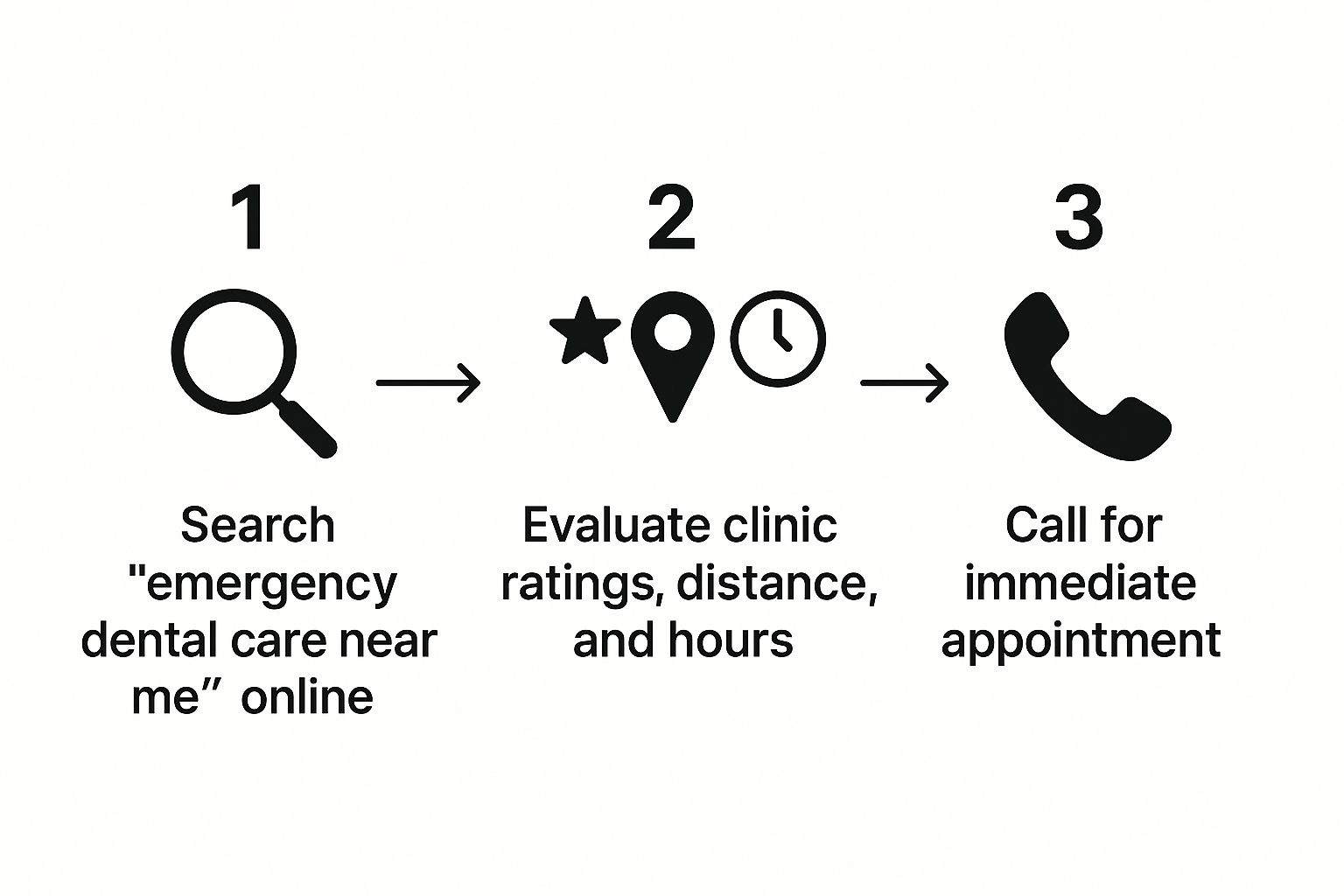
As you can see, a quick search and a phone call are the fastest ways to get the right care when every minute matters.
While these first-aid steps are important, they are just the beginning. Your very next step should always be to call a dentist. To learn more about what counts as a true emergency, you can read about our specific emergency dental services. Getting expert advice right away is the best way to start feeling better.
Finding the Right Emergency Dentist Near You
When you have a dental emergency, you don't want to spend hours searching online. The pain is bad, you're stressed, and you just need help fast. Knowing how to quickly find the right care is key.
The best place to start is with a direct online search, but be specific. A general search will give you a list of every dentist around, not just the ones who can help you right now.
Try searching for phrases like:
- "Emergency dentist open now"
- "Urgent dental care in Renton, WA"
- "Same-day dentist appointment near me"
These searches will help you find dental offices that are ready to handle your situation immediately. Once you find a few good options, it's time to make a phone call.
Key Questions to Ask a Dental Office
A quick phone call is the fastest way to find out if a dental practice is right for you. Have a few questions ready so you can get the information you need.
Your goal is to find a caring team that can see you quickly and is clear about their process. A good office will happily answer your questions to help you feel comfortable.
When you call, be sure to ask:
- Do you offer same-day emergency appointments for new patients? This is the most important question. If the answer isn't a clear "yes," try another office.
- What are the estimated costs for an emergency visit and X-ray? This gives you an idea of the cost upfront and helps you avoid surprises.
- Do you accept my dental insurance? Knowing this ahead of time will save you trouble later.
Choosing a dentist, even when you're in a hurry, is about more than just finding an open time slot. You are looking for a team that makes you feel supported and comfortable. At Cedar Dental Group, we put patient comfort first to help turn a stressful situation into a positive one.
What to Expect at Your Emergency Dental Visit
Walking into a dental office for an emergency is stressful. You are likely in pain and just want the problem to be fixed. We understand. Knowing what to expect can make a big difference, so let's walk through what a visit at Cedar Dental Group is like.
When you arrive, our first priority is to make you comfortable and find out what’s wrong. We’ll start with an exam focused on the problem area. This usually includes a quick digital X-ray, which helps us see what’s going on with the tooth's root and the bone around it.
Getting You Out of Pain First
Before we do anything else, our main goal is to stop your pain. Once we know the source of the problem, we will take immediate steps to make you feel better. This often means numbing the area with a local anesthetic.
Your emergency visit is not just a quick fix; it’s about providing caring help for your urgent need. We take the time to explain what we find and make sure you feel heard and supported.
After you're comfortable, we'll address the immediate problem. Depending on your situation, this might include:
- Treating an infection: If a painful abscess is the cause, we’ll clean the area and may give you antibiotics to fight the infection.
- Stabilizing a damaged tooth: For a cracked or broken tooth, the goal is to protect it from more damage before we plan a permanent solution.
- Discussing next steps: We'll explain all your options in simple terms, whether it's a root canal, pulling the tooth, or another treatment.
It might feel like you're the only one going through this, but dental problems are very common. Oral diseases affect about 3.5 billion people worldwide, and tooth decay is the most common chronic condition in the world. You can read more about global dental health challenges.
Our Renton, WA office is a calm and reassuring place. We know you are here because of a stressful situation, and our entire team is here to provide gentle, effective care to help you feel better. You can learn more about our approach to emergency dentistry and how we put our patients' comfort first.
How to Prevent Future Dental Emergencies

The old saying is true: an ounce of prevention is worth a pound of cure. This is especially true for your teeth. The best way to handle a dental emergency is to stop it from happening in the first place.
While some accidents happen, most urgent dental problems—like a bad toothache or abscess—come from smaller issues that were ignored. Being proactive is your best defense against future pain, stress, and unexpected costs.
It all starts with regular dental check-ups. These appointments are more than just a cleaning; they give us a chance to find trouble when it’s small. A tiny cavity that is an easy fix today can turn into a painful abscess needing a root canal in six months if it's not treated.
Unfortunately, many people wait to see a dentist until they are already in pain. One study found that 73% of people said they only go to the dentist when a serious problem makes them. (Source: PLOS Global Public Health). This approach almost always leads to more difficult and expensive treatments. You can see the full study on preventive versus emergency dental care visits.
Building Strong Daily Habits
What you do every day matters just as much as your dental visits. Simple, consistent habits are the foundation of a healthy, emergency-free smile.
Think of preventive care as an investment in your future. The few minutes you spend on your oral health each day pay off by helping you avoid the pain and cost of a dental emergency.
To keep your teeth in great shape and prevent problems, a solid daily routine is key. The chart below shows the simple habits that make a big difference.
Your Daily Checklist for Preventing Dental Emergencies
| Preventive Action | Why It's Important | How Often |
|---|---|---|
| Brush for Two Minutes | Removes daily plaque and food before they can cause decay or gum problems. | Twice a day |
| Floss Between All Teeth | Cleans the 40% of your tooth surfaces that a toothbrush can't reach, preventing hidden cavities. | Once a day |
| Use Fluoride Toothpaste | Strengthens tooth enamel, making it more resistant to acid from sugar and bacteria. | Twice a day |
| Wear a Mouthguard | Protects teeth from breaks, chips, or being knocked out during sports or from grinding at night. | During sports/at night |
| Limit Sugary Foods/Drinks | Reduces the food for cavity-causing bacteria, lowering your risk of decay. | Daily |
| Regular Dental Check-ups | Allows for professional cleaning and finding issues early before they become emergencies. | Every 6 months |
By making these small steps part of your life, you greatly lower your risk of having serious issues that require an emergency dentist. Taking care of your oral health is the best way to prevent cavities and keep your smile healthy for life.
Your Emergency Dental Care Questions Answered
When you have a dental emergency, you probably have a lot of questions. That's completely normal. Here are answers to some of the most common concerns we hear from patients to help you feel more prepared.
How much will an emergency dental visit cost?
The cost of an emergency visit depends on the treatment you need. For example, replacing a lost filling costs less than treating a severe tooth infection. A good dental office will always be clear about costs before starting any treatment. At Cedar Dental Group, we provide an estimate and discuss payment and insurance options so you know what to expect.
Should I go to the ER for a tooth problem?
A hospital emergency room (ER) is usually not the best place for a tooth problem. Doctors there can help with severe pain or infection by giving you medication, but they can't fix the tooth itself. For a knocked-out tooth, a cracked tooth, or a tooth abscess, you need an emergency dentist who has the right tools and training to solve the problem.
What if my emergency happens after hours?
Dental emergencies don't always happen during business hours. That’s why many dental offices, including Cedar Dental Group, have a plan for after-hours care. Your first step should be to call the office's main phone number. You will likely hear a recording with instructions on how to reach the on-call dentist for help.
I'm not a regular patient—can I still be seen?
Yes, absolutely. A dental practice committed to its community understands that emergencies happen to everyone. We always make patients in pain a priority, whether they are new to our office or have been with us for years. Most dental offices that offer emergency care will do their best to see you the same day you call.
What if I’m scared of the dentist?
Feeling nervous is very common, especially when you are in pain. The most important thing you can do is tell the dental team how you feel. A caring team will take extra time to make you comfortable, explain each step, and go at your pace. Don't let fear stop you from getting the relief you need. For more tips, read our guide on how to overcome dental anxiety.
If you are in pain or have a dental emergency, please don't wait. The compassionate team at Cedar Dental Group is here to provide the relief and expert care you need. Contact us today to schedule your emergency appointment in Renton, WA. https://cedardentalgroup.com
