
Direct Answer: A gum graft can be cosmetic, medically necessary, or both, depending on documented clinical findings like root exposure and recession depth. Insurance coverage is driven by how the procedure is recorded, not just why the patient wants it.
A lot of people run into the same confusing wall when they start researching gum grafting. Some sources call it cosmetic surgery. Others call it a medically necessary procedure. And insurance companies sometimes treat the same procedure completely differently depending on which practice submits the claim and how they document it. That gap matters a great deal, because the difference between cosmetic and restorative classification can be the difference between your plan covering 50% of the cost or covering nothing at all.
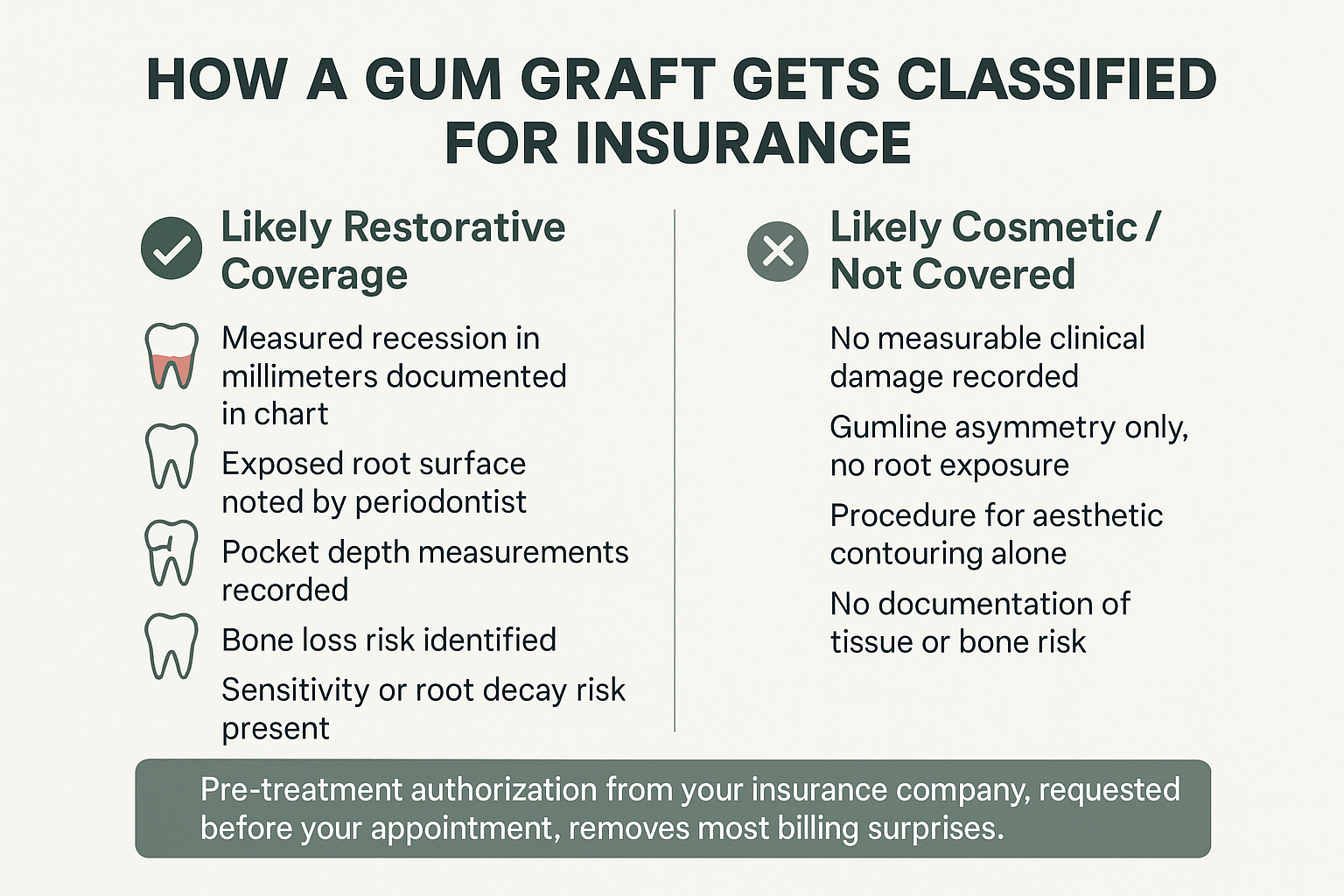
What actually drives that classification is not the patient’s reason for wanting the procedure. It is the clinical evidence in the chart. A periodontist who measures recession in millimeters, records pocket depth, documents root exposure, and notes bone loss risk is building the record that insurance reviewers actually evaluate. The motivation a patient walks in with, whether that is sensitivity, appearance, or both, is separate from what the clinical findings support.
This article focuses on two things: what the cosmetic-versus-medical line actually means in the context of gum grafting, and what you can do before your appointment to avoid surprises at billing. If you are trying to figure out whether recession warrants a graft in the first place, the article on receding gums and whether a graft is actually necessary covers that ground in more detail.
What Gum Recession Actually Does to a Tooth
Recession is the condition gum grafting is designed to address. It happens when gum tissue pulls back from the tooth, exposing part of the root surface that was never meant to be exposed. That exposed root has no protective enamel, which is why teeth become sensitive to cold drinks and air when recession progresses.
Beyond sensitivity, exposed roots are at a meaningfully higher risk for root decay, which is harder to treat than cavity decay on the crown of the tooth. And when recession is significant, the underlying bone that supports the tooth can begin to weaken as well. Left untreated long enough, that chain of events can take a tooth from treatable to very difficult to save.
This clinical reality is exactly why many insurance plans will categorize gum grafting as restorative rather than cosmetic when the documentation supports it. A procedure that covers an exposed root, protects against bone loss, and reduces decay risk is doing measurable clinical work, regardless of whether the patient also noticed how their gumline looked in the mirror.
For a deeper look at how recession progresses and what slows it, the article on gum recession and how to tell if it’s getting worse is worth reading before your consultation.
Why Patients Mention Appearance and Sensitivity in the Same Breath
Something that comes up often when patients describe their gum concerns is that they mention how their gums look and how their teeth feel almost in the same sentence. That is not unusual, and it is not a conflict. Recession is a condition that tends to be visible and uncomfortable at the same time.
A patient who says their gumline looks uneven and their teeth hurt with cold food is describing two symptoms of the same problem. Neither motivation cancels the other out. A graft that covers the exposed root is doing clinical work even when the patient’s first awareness of the problem was cosmetic.
What matters for insurance purposes is what the clinical evaluation documents, not the patient’s stated reason for coming in. If the periodontist’s measurements show meaningful recession, exposed root surface, and risk of further tissue or bone loss, that documentation supports a restorative classification. If the graft is being performed primarily to even out an otherwise healthy gumline for appearance alone, without measurable clinical indicators of damage or risk, the classification will likely be different.
The patient’s experience of their own symptoms is real and valid either way. The records just need to reflect what the examination actually found.
How Insurance Classifies a Gum Graft: The Key Factors
This infographic shows the two paths a gum graft claim can take, and the clinical factors that determine which path applies.
Gum Graft Types and How They Typically Get Categorized
The three types of gum grafting we perform address different clinical situations, and the documentation behind each one shapes how it is coded for insurance. This table outlines the distinctions.
| Graft Type | What It Addresses | Insurance Category (Typical) |
|---|---|---|
| Connective Tissue Grafting | Exposed root surface, recession with bone loss risk, tooth sensitivity from root exposure | Often restorative when recession is documented with clinical measurements |
| Free Gingival Grafting | Thin or fragile gum tissue that lacks protective thickness, high recession risk areas | May be restorative if inadequate attached tissue is documented; varies by plan |
| Gum Grafting for Implant Support | Tissue deficiency around an existing or planned implant site | Often categorized as part of the implant procedure; reviewed case by case |
What You Can Do Before the Appointment to Avoid Billing Surprises
The single most useful step a patient can take before a gum graft is requesting a pre-treatment estimate, sometimes called a pre-authorization, from their insurance company. This is not a guarantee of payment, but it is a written statement from the insurer indicating how they intend to classify and pay for the procedure based on the submitted documentation. Getting that estimate before the appointment removes most of the surprise at billing.
To get a useful pre-authorization, the claim information submitted to the insurance company needs to be detailed and accurate. That means the periodontist’s documentation of recession measurements, pocket depths, root exposure, and clinical justification needs to be part of the submission.
Before your appointment, there are a few specific questions worth asking:
- How will this procedure be documented and coded? The codes submitted matter. A graft coded as restorative needs to be backed by records that support that classification.
- Can a pre-treatment estimate be requested on my behalf? Most practices can submit this to your insurer before treatment begins.
- What has my plan historically covered for this type of procedure? Some plans have explicit exclusions or waiting periods; knowing this in advance gives you time to plan.
- What will my estimated out-of-pocket cost be after insurance? Even with coverage, there will typically be a patient portion.
Understanding how dental insurance works before you go in can also help. The article on how dental insurance works in Washington and where it falls short breaks down the structure of most PPO plans in plain terms.
In the Renton area, out-of-pocket costs for gum grafting vary considerably depending on the extent of recession, how many teeth are involved, and what your plan covers. Patients with PPO insurance who have a restorative classification documented often find their plan covers a meaningful share of the procedure. Patients without insurance, or with plans that classify the graft as cosmetic, typically carry the full cost. Getting that pre-authorization answered before your appointment is the clearest way to understand where you will land.
Why the Specialist’s Documentation Is What Actually Moves the Needle
Most general dentists refer patients out to a periodontist for gum grafting, which means the patient is navigating a separate office, a new provider relationship, and a separate billing cycle at the same time they are trying to understand their treatment. That fragmentation makes the insurance question harder to sort out.
When a board-certified periodontist performs the evaluation, takes the measurements, and prepares the documentation in-house, the clinical record that goes to the insurer is built by someone specifically trained to quantify and describe the condition. That specificity in documentation is what gives an insurance reviewer the information they need to make a restorative rather than cosmetic determination.
Dr. Jaewon Kim, our board-certified periodontist, handles gum grafting procedures here at our Renton practice. Patients who would otherwise be referred to a separate specialist can have the evaluation, documentation, and procedure completed without leaving the practice. That matters not only for continuity of care but for the accuracy and completeness of the clinical record that supports the insurance submission.
For patients who want to understand what the recovery period looks like after a graft, the article on gum grafting recovery and the first two weeks walks through what to expect in practical terms.
The American Academy of Periodontology also provides patient-focused information on gum recession and graft procedures if you want a second reference point from a recognized clinical authority.
Frequently Asked Questions About Gum Graft Coverage
Will my insurance cover a gum graft if I only care about how my gumline looks?
It depends entirely on what the clinical examination finds. If your periodontist documents measurable recession, exposed root surface, or tissue loss that puts the tooth at risk, those findings can support a restorative classification even if your first concern was cosmetic. If the examination shows no clinical damage and the graft would serve only an aesthetic purpose, most plans will not cover it. The evaluation itself is the step that clarifies this.
What is a pre-treatment estimate, and should I ask for one?
A pre-treatment estimate, sometimes called a pre-authorization, is a written response from your insurance company indicating how they plan to classify and pay for a procedure before it happens. It is not a payment guarantee, but it gives you a realistic picture of your out-of-pocket cost. Yes, you should ask for one. Getting it before the appointment means no surprises at billing.
My teeth are sensitive to cold and my gums look uneven. Is that cosmetic or medical?
Both symptoms can point to the same underlying condition: gum recession. Sensitivity often means root exposure, which is a clinical finding. The appearance change is usually the same recession made visible. A periodontist will measure the recession depth and document the findings, and that record is what determines how your plan classifies the procedure. Your experience of both symptoms together is completely normal and does not disqualify you from restorative coverage.
Do different insurance plans classify gum grafts differently?
Yes. Plan language varies, and two patients with similar recession and similar documentation can see different coverage decisions based on their specific policy terms. Some plans have explicit limitations on periodontal procedures, waiting periods, or frequency restrictions. This is why a pre-treatment estimate, submitted with your actual clinical documentation, is more reliable than any general answer about what plans typically cover.
What if my insurance denies the claim as cosmetic even though my periodontist documented recession?
Denials can be appealed. The appeal process typically involves submitting additional clinical documentation, including recession measurements, photographs, and the periodontist’s written justification. A detailed initial submission reduces the likelihood of denial, but if a denial happens, the clinical record your periodontist built is the foundation of any appeal. Ask your provider before treatment whether they support the appeals process.
Want a Clear Answer About What Your Situation Actually Requires?
The only way to know whether your recession warrants a graft, and how that graft is likely to be classified by your insurance plan, is a clinical evaluation that actually measures what is happening. We are available to talk through your situation, answer your questions about documentation and coverage, and help you understand your options before you commit to anything. Call Cedar Dental Group at 425-430-0400 or visit cedardentalgroup.com to schedule a consultation with our periodontal team in Renton.
