
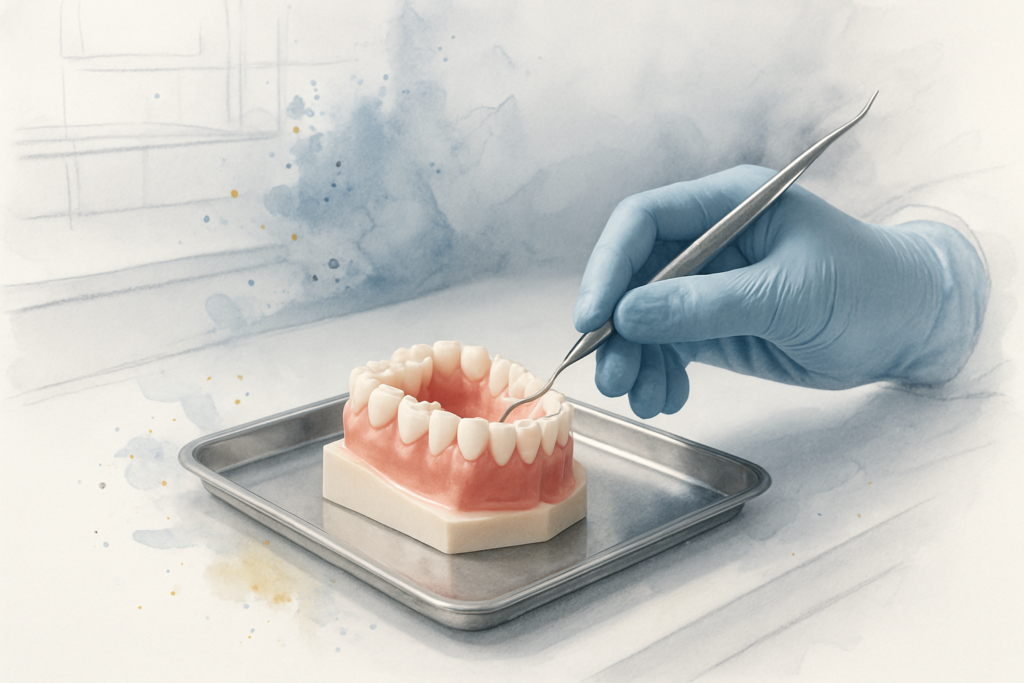
Direct Answer: A deep cleaning, or scaling and root planing, removes bacteria and buildup from below the gumline under local anesthetic. Most patients have some tenderness for a few days, then feel fine.
A lot of people walk into a dental office saying some version of the same thing: “I haven’t been in a while, and I probably need a deep cleaning.” They’ve heard the phrase, they suspect it applies to them, and they’re a little nervous about what it actually means. That uncertainty is completely understandable, “deep cleaning” sounds intense, and most people have never had one explained to them in plain terms.
Scaling and root planing is the clinical name for what patients call a deep cleaning. It is different from a routine cleaning, and once you understand how it works, it tends to feel a lot less intimidating. The procedure itself is done with local anesthetic, so you don’t feel discomfort while it’s happening. What matters more to most patients is what comes after.
This article walks through what actually happens during the procedure, what the recovery week looks like day by day, and what the follow-up appointment means for your long-term gum health.
Why a Deep Cleaning Is Not the Same as a Routine Cleaning
A routine prophylaxis cleaning, the kind most people get twice a year, addresses the surfaces of your teeth above the gumline. Your hygienist removes plaque and tartar buildup, flosses, and polishes. It takes about 45 minutes and you leave feeling fresh.
Scaling and root planing works in a completely different zone. When gum disease is present, the gum tissue pulls away from the teeth and forms pockets. Bacteria, calculus, and infected debris collect inside those pockets, down along the root surfaces where a regular cleaning can’t reach. Scaling and root planing goes below the gumline to clean those root surfaces directly.
This distinction matters because the two procedures address different problems. A routine cleaning maintains healthy gums. Scaling and root planing treats gum disease that has already started. If gum pockets are deeper than about 3 millimeters and show signs of active infection, a routine cleaning simply won’t solve the problem, no matter how thorough it is. You can read more about how deep cleaning and gum surgery compare, and how patients know which one applies to them.
What Actually Happens During Scaling and Root Planing
The procedure is typically split into two appointments, treating one side of the mouth at each visit. Doing both sides at once would mean your entire mouth is numb for hours, which most patients find uncomfortable. Splitting it gives each side a chance to begin healing before the other is treated.
At each appointment, your hygienist or periodontist will:
- Administer local anesthetic to numb the gum tissue and surrounding area
- Use a combination of hand instruments and an ultrasonic scaler to remove calculus and bacterial deposits from the root surfaces inside the pockets
- Smooth the root surfaces, this is the “planing” part, so that gum tissue can reattach more easily
- Rinse the pockets thoroughly before finishing
The anesthetic means you should feel pressure and movement, but not pain. Most appointments run 60 to 90 minutes per side. Once the numbness wears off a few hours later, that’s when patients start to feel the post-treatment tenderness, which is completely expected and temporary.
At our practice, Dr. Jaewon Kim, our board-certified periodontist, performs scaling and root planing and all advanced periodontal care in-house. Patients who would otherwise need a referral to a separate specialist can receive that care here without leaving.
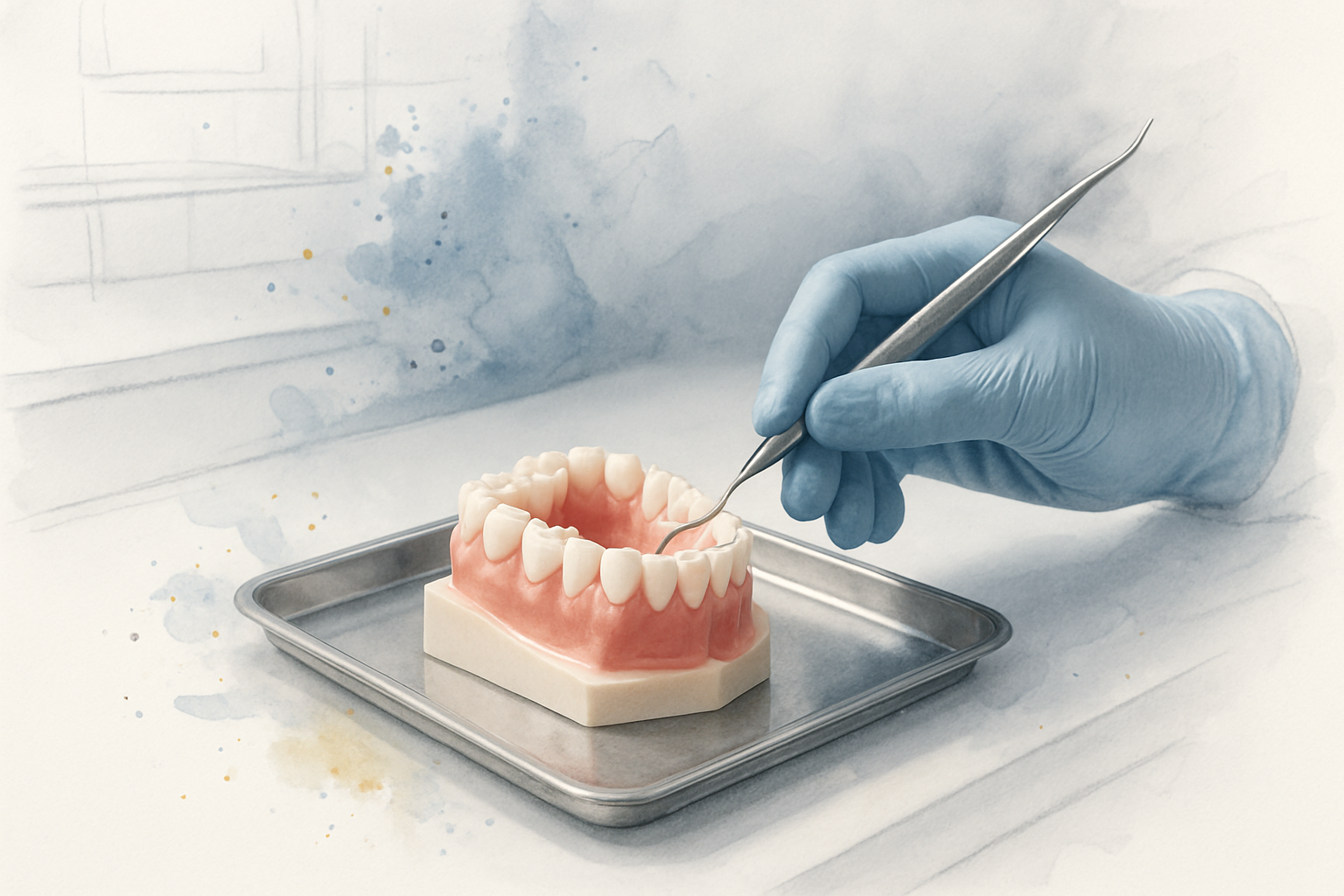
What the Recovery Week Actually Looks Like
This is the part most patients want to know about before they agree to anything. The honest answer is that most people feel noticeably tender for two to four days, then steadily better from there.
Here is what a typical week looks like:
- Day 1: Numbness wears off in the afternoon or evening. Gums feel sore and inflamed. Stick to soft foods, soup, eggs, yogurt, anything that doesn’t require much chewing force. Avoid temperature extremes.
- Days 2-3: Tenderness peaks for most patients. Mild over-the-counter pain relievers help. You may notice some mild bleeding when you brush, this is normal and expected as the tissue heals.
- Days 4-7: Soreness starts to ease. Most patients return to normal brushing and eating by the end of the first week, though gently.
- Week 2: Tooth sensitivity to temperature is common during this stretch. Root surfaces that were buried under calculus are now cleaner and more exposed to sensation. This resolves on its own for most patients within two weeks.
None of the above means something went wrong. It means the tissue is healing. That said, there are a few things worth calling the office about:
- Bleeding that is heavy or doesn’t slow down after several days
- Pain that is worsening instead of improving after day three
- Any sign of swelling spreading beyond the treated area
- Fever or signs of infection
Those situations are uncommon, but they are worth a call. Mild tenderness and sensitivity on their own are not.
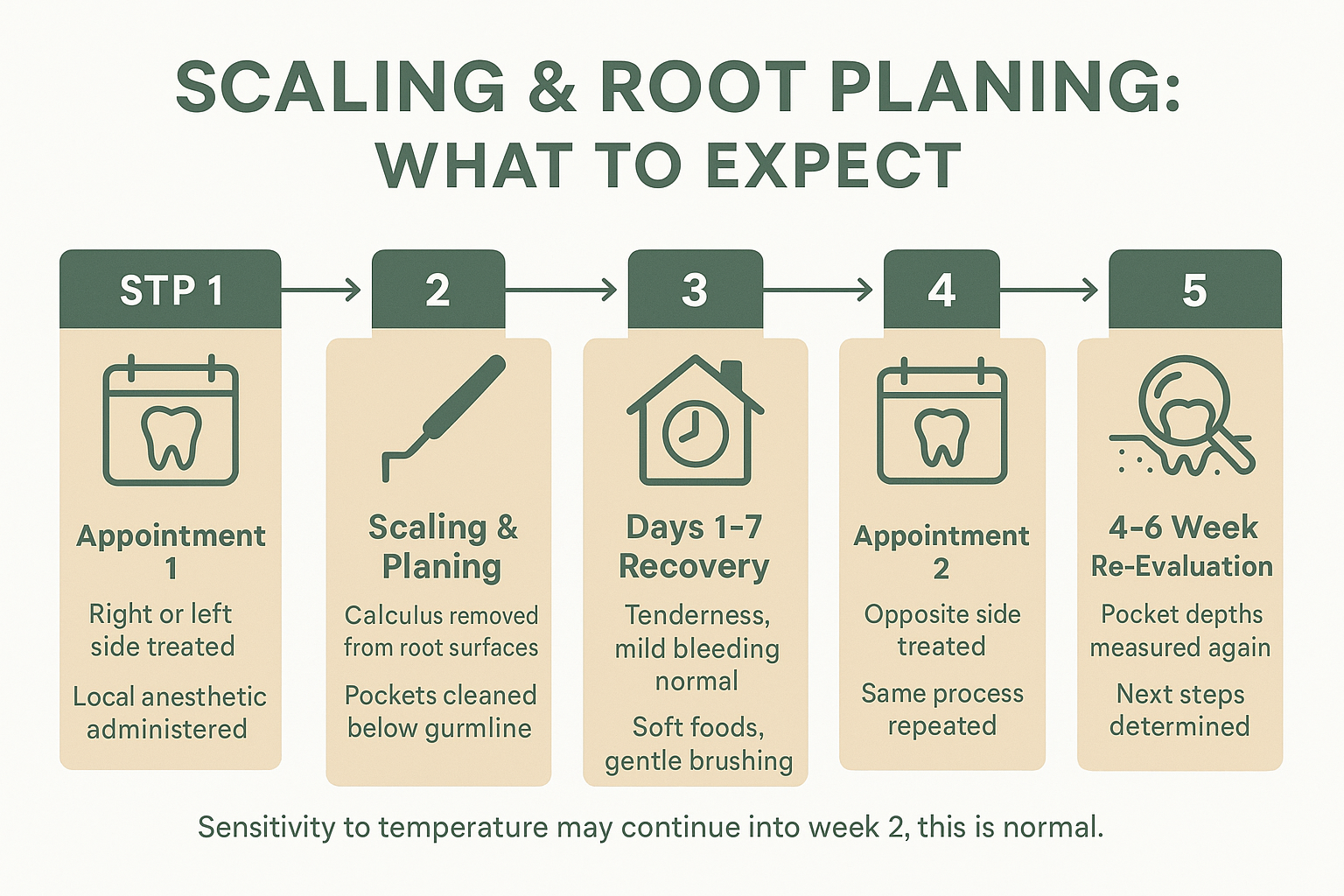
Scaling and Root Planing: From Appointment to Recovery
Here is a visual summary of how the process unfolds, from the first appointment through the follow-up evaluation.
The Follow-Up Appointment Most Patients Don’t Know About
About four to six weeks after both sides have been treated, we schedule what is called a periodontal re-evaluation. A lot of patients don’t realize this appointment is coming, and when they do hear about it, they sometimes wonder why it’s necessary.
The reason is simple: the re-evaluation is how we find out whether the treatment worked.
At that appointment, the hygienist or periodontist measures your gum pocket depths again and compares them to where they were before treatment. In many cases, pockets that were inflamed and abnormally deep will have reduced measurably once the bacterial load is gone and the tissue has had time to heal. Inflammation causes swelling, and swelling makes pockets read as deeper than they actually are. When the infection clears, the tissue tightens back up.
What happens next depends on those measurements:
- If pockets have reduced to a healthy depth and the tissue looks stable, you transition to periodontal maintenance, more frequent cleanings, typically every three to four months, to keep the bacterial levels low going forward.
- If some pockets remain deep despite healing well, the periodontist may recommend additional treatment, which could mean more localized scaling, or a conversation about whether periodontal surgery is the appropriate next step.
Explaining this upfront matters because the re-evaluation is not a sign that something failed. It is a built-in checkpoint. The American Academy of Periodontology recognizes this re-evaluation as a standard part of the non-surgical periodontal treatment sequence for exactly this reason.
Routine Cleaning vs. Scaling and Root Planing: Key Differences
If you’re trying to understand which type of cleaning applies to your situation, this comparison covers the main distinctions.
| Routine Cleaning | Scaling and Root Planing | |
|---|---|---|
| Where it works | Above the gumline | Below the gumline, along root surfaces |
| Who it’s for | Patients with healthy gums | Patients with gum disease and deeper pockets |
| Anesthetic used | Usually none | Yes, local anesthetic each visit |
| Number of visits | One appointment | Typically two, one side per visit |
| Recovery time | None | Tenderness for a few days; sensitivity up to 2 weeks |
| Follow-up | Next 6-month cleaning | Periodontal re-evaluation at 4-6 weeks |
Frequently Asked Questions About Scaling and Root Planing
Will I be in pain during the procedure?
No. Local anesthetic is used before we begin, so the area is fully numb. You will feel pressure and some movement, but not sharp pain. If you ever feel discomfort during treatment, let us know and we can adjust.
I haven’t been to the dentist in a few years. Does that automatically mean I need a deep cleaning?
Not automatically. Whether scaling and root planing is needed depends on your specific pocket depths and the condition of your gum tissue, not just the length of time since your last visit. Some patients who have been away for several years have gums that are still healthy enough for a routine cleaning. Others do have gum disease that requires treatment. An exam and X-rays are the only way to know for certain. If you’re coming in after a long gap, here’s what to expect at that first appointment.
My teeth feel more sensitive after the procedure than before. Is something wrong?
This is one of the most common things patients notice, and it almost always resolves on its own. Root surfaces that were previously covered in calculus are now clean, which means they’re more exposed to temperature sensation for a short time. Sensitivity typically fades within one to two weeks. If it’s severe or getting worse rather than better, call the office.
Does dental insurance cover scaling and root planing?
Most PPO plans cover scaling and root planing at least partially because it’s considered a medically necessary treatment rather than a cosmetic one. Coverage varies by plan, and there is often a waiting period or annual maximum that affects what you’ll owe. We accept most major PPO plans including Delta Dental, Cigna, MetLife, and several others. For a broader look at how dental insurance works in Washington, this article breaks it down.
What happens if I skip the re-evaluation appointment?
Skipping the periodontal re-evaluation means we don’t have the data to know whether treatment worked. Gum disease is progressive, if pockets remain deep and bacterial levels stay elevated, the disease continues to advance. The re-evaluation is the checkpoint that determines whether you’ve stabilized or whether more treatment is needed. It’s a short appointment, and it’s worth keeping.
Can gum disease come back after a deep cleaning?
Yes, it can. Scaling and root planing removes the bacterial deposits that are causing damage, but it doesn’t change the underlying tendency toward gum disease. That’s why transitioning to periodontal maintenance cleanings every three to four months, rather than the standard six-month schedule, is so important after treatment. Those more frequent visits keep bacterial levels low enough to prevent the disease from returning to where it was.
Have Questions Before You Book?
If you’ve been putting off a dental visit because you weren’t sure what to expect, or because you suspected you’d need more than a routine cleaning, we’re happy to walk through it with you before you commit to anything. Our team at Cedar Dental Group in Renton serves patients from across South King County, including Kent, Tukwila, Newcastle, and Burien, and we take the time to explain exactly what we’re seeing and why before any treatment begins. You can reach us at 425-430-0400 or schedule online at cedardentalgroup.com.
