
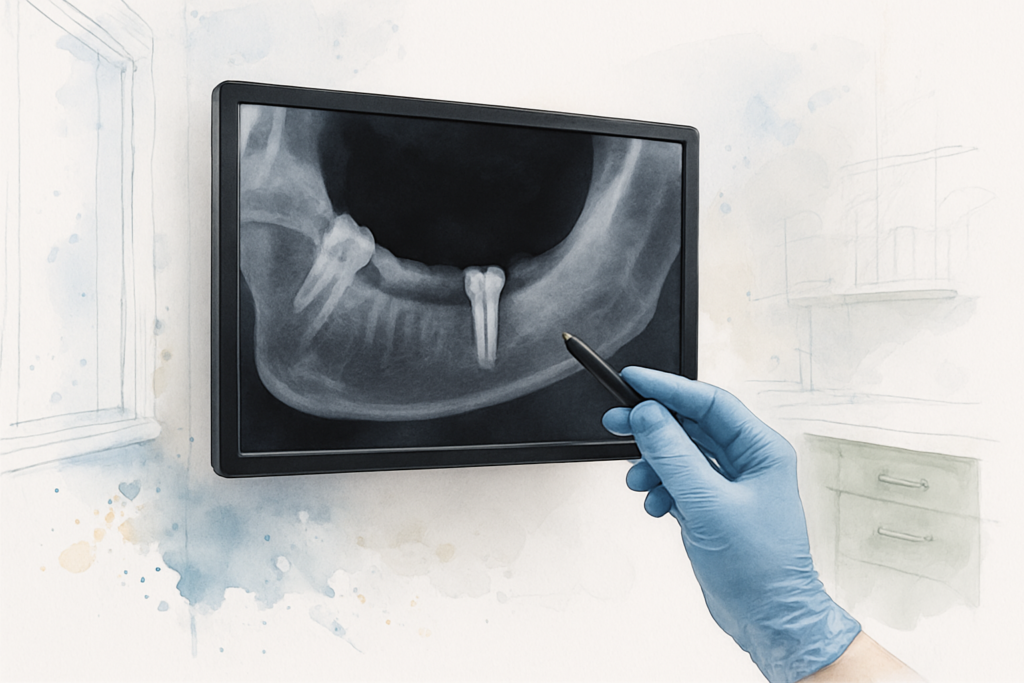
Direct Answer: Bone starts shrinking within weeks of losing a tooth, with the fastest change in the first year. Implants are still possible years later, but grafting is more often needed first.
The question I hear most often about implants is not about pain or cost. It is some version of “I lost this tooth a while ago. Did I wait too long?”
Sometimes the tooth came out six months ago. Sometimes it was three years ago, after an extraction done somewhere else, or a treatment plan that stalled when money or scheduling got in the way. One person who reached out to us here in Renton put it simply: they had dental work that was started but never finished, and they wanted to get back on track.
So let me answer the honest version of that question. Bone begins to change almost immediately after a tooth is removed, and the fastest change happens in the first 12 months. That does not close the door on an implant. It does change what the plan looks like, and this article walks through exactly how.
Why Bone Loss Drives Implant Candidacy in Renton Patients
A tooth root does more than hold a tooth in place. It signals the surrounding jawbone to stay dense and keep its shape, the same way a muscle stays strong because you use it.
Take the root away and that signal stops. The bone that held the tooth, called the alveolar ridge, gradually gets both narrower and shorter.
Two details matter here:
- Width usually goes first. The ridge thins from the cheek side inward, which is the exact dimension an implant needs.
- Most of the change is early. The largest shift happens in the first 6 to 12 months, then slows to a steady trickle.
- Gum disease speeds it up. If the tooth was lost because of advanced gum disease, bone was already being lost before the extraction. The National Institute of Dental and Craniofacial Research describes how untreated gum disease damages the bone that supports teeth.
An implant needs a certain amount of bone height, width, and density to sit securely and stay that way for decades. When the ridge has thinned past that point, we rebuild it first with a bone graft, then place the implant.
That is the whole relationship between timing and difficulty. Nothing more dramatic than that.
Six Months, Eighteen Months, Several Years: The Real Difference
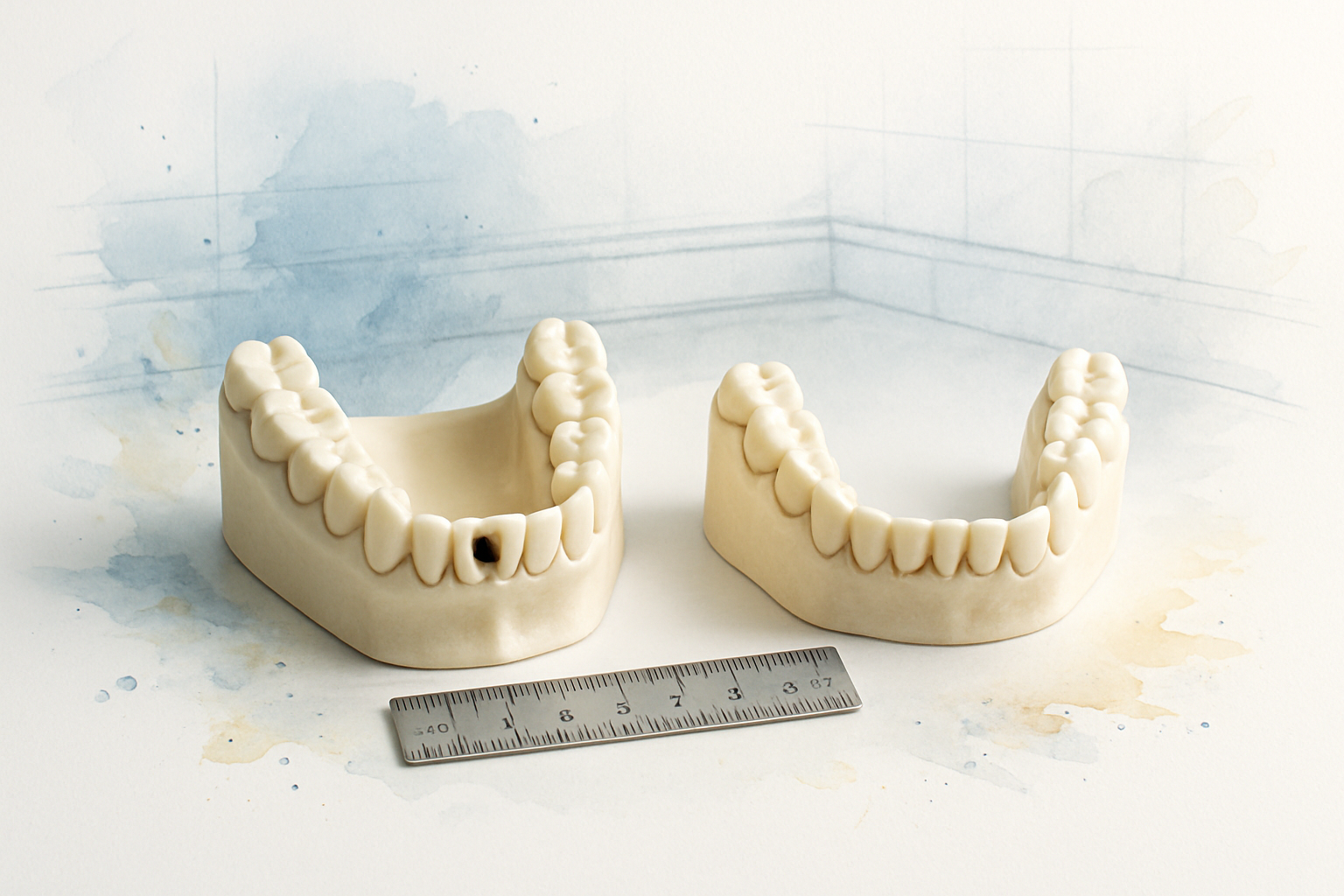
Patients want a number, and I understand why. There is no single cutoff date, but there are meaningful stages, and knowing which one you are in tells you a lot.
Around 6 months. The socket has healed and filled in. Some width is gone, but for many people there is still enough bone that an implant can be placed on its own or with a small amount of graft material added at the same visit. This is the smoothest version of the process.
Around 12 to 18 months. The ridge is measurably narrower. Grafting becomes a real possibility rather than an exception, and imaging decides it. In some cases we can graft and place the implant in one surgical visit. In others the graft needs to heal on its own first.
Several years or more. The ridge is often thin enough that we plan in stages. A graft goes in, heals for a few months, and then the implant is placed into rebuilt bone. Upper back teeth add another wrinkle, because the sinus floor sits closer once height is lost.
Here is the part I want to be clear about. A staged plan is not a worse outcome. It is a longer road with the same destination, and people finish it successfully all the time. If you are weighing whether to start now or wait a bit longer, our guide on when the right time to start the implant process is worth reading alongside this one.
What Timing Usually Means for the Plan
This is a general pattern, not a rule. Bone changes at different speeds depending on why the tooth was lost, your health history, and which tooth it was.
| Time since tooth loss | What the bone usually looks like | What that means for the implant plan |
|---|---|---|
| Same visit as the extraction | Socket intact, ridge at full width | A socket preservation graft can be placed right away to hold the shape |
| 2 to 6 months | Socket healed, mild width loss | Implant often placed with little or no added grafting |
| 6 to 18 months | Ridge noticeably narrower | Grafting becomes likely; sometimes done at the same visit as the implant |
| 18 months to a few years | Thinner ridge, some height loss | Ridge augmentation first, then healing, then the implant |
| Several years or longer | Thin, lower ridge; sinus or nerve sits closer | Staged plan with a longer overall timeline |
The Imaging Step Is Not Upselling, It Is Measurement
I have had patients arrive with a printout from another office and a quoted price, ready to move forward, and no one has ever measured their bone in three dimensions. That is where surprises come from.
A standard dental X-ray is a flat picture. It shows bone height reasonably well and gives a rough sense of what is going on around the roots.
What it cannot show is width, and width is usually the limiting factor. A ridge can look perfectly fine on a regular X-ray and still be too thin to hold an implant.
That is why implant planning includes a CBCT scan, short for cone beam computed tomography. It is a quick scan that produces a three-dimensional view of your jaw, and it lets us read:
- Bone height above the ridge
- Bone width at the exact spot the implant would go
- Bone density and quality
- The position of the sinus floor on upper teeth
- The path of the nerve canal on lower teeth
With those measurements, the grafting question stops being an opinion. Either there is enough bone or there is not, and you can see it on the screen with us.
This is also the moment when a plan becomes honest about cost and time. A quote given without 3D imaging is a guess, and guesses tend to grow.
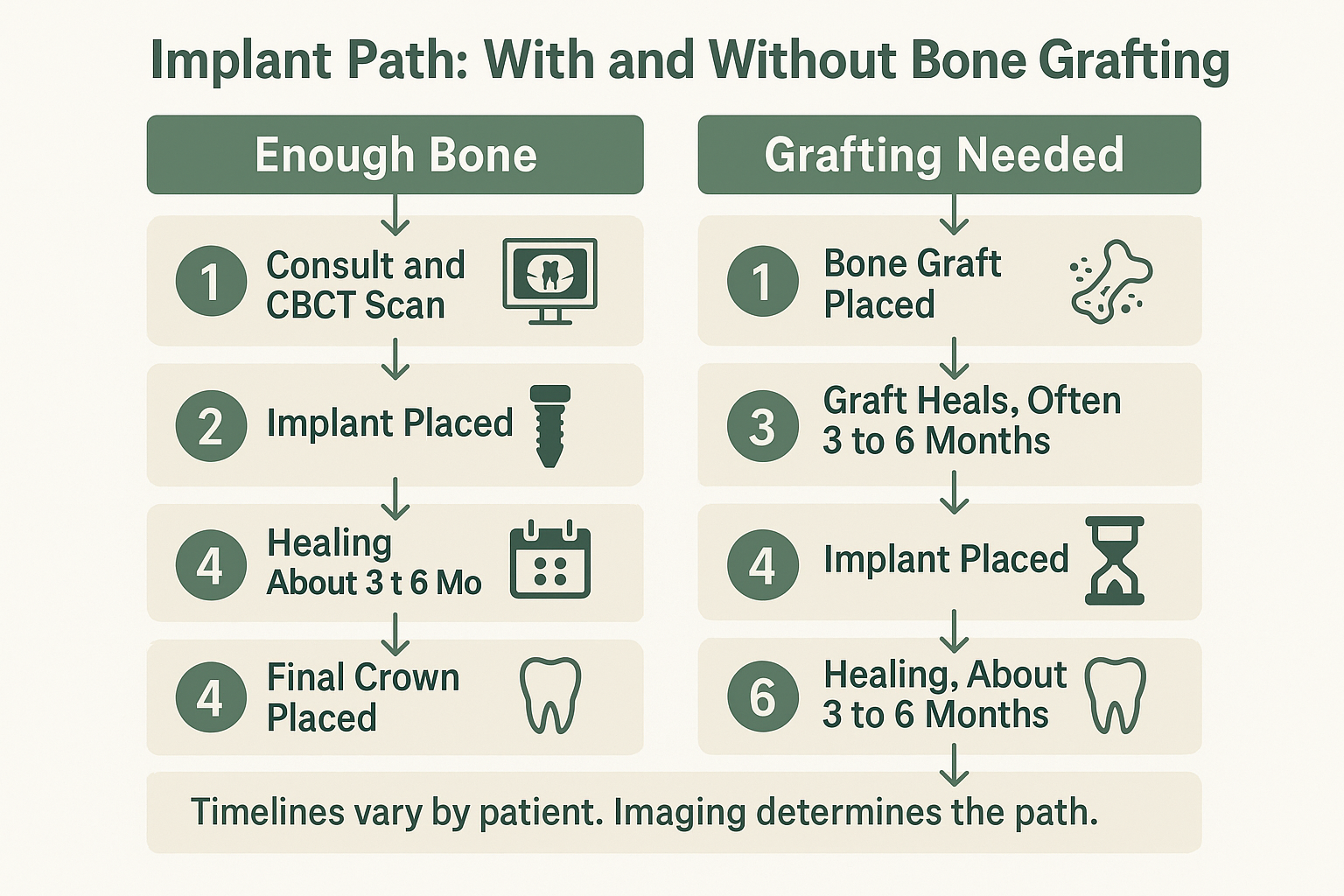
How the Path Changes When Grafting Is Part of the Plan
This shows the two routes an implant can take, depending on what the imaging finds.
Waiting Costs Time Before It Costs Money
A caller once told our front desk they were price-shopping implants after getting a quote from another office. Every question was about the upfront number.
I get it. But the number people usually miss is the calendar.
When a graft is needed, it does not just add a line item. It adds its own healing period, commonly several months, before the implant can even be placed. Then the implant needs its own months of integration with the bone before the final crown goes on.
So a case that might have wrapped up in a few months can stretch to a year or more. Costs vary widely by case and by insurance plan, and most Washington PPO plans treat grafting and implants differently from one another, so I would rather point you to a real estimate than a range from the internet. If you want to understand what actually drives the total, our breakdown of what goes into implant cost walks through each component, and this piece on why bone grafting comes up and what it means for your timeline covers the scheduling side in more detail.
Deciding on price alone, without knowing whether grafting is in your picture, is how people end up surprised halfway through.
What the Care Path Looks Like When a Specialist Is Involved
Here is a practical difference that matters more than most people expect when they first start researching.
In a lot of offices, learning you need a graft means a referral. You get sent to a periodontist across town, wait for that appointment, heal under their care, then come back to the general dentist for the implant and crown. Records travel, timelines slip, and nobody quite owns the whole plan.
We handle it differently in our Renton office. Dr. Jaewon Kim, our board-certified periodontist, performs bone grafting and the surgical side of implant preparation on site, including:
- Socket preservation at the time of an extraction, to limit bone loss before it starts
- Ridge augmentation, to rebuild width and height where bone has already been lost
- Surgical planning coordinated directly with Dr. Susan Chu, who handles the restorative side
That means one set of imaging, one plan, and one team tracking your healing from graft to crown. For patients driving in from Kent, Tukwila, Burien, or Newcastle, it also means fewer trips and no second office to get established with.
If you are still deciding whether an implant is the right replacement at all, our article on when a dental implant is the right choice after tooth loss compares it against the other options.
Frequently Asked Questions About Implant Timing and Bone Loss
Is it ever truly too late to get an implant?
Rarely, and almost never because of time alone. Even ridges that have been empty for many years can usually be rebuilt with grafting. What changes is the number of steps and the length of the timeline, not whether it is possible. The only way to know your situation is a 3D scan and an exam.
I already had X-rays taken at another office. Do I need another scan?
Often yes, and not because we doubt the other office. Standard X-rays show bone height but not width or density, and implant planning depends on all three. We are happy to review records you bring in, and we will tell you plainly what they do and do not answer.
How long does a bone graft take to heal before the implant?
It depends on how much bone is being rebuilt and where. Smaller grafts heal faster than larger ridge rebuilds, and several months is a common range before the site is ready for an implant. We check healing with imaging rather than guessing from the calendar.
Does insurance cover bone grafting?
Some Washington PPO plans contribute toward grafting, some treat it as part of the implant benefit, and some exclude it. Coverage varies enough that a pre-treatment estimate submitted to your specific plan is the only reliable answer. Our front desk can check your benefits before you commit to anything.
Will I be without a tooth the whole time?
Usually not. Depending on which tooth it is and what the plan involves, there are temporary options that let you eat and speak normally while the site heals. That is a conversation worth having at the consultation, because comfort during the waiting period matters.
I feel embarrassed that I let this go for so long. Is that common?
Very. Most people who bring this up had a real reason: cost, a job change, a move, or a bad experience that made them avoid the whole subject. There is no lecture waiting for you here, just measurements and options.
Want to know where your bone actually stands?
If you lost a tooth months or years ago and you have been quietly wondering whether the window closed, a consultation with imaging will give you a straight answer instead of a guess. We see patients from Renton and across South King County who are picking treatment back up after a long pause, and that is a normal place to start. You can reach Cedar Dental Group at 425-430-0400 or read more at cedardentalgroup.com whenever you are ready.
