

You've probably heard the simple explanation: a crown is a "cap" for a bad tooth, and a bridge "fills a gap." While that's technically true, it's where most dental conversations end. This leaves you without the details you need to make a smart, confident decision about your smile.
This guide is different. We're pulling back the curtain on the connection between a healthy bite and a beautiful look. We will explore modern materials built to last and help you figure out the right long-term solution for your health and confidence.
Your Guide to Crowns and Bridges Beyond the Basics
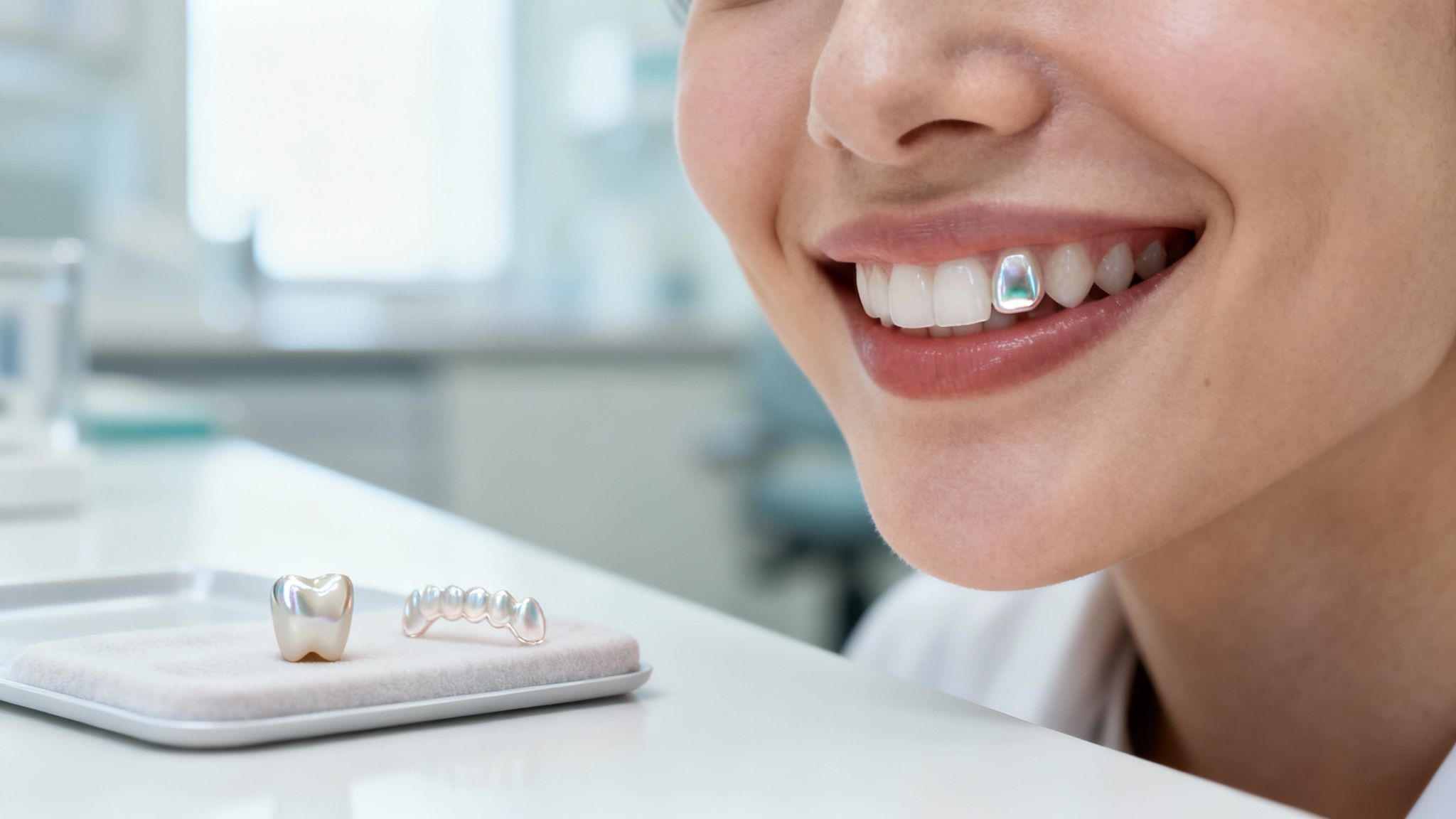
When you face a decision about a crown or bridge, the standard explanation doesn't cut it. At Cedar Dental Group, we've noticed our Renton patients have thoughtful questions that often get overlooked. Is a crown just for looks, or is it a functional need? When does a bridge make more sense than a dental implant?
We believe that providing the advanced crown and bridge guide most dentists don’t provide means getting past simple definitions. It’s about creating a partnership where your concerns are heard and your questions are answered. This is also why we focus on proven strategies to improve patient experience.
Bridging the Information Gap
Our goal is simple: to show you how modern dentistry can save your natural teeth while making your smile look fantastic. We want you to see the real value in your treatment because looks and function should always go hand-in-hand. This is more important than ever, as we see more cracked teeth from stress-related grinding and higher patient expectations for natural results.
At Cedar Dental Group, we believe an informed patient is an empowered patient. Our goal is to provide the honest, detailed answers you deserve to invest wisely in your oral health.
The demand for high-quality dental work is growing. The global market for dental crowns and bridges is expected to reach nearly $7.4 billion by 2030 (Source: Grand View Research). This growth is fueled by modern materials like zirconia and advanced ceramics. These aren't your grandparents' crowns; they have success rates over 95% and can last 15-20 years with proper care.
Making Confident Choices for Your Smile
Our commitment is to empower you to make choices you feel good about. Whether that means saving a natural tooth with a perfectly fitted crown or figuring out if a bridge is the right call for your budget and lifestyle, we're here with straight answers.
If you're in the Renton area and feeling unsure about your options, Cedar Dental Group is ready to give you the clarity you need.
When Is a Crown or Bridge the Right Choice for You?
Deciding on a dental treatment can feel overwhelming, especially when you have a damaged or missing tooth. Let's walk through real-world situations where a crown or bridge is the perfect solution for your long-term oral health.
Think of a dental crown as a custom-made helmet for your tooth. Its main job is to protect and strengthen a tooth, bringing it back to its original shape and function. It's a key tool in modern restorative dentistry that we use to save natural teeth.
A dental bridge, on the other hand, does exactly what its name says—it bridges a gap left by a missing tooth. It uses neighboring teeth as anchors to hold a false tooth in place, restoring both the look and function of your smile.
Decoding the Need for a Dental Crown
Your dentist will recommend a crown when a tooth has become too weak to stand up to daily use on its own. It’s more than a cosmetic touch-up; it's a structural necessity.
You are likely a candidate for a dental crown if you have:
- A Cracked or Fractured Tooth: We’re seeing more cracked teeth than ever, often from stress-related grinding. A crown holds the tooth together and prevents a crack from spreading, which could lead to an extraction.
- A Tooth with a Very Large Filling: When more than half of a tooth is gone due to a cavity, a simple filling won't be enough. The remaining tooth is too fragile. A crown provides the full coverage needed to keep the tooth from breaking under normal chewing pressure.
- A Tooth After a Root Canal: Root canal therapy saves an infected tooth, but the process can leave it brittle. A crown is the final, essential step to protect it from fracturing.
- Severe Wear from Grinding: Years of clenching and grinding can wear teeth down. We use crowns to rebuild your bite to its proper height, protecting your teeth from more damage.
Understanding When a Dental Bridge Is the Answer
Losing a tooth isn’t just about a gap in your smile. It affects your bite and ability to chew, and can cause other teeth to drift into the empty space. A bridge is a reliable way to stop that from happening.
A bridge is often the best solution in these situations:
- You Have One or Two Missing Teeth in a Row: Bridges are great for filling smaller gaps. They bring back your chewing function and prevent the "domino effect" of shifting teeth.
- The Teeth on Either Side of the Gap Are Healthy: For a traditional bridge to work, the neighboring teeth (abutment teeth) need to be strong enough to act as solid anchors.
- You Prefer a Non-Surgical Option: Dental implants are a great technology, but they require surgery. A bridge, in contrast, is a non-surgical treatment.
To make this clearer, let's break down which solution fits which problem.
Crown vs. Bridge: When Is Each Needed?
| Dental Issue | Best Solution | Why It Works |
|---|---|---|
| A single, badly damaged or weak tooth | Crown | It provides 360-degree protection, strengthening the existing tooth so you can keep it. |
| One or more missing teeth in a row | Bridge | It "bridges" the gap using adjacent teeth for support, restoring your smile without surgery. |
| A tooth with a large filling at risk of fracture | Crown | A crown contains the tooth, preventing the thin walls from cracking under chewing forces. |
| Teeth next to a gap already need crowns | Bridge | This is a "two-birds, one-stone" scenario. The bridge can fix the gap while also protecting the anchor teeth. |
| A tooth that just had a root canal | Crown | It seals and protects the brittle tooth from breaking in the future. |
Ultimately, choosing the right treatment is a decision we make together. By understanding what each of these restorations does, you can have a better conversation with your dentist and feel confident in your choice.
The Cedar Dental Group Approach: We don't just tell you what you need; we show you why. Using tools like intraoral cameras, we help you see exactly how a crown will save your tooth or why a bridge is the best fit for you.
The Advanced Materials Your Dentist Might Not Mention
When most people hear “dental crown,” they often think of a noticeable gold cap or a chalky-looking tooth that doesn't blend in. For years, the main option was the porcelain-fused-to-metal (PFM) crown. While strong, they often show a dark gray line at the gum line over time.
Thankfully, dentistry has moved far beyond those old options. This is a key part of the advanced crown and bridge guide most dentists don’t provide. Understanding today's materials allows you to ask for a solution that delivers strength, beauty, and longevity.
The New Gold Standard: All-Ceramic and Zirconia
Imagine a crown so strong it can handle the bite forces of your back teeth, yet so natural it mimics the look of real enamel. This is the reality of modern dental materials.
-
All-Ceramic Crowns: For front teeth where looks are most important, all-ceramic is often the top choice. Made from high-grade dental porcelain, these crowns match the subtle color of your natural teeth. They are also metal-free and gentle on your gums.
-
Zirconia Crowns: Zirconia is the champion of dental materials. It's a type of ceramic that is both incredibly strong and beautiful. It’s very resistant to chipping, making it perfect for molars. Its strength also allows us to preserve more of your healthy tooth structure.
These materials are at the heart of the future of dentistry, and they represent the standard of care every patient deserves.
Why should you have to choose? You shouldn't be forced to pick between a crown that looks good and one that will last. With modern materials like zirconia, you get the best of both worlds—a restoration built to last and designed to be invisible.
How Modern Tech Delivers a Flawless Fit
It’s not just the materials that have improved; the entire process of creating a crown has changed. The days of biting into a tray of messy impression putty are over. Today, we use digital technology to create crowns and bridges with amazing accuracy.
This is where CAD/CAM (Computer-Aided Design/Computer-Aided Manufacturing) technology comes in. We use a small digital scanner to capture a detailed 3D image of your tooth. This digital map is then sent to an in-office milling machine, which carves your custom crown from a solid block of zirconia or ceramic.
The precision is remarkable. In fact, one report notes that digital dentistry can cut treatment time by over 30% and reduce errors significantly (Source: American Dental Association). This technology can also make same-day crowns possible, so you can walk out with your final restoration instead of wearing a temporary for weeks. You can dig deeper into these trends in this market analysis.
Knowing these options exist is the first step. The next is finding a dental team that makes them a priority.
Deciding Between a Bridge and a Dental Implant
When you have a missing tooth, that gap is only half the story. The real decision is about choosing a long-term solution that supports your overall oral health. The two main options are a traditional dental bridge or a modern dental implant.
Most dentists give you the basic rundown, but we want to get into the key differences. This will help you feel informed and confident about your care.
A dental bridge is a classic solution. It "bridges" the gap left by a missing tooth. It's made of a false tooth (called a pontic) held in place by crowns anchored to the healthy teeth on either side. It’s often a faster and more affordable option upfront.
A dental implant, on the other hand, replaces the entire tooth from root to crown. A small titanium post is placed into the jawbone, acting as a new root. After it heals, a custom crown is attached. This creates a replacement that looks, feels, and works just like a real tooth.
Weighing the Pros and Cons
This isn't about which one is "better." It's about weighing the benefits of each against your personal goals, budget, and oral health. The path you choose affects your neighboring teeth, the health of your jawbone, and your daily cleaning routine for years to come.
This flowchart helps show how dentists think about these decisions, often balancing strength versus a lifelike look.
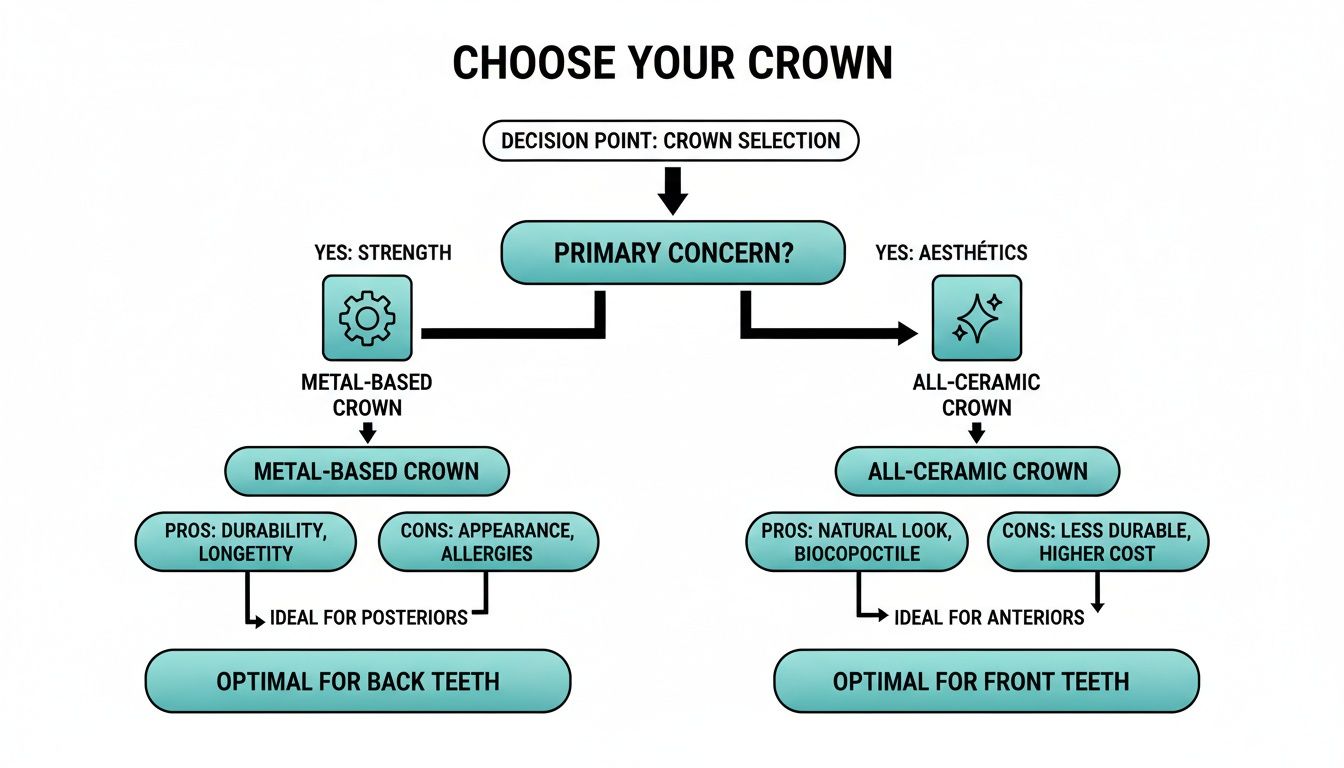
As you can see, dental restorations are about balancing priorities. You might choose a strong metal-based crown for a back molar or a beautiful all-ceramic one for a front tooth.
Let's break down the key factors head-to-head:
- Impact on Other Teeth: This is a big one. To place a bridge, the two healthy neighboring teeth have to be filed down to fit the support crowns. An implant stands on its own and leaves your other healthy teeth untouched.
- Jawbone Health: This is a critical, often missed difference. A dental implant fuses with your jawbone, giving it the stimulation it needs to stay strong and prevent bone loss. A bridge just sits on top of the gums, so the bone under the missing tooth can slowly shrink over time.
- Longevity and Durability: A well-made bridge can last 10-15 years. Dental implants are designed to last a lifetime with proper care. Their success rate is very high, often topping 98% (Source: Journal of Oral & Maxillofacial Research).
- Maintenance: Cleaning a bridge means learning to use tools like floss threaders to get underneath the false tooth. In contrast, you can brush and floss an implant just like a natural tooth. It's much simpler.
- Treatment Timeline: You can have a finished bridge in just two or three appointments over a few weeks. The implant process takes longer, usually several months, to allow the post to fully heal before the final crown is placed.
Which Option Is Right for You?
The best choice is the one that fits your unique situation. A bridge can be a great option if the neighboring teeth already need crowns. In that case, it's a practical two-for-one solution. It's also a great choice if you need a faster result or want to avoid surgery.
For a deeper look at these factors, check out our guide on dental implants vs. crowns and bridges.
An implant, however, is often considered the gold standard for replacing a single tooth. Why? It's the only option that preserves your jawbone and mimics the function of a natural tooth. If you want the most durable, long-term solution, an implant is an incredible investment.
What to Expect During Your Crown or Bridge Procedure
Walking into a dental procedure can be stressful if you don’t know what’s coming. Many patients worry about it being complicated or uncomfortable. Restoring a smile with a crown or bridge has become a smooth and straightforward process.
At Cedar Dental Group, we believe you should be an active participant in your care. We’ll explain everything as we go, using gentle techniques to make sure you feel comfortable and in control.
Your First Appointment: Building the Foundation
Your journey starts with the main preparation appointment. This is usually the longer of the two visits.
- Getting Numb: First, your comfort is our top priority. We’ll use a local anesthetic to completely numb the tooth and gums around it. You won't feel anything during the preparation.
- Shaping the Tooth: Your dentist will then carefully reshape the tooth, creating the perfect base for the crown to fit over it. If you're getting a bridge, the teeth on either side of the gap are prepared in the same way.
- Taking a Digital Scan: Forget those messy impression trays that make you gag. We use a high-tech digital scanner to create a perfect 3D model of your teeth. It’s faster, more comfortable, and incredibly accurate.
This technology makes a huge difference. With nearly 47% of adults over 30 having some level of gum disease, we need solutions that are both precise and efficient (Source: Centers for Disease Control and Prevention). Digital scanning can reduce your time in the chair and improve the final fit. You can read more about how these dental advancements improve restorative outcomes here.
The In-Between Stage: Your Temporary Crown
Once your tooth is prepped and scanned, we’ll place a temporary crown or bridge. This isn't just for looks; it protects the prepared tooth and lets you chew and talk normally while your permanent restoration is being made.
Think of a temporary crown as a placeholder. It keeps your tooth safe and your smile looking great while our trusted dental lab crafts your final, custom-fit restoration.
While the lab process traditionally takes a couple of weeks, technology is changing the game here, too. To see how things are getting faster, check out our guide on the shift to same-day crowns.
Your Second Appointment: The Big Reveal
About a week or two later, you’ll come back for the final placement. This visit is much quicker.
- First, we’ll gently remove your temporary crown or bridge.
- Next, your dentist will carefully place your new permanent one. They will check the fit, your bite, and the color to make sure it's perfect.
- Once you’re both happy with the look and feel, it will be bonded permanently in place.
That's it. You’ll walk out of our Renton office with a tooth that’s fully restored and looks, feels, and works just like your own.
Caring for Your New Smile to Ensure It Lasts
You’ve made a great investment in your smile. With the right care, your new crown or bridge can easily last for 15 years or more. Making it last that long means adjusting your daily routine just a little.
Think of your new restoration like your natural teeth—it needs daily attention. A few specific techniques make all the difference.
Essential Daily Care Techniques
The biggest threat to a crown or bridge isn't the restoration itself, but the natural tooth under it. Plaque can gather at the edge where the crown meets the gumline. Good at-home care is all about keeping that area clean.
Consistency is everything. Here are a few powerful habits to get into:
- Pick the Right Toothpaste: You’ll want a non-abrasive formula. Harsh toothpastes can scratch the polished surface of porcelain or zirconia, dulling its shine over time.
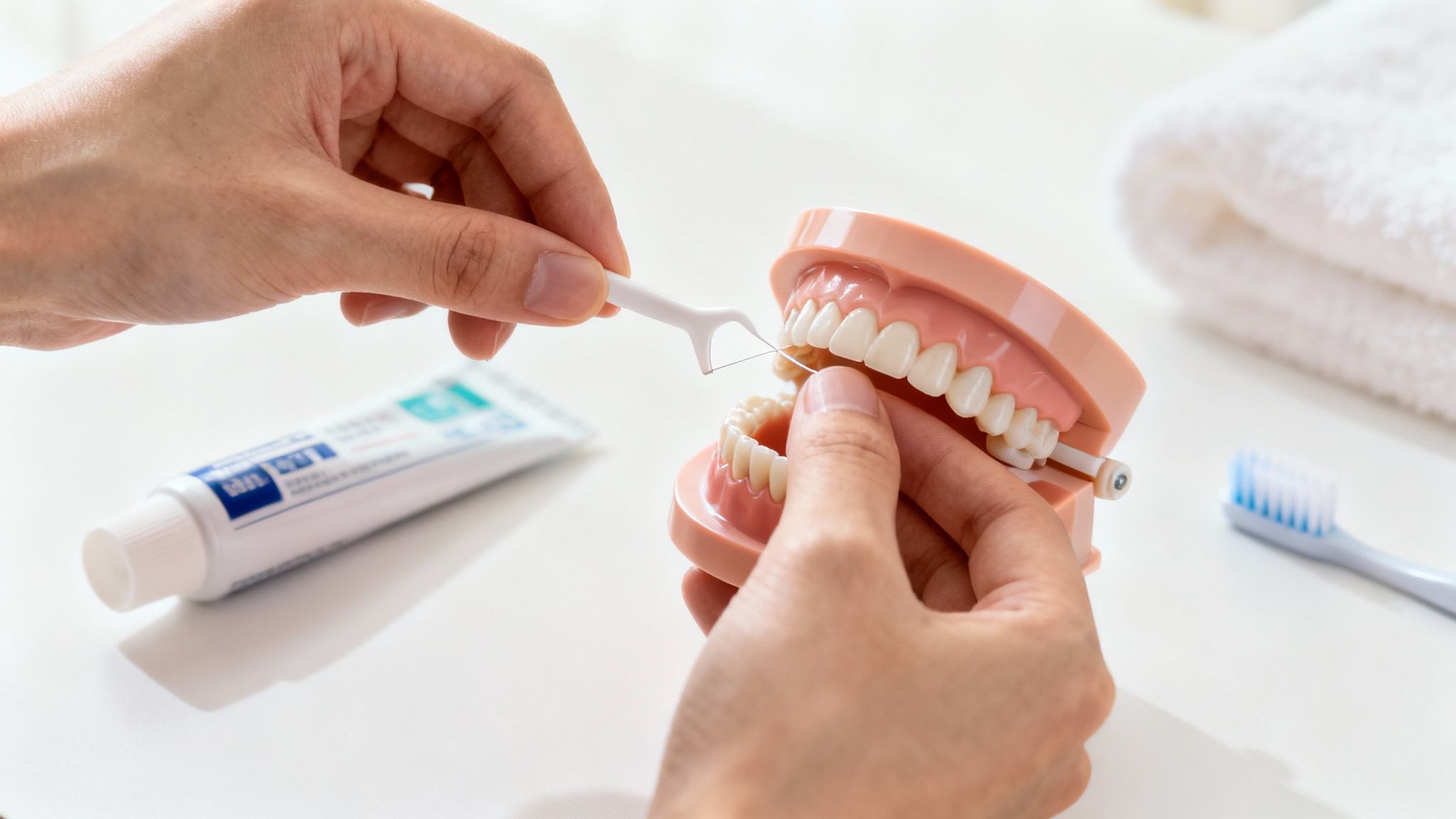
- Change Your Flossing Method: For a single crown, floss normally but be gentle. Instead of snapping the floss up, just slide it out to the side. This prevents you from catching the edge of the crown.
- Get a Floss Threader for Bridges: A bridge is a unique challenge because the teeth are connected. A floss threader is a simple tool that helps you guide floss underneath the bridge to clean the gap.
For a deeper dive into these techniques, check out our complete guide on how to care for dental crowns.
Habits to Avoid to Protect Your Investment
A few small lifestyle changes can save your restoration from unnecessary damage. Your crown or bridge is incredibly strong, but it isn't indestructible.
Try to avoid habits that are known to cause chips and fractures:
- Chewing on Hard Objects: This is the big one. Ice, hard candy, and popcorn kernels can create tiny fractures in the porcelain that can grow over time.
- Using Your Teeth as Tools: Tearing open a package or biting your nails puts uneven pressure on your restorations. This is a sure way to cause damage.
Here's the most important takeaway: The goal is to protect the seal where the crown or bridge meets your natural tooth. If you can keep that area clean, you'll prevent new decay from getting started underneath.
By following these simple rules and keeping your regular cleanings with us at Cedar Dental Group, you’ll be set to enjoy your healthy, confident smile for decades.
Frequently Asked Questions About Crowns and Bridges
How long do crowns and bridges really last?
With modern materials like zirconia and good at-home care, a crown or bridge can easily last 15 years or more. Its lifespan depends on your daily hygiene and avoiding habits that can damage the restoration, like chewing ice.
Will getting a crown or bridge hurt?
No, the procedure itself is not painful. We use local anesthetic to completely numb the area, ensuring you are comfortable throughout the appointment. You may feel mild sensitivity for a day or two afterward, which is normal and temporary.
Will my new crown or bridge look natural?
Yes, absolutely. We use modern, all-ceramic materials that are custom-shaded to match your surrounding teeth perfectly. They mimic the way light reflects off natural enamel, so your restoration will blend in seamlessly with your smile.
Can a tooth under a crown still get a cavity?
Yes, it can. While the crown itself cannot decay, the natural tooth underneath it can. A cavity can form right at the margin, which is the line where the crown meets your tooth. This is why daily brushing and flossing around the crown are so important.
What is the cost of a crown or bridge in Renton?
The cost depends on the specific material used and the complexity of your case. At Cedar Dental Group, we provide a clear, detailed cost breakdown during your consultation. We will also help you understand your insurance benefits and discuss financing options to fit your budget.
Ready to improve your smile? Contact Cedar Dental Group in Renton, WA today to schedule your consultation. We're here to provide the honest, detailed answers you deserve.
