

Getting a dental crown is a common and effective way to fix a damaged tooth. But it's also a big decision for your health and your wallet. Most articles online explain what a crown is. They often leave out what patients really care about: the cost, the choices you have, and the long-term plan.
At Cedar Dental Group, we believe you make the best decisions when you have all the facts. This is especially true now, as we’ve seen more people with cracked teeth from stress-related grinding. This guide goes beyond the basics to give you the smart questions to ask your dentist. It will help you understand the full picture before you get a crown.
This isn't just another article about dental procedures. It’s a helpful checklist to put you in control. We'll cover the key questions you should ask, from the best materials to the total costs and long-term care. Our goal is to help you restore your smile with confidence and avoid surprise bills. When you ask these questions, you become an active partner in your dental health.
1. What is the dentist's experience with crown procedures?
Before you agree to a dental crown, it's important to know the skill of the person doing the work. A crown is a custom-made restoration that needs both technical skill and an artistic touch. It must fit perfectly, work correctly, and look natural. Asking about your dentist’s experience is one of the smartest questions you can ask.
An experienced dentist is skilled at every step. They will prepare the tooth carefully, take precise impressions, and make sure the final crown matches your other teeth. At Cedar Dental Group, our team combines careful attention to detail with years of experience in restorative dentistry.
Why This Question Matters
A well-made crown can last 15 years or more. A poorly fitted one can cause problems like discomfort, gum issues, or even new decay. Asking about a dentist's background helps you feel sure they can give you a lasting and beautiful result.
Actionable Tips for Patients
Don't be afraid to ask specific questions. A confident and experienced dentist will be happy to answer them.
- Ask about their training: Inquire about any special courses they've taken in restorative or cosmetic dentistry.
- Request to see their work: Ask if they have before-and-after photos of other crown patients.
- Understand their approach: Ask how they make sure the fit and color are perfect. Do they use modern digital scanners?
Knowing your dentist’s background is a key step. To learn more, check out our guide on how to pick the right dentist in Renton.
2. What type of crown material do you recommend, and why?
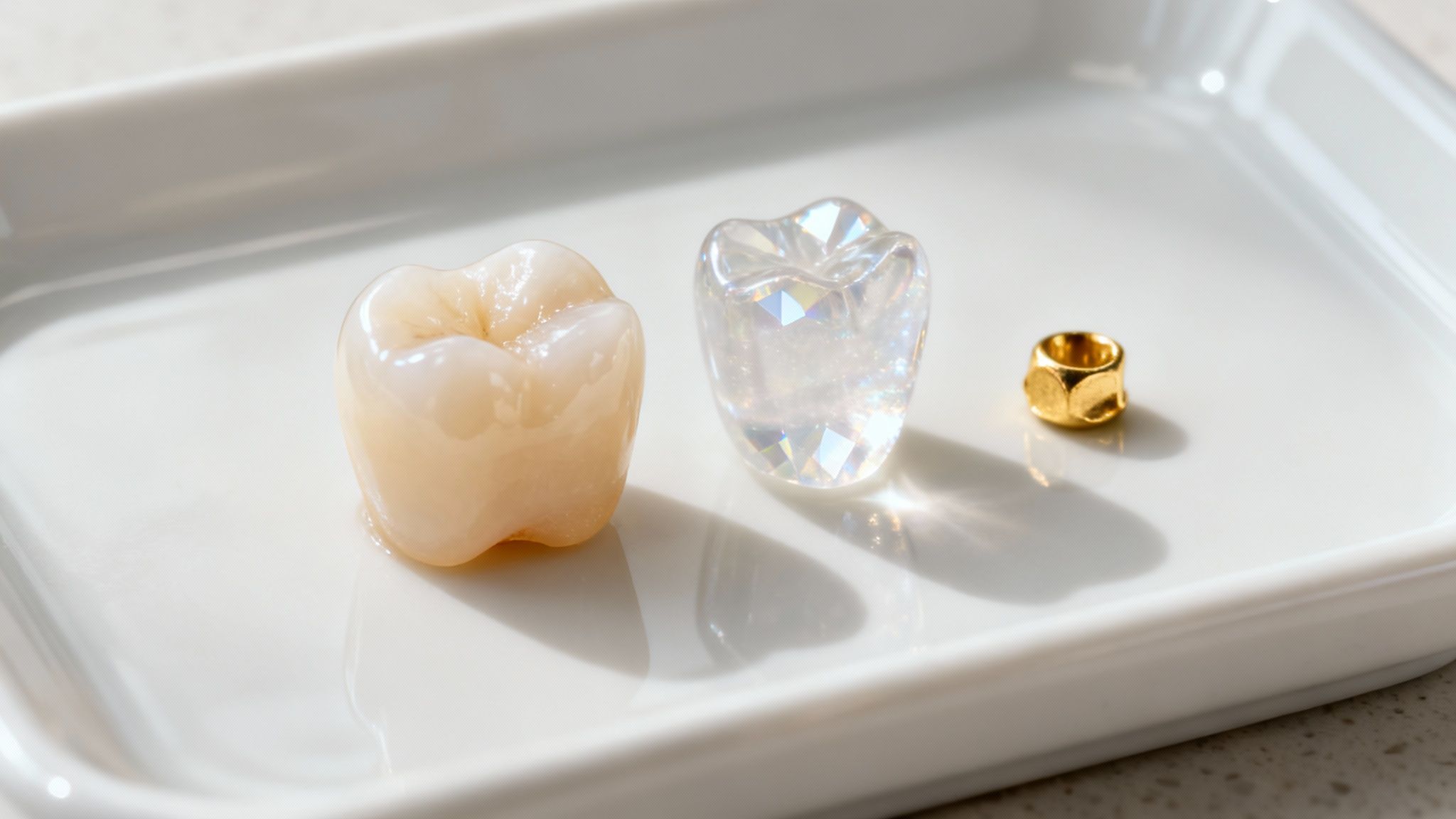
Choosing the right material for your crown is a big decision. It affects how it looks, how long it lasts, and how much it costs. The best material depends on where the tooth is, what you want it to look like, and your budget. This is a practical question because your choice will impact your smile for many years.
Your dentist should explain the pros and cons of materials like porcelain, zirconia, or gold. At Cedar Dental Group, we help patients in Renton understand their choices. We want you to make a decision that fits your health needs and smile goals.
Why This Question Matters
The right material is key to a successful crown. A front tooth needs a material like all-ceramic or zirconia to look natural. A back molar needs a stronger material like zirconia or gold to handle chewing. The wrong material can wear down, break, or look out of place.
Actionable Tips for Patients
A good dentist will walk you through the options. Use these questions to help guide the conversation:
- Ask to see samples: Seeing examples of crowns made from different materials can help you decide.
- Discuss the tooth’s location: Ask, "Since this is a back tooth, what material offers the best strength?"
- Inquire about lifespan: Ask how long the recommended material is expected to last compared to others.
- Consider your health: If you grind your teeth or have metal allergies, ask how that affects the best choice for you.
Understanding the materials helps you feel confident in your treatment. For a deeper look, you can read the advanced crown and bridge guide most dentists don't provide.
3. What is the total cost, and what will my insurance cover?
Knowing the full cost is a big deal before you get a dental crown. The price can change based on the material, the difficulty of the procedure, and your insurance plan. Asking about the total cost upfront is one of the most important questions. It helps you avoid surprise bills and budget for your care.
A good dental office will give you a clear breakdown of all the fees. At Cedar Dental Group, we believe in being open and honest about costs. If you're in Renton and wondering what a crown will really cost, we break it down clearly—no surprises. We accept many PPO plans and will review your benefits to give you an estimate of your out-of-pocket costs before we begin.
Why This Question Matters
Worrying about money can be stressful and may stop you from getting the care you need. A crown is an investment in your health. Knowing the full cost helps you plan without stress. Without a clear estimate, you might be surprised by fees for things like the temporary crown or lab work.
Actionable Tips for Patients
Be proactive when you talk about finances. A helpful dental team will walk you through the numbers.
- Ask for a detailed estimate: Get a written plan that lists every cost involved.
- Check with your insurance: Call your insurance company to confirm what they cover for crowns and what your deductible is.
- Ask about pre-authorization: Your dentist can send a pre-treatment estimate to your insurance. This helps you understand what will be covered before you start. You can learn more about prior authorization in healthcare.
- Discuss payment options: If the cost is a concern, ask about payment plans. We offer flexible financing through Cherry to help make treatment affordable.
To learn more about how we make dental care accessible, read about our membership and payment plans.
4. How long will the procedure take from start to finish?
It’s helpful to understand the full timeline for getting a crown, especially if you have a busy schedule. The process usually involves more than one visit. Asking about the timeline is a smart question because it lets you plan for time off work and know what to expect.
The standard crown process usually takes two appointments over two to three weeks. This gives a special dental lab time to create your custom crown. Knowing the schedule ahead of time makes the whole experience smoother and less stressful.
Why This Question Matters
A clear timeline helps you manage your schedule. The first appointment is longer, while the second one is quicker. Knowing this can help you plan. For example, you might book your first appointment on a Friday to have the weekend to recover.
Actionable Tips for Patients
When you talk about the timeline, have these questions ready to get clear answers.
- Ask for a step-by-step plan: Request an outline of each visit and how long it will take. The first visit can be 90 minutes to two hours, and the final visit is usually less than an hour.
- Inquire about lab time: Ask how long it takes for the lab to make your permanent crown.
- Discuss faster options: If you need the crown sooner, ask if there are any rush options available.
- Learn about temporary crown care: You'll have a temporary crown for a few weeks. Ask for instructions on how to care for it.
Some dental offices have technology that can speed up this process. To see how, you can learn more about same-day crowns and see if it’s a good option for you.
5. What are the possible risks, and how do you handle them?
Every dental procedure has some potential risks, even routine ones. A dental crown is a very safe and effective treatment. But understanding the possible issues is important for making an informed choice. This is a smart question because it shows your dentist is committed to being open and honest with you.
A trustworthy dentist will talk to you about things like tooth sensitivity or problems with the crown's fit. At Cedar Dental Group, we believe in educating our patients. We make sure you know what to expect and how we would handle any issues, which gives you peace of mind.
Why This Question Matters
Talking about risks isn't meant to scare you; it's about being prepared. Knowing how a dental office handles problems shows how much they care about their patients. A small issue like temporary sensitivity is easy to manage. But an unaddressed problem could lead to bigger issues later. This talk is very important for patients with dental anxiety because it builds trust.
Actionable Tips for Patients
A good dentist will be glad you are taking an active role in your health. Use these questions to guide your conversation.
- Ask about your specific risks: Ask, "Based on my tooth, are there any specific risks I should know about?"
- Clarify aftercare: Get detailed instructions on how to care for your tooth after the procedure to avoid common problems.
- Inquire about follow-up care: Ask, "What happens if I have a problem? Is the follow-up visit included in the cost?"
- Discuss any guarantees: Ask if there is a warranty on the crown in case it breaks or fails early.
- Share your health history: Tell your dentist if you have sensitive teeth, gum problems, or any allergies.
6. What happens when you prepare the tooth?
Getting a crown means your dentist will reshape the natural tooth underneath. This is a permanent change where a layer of enamel is removed to make room for the crown. This is a smart question to ask because it helps you understand the long-term commitment you are making.
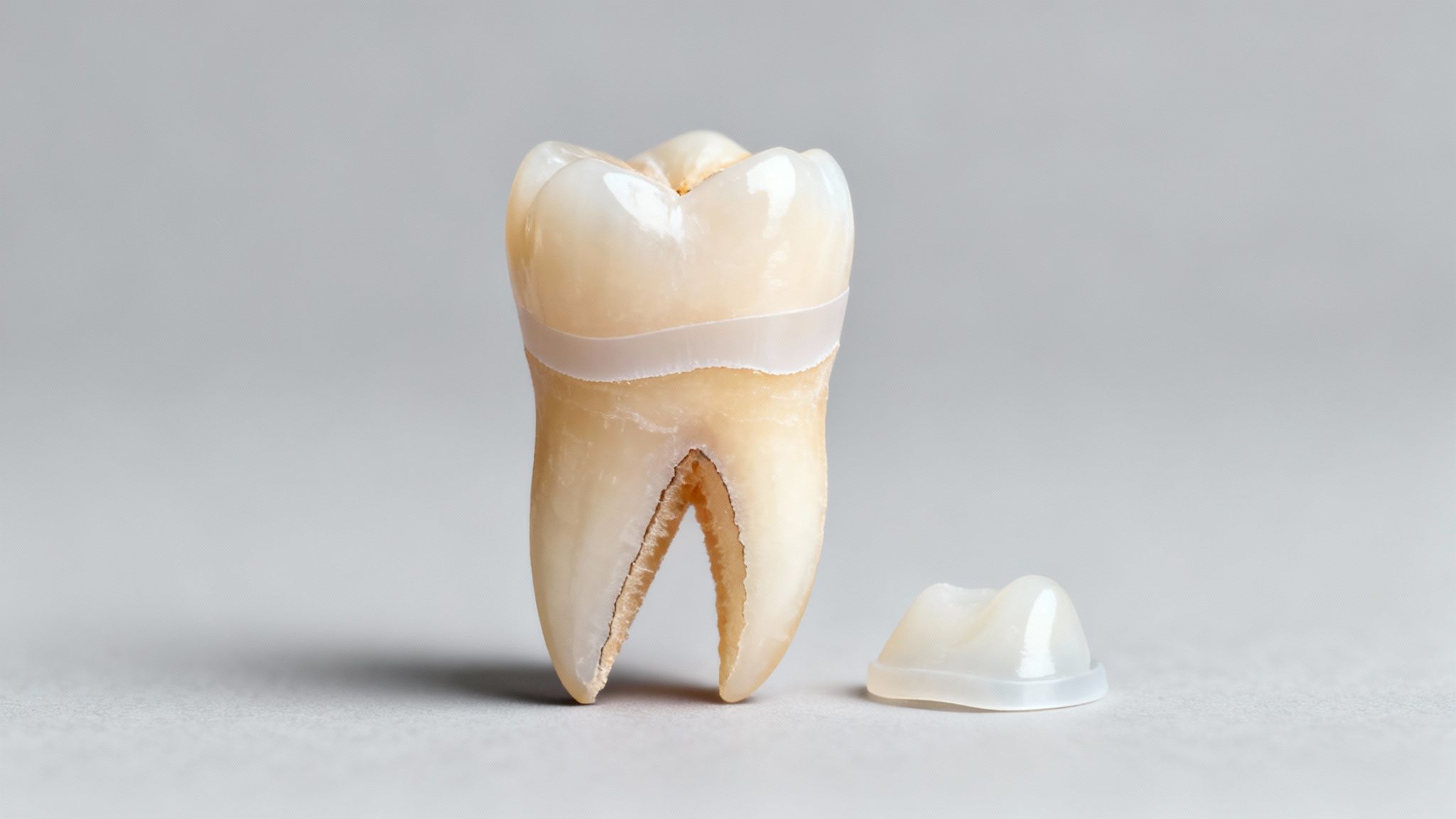
A skilled dentist will try to save as much of your healthy tooth as possible. The goal is to remove only what is needed, which is usually 1 to 2 millimeters. This careful approach keeps the tooth strong and lowers the risk of future problems. At Cedar Dental Group, we focus on preserving your natural tooth structure.
Why This Question Matters
How much of the tooth is removed can affect its long-term health. Removing too much can weaken the tooth. A carefully prepared tooth keeps its natural strength and provides a better foundation for the crown. Asking about this shows your dentist’s commitment to your long-term smile health.
Actionable Tips for Patients
Feel free to talk about the details of how your tooth will be prepared. A dentist who cares about patient education will be happy to explain.
- Ask about their technique: Inquire, "What is your approach to preparing the tooth? Do you use methods that save as much of the tooth as possible?"
- Discuss the specifics: Ask how much of your tooth needs to be removed and why.
- Inquire about nerve protection: You can ask, "What do you do to protect the tooth's nerve during this process?"
- Understand it is permanent: Make sure you understand that this change is permanent and discuss any worries you have.
- Explore other options: If you are concerned, ask if a more conservative treatment like an onlay could work instead.
7. What care is needed after the procedure?
Your role in caring for your crown doesn’t end when you leave the dentist's office. How you care for it right after and for years to come is key to its success. Asking about aftercare is a practical question that helps you protect your investment.
Proper care makes sure your temporary crown stays put and your permanent crown fits well. At Cedar Dental Group, we give every patient clear instructions because we know that an informed patient is our best partner in dental health.
 dental crowns blurred in the background.” />
Why This Question Matters
A new crown is delicate, especially the temporary one. Eating the wrong foods can make it come loose. Not flossing correctly can pull it off. In the long run, poor hygiene or teeth grinding can cause the crown to fail. Understanding the do's and don'ts from the start helps your crown last for its full lifespan of 15 years or more.
Actionable Tips for Patients
When you get your temporary crown, it’s the best time to ask for specific advice.
- Ask for written instructions: Get a handout with care instructions for both the temporary and permanent crowns.
- Clarify what to eat: Ask, "What foods should I avoid with my temporary crown?" This includes sticky or hard things like caramel or ice.
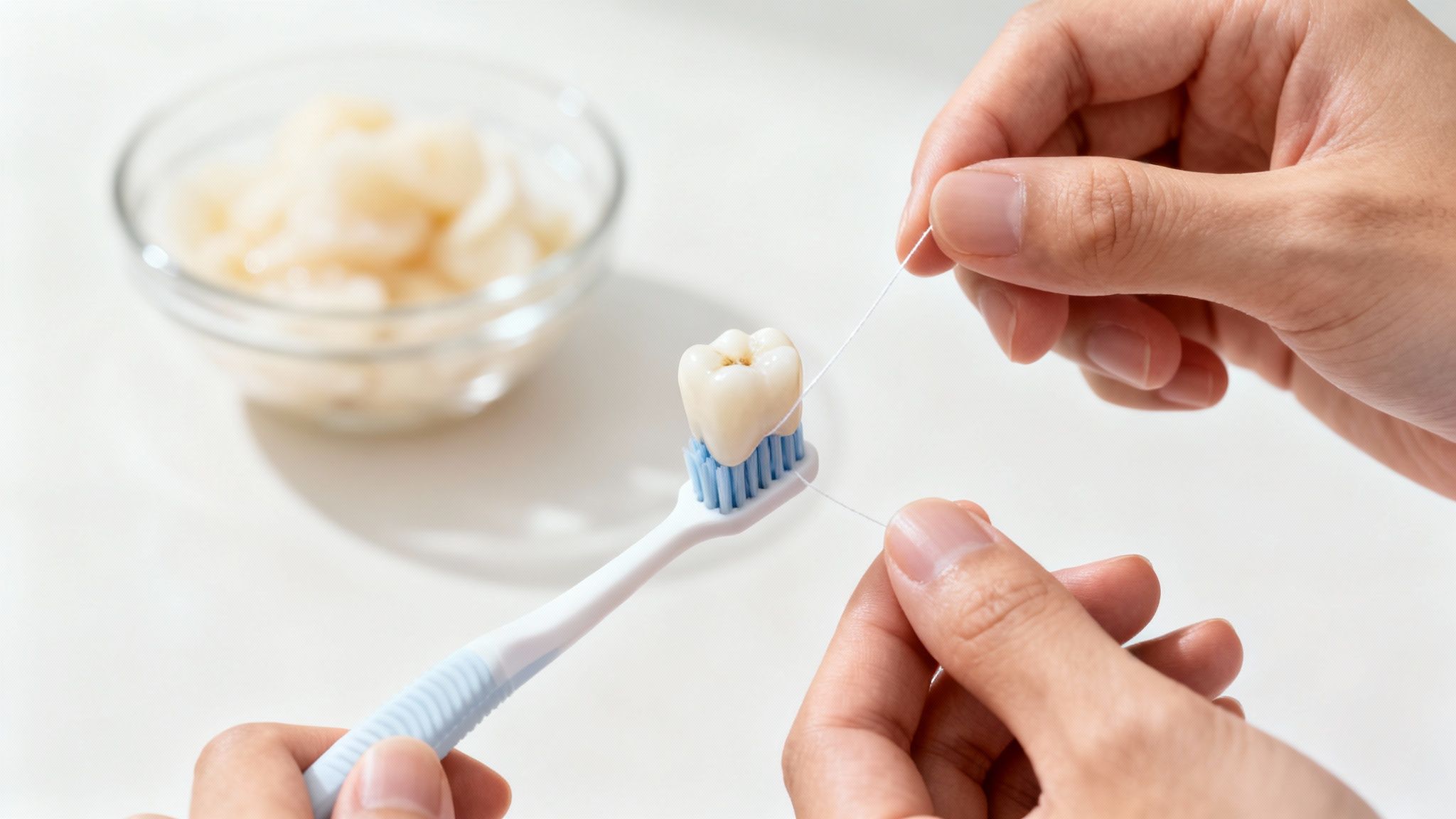
- Learn how to floss: Instead of pulling floss up, you should slide it out to the side. Ask for a quick demonstration.
- Manage sensitivity: Ask what to do if you feel sensitivity to hot or cold and if special toothpaste can help.
- Discuss long-term protection: If you grind your teeth, ask, "Should I get a night guard to protect my new crown?"
- Know the warning signs: Ask what feelings, like looseness or pain, mean you should call the office right away.
Taking care of your crown is the best way to ensure a comfortable recovery and a long-lasting result. You can find more details in our guide on how to care for dental crowns.
8. How long will the crown last, and what happens when it needs to be replaced?
A dental crown is a great investment, but it's not a forever solution. Crowns are strong, but they do wear out and will need to be replaced someday. Understanding this from the start is a smart question to ask because it helps you plan for the future.
Most dental crowns last between 10 and 15 years. (Source: Cleveland Clinic). This can change based on the material, your oral hygiene, and habits like teeth grinding. At Cedar Dental Group, we make sure you have a clear idea of what to expect from your crown.
Why This Question Matters
Knowing the expected lifespan helps you avoid surprises later on. A crown might need to be replaced if it cracks, if the cement washes out, or if decay forms around it. Understanding this helps you plan for the future, both for your health and your budget. It helps you see your crown as part of a long-term health plan.
Actionable Tips for Patients
A conversation about your crown's future is a sign of an informed patient. Use these questions to guide your talk with the dentist.
- Ask about lifespan for different materials: Inquire what lifespan they usually see for zirconia versus porcelain crowns.
- Discuss your personal habits: Ask, "Do I have any habits, like clenching, that might make my crown wear out faster?" This can lead to solutions like a night guard.
- Know the warning signs: Ask what signs, like sensitivity or a dark line at the gum, might mean a crown is failing.
- Understand the replacement process: Ask what is involved in replacing a crown. Is it similar to getting the first one?
- Plan for the future: You can ask, "How many times can a tooth be re-crowned before we need to think about other options?"
Your Guide to a Confident Decision
Getting a dental crown doesn't have to be confusing. By moving beyond the basics and asking smart questions, you become an active partner in your health. You can feel confident about the choices you make for your smile.
This guide was made to give you the questions you need. By asking about experience, materials, costs, and care, you can build trust with your dentist and avoid surprises. Understanding the timeline and potential risks prepares you for a smooth and successful result.
Key Takeaways for Your Dental Crown Journey
- Financial Clarity is Key: Worrying about cost is normal. Asking about the total price, what your PPO insurance covers, and payment options like Cherry financing brings peace of mind. At Cedar Dental Group, we provide clear pricing to help our Renton patients avoid sticker shock.
- The Right Material Matters: The choice between porcelain, zirconia, or metal affects more than just looks. It impacts how long the crown lasts and how it feels. Your lifestyle and where the tooth is located are important factors.
- A Great Dentist Welcomes Questions: A caring dental team will never make you feel rushed. Your questions show you are engaged in your health, and a good dentist will give you clear, reassuring answers.
- Care Continues at Home: Your job isn't done when you leave the dental chair. Knowing how to care for your crown and what to watch for is key to protecting your investment for years to come.
Why This Knowledge Empowers You
With issues like stress-related teeth grinding on the rise, dental crowns are more important than ever. Being armed with these smart questions helps you do more than just fix a tooth. It helps you invest in a solution that is durable, beautiful, and boosts your confidence.
You are no longer just a patient; you are a partner in creating your treatment plan. This proactive approach helps you find a dentist in Renton who has the skill you need and also values clear communication. It all leads to a better, less stressful dental experience.
Frequently Asked Questions (FAQs)
1. How do I know if I really need a crown?
A crown is usually recommended when a tooth is badly damaged by decay or a fracture, has had a root canal, or is severely worn down. Your dentist will use X-rays and an exam to determine if a crown is the best solution to protect the tooth.
2. Will getting a crown hurt?
The area will be completely numbed with local anesthetic, so you shouldn't feel pain during the procedure. It's common to feel some mild sensitivity or gum tenderness for a few days afterward, which can be managed with over-the-counter pain relievers.
3. Can a crowned tooth still get a cavity?
Yes, the natural tooth structure underneath the crown, especially at the gumline where the crown meets the tooth, can still get a cavity. That's why daily brushing and flossing are just as important for a crowned tooth as for any other.
4. What's the difference between a traditional crown and a same-day crown?
A traditional crown requires two visits about two to three weeks apart, with a temporary crown in between. A same-day crown uses CAD/CAM technology to design, mill, and place the permanent crown in a single visit, which usually takes a few hours.
5. How much does a dental crown cost in Renton, WA?
The cost can vary widely depending on the material used (porcelain, zirconia, etc.) and your insurance coverage. It's best to get a detailed estimate from your dental office. At Cedar Dental Group, we provide a clear breakdown and discuss financing options like Cherry to make care affordable.
Ready to get the clear, transparent answers you deserve for your dental crown needs in Renton, WA? At Cedar Dental Group, we prioritize patient education and are here to walk you through every one of these questions and more. Contact us today to schedule your consultation and experience dentistry where your confidence and comfort come first.
