

When you lose a tooth, you have a few options to get your smile back. The two most popular choices are a dental bridge and a dental implant. So, what’s the difference between a bridge and an implant?
A dental implant is a brand-new tooth from the root up. It’s a standalone replacement that doesn’t rely on other teeth. A dental bridge, on the other hand, closes a gap by using the teeth next to the space as anchors for a false tooth. One is a complete, independent tooth, and the other is a unit connected to its neighbors.
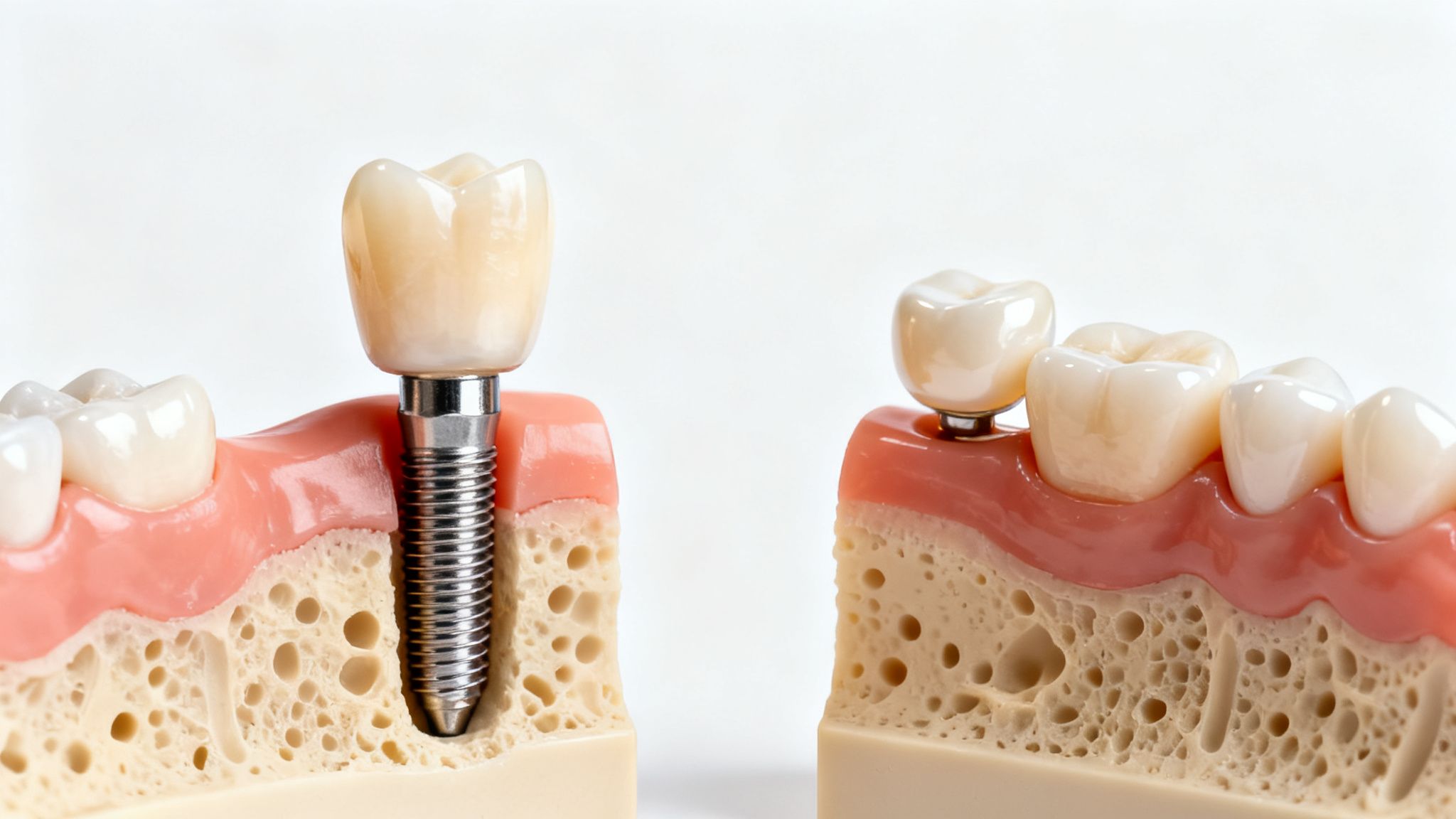
Bridges And Implants: The Modern Answer To A Missing Tooth
Losing a tooth can affect more than just your appearance. A gap can change your bite, make it harder to speak clearly, and even cause other teeth to shift out of place. Deciding how to fill that gap is a big step toward restoring your smile’s health and confidence.
At Cedar Dental Group, we help our Renton patients understand both options. Many people assume bridges are outdated now that implants are so popular, but that’s not true. While implants are an amazing technology, a modern bridge is still a great non-surgical and cost-effective solution for many patients. Today’s bridges are made from materials that look and feel just like your natural teeth.
Dismissing bridges as “old-school” is a common misstep. The best choice isn't about what's new versus old; it's about what’s right for you. We will talk with you about a few key things:
- Your jawbone health: Implants need enough bone to be secure.
- The health of your other teeth: A bridge needs strong neighbors for support.
- Your budget and timeline: The two options have very different costs and schedules.
- Your long-term goals: Each choice affects your future oral health differently.
Dental Bridge Vs. Implant At A Glance
To help you see the differences clearly, here is a quick comparison table. This gives you an overview before we dive into the details of each treatment.
| Feature | Dental Bridge | Dental Implant |
|---|---|---|
| Structure | A false tooth held in place by crowns on the two neighboring teeth. | A titanium post placed in the jawbone to act as a new root for a crown. |
| Surgery Required | No. The process is non-surgical, though it does involve preparing the adjacent teeth. | Yes. Placing the implant post is a minor surgical procedure. |
| Impact on Other Teeth | Requires shaving down the healthy teeth next to the gap to fit the support crowns. | Leaves your other teeth completely untouched, preserving their natural structure. |
| Treatment Timeline | Much faster. It is usually completed in just 2-3 visits over a few weeks. | A longer process that can take 3 to 9 months for the implant to fully bond with the bone. |
Understanding these basics is a great place to start. The trend in modern dentistry is moving toward solutions that last a lifetime. You can read more about this in our guide on permanent tooth replacement.
Ultimately, the best way to know which option is right for you is to talk to your dentist.
Understanding Dental Bridges and When to Choose Them
A dental bridge is a trusted, time-tested way to fill the space left by a missing tooth. It literally “bridges” the gap. A false tooth (called a pontic) is held in place by crowns attached to the healthy teeth on either side of the space. These supporting teeth are called "abutment teeth."
Bridges have been a top choice in dentistry for a long time because they work very well. While some people think they are old-fashioned, modern bridges are made from tooth-colored materials that look and feel incredibly natural.
The Dental Bridge Process Step by Step
Getting a dental bridge is a simple and fast process, especially compared to an implant. At Cedar Dental Group, we make sure you feel comfortable and informed every step of the way.
- Consultation and Tooth Preparation: First, we make sure the neighboring teeth are strong enough to support the bridge. If they are, we gently reshape them to prepare them for the crowns.
- Impressions and a Temporary Bridge: We then take digital impressions of the area. These are sent to a dental lab where your custom bridge is made. You won’t go home with a gap; we’ll place a temporary bridge for you to wear.
- Placing Your Permanent Bridge: When your final bridge is ready, you’ll come back to our Renton office. We will remove the temporary bridge and carefully place your new one, checking the fit and your bite before cementing it permanently.
Key Takeaway: The entire dental bridge procedure is non-surgical. This is a major benefit for anyone who is not a candidate for surgery or prefers to avoid it.
Who Is an Ideal Candidate for a Dental Bridge?
Dental implants are a fantastic option, but they aren't the best choice for everyone. A dental bridge shines as a perfect solution for many of our patients.
You might be a great candidate for a bridge if:
- You Need a Faster Solution: If you need to replace a tooth quickly, a bridge can be ready in just 2-3 weeks. An implant, however, can take 3-9 months to complete because the jawbone needs time to heal.
- You Are Not a Candidate for Surgery: Certain health conditions can make oral surgery risky. If you don't have enough jawbone for an implant, a bridge offers a safe and effective non-surgical alternative.
- The Neighboring Teeth Already Need Crowns: This is a common situation. If the teeth next to your gap are already weak from decay or large fillings, a bridge can fix them with protective crowns while filling the empty space.
When considering options, some people research clinics like Istanbul Dental Clinic for implants and crowns that offer various restorative treatments. However, the most important step is talking with a dentist you trust. You can learn more about our approach to dental crowns and bridges in Renton. If you need to replace a missing tooth in Renton, our team at Cedar Dental Group can help you explore your options with no pressure, just clear answers.
Understanding Dental Implants: The Gold Standard Solution
When it comes to replacing a missing tooth for good, dental implants are considered the best long-term solution available today. An implant is the only option that replaces a natural tooth from root to crown. It doesn't need support from other teeth; it stands completely on its own.
A dental implant starts with a small post made from titanium, a material that is safe for the body. This post acts as a new root for your tooth. It is gently placed into the jawbone where your missing tooth used to be.
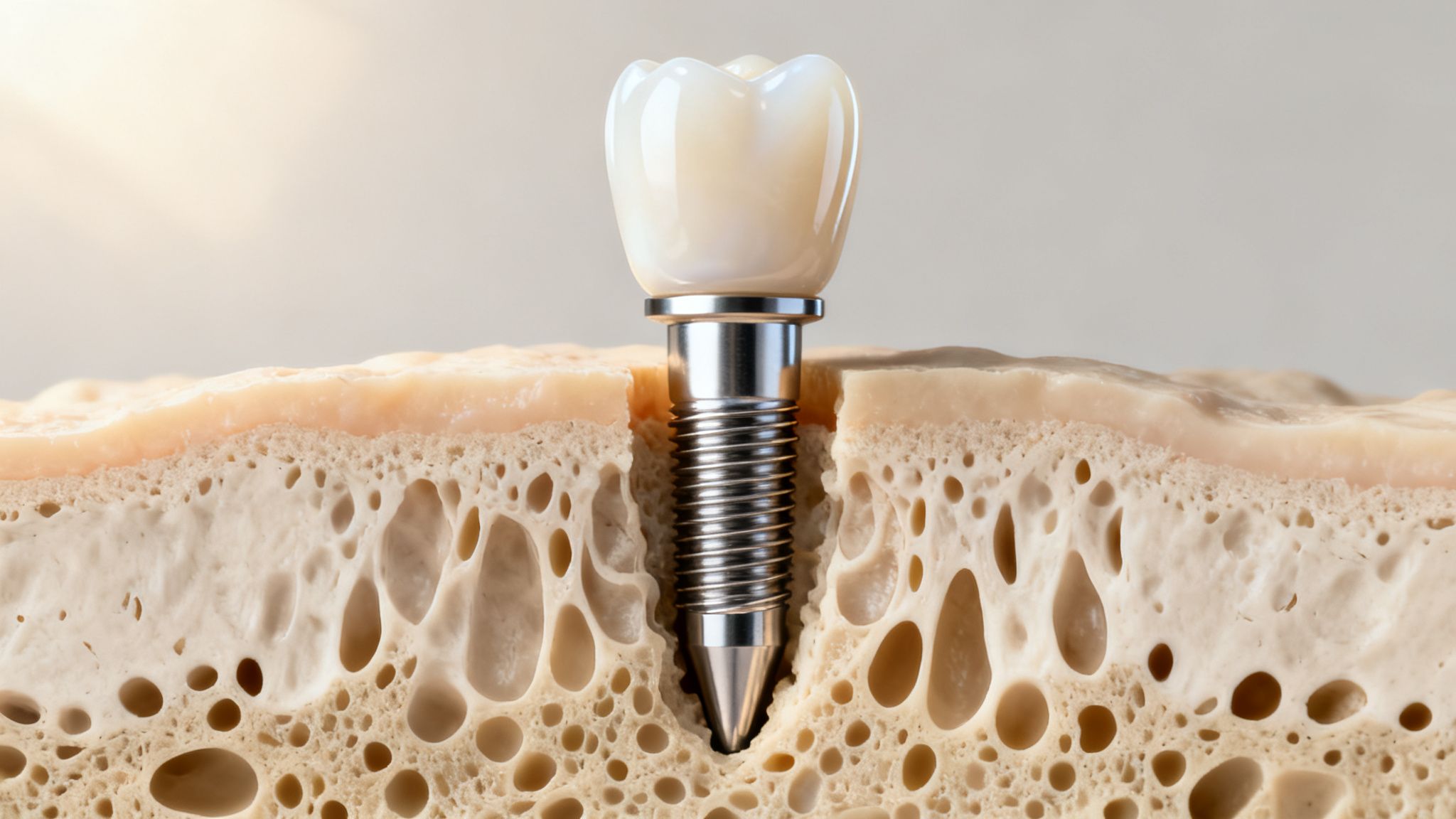
How an Implant Becomes a Part of You
The amazing part happens as you heal. Over a few months, your jawbone naturally grows around and fuses with the titanium post. This process is called osseointegration, and it creates a super strong and stable foundation. The implant becomes a permanent part of your jaw.
Once the bond is solid, a small connector (called an abutment) is attached to the post. Finally, a custom-made porcelain crown is secured on top. The result is a new tooth that looks, feels, and works just like your own, so you can chew, talk, and smile with complete confidence.
The Key Benefits That Set Implants Apart
Getting an implant takes more time than a bridge, but the long-term benefits are clear. Patients often choose implants for a few powerful reasons that make a huge difference in their oral health for years to come.
Here’s what makes implants stand out:
- Preserves Jawbone Health: When you lose a tooth, the jawbone in that spot starts to shrink because the root is gone. An implant post acts like a natural root, keeping the bone strong and preventing the sunken look that can happen after tooth loss.
- Protects Healthy Adjacent Teeth: A dental bridge requires the dentist to shave down healthy teeth on both sides of the gap. Implants don’t require this at all, leaving your healthy teeth completely untouched.
- Offers Unmatched Longevity: With proper care, the implant post itself can last a lifetime. The crown attached to it may need to be replaced after 15 to 25 years due to normal wear, but the strong foundation stays put.
Why This Matters: Choosing an implant is about more than just filling a gap—it's an investment in the long-term health of your entire mouth. Preventing bone loss is key to maintaining your facial structure and overall well-being.
An Investment in Your Future Smile
It's true that the upfront cost of an implant, which can range from $3,000 to $6,000, is higher than a bridge (Source: Penn Dental Medicine). However, it’s important to look at the big picture. Since they can last a lifetime, implants are often more cost-effective over time. This helps you avoid the cost of replacing a bridge every 10 to 15 years.
At Cedar Dental Group, we ensure our patients in Renton understand all the factors. We are here to offer clear, personalized guidance so you can make a choice that fits your health, budget, and smile goals. To learn more, you can read our guide that goes beyond the basics of dental implants.
Comparing Longevity, Cost, and Oral Health Impact
Deciding between a dental bridge and an implant is about more than just filling a space in your smile. It’s about understanding how your choice will affect you for years to come. The three big things to think about are how long it will last, the total cost over time, and its impact on your overall oral health.
These two options are very different in these key areas. Getting a clear picture of these differences will help you choose a path that works for your long-term health and budget. Let's look at the details.
Longevity and Success Rates
When you invest in your smile, you want a solution that is built to last. The data shows that dental implants have a clear advantage in long-term reliability.
One major 10-year study found that dental implants have a 97% success rate, while bridges have an 87% success rate (Source: International Journal of Prosthodontics). Over 15 years, the success rate for implants remains over 90%.
A bridge typically lasts 10 to 15 years. Its lifespan depends on how well you care for it and the health of the teeth that support it. An implant, on the other hand, is designed to be a permanent part of your smile. The titanium post can easily last a lifetime.
The True Cost of Tooth Replacement
On paper, a dental bridge almost always looks like the cheaper choice at first. The initial cost is lower, which is a big plus for many people. But it’s important to think of this as a long-term investment.
A bridge might need to be replaced two or even three times over the lifespan of a single dental implant. When you add up those replacement costs over the years, the total can end up being more than the one-time cost of an implant.
Long-Term Financial Perspective: An implant is a one-time investment in a permanent solution. A bridge, while less expensive up front, often comes with repeating costs for replacement over the years.
Of course, insurance is a big part of the decision. Many dental plans offer some coverage for both options. We break this down in our guide on what’s covered by dental insurance. Here at Cedar Dental Group, our team is always happy to help you understand your benefits to make your treatment as affordable as possible.
Impact on Overall Oral Health
This is one of the most important differences between a bridge and an implant. The path you choose will have a lasting impact on your jaw and your other teeth.
A dental implant actively helps your oral health in a way a bridge cannot.
- Jawbone Preservation: When a tooth is lost, the jawbone underneath begins to shrink. An implant post acts like a natural tooth root, stimulating the bone and stopping this process. This helps keep your jaw strong and healthy.
- Protection of Healthy Teeth: To place a bridge, we have to grind down the healthy teeth on either side of the gap. This is a permanent change to those teeth. An implant is a standalone solution that leaves your healthy teeth completely untouched.
A bridge does not provide any stimulation to the jawbone, so you will still lose bone under the false tooth. The supporting teeth also take on extra stress, which can make them more prone to problems later. Habits like addressing teeth grinding are also important, as they can put extra strain on either type of restoration.
Ultimately, choosing between these two great options is a personal decision. By looking at the differences in longevity, lifetime cost, and oral health, you can make an informed choice that’s right for you. If you're in the Renton area and need some guidance, our team at Cedar Dental Group is here to give you clear, personalized advice.
How to Choose the Right Option for Your Smile
Deciding between a dental bridge and a dental implant is a big step, and there’s no single right answer. The best choice depends on your unique situation—your oral health, your budget, and your long-term smile goals.
This isn't a one-size-fits-all solution. It's a personal decision made by looking at several factors. To help you get a clearer picture, let's go through the key things your dentist will discuss with you. The most important first step is a professional, no-pressure consultation to get answers that are just for you.
Evaluating Your Personal Candidacy
Your dentist will look at a few key areas to help guide your decision. Each one gives a clue as to whether a bridge or an implant will serve you better.
- Jawbone Health: This is the biggest factor for an implant. Dental implants need a solid foundation of healthy jawbone to fuse with. If a tooth has been missing for a while, the bone may have started to shrink.
- Health of Adjacent Teeth: A dental bridge relies on the teeth next to the gap for support. If those teeth are healthy and strong, they are great candidates to hold the bridge. If they already have large fillings or crowns, a bridge can be a smart way to fix them and fill the gap.
- Your Timeline: How quickly do you need your tooth replaced? A bridge is a much faster solution, usually finished in just two or three weeks. An implant is a longer journey that takes several months from start to finish to allow for proper healing.
- Your Budget and Long-Term Value: While a bridge often costs less up front, an implant is usually the more cost-effective choice over a lifetime because it rarely needs to be replaced.
This flowchart can help you see the key questions that point toward either a bridge or an implant.
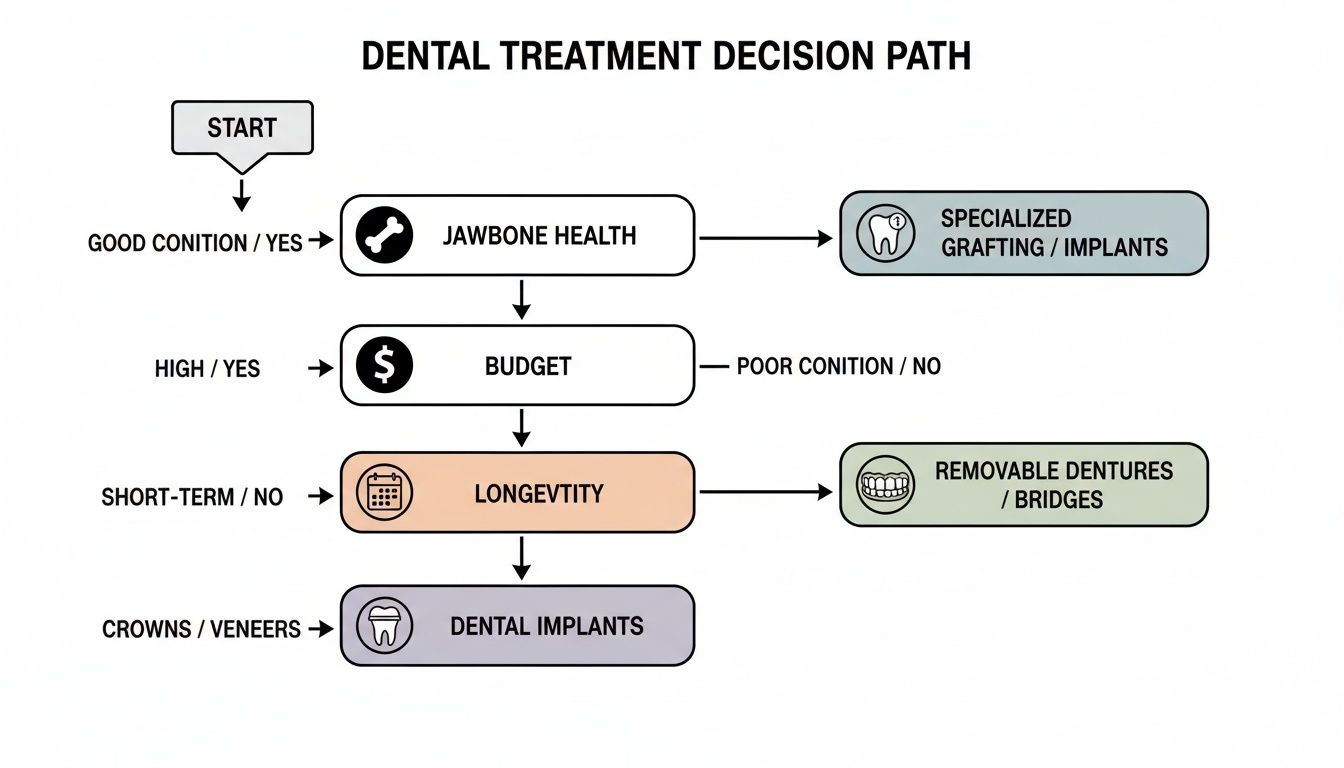
As you can see, things like your bone density, your budget, and whether you want a permanent or a faster fix are what really guide the final recommendation.
Scenarios Where One Option Is Clearly Better
To make this even clearer, let's look at a few real-world examples. Seeing how these situations play out can help you recognize your own.
A Dental Implant is Likely Your Best Choice If:
- You have good, strong jawbone.
- The teeth next to the gap are perfectly healthy, and you want to keep them that way.
- You are looking for the most permanent, long-term solution available.
- Your main goal is to protect your jawbone from shrinking.
A Dental Bridge May Be the Perfect Fit If:
- You are not a good candidate for surgery due to other health issues.
- You need a tooth replaced quickly for an important event or work.
- The teeth on either side of the gap already need crowns or have large fillings.
- You have significant bone loss in your jaw and prefer to avoid a bone grafting procedure.
Your Next Step: A Professional Consultation
At the end of the day, the only way to know for sure is to talk with your dentist. A thorough exam with digital imaging will give you the full story of your oral health. From there, we can help you make a decision based on facts, not guesses.
At Cedar Dental Group, we help Renton residents explore all their options without any sales pressure. We’ll sit down with you, explain the pros and cons of each choice as they apply to you, and make sure all your questions are answered. Our goal is to give you the confidence to make the right decision for your health and your smile. We offer both modern bridges and advanced dental implants, personalized to your situation.
FAQs: Your Questions About Bridges and Implants Answered
Here are answers to some of the most common questions we hear from patients in our Renton office when they are deciding between a dental bridge and an implant.
1. Does getting a dental implant hurt?
The implant procedure is much more comfortable than most people expect. We use local anesthesia to completely numb the area, so you won’t feel any pain. Most patients say the recovery is easier than having a tooth pulled and that any mild soreness can be managed with over-the-counter pain relievers.
2. How long does a dental bridge last compared to an implant?
A dental bridge typically lasts 10 to 15 years with good care. A dental implant is designed to be a permanent solution. The titanium post can last a lifetime, while the crown on top may need to be replaced after 15 to 25 years due to normal wear and tear.
3. Will my dental insurance cover a bridge or an implant?
Most dental insurance plans offer some coverage for both bridges and implants, as they are considered major restorative treatments. Coverage varies by plan, but our team at Cedar Dental Group is experienced in helping patients understand and maximize their benefits.
4. What is the main advantage of a bridge over an implant?
The main advantages of a bridge are its faster treatment time (usually 2-3 weeks) and its non-surgical nature. It's an excellent option for patients who need a quick solution or are not candidates for oral surgery.
5. Why do I need to talk to a dentist to decide?
Only a dentist can evaluate your specific situation. A professional consultation, including an exam and digital imaging, is the only way to know for sure which option fits your bone health, budget, and long-term goals. Your dentist can provide a personalized recommendation based on your unique needs.
Ready to improve your smile? Contact Cedar Dental Group in Renton, WA today to schedule your consultation.
