

When it comes to your oral health, an ounce of prevention is truly worth a pound of cure. Preventing cavities before they start is about more than just avoiding sugary treats; it’s a comprehensive strategy that combines consistent daily habits, smart dietary choices, and a partnership with your dental team for proactive care.
This guide is your personal defense plan—a simple yet powerful way to keep your smile healthy and avoid the need for fillings down the line. At Cedar Dental Group, we believe that empowering our patients with knowledge is the first step toward a lifetime of excellent oral health.
Understanding and Preventing Cavities

Cavities, known in dentistry as "dental caries," are small holes that form when the hard outer surface of your tooth is permanently damaged. They don't appear overnight. They are the end result of a slow process where acids, produced by bacteria in plaque, gradually erode your tooth enamel.
This process begins with leftover food particles, particularly sugars and starches. Bacteria in your mouth feed on these leftovers, forming a sticky, clear film called plaque. If plaque isn't removed regularly, the acids it creates continue to attack your enamel until a cavity forms.
Are You at a Higher Risk for Cavities?
While anyone can get cavities, certain factors can make you more susceptible. Understanding your personal risk profile helps you and your dentist create a prevention plan that is truly effective for you.
Here are a few common risk factors:
- Your Diet: Frequently consuming sugary drinks or snacking on starchy foods provides a constant food source for cavity-causing bacteria.
- Dry Mouth: Saliva is your mouth’s natural defense, washing away food and neutralizing acids. If your mouth is often dry due to medications or a health condition, your cavity risk increases significantly.
- Oral Hygiene Habits: Inconsistent brushing and flossing allow plaque to build up, creating the perfect environment for tooth decay.
- Receding Gums: When gums pull back, they expose the tooth's root. This surface is softer than enamel and much more vulnerable to cavities.
Cavities are a significant global health issue. In fact, untreated tooth decay is the single most common health condition worldwide (Source: World Health Organization). Despite this, many people miss out on regular professional cleanings and check-ups, which are essential for preventing decay. You can explore more dental care statistics to understand the full scope of the issue.
At Cedar Dental Group, we know that the first step to preventing cavities is understanding why they happen. We focus on educating our patients, giving you the knowledge and tools you need for a lifetime of good oral health. We’re not just here to fix problems—we’re here to help you avoid them altogether.
By adopting proactive habits and working with our team in Renton, WA, you can take meaningful control over your dental health. Preventing cavities is far easier, more comfortable, and more affordable than treating them. This guide will show you exactly how.
Mastering Your Daily Oral Hygiene Routine

Your daily habits are the foundation of a cavity-free smile. Effective oral hygiene isn't just about going through the motions; it requires a deliberate and consistent approach. These small, daily actions create a powerful, long-term defense against tooth decay.
The primary goal is to diligently remove the plaque that builds up every day before it has a chance to produce damaging acid. Think of it as essential daily maintenance for your teeth.
Choosing the Right Tools
Using the proper tools can make a significant difference in your oral health.
- Toothbrush: Always choose a soft-bristled brush. Medium or hard bristles can damage enamel and irritate gums over time. An electric toothbrush can be an excellent investment, as its built-in timer and consistent motion often lead to a more thorough clean.
- Toothpaste: The most critical ingredient to look for is fluoride. This mineral is your enamel's greatest ally, actively working to remineralize weakened spots and make your teeth more resistant to acid attacks.
- Floss: With numerous options available—from traditional string floss to floss picks and water flossers—the best one is simply the one you will use consistently every day.
Brushing with Purpose, Not Power
How you brush is just as important as how often. Many people brush too aggressively or miss key areas. For a truly effective clean, focus on your technique.
- Angle is Everything: Hold your brush at a 45-degree angle toward your gums. This allows the bristles to gently sweep along and just under the gumline, a primary hiding spot for plaque.
- Gentle Does It: Use short, gentle, circular strokes instead of aggressive back-and-forth scrubbing. This method cleans effectively without being harsh on your enamel or gums.
- Be Thorough: Make sure you clean every surface of every tooth—the outside, inside, and chewing surfaces. Pay special attention to your back molars, as they are often missed.
- Watch the Clock: Brush for a full two minutes, twice a day. Anything less is not enough time to remove plaque effectively.
The Critical Role of Flossing and Rinsing
Brushing alone cannot reach the tight spaces between your teeth or the area under your gumline. These spots account for roughly 35% of your tooth's surface, which is why daily flossing is non-negotiable. It is the only way to remove plaque and food particles that your toothbrush cannot access.
The global impact of poor oral hygiene is staggering. An estimated 2 billion people worldwide suffer from cavities in their permanent teeth (Source: World Health Organization). This statistic highlights the urgent need for better preventive habits. Simple actions like daily brushing with fluoride toothpaste and flossing are your best defense.
Adding a fluoride mouthwash to your routine provides another layer of protection. Swishing for 30-60 seconds after brushing and flossing helps eliminate lingering bacteria and keeps your enamel strong. While these at-home steps are crucial, they deliver the best results when combined with professional care. You can learn more about how we support your routine with our professional exams and cleanings in Renton, WA.
How Your Diet Impacts Your Dental Health
What you eat and drink has a direct and significant impact on your oral health. Every time you consume something sugary or acidic, you are feeding the harmful bacteria in your mouth. These bacteria then produce acid, which erodes tooth enamel and leads to cavities.
Each sip of a sugary drink or bite of a sticky snack can trigger an "acid attack" that lasts for about 20 minutes. If you sip on a sweetened coffee all morning or snack on chips throughout the afternoon, your teeth are under constant siege, which can accelerate tooth decay.
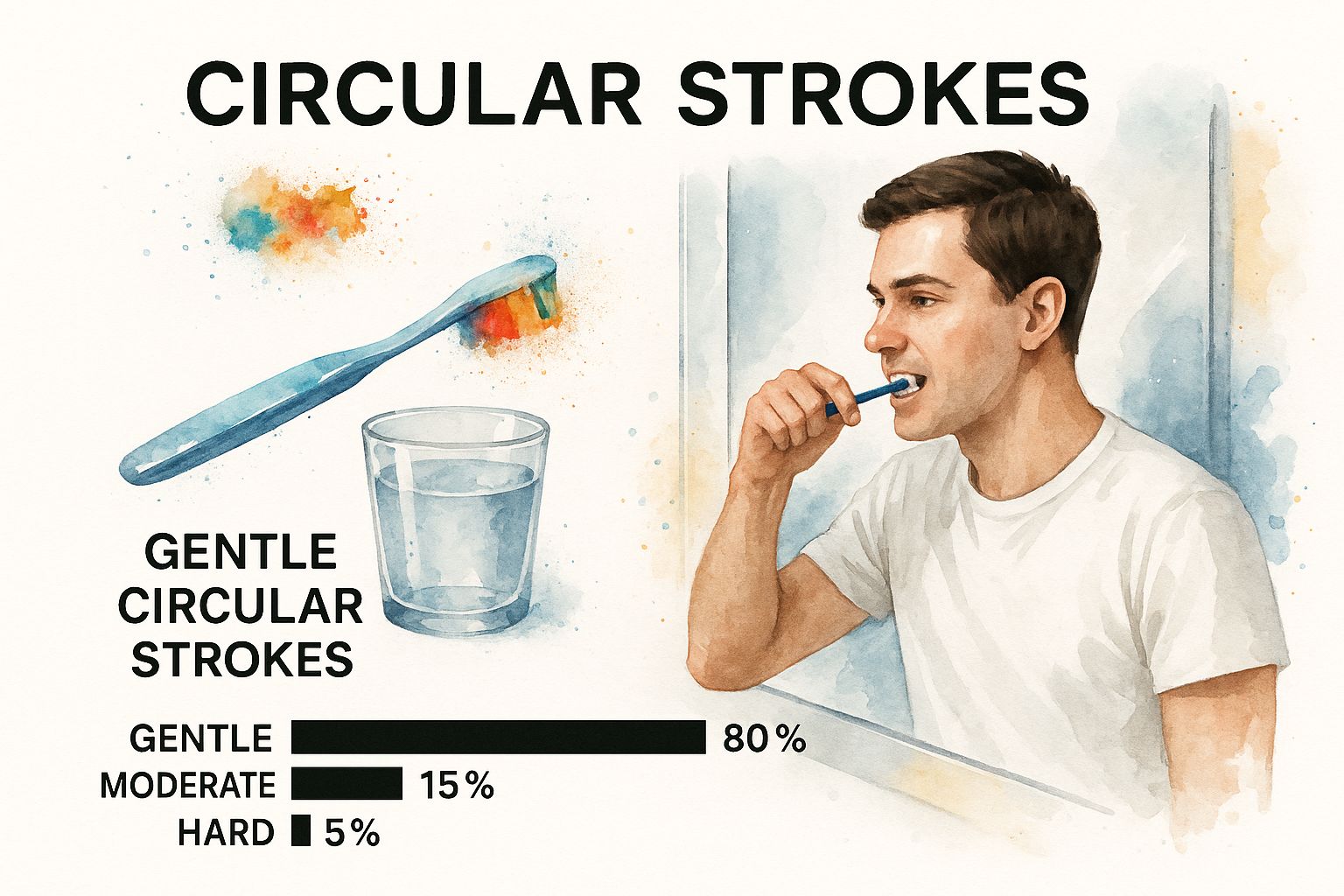
This is why your daily habits, such as proper brushing technique, are so critical in combating the effects of your diet.
Building a Tooth-Friendly Plate
Eating for your dental health doesn't mean your meals have to be bland. It’s about making smart swaps and understanding which foods build up your teeth versus which ones break them down.
Tooth-Friendly vs. High-Risk Foods and Drinks
| Food/Drink Category | Better Choices (Low Cavity Risk) | Limit These (High Cavity Risk) | Why It Matters |
|---|---|---|---|
| Beverages | Water, milk, unsweetened tea | Soda, fruit juice, sports drinks, sweetened coffee/tea | Sugary and acidic drinks coat your teeth, fueling bacteria and directly eroding enamel. Water is neutral and helps rinse the mouth. |
| Snacks | Crunchy raw vegetables (carrots, celery), cheese, nuts, plain yogurt | Chips, crackers, cookies, granola bars, dried fruit, candy | Sticky, starchy snacks cling to teeth, providing a prolonged food source for bacteria. Crunchy veggies naturally scrub teeth. |
| Fruits | Fresh, whole fruits (apples, pears) | Canned fruit in syrup, dried fruit (raisins), fruit snacks | While natural, sugar in fruit can still cause decay. Dried and processed fruits are often sticky and have concentrated sugars. |
| Meals | Lean proteins, leafy greens, whole grains | Processed foods, sugary sauces, refined carbohydrates (white bread) | A balanced meal supports overall health, including saliva production, which is your body's natural defense against acid. |
By consciously choosing more items from the "Better Choices" column, you are actively strengthening your teeth and reducing your cavity risk.
Practical Tips for Everyday Life
Knowing what to eat is one thing; putting it into practice is another. Here are a few simple strategies you can start using today:
- Limit your snacking. Instead of grazing all day, stick to main meals. This gives your saliva a chance to neutralize acids in your mouth.
- Drink through a straw. When enjoying a sugary or acidic beverage, using a straw helps minimize contact with your teeth.
- Time your treats. If you have something sweet, consume it with a meal. Your mouth produces more saliva while eating, which helps wash away sugar and buffer acid.
A diet high in sugar can also lead to gum inflammation, a major contributor to gum disease. If you are experiencing tender or inflamed gums, learning more about professional gum disease treatment in Renton, WA is an important step toward protecting your entire mouth.
The Power of Professional Dental Care
Even with a perfect at-home routine, professional dental care is irreplaceable. Your relationship with Cedar Dental Group is a partnership. We work with you, providing the expertise and advanced tools needed to keep your smile healthy for life.
Your daily brushing and flossing are excellent for removing soft plaque. However, once plaque hardens into tartar (also called calculus), it cannot be removed by brushing at home. Regular professional cleanings are the only way to safely remove this stubborn buildup, which is a major cause of cavities and gum disease.
Catching Problems When They Are Small
One of the greatest benefits of regular dental visits is early detection. During an exam, we can spot the earliest signs of enamel demineralization—the first stage of a cavity. When found this early, the process can often be reversed, saving the tooth from needing a filling.
This is a common issue. The CDC reports that 1 in 4 adults in the U.S. have untreated cavities (Source: CDC). Consistent check-ups are your best defense, allowing us to find these spots when treatments are simpler and less invasive.
Professional Treatments That Strengthen Your Defenses
Beyond cleanings and exams, we offer professional treatments that provide an additional layer of defense against decay.
Two of the most effective options are:
- Professional Fluoride Applications: We apply a concentrated fluoride varnish directly to your teeth. This treatment helps remineralize the enamel, making it significantly more resistant to acid attacks from bacteria. It’s a quick, painless, and highly effective preventive measure.
- Dental Sealants: The grooves and pits on your back teeth (molars) are prime locations for food and bacteria to hide. Dental sealants are thin, protective coatings painted onto these chewing surfaces, creating a smooth barrier that "seals out" harmful debris and bacteria.
These preventive measures are a key part of the comprehensive services we provide at our Renton office. Our goal is to give you every possible advantage in maintaining a healthy, confident smile.
Key Lifestyle Factors That Raise Your Cavity Risk
An excellent oral hygiene routine can be undermined by certain lifestyle habits. To truly protect your teeth, it's important to look beyond the bathroom sink.
For example, tobacco use dramatically reduces saliva flow. This creates a dry environment where acid-producing bacteria thrive, leaving your enamel more vulnerable to decay.
The Problem with Dry Mouth
Dry mouth, or xerostomia, is one of the most significant hidden risks for cavities. It can be a side effect of medications, a result of a health condition, or related to daily habits. Saliva is essential for washing away food debris, neutralizing acids, and remineralizing enamel. Without enough of it, your decay risk increases dramatically.
If you frequently experience dry mouth, these tips can help:
- Sip water throughout the day.
- Chew sugar-free gum containing xylitol to stimulate saliva flow.
- Limit caffeine and alcohol, as both can worsen dryness.
- Ask us about over-the-counter saliva substitutes or rinses.
The Hidden Damage of Teeth Grinding
Another common but often unnoticed habit is teeth grinding, or bruxism. Many people grind their teeth in their sleep and are unaware of it. This clenching and grinding puts immense force on your teeth, which can slowly wear down the protective enamel and create tiny fractures—perfect entryways for cavity-causing bacteria.
Waking up with a sore jaw, a dull headache, or noticing that your teeth appear flatter are classic signs of bruxism. A custom-fitted nightguard from our dental office is the most effective way to protect your teeth from this damage.
The global burden of oral diseases has grown, with cases of cavities in permanent teeth increasing significantly between 1990 and 2021 (Source: The Lancet). This statistic highlights how lifestyle factors and access to care remain major challenges. You can read the full research about these oral health trends to learn more. When habits lead to damage, early intervention is key, and our compassionate team is here to provide expert care for tooth fillings in Renton, WA.
FAQs: Your Cavity Prevention Questions Answered
We understand that you may have questions about protecting your teeth. Getting clear, professional answers is the first step toward feeling confident in your oral health. Here are answers to some of the most common questions we hear at Cedar Dental Group.
1. Are some people naturally more prone to cavities?
Yes, it's true. Factors like genetics, the natural shape of your teeth, and certain medical conditions can increase your risk. Conditions that cause dry mouth or gum recession, which exposes the softer root surfaces of your teeth, can also make you more susceptible to decay. This is why a personalized prevention plan is so important.
2. Can you really reverse a cavity without a filling?
In the earliest stage, called demineralization, it is sometimes possible. At this "pre-cavity" stage, the enamel has weakened but a physical hole has not yet formed. With professional fluoride treatments and diligent home care, we can often help the enamel remineralize and harden. However, once the decay creates a hole, a filling is necessary to restore the tooth.
3. Do electric toothbrushes prevent cavities better than manual ones?
Both manual and electric toothbrushes can be effective with proper technique. The main advantage of an electric toothbrush is that it can make proper technique easier to achieve. Many models have built-in two-minute timers and oscillating heads that help users clean more consistently and thoroughly, reducing the chance of human error.
4. How often should I see a dentist to prevent cavities?
For most adults, we recommend a professional cleaning and exam every six months. These regular visits allow us to remove hardened tartar, spot early signs of decay, and address any concerns before they become more serious problems. Based on your individual risk factors, we may recommend a different schedule.
5. Are dental sealants only for children?
No, dental sealants can be an excellent preventive tool for adults as well. If you have deep grooves in your molars and no existing decay or fillings in those teeth, sealants can provide a powerful barrier against cavities. We can assess your teeth to determine if you are a good candidate.
Ready to take control of your oral health and build a strong defense against cavities? Contact Cedar Dental Group in Renton, WA today to schedule your consultation. We are here to provide the compassionate, professional care you deserve.
