
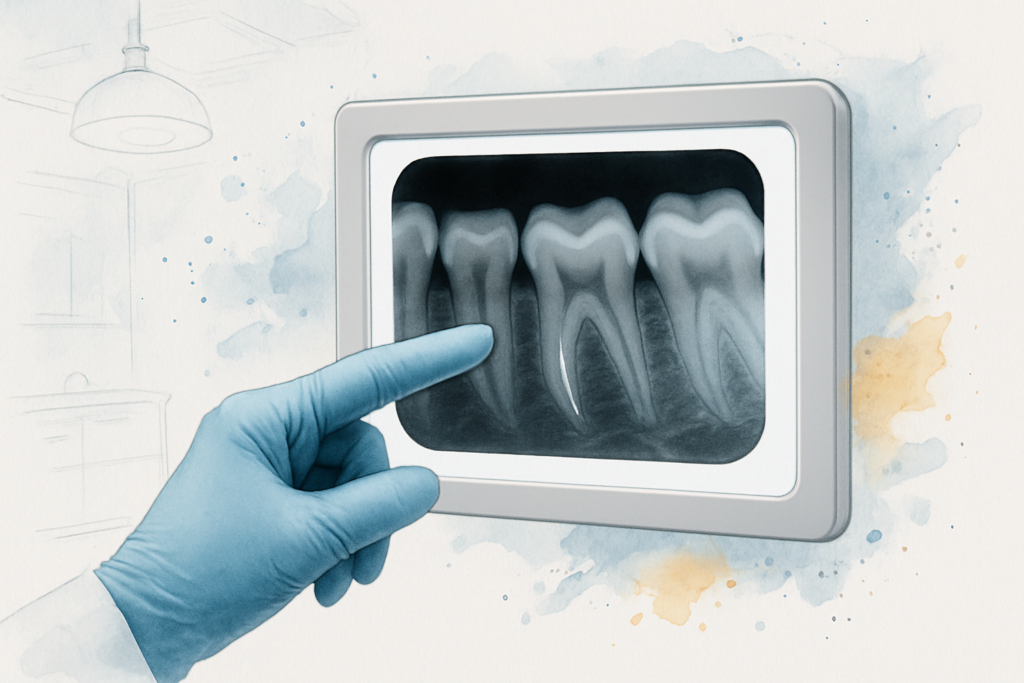
Direct Answer: For a tooth with a living but inflamed pulp, conservative options like pulp capping may exist. For an infected or abscessed tooth, the real alternatives are extraction or doing nothing, both of which carry their own consequences.
The question I hear most often before a root canal conversation is some version of this: ‘Is there anything else I can do instead?’ It’s a completely fair question, and it deserves a straight answer rather than a sidestep.
The honest answer depends entirely on what’s actually happening inside the tooth. There isn’t one answer, there are a few different clinical situations, and each one points somewhere different. I want to walk through what those situations actually look like, because conflating them leads to decisions that don’t hold up over time.
If you’re searching this topic because you’re anxious about the procedure itself rather than genuinely opposed to it, I’d ask you to keep reading past the clinical part. A lot of the fear around root canals is based on experiences that don’t reflect what modern endodontic treatment actually involves, and that distinction matters when you’re trying to make a clear-headed decision.
When a True Alternative Actually Exists
The only scenario where a real alternative to a root canal exists is when the pulp, the living tissue inside the tooth, is inflamed but not yet infected or dead. That window is narrower than most people assume, and it closes as decay or damage progresses.
In that early window, a procedure called pulp capping may be an option. Here’s what it involves: when decay is removed and the exposed or nearly-exposed pulp tissue is still healthy enough to heal, a medicated material is placed directly over that tissue to protect it and encourage recovery. The tooth is then restored normally. The goal is to preserve the tooth’s vitality rather than remove the pulp entirely.
For pulp capping to be a realistic choice, a few things have to be true:
- The pulp must still be alive and show signs of being able to heal
- The exposure or near-exposure has to be small and clean, not contaminated
- There should be no signs of infection, significant swelling, or spontaneous pain that lingers after stimulation is removed
- The surrounding bone should look healthy on X-rays
When those conditions are met, pulp capping has a reasonable success rate. But I want to be clear: if you’ve had a throbbing toothache that keeps you up at night, or pain that lingers for minutes after you drink something cold, that’s usually a sign the pulp is too far along for a conservative approach. The decision between a root canal and other options is always made from diagnostic findings, X-rays, pulp testing, and clinical examination, not from symptoms alone.
When the Pulp Is Already Infected: What the Real Options Are
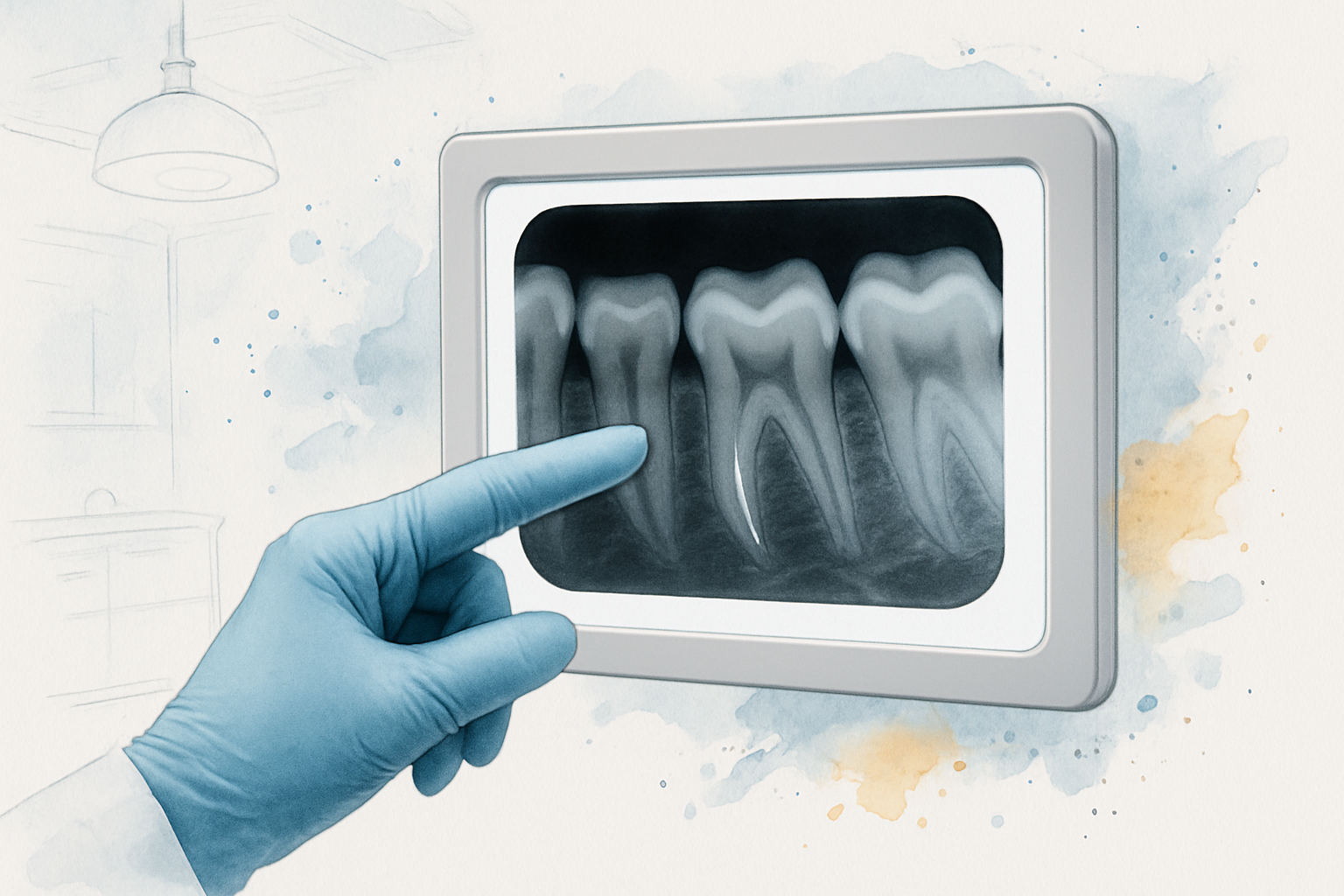
If the tooth is already infected, abscessed, or the pulp has died, pulp capping is off the table. At that point, the clinical options narrow to three paths: a root canal, extraction, or doing nothing. I’ll be direct about what each of those paths actually looks like.
A root canal removes the infected or dead tissue from inside the tooth’s canals, cleans and disinfects those canals, and seals the tooth. It usually ends with a crown to restore function and protect the tooth long-term. The tooth stays in your mouth and continues to hold space and support neighboring teeth.
Extraction removes the tooth entirely. It resolves the immediate infection, and for many patients it feels like the simpler and less expensive path upfront. But a missing tooth creates its own set of downstream problems, neighboring teeth begin to shift, the jawbone in that area starts to lose density over time, and replacing the tooth later often costs more than the root canal and crown would have cost at the outset. If you’re weighing this path, understanding the full cost of a dental implant is part of making that comparison honestly.
Doing nothing is not a neutral choice. An infected tooth doesn’t resolve on its own. The infection can spread to surrounding bone and tissue, pain tends to intensify, and the bone around the tooth can deteriorate in ways that complicate any future treatment. I’m not saying this to alarm anyone, I’m saying it because people sometimes land in a ‘wait and see’ position without realizing what they’re waiting through. If you’ve had tooth pain that won’t go away, that’s a signal worth acting on rather than sitting with.
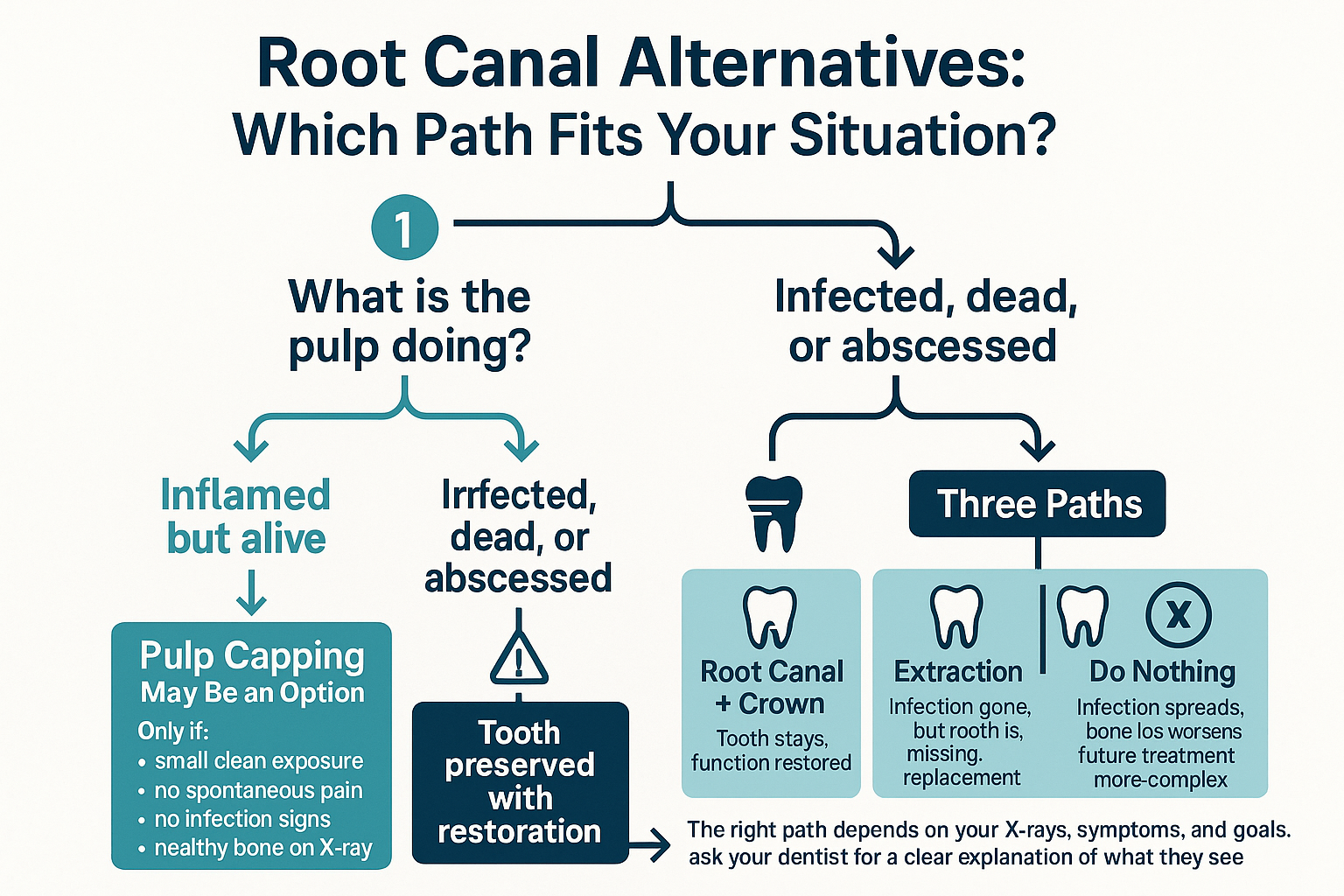
The Decision Tree: Root Canal vs. Alternatives
This breakdown shows how the clinical situation shapes which options are actually on the table, and what each path leads to.
Extraction vs. Root Canal: The Honest Cost Comparison
A lot of patients land here because extraction initially looks cheaper and simpler. And upfront, that can be true. But the comparison only makes sense if you account for what comes next.
Leaving a gap where a tooth was is rarely a long-term plan. The bone underneath a missing tooth begins to resorb, the body essentially stops maintaining bone in a spot where there’s no tooth root to stimulate it. Neighboring teeth start to tilt toward the gap. Bite alignment can shift. And when you’re ready to replace the tooth later, you may be starting from a harder position.
In the Renton area and across South King County, the cost of an implant to replace an extracted tooth typically runs higher than what a root canal and crown would have cost at the time of the original problem. And if bone loss has already occurred by the time you’re ready for an implant, a bone graft may be needed before the implant can even be placed, which adds both time and cost to a path that felt simpler at the outset. Why bone grafting comes up is worth understanding before you commit to extraction as the ‘easier’ route.
I’m not saying extraction is always the wrong choice. Sometimes a tooth is too damaged to restore, or other clinical factors make it the right call. But the comparison deserves to be made with the full picture in front of you, not just the upfront numbers.
Root Canal vs. Extraction vs. Pulp Capping: A Quick Reference
This table summarizes the three main paths, what they require, and what they lead to. It’s meant to help you ask better questions, not to substitute for a clinical evaluation.
| Option | When It Applies | What Comes Next | Key Trade-off |
|---|---|---|---|
| Pulp Capping | Pulp is alive and inflamed but not infected; small clean exposure | Restoration (filling or crown); monitoring over time | Window closes quickly as decay or damage progresses |
| Root Canal | Pulp is infected, dying, or dead; tooth structure is restorable | Crown to protect and restore the tooth | Higher upfront cost than extraction alone, but keeps the tooth |
| Extraction | Tooth is too damaged to restore, or patient declines root canal | Replacement planning: implant, bridge, or partial | Upfront cost may be lower, but total cost rises with replacement |
| Do Nothing | No treatment pursued | Infection spreads; bone deterioration; worsening pain | Delays cost more, clinically and financially, over time |
What a Root Canal Actually Involves (For the Anxious Reader)
I want to address something directly, because I think it’s driving a meaningful portion of searches on this topic: many people searching for ‘alternatives to a root canal’ aren’t actually opposed to the treatment. They’re scared of it.
That’s completely understandable. Root canals have a long-standing reputation for being painful. But the discomfort most people associate with a root canal is usually the infected tooth before treatment, not the procedure itself.
Here’s what actually happens during a root canal:
- The tooth and surrounding area are numbed thoroughly before anything starts
- Once numb, the infected or dead tissue inside the root canals is removed
- The canals are cleaned, shaped, and disinfected
- The space is sealed to prevent reinfection
- The tooth is typically restored with a crown afterward to protect it
For most patients, the procedure itself is no more uncomfortable than having a filling placed. The tooth is numb. What people feel is pressure and sensation, not sharp pain. According to research from the American Association of Endodontists, patients who have had root canals are significantly more likely to describe the procedure as painless than those who have not had one.
If dental anxiety is part of what’s holding you back, that’s worth talking through before you decide anything. A practice that’s built for anxious patients approaches this conversation differently than one that isn’t, and that difference shows up in whether you feel informed or just managed.
What It Means to Have an Endodontist In-House
Most patients who need a root canal at a general dental practice get a referral to an outside endodontic office. That means a separate appointment, a provider they’ve never met, records that have to transfer between offices, and a coordination gap that can feel disjointed.
At Cedar Dental Group, we have an in-house endodontist, Dr. Joe Dutner, who handles root canal therapy and endodontic care within the same practice where the diagnosis was made. That’s a genuinely uncommon setup in a general dental office in the Renton area.
What it means practically: the clinical handoff is cleaner, the records are already in one place, and patients don’t have to re-explain their situation to a provider they’ve never seen. For someone who’s already anxious about the procedure, not having to navigate a referral to a separate office is a real difference, not a marketing point.
If you’ve been told you need a root canal and you’re still working through what that means, understanding how the decision gets made is a good place to start.
Frequently Asked Questions About Root Canal Alternatives
Can antibiotics be an alternative to a root canal?
Antibiotics can help manage an infection temporarily, but they don’t remove the source of the problem. The infected pulp tissue inside the tooth doesn’t have a blood supply once it’s dead, so antibiotics can’t fully reach it. Most dentists will prescribe antibiotics to control spreading infection before treatment, not instead of it.
What happens if I just wait and see how the tooth does?
For an infected tooth, waiting typically means the infection continues to progress. The surrounding bone can begin to deteriorate, the pain usually worsens before it goes away, and the infection can spread to adjacent teeth or tissue. The tooth may also become harder to save the longer treatment is delayed. Monitoring makes sense for some situations, but an active infection is generally not one of them.
Is extraction cheaper than a root canal?
Extraction alone often costs less upfront. But most patients eventually need to replace the missing tooth, which means an implant, a bridge, or another restorative solution. In the Renton and South King County area, the combined cost of extraction plus implant plus crown typically exceeds what a root canal and crown would have cost at the time of the original treatment. If bone loss has occurred in the interim, a bone graft may also be needed, which adds to both the timeline and the total cost. The full breakdown of implant costs is worth reviewing before making this comparison.
How do I know if pulp capping is an option for my tooth?
Pulp capping requires a clinical evaluation, X-rays, pulp vitality testing, and a careful look at what the decay or damage has actually reached. There’s no way to determine this from symptoms alone. If your tooth still responds normally to cold and you don’t have spontaneous pain that lingers, that’s a sign the pulp may still be healthy. But the only way to know for certain is a thorough exam.
Will a root canal hurt?
The procedure itself is performed with the tooth fully numb, and for most patients it’s comparable in comfort to getting a filling. What tends to be painful is the infection before treatment, not the root canal itself. Recovery after the procedure is usually mild and manageable with over-the-counter pain relief for a day or two.
What if I’ve had a bad experience with a dentist before and I’m nervous about this?
That’s one of the most common things we hear. A history of negative experiences is a real factor, and it’s worth telling any provider you’re considering about it before you commit to anything. A practice that takes dental anxiety seriously will adjust how they communicate, how they pace the appointment, and how much information they give you before they do anything. That context makes a difference.
Have Questions About Your Specific Situation?
If you’ve been told you need a root canal and you’re trying to understand your options before you commit, the most useful thing you can do is get a clear, unhurried explanation of what the diagnostics actually show. At Cedar Dental Group, Dr. Dutner handles endodontic care in-house, which means patients in Renton and throughout South King County can have that conversation in the same place where they were first evaluated. You can reach us at 425-430-0400 or visit cedardentalgroup.com to schedule a consultation.
