

Restoring your smile with reliable dentures and partials in Renton, WA is a big step toward renewed confidence. To keep them looking and feeling their best, a simple daily routine is key. Your best defense against stains, odor, and bacteria is to rinse after meals, brush gently with a non-abrasive cleanser, and soak them overnight in a special solution.
Why a Daily Denture Cleaning Routine Matters
Getting new dentures or partials can be a huge boost to your confidence and comfort. However, many people don't realize that caring for them is just as important as caring for natural teeth. This isn't just about looks—it's a core part of your overall oral health.
Without daily cleaning, your dentures can become a place for plaque, food, and bacteria to hide. This can lead to problems that go far beyond a dull-looking smile.
The Real Benefits of Clean Dentures
A consistent cleaning routine is one of the best things you can do for your health and comfort. Here’s what’s at stake:
- Avoid Painful Gum Irritation: When bacteria builds up under your denture, it can inflame your gums. This condition, called denture stomatitis, can make wearing your appliance very uncomfortable.
- Keep Your Breath Fresh: Bad breath can hurt your confidence. Trapped food and bacteria are the number one cause, and daily cleaning gets rid of them.
- Protect Your Natural Teeth: If you wear a partial, keeping it and its clasps clean is crucial. Plaque can easily spread from the partial to your remaining teeth, putting them at risk for decay.
- Make Your Investment Last: Dentures are an investment in your quality of life. Proper care prevents stains and keeps the materials from breaking down, helping them last for years.
The global market for denture cleaning tablets was valued at USD 1.59 billion in 2023. It's expected to reach USD 2.5 billion by 2032 (Source: Precedence Research). This shows how essential these products are for millions of people.
At Cedar Dental Group, our goal is to help our Renton, WA patients build simple, effective habits. Once you understand why you're cleaning your dentures, the "how" becomes easy. This guide will walk you through every step to keep your smile healthy and bright.
Your Daily Denture Care Routine
Your daily denture cleaning routine is the foundation of good oral health. It’s essential for stopping plaque, bacteria, and food from building up. The secret to success is creating a simple process you can stick to every morning and night.
This daily habit isn't just about how your dentures look. It's a huge factor in your comfort and helps you avoid bigger problems later on.
The Core Steps for Daily Cleaning
Your daily routine doesn't need to be complex. The most important thing is to be consistent. A great first step is rinsing your dentures under cool, running water right after you eat. This washes away loose food before it can stick.
After rinsing, gently but thoroughly brush the entire surface of your appliance. We recommend using a soft-bristled denture brush. A regular toothbrush is often too stiff and can cause damage. Pair it with a non-abrasive denture cleanser or a mild soap. Whatever you do, avoid regular toothpaste. Its abrasive ingredients can create tiny scratches where bacteria can hide.
This visual shows the three essential parts of the process.
Seeing the flow from brushing to soaking to storing shows how each step helps keep your dentures in great shape.
Don't Forget to Clean Your Mouth
Taking care of your dentures is only half the job. You also need to clean your mouth every time you take them out, especially before bed. It’s a quick step that helps prevent irritation and keeps your gums healthy.
Use a very soft toothbrush or a clean, damp cloth to gently go over your gums, tongue, and the roof of your mouth. This does two important things:
- It removes plaque: Plaque doesn't just build up on teeth; it can also gather on the soft tissues in your mouth.
- It stimulates circulation: This gentle massaging action helps keep your gum tissues healthy, which is vital for a good denture fit.
Skipping this step can lead to inflammation and sores. For older adults who might need help with their daily routines, personal care services can be a great resource, often including support with oral hygiene. By making these habits part of your day, you’re protecting your investment and ensuring your smile stays confident.
Deep Cleaning for a Fresher Feel
Your daily brushing is the foundation for good denture care. But for that truly fresh, confident feeling, you need to do a regular deep clean. Think of it as a spa day for your smile.
This extra step gets into all the tiny grooves, lifting away stubborn buildup and stains that a simple brushing might miss.
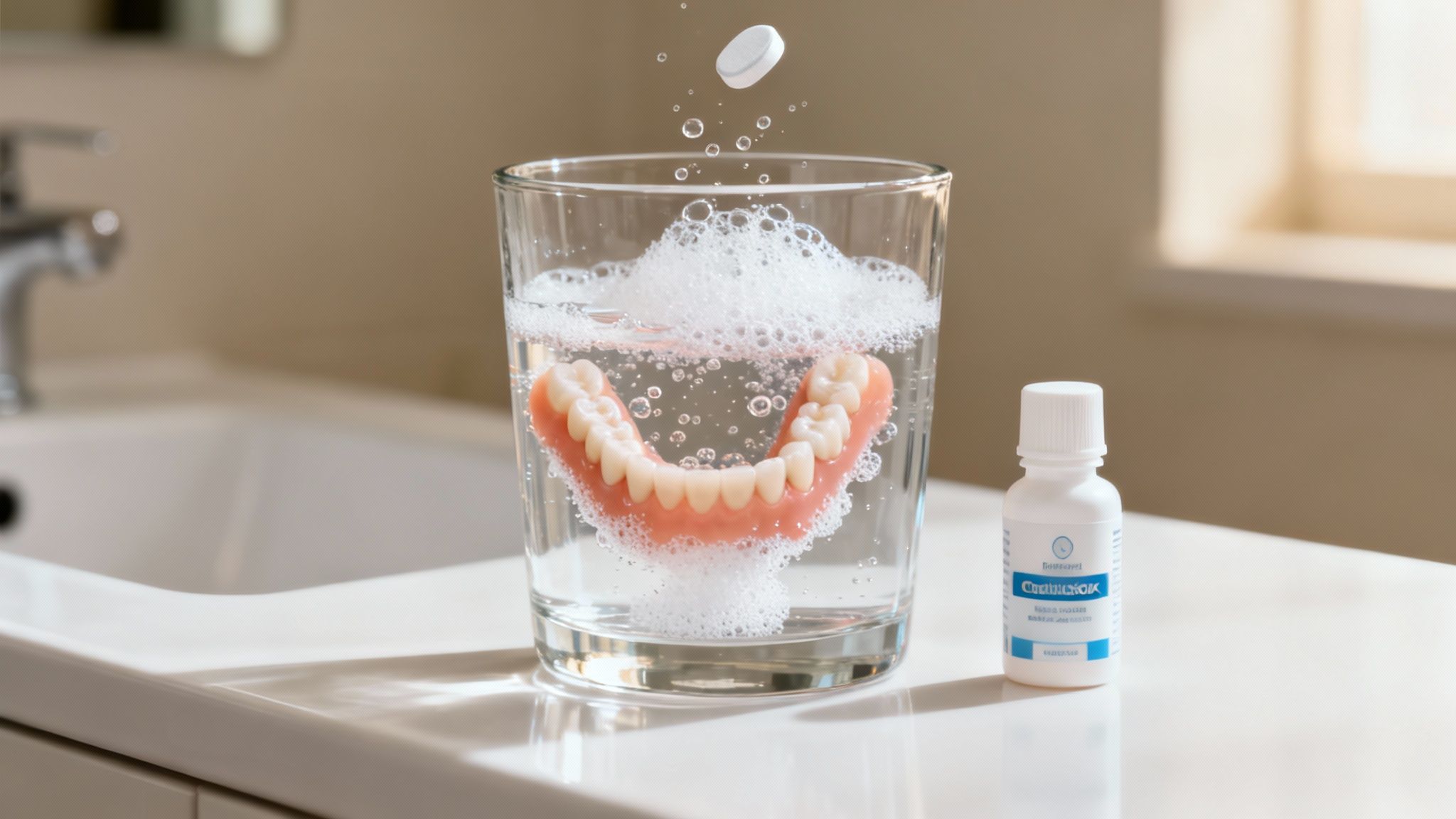
The best way to deep clean your dentures is to soak them in a specially designed solution. These cleaners are made to kill 99.9% of odor-causing bacteria (Source: Polident) and gently break down tough deposits without harming the denture material.
Choosing Your Soaking Solution
You will usually see two types of denture cleansers in stores. Both are excellent choices.
- Effervescent Tablets: These are very convenient. You just drop a tablet into a glass of water, and it fizzes to create a cleaning solution that works its way into every groove.
- Liquid Cleansers: These concentrated formulas offer the same powerful cleaning action. You simply mix the right amount with water to create your soaking bath.
The global market for these products was valued at roughly USD 327.4 million in 2021. It's expected to grow to USD 437.8 million by 2025 (Source: Business Research Company). This trend shows a growing commitment to overall health.
The Right Way to Soak Your Dentures
To get the most from your deep clean, timing is everything. For a quick daily refresh, most products suggest soaking for 15-30 minutes.
However, many are also safe for an overnight soak. Letting your dentures rest in the solution while you sleep is an easy way to ensure they are clean and ready for you in the morning.
Expert Tip: After soaking, always rinse your dentures well under cool, running water before putting them back in your mouth. This washes away any leftover cleanser.
If you have very tough buildup, you might be tempted to use a stronger, DIY solution. Before you do, please talk to us first. While some people look into understanding advanced disinfection methods, including the use of diluted bleach solutions, it’s important to know that harsh chemicals can permanently damage your dentures. Consistent deep cleaning with the right products is always your best defense.
Common Denture Cleaning Mistakes to Avoid
Knowing how to clean your dentures is only half the battle. It's just as important to know what not to do. Many patients, with good intentions, accidentally damage their dentures with common household products.
This kind of damage can lead to a poor fit, discomfort, and sometimes even a costly replacement. Let's review a few key things to avoid to protect your investment and keep your dentures in great shape.
Don't Use Your Regular Toothpaste
This is the number one mistake we see. It seems logical—toothpaste is for cleaning teeth. But the paste you use on natural teeth is designed to polish hard enamel.
Denture material is much softer. When you use regular toothpaste, its abrasive particles create thousands of tiny scratches on the surface. These small grooves are a perfect place for bacteria and plaque to hide, which can lead to stains and bad breath. Speaking of which, it's helpful to understand the hidden connection between bad breath and gum disease for a complete picture of your oral health.
Stay Away From Hot or Boiling Water
Using hot water to disinfect things is common, but it's a disaster for dentures. The acrylic that forms your denture base is molded to a very precise shape.
Exposing that acrylic to high heat can warp it and permanently change its shape. A warped denture won't fit right. This can cause:
- Slipping and shifting when you talk or eat.
- Painful sore spots on your gums from uneven pressure.
- A loose, uncomfortable fit that might need a professional reline or a new denture.
Always use cool or lukewarm water for rinsing and soaking. It’s a simple rule that is vital for keeping the custom fit you need.
Avoid Harsh Household Chemicals
When dealing with a tough stain, you might be tempted to use a powerful household cleaner like bleach. Please don't. These chemicals are too aggressive for oral appliances and can cause permanent damage.
Bleach can weaken the denture's structure and bleach the pink, gum-colored acrylic. Harsh scouring powders will scratch the surface just like abrasive toothpaste. Always use products made for cleaning dentures—they are effective without being destructive.
Handling, Storing, and Using Adhesives
Once you have your cleaning routine down, the next step is knowing how to handle, store, and secure your dentures. This might seem like a small detail, but it makes a big difference in their lifespan and your comfort. A little care goes a long way in preventing damage.
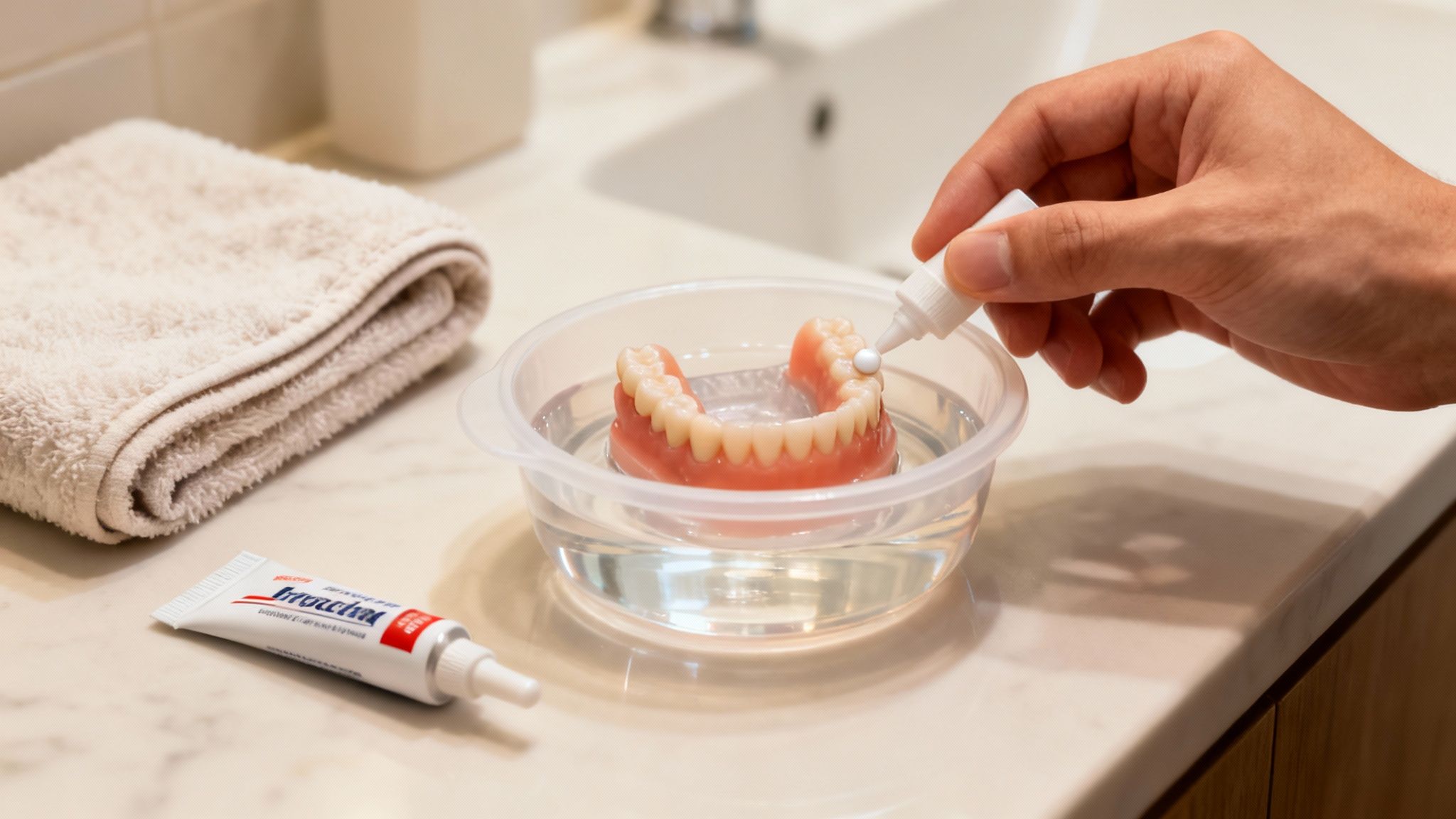
Here’s a simple trick we share with patients: always handle your dentures over a soft surface. When you take them out, place a folded towel in the sink or fill the basin with a few inches of water. Dentures are tough, but they can still break. This little habit provides the perfect cushion if they slip.
How to Store Your Dentures Correctly
The material your dentures are made from needs to stay moist. If it dries out, the acrylic can warp and change shape. A warped denture will never fit correctly again and can cause painful sore spots.
To prevent this, always keep your dentures in water or a denture-soaking solution when they aren't in your mouth. A covered denture bath is the ideal tool for this. It keeps them safe from dust and drops while making sure they stay hydrated overnight.
Patient Tip: Never use hot water for soaking. High temperatures can distort the acrylic just as easily as letting it dry out, ruining the custom fit. Stick to cool or lukewarm water.
Using Denture Adhesives
For many people, adhesives are the secret to feeling confident while eating and talking. The trick is to use them correctly so you get a secure fit without a mess. Remember, a thin, even layer is the goal.
Here’s how to do it right:
- Less is More: Start with a much smaller amount than you think you need. You can always add a bit more the next day if needed.
- Strategic Placement: Apply a few small dots or a very thin strip of adhesive. Keep it away from the edge of the denture.
- Press and Hold: After placing the denture in your mouth, bite down gently and hold for a few seconds. This spreads the adhesive and creates a solid seal.
Proper removal is also important. When you take your dentures out, you need to get all the adhesive off—from both your mouth and the appliance. Use a soft brush and warm water to gently clean any residue from your gums and tongue. Then, clean the denture itself thoroughly before soaking it.
When to See Your Dentist
Even with great at-home care, your dentures need professional attention from time to time. Your daily cleaning is essential maintenance, but your visits to us at Cedar Dental Group are like professional tune-ups that keep everything working perfectly.
It is normal for the shape of your jawbone and gums to change over the years. This is a natural process. As this happens, a denture that once fit perfectly can start to feel loose. If your dentures slip, click when you talk, or cause sore spots, it's time to give us a call.
Signs You Need a Professional Check-Up
Catching small issues early is the best way to avoid bigger problems. Don't wait for major discomfort. You should book an appointment with our Renton team if you notice any of these signs:
- A Loose Fit: This is the most common reason we see patients for denture adjustments. It's often a simple fix that can make a big difference in your comfort.
- Chips or Cracks: Please never try to fix your dentures with household glues. We have the proper, safe materials to repair your appliance without damaging its fit.
- Stubborn Stains or Odor: If you can't get rid of lingering stains or an odor at home, let us handle it. Our professional tools can restore their freshness.
- Gum Irritation or Sores: Pain is your body’s alarm system. Any discomfort is a clear signal that the fit needs to be checked.
Regular professional check-ups ensure you're getting the most out of your investment in your smile. The global market for denture care is projected to reach USD 1.04 billion by 2033 (Source: on Straits Research), showing how many people rely on these solutions.
A changing fit sometimes makes people curious about more permanent tooth replacement options. If that sounds like you, our expert guide on dentures vs. dental implants is a great resource.
Frequently Asked Questions About Denture Care
Our patients at Cedar Dental Group often ask great questions about caring for their dentures and partials. We’ve gathered the most common ones we hear in our Renton office to help you maintain a healthy, confident smile.
How often should my dentures be professionally cleaned?
We recommend bringing your dentures for a professional cleaning and check-up at least once a year. During this visit, we use special tools to safely remove tough, hardened tartar that daily cleaning can't handle. It's also the perfect time for us to inspect your appliance for any wear and tear and ensure the fit is still perfect.
Can I use regular toothpaste to clean my dentures?
No, please avoid using regular toothpaste. It contains abrasive ingredients that are too harsh for the softer material of dentures. These abrasives create tiny scratches on the surface where bacteria can hide, leading to stains and bad breath. Always use a soft-bristled brush and a non-abrasive denture cleanser or mild soap.
What should I do if my dentures feel loose?
If your dentures are slipping or making it hard to eat, it's time to call us. It’s normal for your jaw and gums to change shape over time, which affects the fit. A loose denture can cause painful sore spots, so don't ignore it. We can often fix the problem with a simple adjustment or reline to make them feel secure again.
Is it okay to sleep with my dentures in?
We strongly advise against sleeping with your dentures in. It's important to take them out every night. This gives your gums and underlying bone a rest from the pressure. Soaking them overnight also keeps the denture material hydrated and hygienically clean, which is crucial for your overall oral health.
Can I fix a broken denture at home?
You should never try to repair a broken denture yourself with superglue or other household adhesives. These glues contain chemicals that are not safe for your mouth and can permanently damage the denture. If your denture chips, cracks, or breaks, please contact our office right away for a professional and safe repair.
Ready to improve your smile? Contact Cedar Dental Group in Renton, WA today to schedule your consultation.
