

For many seniors, implant-supported dentures are a top choice. They offer amazing stability and help keep your jawbone healthy. However, today’s full and partial dentures are also excellent options. They look natural and are a popular way to bring back a confident smile.
Your Guide to Modern Dentures and a Renewed Sense of Self
Losing teeth can be a difficult experience, but it’s something many people go through. As we get older, tooth loss becomes more common. The good news is that modern dentistry has developed some wonderful solutions. We have moved far beyond the clunky "false teeth" of the past.

Today's dentures are made to look and work beautifully. They help you get back to eating, speaking, and smiling without worry. This guide will walk you through the options in a clear, compassionate way. We want you to feel empowered to choose what's best for your health and lifestyle.
Why Dentures Can Be a Lifeline for Seniors
Choosing dentures is a big step toward improving your daily life. It’s also a common one. By 2025, an estimated 42.46 million Americans will wear dentures (Source: Statista). Research shows that about 57% of U.S. seniors between 65 and 74 rely on them (Source: National Health and Nutrition Examination Survey).
For many people, dentures are more than a dental tool. They help you stay healthy through good nutrition, connect with friends, and feel confident in yourself.
At Cedar Dental Group, we see dentures as a positive solution. Our goal is to replace uncertainty with comfort and confidence. We make sure you feel fully supported from your very first visit.
Comparing Denture Options at a Glance
Learning about dentures can feel overwhelming at first. A great place to start is by understanding the main types. Each one is designed for a different need, whether you're missing a few teeth or need a whole new smile.
| Feature | Full Dentures | Partial Dentures | Implant-Supported Dentures |
|---|---|---|---|
| Best For | Replacing all teeth on the top or bottom jaw. | Filling gaps when some healthy teeth remain. | The best stability and chewing strength. |
| How It Stays In | Natural suction, sometimes with an adhesive. | Clasps that grip onto your existing teeth. | Snaps securely onto surgically placed dental implants. |
| Main Benefit | Gives you a full smile and supports your face. | Keeps remaining teeth from shifting out of place. | Stops slipping and helps prevent jawbone loss. |
These solutions are all part of a field called restorative dentistry. This area of dentistry focuses on repairing and replacing teeth to bring back your best smile and bite. In the next sections, we’ll explore each of these options in more detail to help you find the perfect fit.
Comparing the Most Common Types of Dentures
Finding the right dentures for your mouth, lifestyle, and budget is our main goal. It's not about picking the most expensive option. It's about matching the right type of denture to your specific needs. Let's walk through the three most common choices.
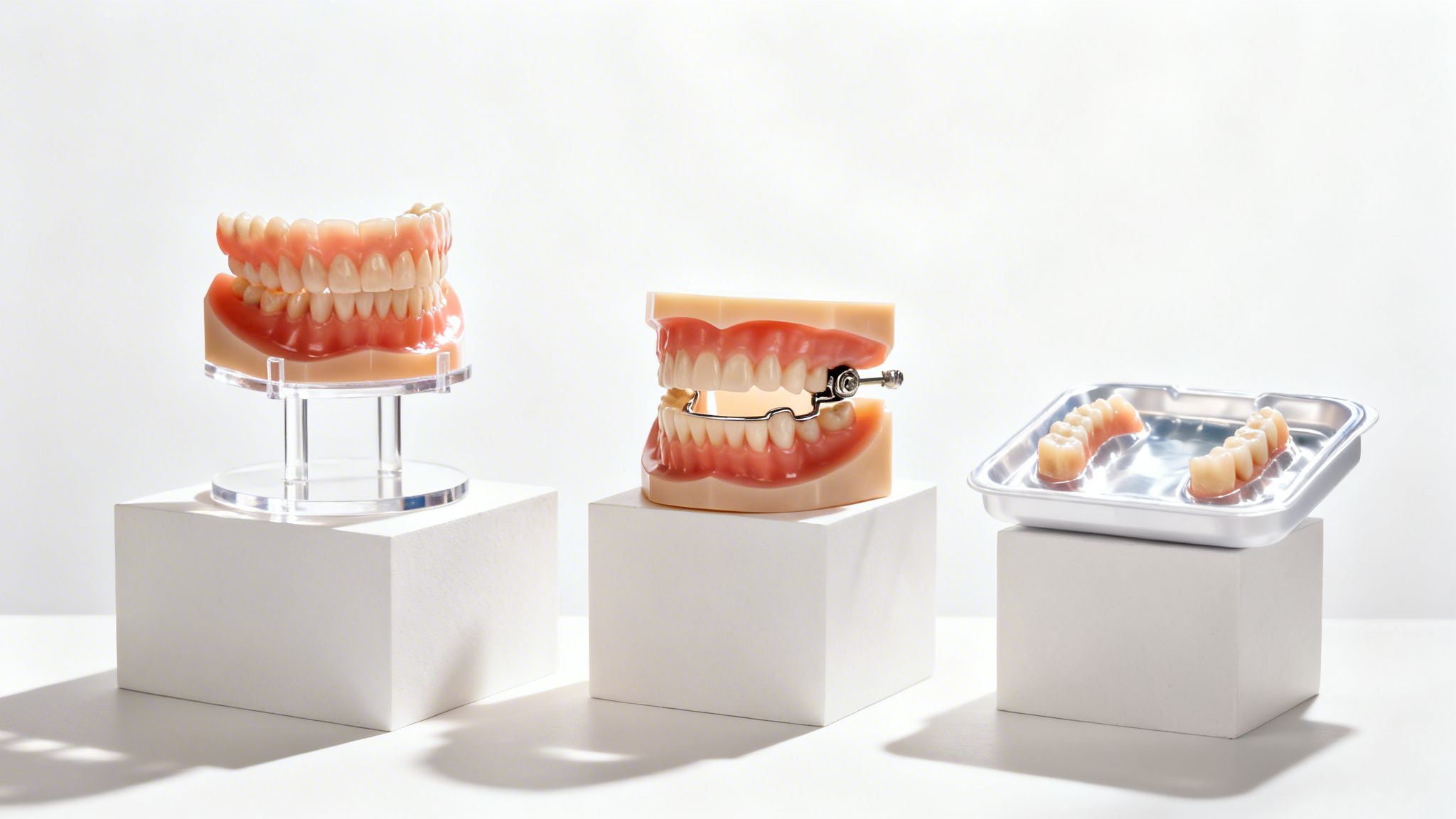
We'll explain how each one works and who it’s best for. Our team wants you to have the clarity you need to move forward with confidence.
Full Dentures: The Classic Solution for a Complete Smile
When all the teeth on the top or bottom jaw are missing, full dentures (or complete dentures) are the usual solution. They are a full set of acrylic teeth on a gum-colored base. They are designed to restore your smile and ability to chew.
An upper denture uses suction against the roof of your mouth to stay in place. The lower denture is horseshoe-shaped to leave room for your tongue. It stays put by fitting precisely over your gums.
This is a very common need. About one-quarter of U.S. seniors over 65 have lost all their teeth, making complete dentures a trusted solution (Source: Centers for Disease Control and Prevention). They are so popular that they are expected to make up 63.72% of the global denture market revenue in 2025 (Source: Grand View Research).
This is the right path for you if:
- You are missing all the teeth in your upper or lower jaw.
- Your few remaining teeth cannot be saved and need to be removed.
- You want a reliable, proven, and affordable way to restore your entire smile.
Full dentures also support your facial muscles, which helps prevent the "sunken" look that can happen after tooth loss.
Partial Dentures: Seamlessly Filling the Gaps
What if you still have some strong, healthy teeth? This is where partial dentures are a great choice. Think of them as custom puzzle pieces that fill the spaces from missing teeth, fitting in with your natural ones.
Partials usually have a metal or acrylic frame with small clasps. These clasps grip your existing teeth to hold the denture steady. This not only restores your smile but also keeps your other teeth from shifting into the empty spaces.
The great thing about a partial denture is how it works with your natural teeth. It's a conservative approach that saves what you have while replacing what you've lost.
A partial can be a great long-term fix or a good temporary step while you think about other options. If you're considering permanent solutions, our expert guide on dentures vs. dental implants in Renton might be helpful.
A partial denture is a great fit if:
- You are missing one or more teeth but still have healthy teeth nearby.
- You want to stop your existing teeth from moving out of place.
- You need a removable option for scattered tooth loss.
Modern partials can be made with flexible, gum-colored clasps that are less noticeable than old metal ones.
Immediate Dentures: Your Smile, Same-Day
The thought of going without teeth, even for a few days, can be stressful. That’s why immediate dentures exist. As the name suggests, they are placed in your mouth on the same day your teeth are removed.
How does this work? We take impressions of your mouth before your extraction appointment. A dental lab uses these impressions to create your denture ahead of time. On the day of your appointment, we place it right after the teeth are removed.
This approach has some huge benefits:
- No "Toothless" Period: You leave our office with a full smile.
- A Natural Bandage: The denture acts as a cover over the healing gums, which helps with bleeding and comfort.
- Quicker Adaptation: You can start getting used to speaking and eating with your new teeth right away.
It's important to know that your gums and jawbone will shrink as they heal. This means your immediate denture will loosen over time, which is completely normal. You'll need to visit us for adjustments. Once your mouth has fully healed, we will create a new, permanent denture for you.
To help you see everything at a glance, here's a simple breakdown of these options.
Quick Comparison of Denture Types for Seniors
This table offers a side-by-side look at the most common denture options, helping you quickly understand the best use case, materials, and key features for each.
| Denture Type | Best For | Material | Key Feature |
|---|---|---|---|
| Full Denture | Complete tooth loss in one or both jaws. | Acrylic base with acrylic or porcelain teeth. | Replaces all teeth, restoring full function and facial support. |
| Partial Denture | Missing one or more teeth with healthy natural teeth remaining. | Metal/acrylic framework with acrylic teeth. | Preserves existing teeth and prevents them from shifting. |
| Immediate Denture | Those needing extractions who don't want to go without teeth. | Acrylic. | Placed the same day as extractions for a seamless transition. |
Each type serves a different purpose. The best choice always depends on your oral health and personal preferences.
The Gold Standard: Implant-Supported Dentures for Ultimate Stability
For seniors who want the most stable and functional option, implant-supported dentures are a game-changer. This solution offers a level of security that traditional dentures can't match. It combines the beautiful look of a denture with the solid foundation of dental implants.
Instead of resting on your gums, these dentures lock onto small posts anchored in your jaw. It's like a seatbelt clicking into place—that's the kind of confidence you feel. All the slipping, wobbling, and irritation of conventional dentures are eliminated.
How Do They Actually Work?
The process begins by placing a few small titanium posts into your jawbone. These posts act like natural tooth roots. Over the next few months, your jawbone fuses directly to these implants. This process, called osseointegration, creates an incredibly strong base.
Once the foundation is solid, we attach your custom-made denture. There are two common methods:
- Ball-retained: Each implant has a metal ball on top that snaps into a socket on your denture.
- Bar-retained: A thin metal bar connects the implants along your jaw's curve. Your denture then clips onto this bar.
Both methods provide a secure fit that lets you eat, talk, and laugh without worry.
The Real-World Benefits for Seniors
Choosing an implant-supported denture is a major investment in your long-term health and quality of life. The benefits address the biggest frustrations people have with older dentures.
One of the most important advantages is what it does for your jaw. When you lose teeth, the jawbone underneath starts to shrink because it's no longer stimulated by tooth roots. Dental implants mimic those roots, providing that key stimulation to help stop bone loss.
This is critical. Preserving your jawbone helps your denture fit well for years. It also helps maintain your facial structure, preventing that "sunken" look.
The improvement in chewing is also dramatic. Studies show that implant-retained dentures can restore up to 90% of your natural biting force (Source: Journal of Oral Rehabilitation). Compare that to just 25-50% with traditional dentures. Suddenly, crunchy foods like apples, nuts, and steak are back on the menu.
A Clear Comparison: Traditional vs. Implant-Supported
To see the difference, let’s look at how these two options compare in daily life.
| Aspect | Traditional Dentures | Implant-Supported Dentures |
|---|---|---|
| Stability | Relies on suction; can slip when eating or talking. | Locks onto implants; will not slip, click, or fall out. |
| Chewing Power | Limited to softer foods; biting hard foods can be difficult. | Powerful and stable; allows you to eat a wide variety of foods. |
| Bone Health | Does not prevent jawbone loss, which leads to a changing fit. | Stimulates the jawbone, helping to preserve its density. |
| Comfort | Can cause sore spots from rubbing on the gums. | Rests on implants, greatly reducing pressure on your gums. |
| Maintenance | Requires adhesives and frequent adjustments as bone changes. | No adhesives needed; provides a consistent, long-term fit. |
While traditional dentures restore your smile, implant dentures restore your lifestyle. You can learn more by reading our overview of dental implants for seniors in Renton.
Our Approach at Cedar Dental Group
We know that any dental procedure can feel intimidating. At Cedar Dental Group, your comfort is our top priority. We make sure you feel supported and informed every step of the way.
- Consultation & Planning: We start with a full exam, including 3D imaging, to see if you're a good candidate. We’ll talk about your goals and answer all your questions.
- Implant Placement: This is a precise and gentle procedure. We focus on keeping you comfortable from start to finish.
- Healing Period: You’ll wear a temporary denture while your jaw heals and fuses with the implants over a few months.
- Final Denture Fitting: Once healed, we create your final, beautiful denture and show you how easy it is to snap it on and off.
Our Renton team is with you through the entire process, making sure it's as smooth and reassuring as possible.
How to Choose the Right Dentures for Your Lifestyle
Picking the right dentures is about finding a solution that fits your life. The best choice depends on your health, daily habits, and goals. Making a confident decision starts with a professional consultation at Cedar Dental Group. We will sit down with you to understand your needs before discussing options.
Your Health Is the Starting Point
Before we look at different types of dentures, we must look at your health. Your oral and overall health are the biggest factors in what will work best for you.
A few key things we assess are:
- Jawbone Density: For implants, you need enough healthy jawbone to anchor them. If you've had missing teeth for a while, you may have some bone loss. This might make traditional dentures a more direct option.
- Gum Health: Your gums are the foundation for any denture. We must treat any gum disease first to make sure your new smile has a healthy base.
- Medical Conditions: Certain conditions, like diabetes, can affect healing. We always review your medical history to make sure our plan is safe and effective for you.
Questions to Guide Your Decision
Thinking about what you want from your new teeth can help. Answering these questions before your appointment can provide clarity and help us find the best fit for you.
What Are Your Food Goals?
- Are you okay with sticking to softer foods? Or do you miss biting into a crisp apple or enjoying a steak? Your answer helps show if you need the stability of implant-supported dentures.
How Important is a Low-Maintenance Routine?
- Are you prepared for a daily routine of removing, cleaning, and maybe using adhesives? Or does a "set it and forget it" solution sound better?
What is Your Budget for Long-Term Value?
- Are you focused on the lowest initial cost? Or are you willing to invest more in a solution that preserves your jawbone and may need fewer adjustments later? Understanding your insurance is a big part of this. To learn more, check out our guide on what's covered by dental insurance.
This decision tree gives you a quick visual of how stability can point you toward one option or another.
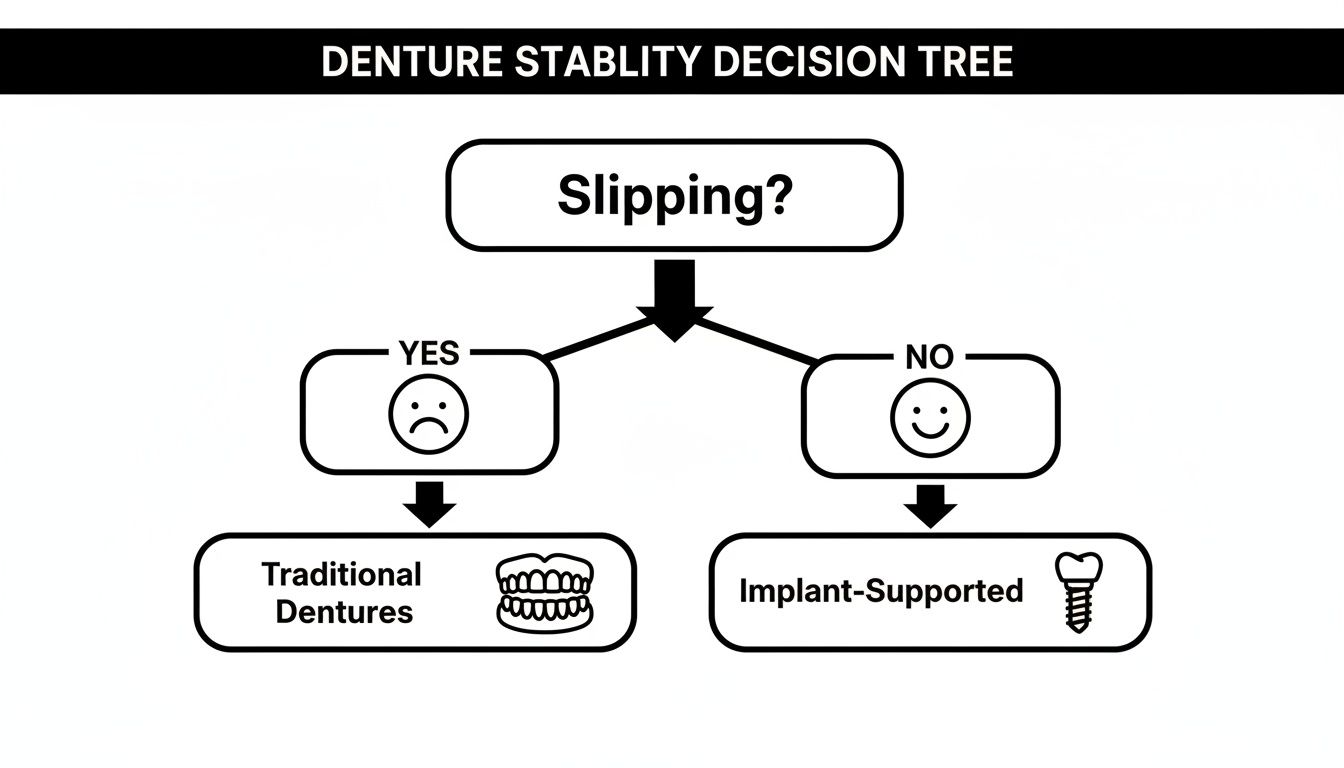
If the thought of your dentures slipping is a major concern, implant-supported dentures are designed to end that worry for good.
The Role of a Professional Consultation
Thinking about these questions is a great first step. However, it can’t replace a real conversation with a dental team that understands your needs. When you come into our Renton office, we will do more than just examine your mouth—we will listen.
Your lifestyle, budget, and health are all part of the discussion. Our job is to give you the expert advice you need to make a choice you’ll be happy with for years.
We will perform a thorough exam, which may include 3D imaging, to get the full picture. This ensures our recommendations are based on solid facts, not guesses. We believe the best dentures are chosen with complete confidence.
Living Comfortably With Your New Dentures
Getting new dentures is a big moment, but it's just the beginning. There is an adjustment period as you get used to your new smile. Our team at Cedar Dental Group is here to give you simple, practical advice to make the change a comfortable one.

It’s normal for things to feel a little strange at first. You might notice more saliva or find a few sore spots. Don't worry—these feelings usually go away within a few weeks as your mouth gets used to the dentures.
Mastering Daily Life With Dentures
Learning to eat and speak again is a gradual process. The key is to start slow and be patient with yourself. Soon, these new skills will feel natural.
Tips for Eating Confidently:
- Start Soft: For the first few days, stick to foods like yogurt, mashed potatoes, and scrambled eggs. This helps you get used to chewing without putting too much pressure on your gums.
- Cut Food Small: Make things easier by cutting food into small, easy-to-manage pieces.
- Chew on Both Sides: Try to chew on both sides of your mouth at the same time. This simple trick helps keep the denture stable and prevents it from tipping.
Speaking can also feel a little different. Certain words might be tricky to say, but practicing helps. Try reading a book out loud to help your tongue and lips get used to the new fit.
A Simple Cleaning Routine for Lasting Success
Keeping your dentures clean is essential for your oral health. A good daily routine prevents stains, removes bacteria, and keeps your breath fresh. For more details, check out our guide on how to clean dentures and partials.
Your dentures are an investment in your health and happiness. A consistent cleaning routine is the best way to protect that investment.
Your Daily Care Checklist:
- Rinse After Meals: Take your dentures out after eating and rinse them to wash away food particles.
- Brush Daily: Use a soft denture brush and a non-abrasive denture cleaner to gently clean all surfaces. Avoid regular toothpaste, as it can create tiny scratches.
- Soak Overnight: Always take your dentures out at night to give your gums a rest. Soaking them in a special solution or water keeps them from drying out.
- Clean Your Mouth: Before putting your dentures back in, gently brush your gums, tongue, and the roof of your mouth with a soft toothbrush.
Why Regular Check-Ups Are So Important
Over time, the shape of your mouth naturally changes. This means your dentures will eventually need a tune-up to keep a snug fit. Regular visits to our Renton office allow us to check for pressure spots, reline the denture, and screen for oral cancer. A comfortable fit is a key part of maintaining dignity, comfort, and independence in elderly care. These appointments ensure your smile feels great and your mouth stays healthy.
FAQs: Common Questions About Dentures for Seniors
Thinking about dentures is a big step, and it’s normal to have questions. Getting clear answers can make the process feel less intimidating. Here are some of the questions we hear most often from our senior patients in Renton.
Our goal is to give you honest, reassuring answers that show the kind of care you’ll always find at Cedar Dental Group.
How much do dentures for seniors cost?
The cost of dentures varies based on the type you need and the materials used. A set of traditional full dentures can range from a few thousand dollars, while partial dentures usually cost less. Implant-supported dentures are a bigger initial investment because of the implant procedure. However, many patients find the long-term benefits, like preventing bone loss and providing excellent stability, are well worth it. We always provide a clear cost breakdown and can discuss your insurance and financing options.
How long will my new dentures last?
With good care, a set of conventional dentures should last anywhere from five to ten years. Over time, daily use can wear down the teeth, and natural changes in your jaw can make the fit feel loose. This is why regular check-ups are so important. We can make small adjustments to keep your dentures comfortable and extend their life.
Will I be able to eat normally with dentures?
Yes, but it takes some practice. At first, you should stick to softer foods cut into small bites. As you get used to them, you can add more variety back into your diet. Implant-supported dentures are the best option for eating. They lock securely in place, restoring a huge amount of your natural chewing power. You’ll be able to enjoy foods like apples or steak with confidence.
Is it hard to learn to speak with dentures?
It can feel a little awkward at first. Some words might sound different, and you may have a slight lisp as your mouth adjusts. This is temporary for almost everyone. Practicing can help speed up the process. Try reading a book out loud. The more you talk, the quicker your muscles adapt, and your speech will return to normal, usually within a few weeks.
Should I sleep with my dentures in?
We almost always recommend taking your dentures out at night. This gives your gum tissues a much-needed break from the pressure of wearing them all day. It also lowers the risk of infections. Just place them in a denture-soaking solution or plain water overnight. This keeps them clean and prevents them from drying out and losing their shape.
Ready to explore the path to a confident new smile? The team at Cedar Dental Group is here to give you a compassionate, thorough evaluation and help you find the perfect denture solution.
Contact our Renton, WA office today to schedule your consultation!
