
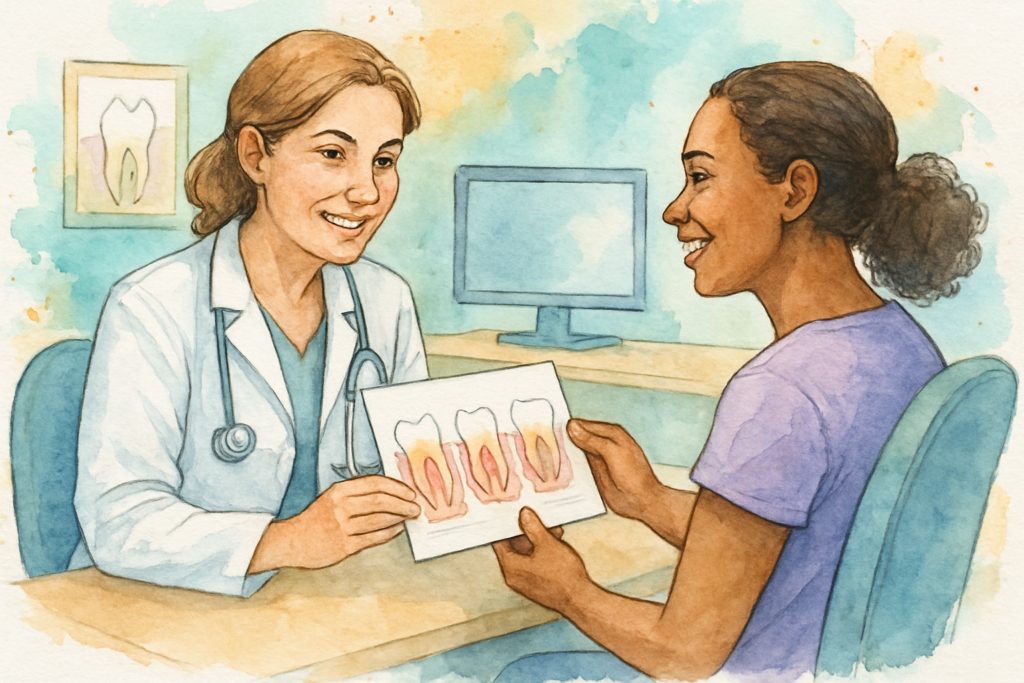
Direct Answer: Scaling and root planing cleans above and just below the gumline, but it can’t reach the bottom of deep periodontal pockets. Surgery gives Dr. Kim direct access to areas a deep cleaning physically cannot.
You followed through. You showed up for the scaling and root planing, you came back for the follow-up, and your gums improved. So when the periodontist mentions surgery, it genuinely doesn’t make sense — didn’t the deep cleaning work?
This is one of the most common questions we hear before consultations with Dr. Jaewon Kim, our board-certified periodontist here in Renton. Patients arrive confused, sometimes frustrated, and occasionally wondering if surgery is just the next thing being added to the list.
The short answer is: the deep cleaning did work. And in some cases, it’s precisely because it worked that we can now see what’s left to address. This article explains what a deep cleaning can and cannot do — and why, for certain pocket depths, surgery is the more precise tool.
What Scaling and Root Planing Actually Does
A deep cleaning — clinically called scaling and root planing — is not the same as a regular cleaning. It goes below the gumline to remove calculus (hardened tartar) and bacterial buildup from the root surfaces of your teeth, targeting the infection that causes gum disease to progress.
For many patients, it does exactly what it’s supposed to do. Inflammation goes down, gums stop bleeding as readily, and at the follow-up appointment — usually 8 to 12 weeks later — pocket depths have improved measurably. That’s a real, meaningful result.
But here’s the part that surprises people: scaling and root planing is a blind procedure. The hygienist or periodontist works by feel, guided by instruments and experience, without being able to see the root surface directly. In pockets that are relatively shallow — say, 4 to 5 millimeters — that’s sufficient. The instruments can reach the bottom, the root can be thoroughly cleaned, and the tissue heals.
When pockets are deeper — 6 millimeters or more — the geometry changes. The instruments still reach in, but cleaning the bottom of a deep, narrow pocket without being able to see it has real limitations. Calculus in those areas can remain even after a thorough deep cleaning, and that remaining deposit is enough to keep the infection active at a low level.
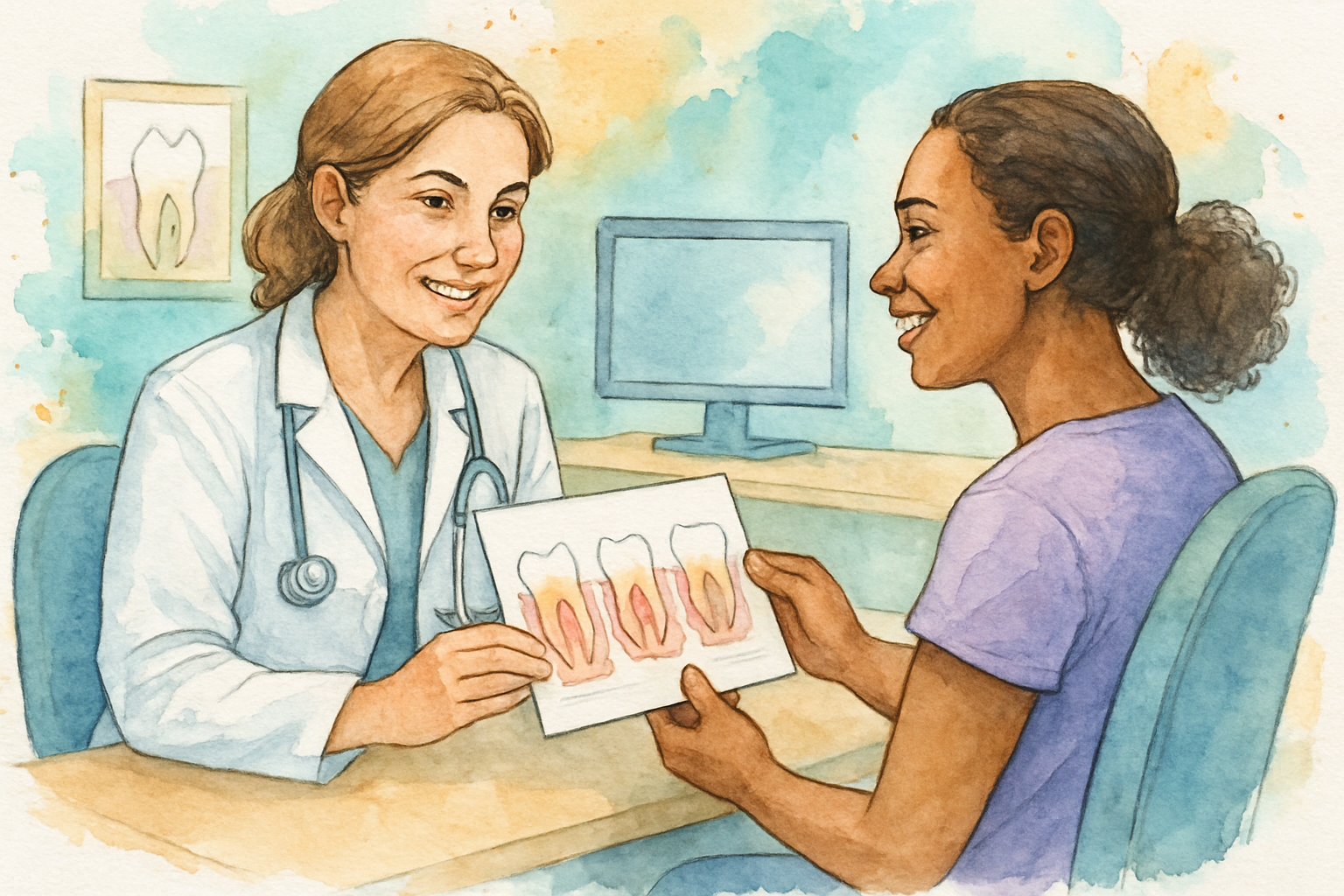
Why Surgery Gives the Periodontist Something a Deep Cleaning Can’t
Periodontal flap surgery — the procedure Dr. Kim performs for patients with persistent deep pockets — involves gently lifting the gum tissue to gain direct access to the root surface and the bone underneath.
This matters because what was previously a blind procedure becomes a visible one. Dr. Kim can see the root surface directly, remove any remaining calculus thoroughly, and if necessary, reshape the bone contour to reduce pocket depth and make the area easier to maintain going forward.
The goal isn’t to start over — it’s to finish what the deep cleaning started. Patients who’ve had scaling and root planing are already in better condition than before treatment. Surgery builds on that foundation.
For patients who come to us from Kent, Burien, or Tukwila — many of whom would otherwise need a referral to a separate specialist — having Dr. Kim available in-house means this next step doesn’t require finding a new provider, re-explaining your history, or coordinating between two separate practices. That continuity matters, especially when treatment spans multiple visits.
If you’re curious about gum recession and what makes it progress, that article goes into the tissue changes that often accompany deep pocket disease.
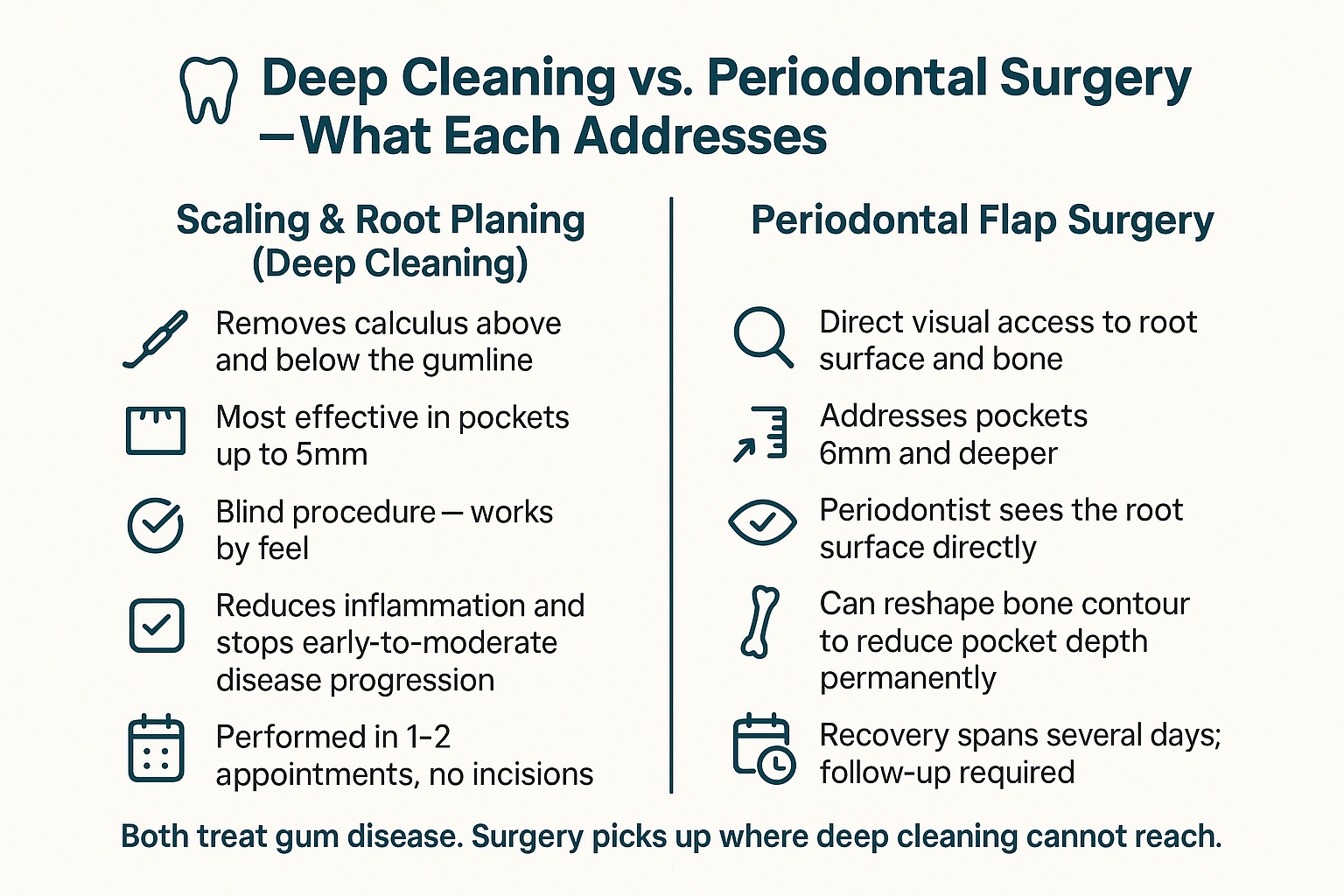
Deep Cleaning vs. Periodontal Surgery: What Each One Addresses
This side-by-side comparison shows where scaling and root planing leaves off and where periodontal flap surgery takes over — based on pocket depth and what each procedure can physically access.
If You Had a Hard Experience With the First Deep Cleaning
One caller recently shared that she had a difficult experience with a deep cleaning on one side of her mouth and was reluctant to complete the other side — let alone consider surgery. That hesitation makes complete sense, and it’s worth addressing directly.
A deep cleaning and periodontal surgery are genuinely different procedures in terms of how they feel and how recovery works. Scaling and root planing is done with instruments working below the gumline — it can be uncomfortable, especially if pockets are deep and inflamed. For patients who’ve had that experience, the idea of surgery can sound like more of the same, only worse.
But the experiences are different. Flap surgery is performed under local anesthesia, and the area is numb before anything happens. Most patients describe the recovery as manageable — over-the-counter pain relief handles most of the discomfort in the first few days, soft foods are recommended for about a week, and talking may feel awkward for a day or two. It’s not a dramatic procedure, but it does need space in your schedule. Plan for the first three to four days to be genuinely rest-focused.
If dental anxiety is part of your situation, this guide on what to look for in a practice built for anxious patients is worth reading before your consultation. Knowing what questions to ask makes the whole process feel more manageable.
What Recovery From Periodontal Flap Surgery Typically Looks Like
Recovery varies by patient, but here’s a general picture of what the first week tends to look like for most people — so you can plan your schedule realistically.
| Timeframe | What to Expect | What Helps |
|---|---|---|
| Day 1 | Numbness wearing off, mild-to-moderate soreness | Ice pack, rest, over-the-counter pain relief as directed |
| Days 2–3 | Peak tenderness in the treated area, some swelling possible | Soft foods only — think yogurt, eggs, soup; avoid chewing near the surgical site |
| Days 4–5 | Noticeable improvement for most patients; swelling starts to reduce | Continue soft diet; gentle rinsing if instructed |
| Days 6–7 | Most patients feel functional; gums still sensitive | Avoid hard or crunchy foods; no flossing in the treated area until cleared |
| Week 2+ | Follow-up appointment; return to normal diet as healing allows | Follow Dr. Kim’s post-op instructions exactly — this protects the result |
Why This Matters for Everything Else You Want to Do
Patients sometimes ask whether they can just skip ahead — skip the surgery and move on to the crown, implant, or other restorative work they’ve been waiting for. The answer is that periodontal health is the foundation everything else sits on.
A crown placed over a tooth with active gum disease is working against time. An implant placed into bone that is still affected by infection is at higher risk of failure. Restorations that might otherwise last 15 to 20 years can fail much earlier when the underlying tissue isn’t stable.
This is why Dr. Kim’s role matters so specifically in the context of our practice. When a patient needs both periodontal treatment and restorative work — say, a crown or an implant — having a periodontist and a restorative dentist working in the same practice means the sequencing is coordinated from the start. Nobody is working in a vacuum.
If you’re in the process of thinking through implants, this article on when the implant process actually starts is a useful read. And for patients who’ve been told they may need bone grafting as part of that process, this explanation of what bone grafting actually means for your timeline gives the honest picture without overcomplicating it.
Frequently Asked Questions About Periodontal Surgery After Deep Cleaning
If the deep cleaning worked, doesn’t that mean the surgery isn’t necessary?
Not always. Improvement after a deep cleaning is a good sign — it means your body is responding. But improvement doesn’t always mean full resolution. If follow-up measurements still show pockets of 6mm or deeper, those areas likely have calculus at the base that the instruments couldn’t reach. Surgery isn’t a punishment for a failed deep cleaning — it’s a more precise tool for a problem that the first step partially but not fully resolved.
How does Dr. Kim decide whether surgery is actually needed?
The recommendation comes from re-evaluation data taken 8 to 12 weeks after scaling and root planing. Dr. Kim measures pocket depths at every tooth, looks at bone levels on updated X-rays, and checks for remaining signs of active infection. Surgery is only recommended when the clinical measurements show that remaining disease cannot be addressed non-surgically.
Will it hurt more than the deep cleaning did?
Most patients find it more manageable, not less — because the area is fully anesthetized before anything begins. The deep cleaning can feel uncomfortable precisely because working below the gumline while you’re partially numb is difficult to stage perfectly. With flap surgery, Dr. Kim waits until the local anesthetic has fully taken effect. Post-procedure soreness is real, but over-the-counter pain relief handles it for most patients.
Does insurance usually cover periodontal surgery?
Many dental insurance plans with periodontal benefits cover a portion of flap surgery, though coverage levels vary significantly by plan. Delta Dental PPO plans — common among patients in the Renton and South King County area — typically cover periodontal surgical procedures at a percentage after deductible, but the exact amount depends on your specific plan. Our front desk verifies coverage before scheduling and walks through what to expect out-of-pocket.
Can I have surgery on just part of my mouth?
Yes. Periodontal surgery is typically staged by quadrant or sextant — meaning Dr. Kim treats one section of the mouth at a time. This is more comfortable to recover from and allows the treated areas to heal before the next section is addressed. Your personalized treatment plan will outline exactly which areas need surgery and in what order.
Have Questions Before You Commit to Anything?
If you’ve been told periodontal surgery is the next step and you want to understand exactly what that means for your situation — what Dr. Kim will be doing, what recovery looks like for you specifically, and how it fits with any other dental work you’re considering — a consultation is the right place to start. Cedar Dental Group sees patients from Renton, Kent, Tukwila, Newcastle, and across South King County. You can reach us at 425-430-0400 or visit cedardentalgroup.com to request an appointment.
