
Direct Answer: A well-fitting crown matches your bite precisely, seals the tooth margin completely, and feels natural when you chew. The difference comes down to preparation quality, material choice, and how carefully the bite is checked before you leave.
Most patients don’t think much about a crown until something feels wrong. Maybe the bite is slightly off, or the gum around it stays irritated, or the crown comes loose after two years when it should last fifteen. By then, fixing it means starting over.
A crown that fits well doesn’t just feel comfortable on day one. It protects the tooth underneath for the long haul, keeps the gum tissue healthy around the margin, and holds up to the real mechanical pressure your back teeth handle every day. Getting that right depends on decisions made before the final crown is ever placed.
This article breaks down what actually determines crown fit — the preparation, the materials, the margin, the bite — and the specific questions worth asking your dentist before you agree to move forward.
The Prep Work Matters More Than the Crown Itself
Most of the variation in crown outcomes traces back to tooth preparation, not the lab or the material. Preparation is the step where your dentist reshapes the natural tooth into a stable, correctly angled base that the crown will sit on permanently.
If the preparation isn’t even, the crown won’t seat properly. If the margin — the edge where the crown meets your natural tooth at the gumline — isn’t clean and sharp, bacteria get in. That leads to decay under a crown that looks completely intact from the outside.
Here’s what a thorough prep process involves:
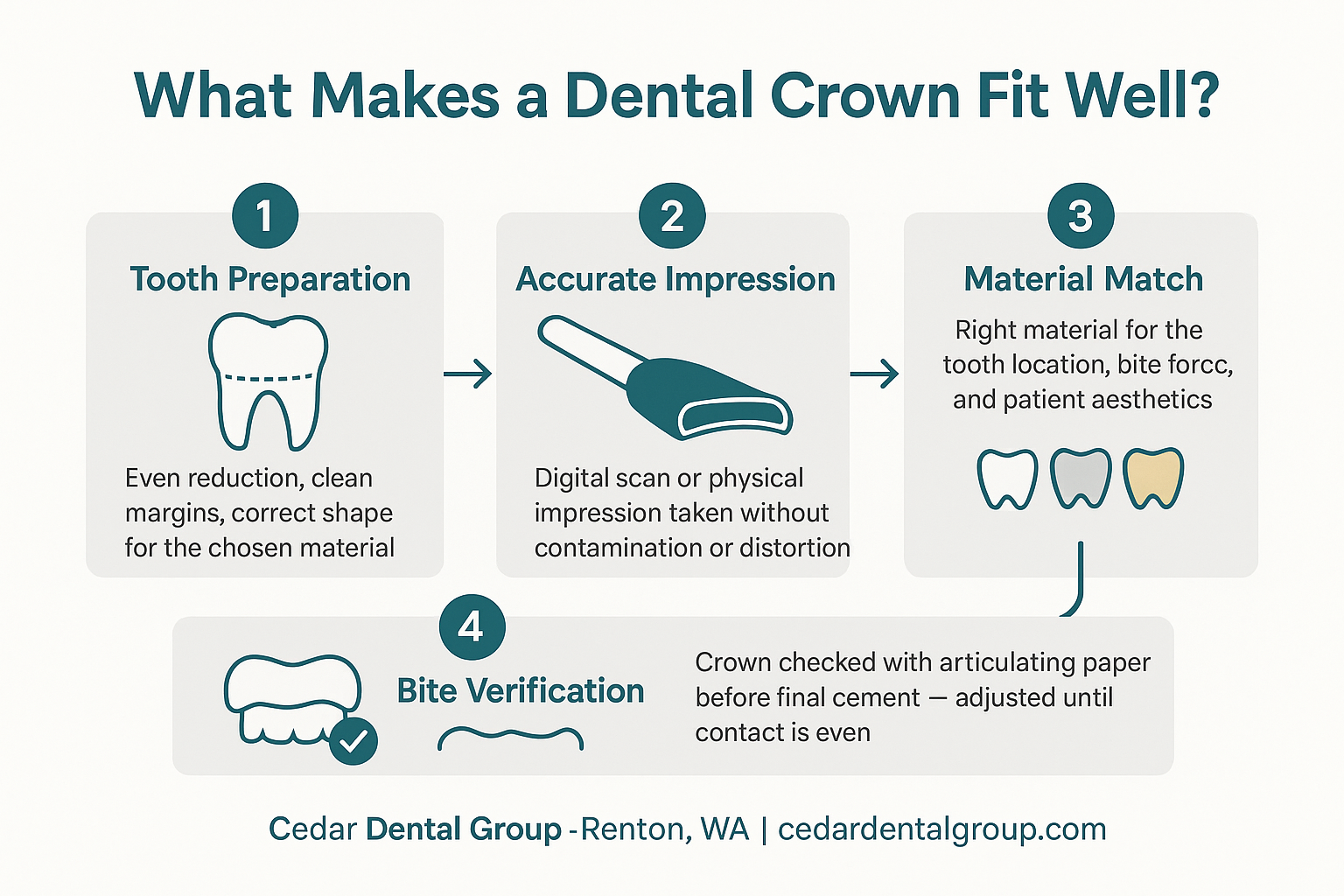
- Removing the right amount of tooth structure — enough for the crown material to have adequate thickness, not so much that the tooth becomes fragile
- Creating smooth, defined margins at the gumline so the lab can fabricate a crown that seals tightly
- Making sure the prepared tooth is the right shape for the specific material being used — porcelain and zirconia have different thickness requirements
- Taking a precise impression or digital scan so the lab has an accurate model to work from
The impression step is where a lot of problems start. An impression taken with a small amount of moisture contamination, or before the gum tissue is fully displaced, gives the lab a distorted model. The crown comes back looking fine until it’s actually seated — and then the fit is off by a fraction of a millimeter that your bite will notice immediately.
For a deeper look at how crowns fit into broader restoration planning, the patient’s guide to crowns and bridges covers the full picture of what these restorations are meant to do.
Crown Materials: What the Options Actually Mean for Fit and Longevity
The material your crown is made from isn’t just a cosmetic decision. Different materials have different strength profiles, different aesthetic results, and different thickness requirements — which affects how much tooth structure gets removed during prep.
Here’s a straightforward breakdown of the most common options:
- Full zirconia: Extremely strong, works well for back molars that take the most chewing force. Less translucent than natural teeth, so it’s not ideal for front teeth where aesthetics matter most. Requires less tooth reduction than porcelain-fused-to-metal.
- Porcelain-fused-to-metal (PFM): The traditional standard for many years. The metal substructure is strong, but the porcelain layer can chip over time. A dark line at the gumline sometimes becomes visible as gums naturally recede slightly with age.
- All-ceramic / lithium disilicate (e.max): Very natural-looking, a good choice for front teeth and visible premolars. Strong enough for most biting situations, though not ideal for patients who grind heavily.
- Gold alloy: Rarely used today for aesthetic reasons, but still the gold standard — literally — for longevity and precision fit. Gold is forgiving, wears similarly to natural enamel, and seals margins extremely well.
For back teeth, zirconia is currently the most common recommendation in most general practices — and for good reason. For front teeth, the conversation should weigh aesthetics, how much you want the crown to blend with adjacent teeth, and whether you have any grinding habits that might stress a ceramic material.
The right answer depends on which tooth, what your bite looks like, and what your long-term goals are. If your dentist doesn’t walk through these tradeoffs with you, it’s worth asking.
Crown Material Comparison at a Glance
Different crown materials suit different teeth and different patients. Here’s how the main options stack up across the factors that matter most.
| Material | Best Use | Typical Lifespan | Key Trade-off |
|---|---|---|---|
| Full Zirconia | Back molars, high-force areas | 15–25 years | Less translucent — not ideal for visible front teeth |
| Porcelain-Fused-to-Metal (PFM) | Back teeth, some premolars | 10–15 years | Metal line can show at gumline over time |
| All-Ceramic / e.max | Front teeth, visible premolars | 10–15 years | Can fracture under heavy grinding |
| Gold Alloy | Back molars where aesthetics aren’t a concern | 20–30+ years | Visible gold color — most patients avoid for cosmetic reasons |
The 4 Things That Determine Whether a Crown Fits Well
A well-fitting crown depends on four distinct factors. Each one affects the final result in a different way.
The Bite Check — and Why It’s the Step That Gets Rushed
Of all the steps in placing a crown, the bite check is the one most likely to be done too quickly. And it’s also the one that causes the most patient complaints afterward.
Your bite is checked using a thin piece of articulating paper — essentially a colored transfer paper that marks exactly where the crown contacts the opposing teeth when you close. If the marks show the crown hitting too high on one side, the dentist makes small adjustments to the crown surface until contact is even.
The problem is that your mouth is numb. When you can’t feel your normal bite, it’s easy to tell the dentist it feels fine when it doesn’t. Then the anesthetic wears off and the crown feels like it’s sticking up — which puts the tooth and the jaw joint under abnormal stress every time you chew.
A high bite that isn’t corrected quickly can cause:
- Soreness in the tooth and surrounding gum tissue
- Headaches from jaw muscle tension
- Accelerated wear on the crown itself
- In some cases, a cracked tooth or failed root if the force is significant and left unaddressed
If your crown feels high even slightly after the anesthetic wears off, call the practice. Adjusting the bite is a quick appointment and should never be a hassle to get done. That one follow-up can add years to how long the crown lasts.
If you’ve had a crown placed over a root canal or are wondering whether a damaged tooth needs a crown versus a different approach, the team at Cedar Dental Group includes an in-house endodontist who handles the tooth-level evaluation before any restoration decision is made.
Questions Worth Asking Before You Say Yes
Patients who ask questions before a crown procedure tend to have better outcomes — not because the questions change what the dentist does, but because they make sure you and your dentist are on the same page about what’s happening and why.
Here are the questions that actually move the conversation forward:
- Why does this tooth need a crown rather than a filling? If there’s significant decay, a crack below the gumline, or the tooth has had a root canal, a crown is the right call. But if a tooth has minor decay and a dentist jumps straight to a crown recommendation, it’s fair to ask what’s driving that decision.
- What material are you recommending, and why? If the answer is vague, ask specifically whether zirconia, e.max, or a PFM makes more sense for that tooth location and what the trade-offs are.
- Will you use a digital scan or a physical impression? Both can produce accurate results when done well. Either way, ask what the process looks like and how the lab they use handles margin detail.
- How will you check the bite before cementing permanently? A good answer involves articulating paper and adjustments before final placement.
- What’s the plan if the crown doesn’t feel right after the anesthetic wears off? You want to know the practice takes follow-up seriously and that getting a bite adjustment is straightforward.
None of these are adversarial questions. A dentist who communicates clearly will welcome them. If you ever feel like asking questions is unwelcome, that itself is useful information about whether the practice is the right fit for you. Some patients find it helpful to read through what makes a dentist feel less intimidating before an appointment — especially if you’ve had less-than-ideal experiences in the past.
Frequently Asked Questions About Dental Crowns
How long should a dental crown last?
A well-placed crown on a properly prepared tooth should last 10 to 15 years on the low end, and often 20 or more years if the bite is correct and oral hygiene stays consistent. Zirconia and gold tend to outlast porcelain-fused-to-metal crowns. How you care for the surrounding gum tissue matters too — decay doesn’t form on the crown itself, but it can form at the margin where crown meets tooth.
Can a crown fall off?
Yes, and it happens more than most patients expect. The most common reasons are decay developing under the crown (which breaks down the cement bond), a bite that places too much stress on the crown, or cement failure over time. A crown that falls off should be brought back to the practice promptly — the prepared tooth underneath is fragile without it.
Is it normal for a crown to feel different from a natural tooth?
For the first few days, yes. Your tongue and bite take time to adjust to the new shape. But after one to two weeks, a well-fitted crown should feel essentially normal. If it still feels high, tight between teeth, or sensitive to pressure after that window, have it checked.
What happens to the tooth under a crown if it gets infected?
If the tooth under a crown develops an infection at the root, you’d typically need root canal therapy before the crown can stay. In some cases, a crown needs to be removed to access the tooth. At Cedar Dental Group, Dr. Joe Dutner handles endodontic treatment in-house, so patients don’t need to get a separate referral and start over at a different office — which simplifies the process significantly.
Does getting a crown hurt?
The preparation appointment is done under local anesthetic, so the process itself shouldn’t be painful. Some sensitivity in the prepared tooth is normal for a few days after the temporary crown is placed. If you have significant dental anxiety, it’s worth asking the practice about comfort options before your appointment — there are several approaches practices use that go beyond just numbing.
Does insurance usually cover crowns?
Most dental insurance plans with major restorative benefits cover crowns at 40–60% after the deductible, subject to the plan’s annual maximum. Coverage often requires that the tooth meets clinical criteria — most insurers won’t cover a crown on a tooth that could be restored with a filling. Always verify your specific plan before the appointment, and ask the practice to submit a pre-authorization if you want a written estimate of what your plan will pay.
Have Questions About a Crown Before Moving Forward?
If you’re weighing a crown recommendation and want to understand exactly what’s involved before committing, we’re glad to walk through it with you. Dr. Susan Chu takes time to explain the reasoning behind every treatment recommendation — including why a crown is the right call when it is, and what the alternatives look like when they’re worth considering. You can reach Cedar Dental Group at 425-430-0400 or visit cedardentalgroup.com to schedule a consultation.
