

Direct Answer: A dentist feels less intimidating when they explain what’s happening before doing it, give you control during the appointment, and don’t rush you through decisions.
A lot of adults in Renton put off dental care for years — not because they don’t know they should go, but because the experience itself feels like something to brace for. The sounds, the tools, the sense of having no control while someone works inside your mouth. That’s not a character flaw. It’s a very common reaction.
What actually makes a dental visit feel manageable isn’t magic. It comes down to a few specific things: how the practice communicates, how much control the patient is given during treatment, and whether the team treats dental anxiety as a legitimate concern rather than an inconvenience.
This article breaks down the elements that genuinely reduce the intimidation factor — so you can know what to look for before you book, and what to ask when you call.
Why the Dental Chair Feels So Uncomfortable for So Many People
Dental anxiety is more common than most people realize. Studies suggest roughly 1 in 5 adults experience enough anxiety about dental visits that they avoid or delay care — sometimes for years at a stretch.
For most of those people, the fear isn’t really about pain. It’s about a few specific things that feel hard to control:
- Not knowing what’s about to happen next
- Being unable to speak or signal discomfort during treatment
- Past experiences where a provider dismissed concerns or moved too fast
- The sounds and sensations of dental instruments, even when nothing hurts
- Feeling judged for the current state of their teeth
Those are reasonable concerns. And they’re exactly the things a well-run practice can address directly — not by pretending the anxiety doesn’t exist, but by building the appointment around it.
Patients coming to us from the broader South King County area, including Tukwila, Kent, and Burien, often mention that they’ve tried other offices and left feeling rushed or unheard. That pattern tends to reinforce the avoidance cycle. Knowing that a different kind of experience is possible is often the first thing that breaks it.
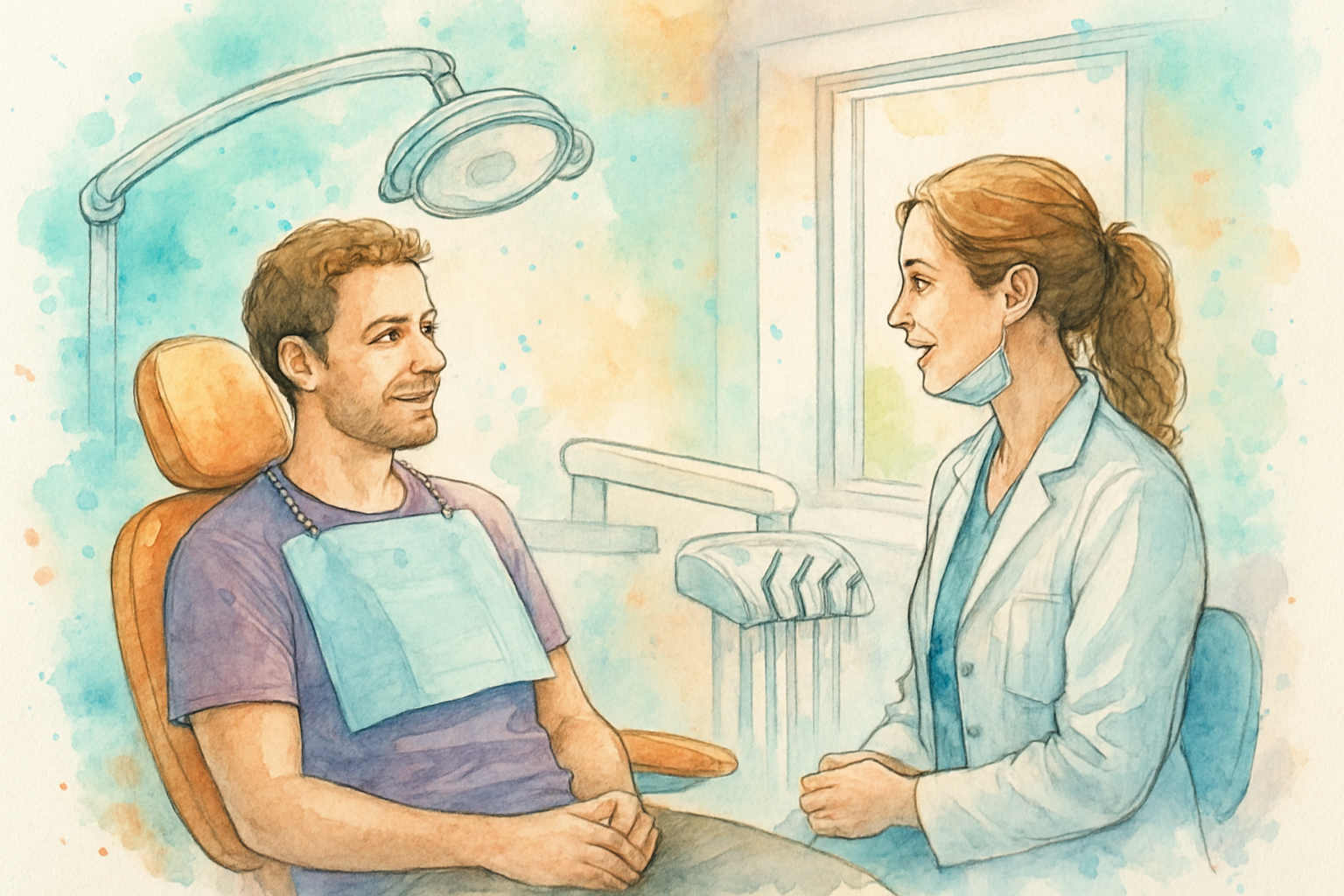
What Actually Reduces Anxiety: The Three Things That Matter Most
There’s no shortage of marketing language around “gentle” and “comfortable” dental care. But behind those words, there are a handful of concrete things that actually change how a visit feels.
1. Explaining before doing.
Anxiety spikes when something unexpected happens. A provider who walks you through each step — what they’re about to do, why, and roughly how it will feel — removes most of that uncertainty. This doesn’t have to be a long lecture. Even a brief “I’m going to take some X-rays first, then we’ll do a full exam before anything else” resets the patient’s nervous system.
2. Giving the patient real control.
This is usually called a “stop signal” — a word or hand gesture the patient can use at any moment to pause treatment. Knowing that signal exists, even if you never use it, changes the dynamic entirely. You’re no longer a passive recipient. You’re a participant.
If you’re researching options in the Renton area, our guide to finding a dentist for anxiety goes deeper on what to look for when evaluating a practice.
3. No judgment about where your teeth are right now.
Patients who’ve avoided the dentist for several years often expect to be scolded when they finally come in. A practice that leads with education instead of criticism — explaining what’s happening and why, without shame — makes it far easier for patients to return for follow-up care.
Comfort Options That Are Available and What They Actually Do
Beyond communication style, there are clinical tools that make procedures more comfortable. It helps to know what exists before you walk in, so you can ask about it directly.
Nitrous oxide (laughing gas) is the most commonly used option for mild-to-moderate anxiety. It’s inhaled through a small mask, takes effect in a few minutes, and wears off quickly — most patients drive themselves home after. The cost of nitrous oxide at a dental office typically runs $75–$150 per visit depending on duration, and it’s often partially covered by dental insurance.
For patients with stronger anxiety, oral sedation (a prescription pill taken before the appointment) creates a deeper state of relaxation. You’ll need someone to drive you, and you may have limited memory of the appointment — which many anxious patients consider a benefit.
A few other comfort-focused features worth asking about:
- Blankets or pillows during longer procedures
- Sunglasses to block overhead light
- Music or headphones during treatment
- A slower pace with more breaks built in
- Same-day consultations before committing to treatment
None of these are unusual requests. A practice that’s built around patient comfort will have answers ready when you ask.
Comfort Options at a Glance: What Each One Does
Here’s a quick comparison of the most common comfort options, so you know what to ask about.
| Option | How It Works | Best For |
|---|---|---|
| Nitrous oxide | Inhaled gas; mild relaxation; wears off in minutes | Mild anxiety, short procedures |
| Oral sedation | Prescription pill taken before visit; deeper calm; requires a driver | Moderate-to-strong anxiety, longer procedures |
| Stop signal | Patient-controlled pause at any moment during treatment | Anyone who feels out of control during care |
| Step-by-step narration | Provider explains each action before doing it | Patients who fear the unexpected |
| Extended appointment blocks | Longer time slots; no rushing | Patients who need more breaks or time to process |
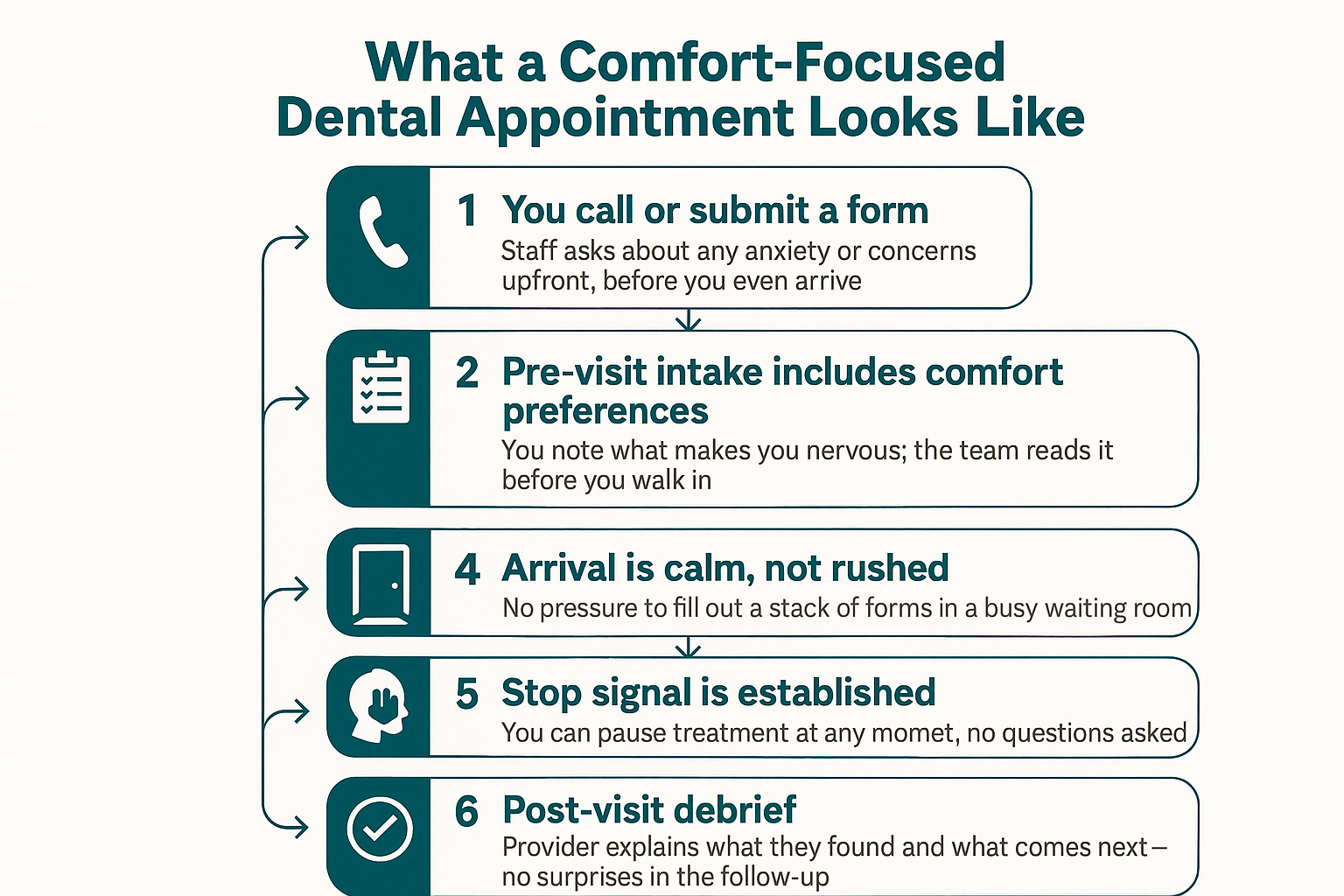
What a Comfort-Focused Appointment Looks Like, Step by Step
This shows what a well-structured appointment looks like when a practice is genuinely built around reducing anxiety — from first contact to walking out the door.
How a Practice’s Setup Signals Whether It Prioritizes Patient Comfort
You can often read a practice’s approach before the appointment even starts. A few things to notice:
On their website: Does it explain procedures in plain language? Do they mention anxiety, comfort, or patient communication directly — or is everything focused on services and promotions?
When you call: Does someone answer who can answer real questions, or do you get routed to a voicemail? Is there patience in the conversation, or does it feel transactional?
At the first appointment: Does the provider sit down and talk with you before the chair reclines? Is the explanation of X-rays and exam findings clinical and rushed, or does it feel like a conversation?
These aren’t small things. They reflect the practice’s actual culture, not just their marketing copy. A provider who leads with education — who treats you as someone capable of making informed decisions — is usually the same provider who will tell you honestly when a procedure can wait and when it probably shouldn’t.
We’ve written about what comfort-focused care in Renton actually looks like in practice, including what questions to ask at a first visit.
When Anxiety Has Led to Delayed Care: What to Expect If It’s Been a While
One of the most common things that keeps anxious patients away is the fear of what the dentist will find after a long gap in care. That fear is understandable — but it tends to be worse in the imagination than in reality.
If it’s been several years since your last visit, here’s what a first appointment typically involves:
- A full set of X-rays to assess bone levels, existing restorations, and any decay that isn’t visible
- A periodontal screening — meaning the hygienist or provider checks the health of your gums, not just your teeth
- A clinical exam of each tooth, the soft tissues, and the jaw joint
- A conversation about findings and options before any treatment is scheduled
Nothing happens at a first visit without your understanding and agreement. The exam is just information-gathering.
If the exam finds signs of gum disease — which is common in patients who’ve been away for a while — that’s worth taking seriously. Early-stage gum disease often has no obvious symptoms, which is exactly why a full exam matters. And when gum issues have progressed further, there are structured treatment paths — including procedures like scaling and root planing — that are more manageable than most patients expect.
Frequently Asked Questions About Dental Anxiety and Comfort Care
Is it okay to tell my dentist I’m nervous before the appointment starts?
Yes — and you should. Telling the provider or the front desk before you arrive (or when you call to book) gives the team a chance to adjust. A practice that’s genuinely patient-focused will slow down, explain more, and check in with you more often. If a provider seems annoyed or dismissive when you mention anxiety, that’s useful information.
What if I need to stop in the middle of a procedure?
Any provider worth working with will stop when you signal them to. Before treatment begins, ask to establish a clear stop signal — a raised hand is the most common. You don’t need a reason to pause. You just need to feel like you have the option.
Does nitrous oxide actually work for dental anxiety?
For most people with mild-to-moderate anxiety, yes. It doesn’t put you to sleep — you’re fully aware of what’s happening — but it creates a calm, slightly disconnected feeling that makes the experience much more manageable. It wears off within 5–10 minutes after the mask is removed, so there’s no grogginess afterward. If your anxiety is more significant, oral sedation is a stronger option worth discussing.
What if I haven’t been to the dentist in five or more years?
You’re not alone — this is extremely common. A first visit after a long gap is just an exam and X-rays. Nothing is treated that day unless you ask for it. The goal is simply to understand what’s going on and give you options. A good provider explains findings without judgment and lets you set the pace for what comes next.
Can I request a longer appointment if I tend to need more breaks?
Absolutely. When you call to book, mention that you prefer a slower pace or may need to stop periodically. Practices that accommodate anxiety will often schedule a longer block specifically to avoid rushing. It’s a simple request that makes a real difference.
Is dental anxiety something a dentist has heard before, or will I seem unusual for mentioning it?
Dentists hear this constantly. Roughly 1 in 5 adults experience significant dental anxiety, and most providers in a patient-focused practice have seen every level of it. You will not seem unusual. You’ll seem like someone who’s being honest, which makes it easier for the team to help you.
Ready to See What a Calm, Unhurried Appointment Feels Like?
At Cedar Dental Group in Renton, we work with a lot of patients who haven’t been to a dentist in years — and who arrived nervous about what that first visit would be like. Dr. Chu and Dr. Kim both lead with explanation and patience, not pressure. If you have questions before booking, or want to talk through what a first appointment would involve, you’re welcome to call us at 425-430-0400 or visit cedardentalgroup.com to learn more or request a consultation.
