

We’ve all heard that sugar causes cavities, but what’s really happening inside your mouth? Tooth decay isn’t a sudden event. It’s a slow process that follows a surprisingly simple recipe: sugar + bacteria = acid. When you eat sugary or starchy foods, you’re not just feeding yourself—you’re feeding specific bacteria that produce acid, and that acid is what wears down your teeth.
Understanding this process is the first step toward preventing it. At Cedar Dental Group, we believe that when patients are well-informed, they feel more confident and in control of their dental health. Let’s break down exactly what causes tooth decay.
Unpacking the Causes of Tooth Decay
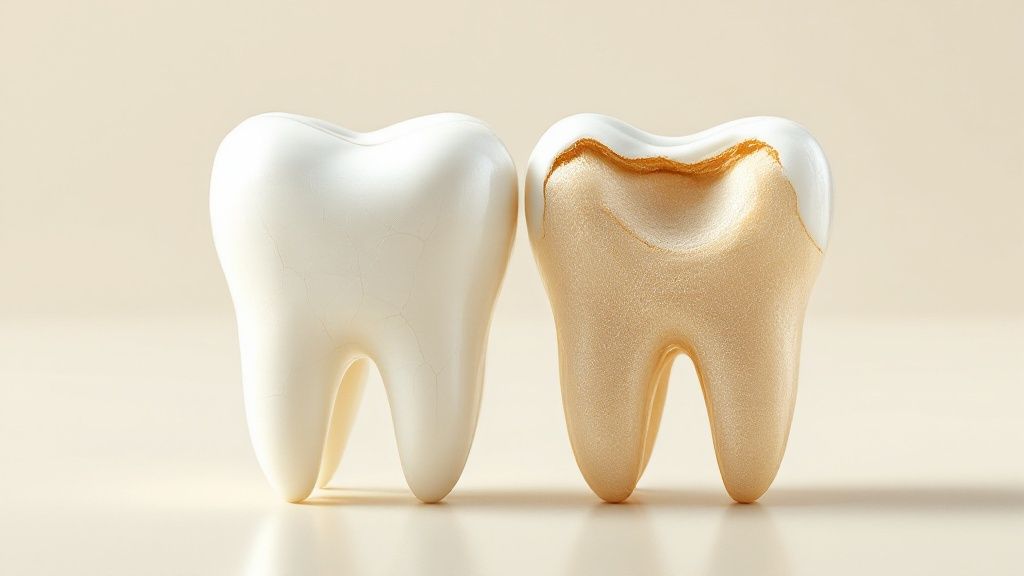
Getting a handle on what causes tooth decay is the first real step toward stopping it. While the idea is simple, three key players team up to create the perfect conditions for a cavity. Think of it like a tiny, constant drip of acid on a stone—eventually, even the toughest surface will start to wear away.
Your tooth enamel is the hardest substance in your body, but it’s not indestructible. Constant exposure to acid pulls minerals out of the enamel, eventually creating the tiny holes we call cavities. Once you grasp this, you can start making smarter choices to protect your smile.
The Three Main Culprits
To really understand what’s happening, let’s look at the main characters in this story. Each one has a critical job in the cavity-forming process. Keeping them in check is the secret to a healthy mouth.
Here’s a simple breakdown of the main components involved in creating cavities.
| The Key Players in Tooth Decay |
| :— | :— |
| Component | Its Role in Causing Tooth Decay |
| Plaque Bacteria | Specific bacteria that thrive on sugar and form a sticky, invisible film on your teeth. |
| Sugars and Starches | The “food” for these bacteria. Found in candy, soda, bread, and even fruit. |
| Acid | The harmful waste product created by bacteria after they feast on sugars. |
Each of these components relies on the others to do damage. It’s a chain reaction that you have the power to interrupt. Now, let’s explore these culprits in more detail.
Plaque: The Sticky Biofilm
Your mouth is an ecosystem filled with hundreds of types of bacteria, and most of them are harmless. The problem starts with certain strains that feed on the sugars and starches you eat. These bacteria band together to form a sticky, colorless film called plaque that constantly coats your teeth. If you’ve ever felt that fuzzy coating on your teeth in the morning, that’s plaque.
Diet: The Fuel for the Fire
This is where your daily habits come into play. Foods loaded with sugars and simple carbohydrates—like candy, soda, but also bread, pasta, and crackers—are the perfect fuel for those plaque bacteria. When you eat them, the bacteria quickly break them down into simple sugars they can easily consume.
Acid: The Final Weapon
As the bacteria process these sugars, they release acid. This acid is strong enough to start dissolving the minerals that make your tooth enamel so tough. This process is called demineralization, and it’s the very beginning of a cavity.
The cycle is clear: Plaque builds up on your teeth. You eat something sugary. The bacteria in the plaque produce acid. That acid attacks your enamel. Repeat this enough times, and a weak spot can turn into a full-blown cavity.
It’s no wonder that cavities are one of the most common health problems in the world, affecting a significant portion of the adult population (Source: World Health Organization). The good news? Tooth decay is also one of the most preventable.
By understanding how this works, you can make informed choices to protect your teeth. The team at Cedar Dental Group is always here to help you navigate your oral health journey with confidence and compassion.
The Battle Happening Inside Your Mouth
It’s easy to think of your mouth as a quiet place, but it’s actually the scene of a constant, microscopic battle. Every day, a tug-of-war is happening between forces that damage your teeth and your body’s natural repair crew. Understanding this dynamic is key to knowing what really causes tooth decay.
Think of it as a balancing act. On one side, you have things that break your teeth down. When you eat or drink anything with sugar or acid, the bacteria in your mouth have a feast. Their byproduct is a powerful acid that attacks your tooth enamel in a process called demineralization. This acid literally leaches vital minerals like calcium and phosphate right out of your enamel, leaving it soft and vulnerable.
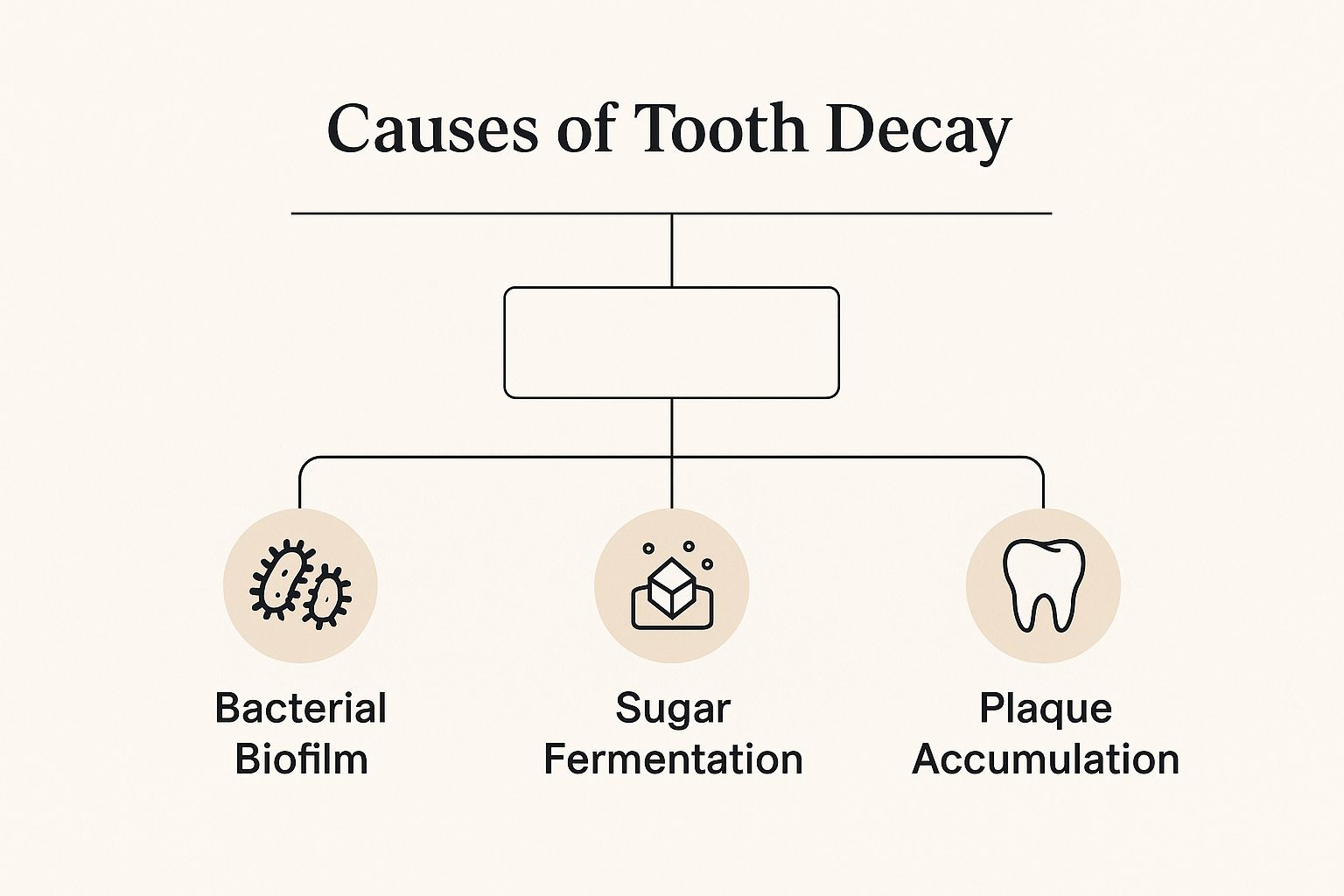
As you can see, it’s the combination of bacteria, sugar, and the plaque they form that creates the perfect storm for an acid attack on your teeth.
Tipping the Scales Toward Repair
Thankfully, your body has an amazing defense system that’s always working to tip the scales back in your favor. This repair process is called remineralization.
Your saliva is the unsung hero here. It works tirelessly to neutralize those harmful acids and redeposit lost minerals back into your enamel, effectively rebuilding weak spots. Fluoride, from sources like toothpaste and tap water, is a powerful ally in this fight, making your enamel tougher and more resistant to future acid attacks.
So, when does a cavity actually form? It happens when that delicate balance gets thrown off. If your teeth are under constant acid assault—from frequent snacking, sipping on sugary drinks, or not brushing away plaque—your saliva just can’t keep up. The scale stays tipped toward demineralization for too long, and a permanent weak spot begins to form.
The Journey from White Spot to Cavity
Tooth decay isn’t an overnight event. It starts small, often as a little chalky “white spot” on the surface of your tooth. That spot is the first warning sign of mineral loss. The good news? At this early stage, the damage is often completely reversible with better brushing, flossing, and professional fluoride treatments.
This initial stage is a critical window of opportunity. If the demineralization process continues, that weak spot will eventually crumble, forming a cavity that can only be fixed with a dental filling.
Ignoring these early signs is how small problems turn into big ones. Oral diseases affect nearly 3.5 billion people across the globe, and cavities in adult teeth are the most common issue (Source: World Health Organization).
If a cavity is left untreated, it will burrow deeper into the tooth, eventually reaching the sensitive inner layers and causing pain. That’s when more complex treatments become necessary. If you ever experience sudden tooth pain, it’s a sign you need help right away—our team provides emergency dental services in Renton, WA for these situations. But catching decay early at Cedar Dental Group is always the best path to keeping your smile healthy and confident.
What You Eat Can Make or Break Your Smile
We’ve talked about the science of bacteria and acid, but our daily diet is what really fuels the process. It’s tempting to blame only the obvious culprits like candy and soda, but the full story is more complex. To truly protect your teeth, you have to understand which foods and eating habits give cavity-causing bacteria the upper hand.
The real problem foods are a group called fermentable carbohydrates. This category is much broader than you might think. It includes not just sweets but also plenty of starchy foods you might not suspect.
The Sneaky Problem with Starches
It surprises most people, but starchy snacks can be just as hard on your teeth as a lollipop. Think about potato chips, crackers, or even plain bread. The moment you start chewing, enzymes in your saliva begin breaking those starches down into simple sugars.
This gives the plaque bacteria a readily available feast right where they live. So while you might feel like you’re choosing a healthier snack, from your enamel’s point of view, that cracker is just another delivery system for sugar.
Actionable Takeaway: Swish your mouth with water right after eating starchy snacks like chips or crackers. This simple action helps wash away sticky particles and leftover sugars, cutting off the fuel supply for acid-producing bacteria.
When Texture and Acidity Compound the Problem
Some foods are a double-edged sword, causing damage due to their stickiness or their own acidic nature. Knowing what to watch for helps you make smarter choices.
- Sticky Foods: Things like dried fruit, toffee, and gummy candies are especially harmful. They cling to tooth surfaces and get wedged in tiny grooves, giving bacteria a slow-release food source that lasts long after you’ve finished the snack.
- Acidic Foods and Drinks: Then there are items that attack your enamel directly, no bacteria required. Sodas (including diet ones), sports drinks, and citrus fruits are highly acidic. They can soften and erode your enamel on contact, leaving your teeth weakened and much more susceptible to decay.
Try to limit these foods or have them as part of a larger meal instead of a standalone snack. That one change can make a huge difference in your oral health.
Why Grazing Is So Dangerous for Your Teeth
It’s not just what you eat; it’s how often you eat it. Every time you eat or drink something sugary or starchy, you kick off an acid attack in your mouth that can last for 20 minutes or more.
If you’re sipping a soda or munching on crackers all afternoon, your teeth are stuck in a constant acid bath with no chance to recover. Your saliva is the hero here, working to neutralize those acids and rebuild your enamel. But when it’s overwhelmed by constant snacking, the battle is lost, and decay wins.
Stick to mealtimes for sugary foods and drinks. This gives your saliva the break it needs to step in and do its job. If decay becomes severe, it can compromise the tooth’s structure, often requiring extensive repair; learning about same-day crowns in Renton is a good way to see how modern dentistry can restore a tooth’s strength and appearance.
Daily Routines That Secretly Increase Your Risk
While diet provides the fuel for decay, your daily habits decide whether that fuel ever ignites. Certain lifestyle factors can silently tip the scales toward demineralization, leaving your teeth far more vulnerable to cavities. Let’s pull back the curtain on these hidden risks.
Your most powerful defense is a solid oral hygiene routine. Brushing twice a day and flossing daily are non-negotiable. Why? Because they physically break up and remove the plaque biofilm before it can do real damage.
The Problem with Inconsistent Brushing and Flossing
Brushing and flossing are the only ways to disrupt those sticky plaque colonies that are always trying to set up camp on your teeth. When you skip a brushing session or forget to floss, you’re giving bacteria an extended invitation to multiply and produce enamel-eroding acid.
Think of plaque like a stubborn weed. If you only pull it out every now and then, it’s going to take over the whole garden. Daily, consistent removal is the only way to keep it in check. For a great refresher on the best techniques, check out our guide on how to floss properly.
The Hidden Danger of a Dry Mouth
One of the most overlooked risk factors for tooth decay is a simple lack of saliva. Saliva is your mouth’s natural superhero—it rinses away food particles, neutralizes destructive acids, and even helps rebuild your enamel. When your mouth is consistently dry, you lose that built-in protective shield.
This condition, known as xerostomia (or dry mouth), is a common side effect of hundreds of medications, from allergy pills to drugs for depression and high blood pressure. Without enough saliva to wash it away, acid can sit on your teeth for much longer, dramatically speeding up the decay process.
If you find yourself dealing with a dry mouth, it’s very important to bring it up with us at Cedar Dental Group. It’s a significant risk factor, and we can help you manage it with simple strategies like staying hydrated, using specific mouth rinses, or tweaking your daily routine.
How Frequent Snacking Creates a Constant Threat
As we touched on earlier, it’s not just what you eat, but how often. Every time you have a sugary or starchy snack or drink, you start an acid attack that lasts for at least 20-30 minutes.
If you’re a frequent snacker or someone who sips on sugary sodas or coffees throughout the day, your teeth are under a near-constant acidic siege. This relentless exposure overwhelms your saliva’s ability to repair the damage, making cavities almost inevitable. The best thing you can do is limit those snacks and sweet drinks to mealtimes. This gives your mouth a much-needed break to recover.
Finally, skipping your regular dental check-ups here in Renton is a significant risk. These appointments are far more than just a cleaning; they’re our best chance to spot the earliest signs of trouble and step in when the fix is still simple and small.
Your Action Plan for Preventing Tooth Decay
Now that you understand what causes tooth decay, let’s talk about how to stop it. Turning knowledge into action is what will protect your smile. This is a straightforward plan you can put into practice today to take control of your dental health.
Preventing cavities isn’t about being perfect. It’s about building consistent, healthy habits that tip the scales in your favor. The small things you do every day make the biggest difference.
Master Your Daily Hygiene
The best defense is a good offense. Physically removing plaque before it has a chance to produce damaging acid is your most powerful tool.
- Brush Twice Daily with Fluoride Toothpaste: Brush for a full two minutes, once in the morning and again right before bed. Using a fluoride toothpaste is critical—it actively strengthens your enamel, making it more resistant to acid attacks.
- Floss Once a Day: Your toothbrush can’t get into the tight spaces between your teeth or just under the gumline, but plaque can. Flossing cleans out these hiding spots and is a non-negotiable step for preventing cavities.
Make Smart Food and Drink Swaps
What you eat directly feeds the bacteria that cause cavities. If you starve them of their favorite fuel, you can dramatically lower your risk.
The key is frequency, not just what you eat. If you limit sugary or starchy foods to mealtimes, you give your saliva a chance to do its job—neutralizing acids and repairing your enamel. Otherwise, you’re putting your teeth under a constant, all-day assault.
For a more detailed look at effective prevention, check out our guide on how to prevent cavities.
Partner with Your Dental Team
Even the most careful at-home care needs professional backup. Regular check-ups and cleanings are your best bet for catching problems early when they’re small and much easier to fix.
At Cedar Dental Group in Renton, WA, our team can remove the hardened plaque (tartar) that no amount of brushing can scrub away. We also spot the earliest warning signs of trouble. These visits are the foundation of a successful prevention plan, helping you keep your smile healthy for life.
Frequently Asked Questions About Tooth Decay
It’s completely normal to have questions about tooth decay. Getting clear, straightforward answers is one of the best ways to feel more in control of your dental health. Here are a few of the most common questions we hear from patients at Cedar Dental Group.
Is tooth decay reversible?
In its very earliest stage, when decay just looks like a faint “white spot” on the tooth, the damage is often reversible. At this point, better home care and professional fluoride treatments can help the tooth “remineralize” or rebuild itself. Once a physical hole (a cavity) forms, the damage is permanent and needs to be repaired with a filling.
Are cavities contagious?
You can’t catch a cavity like a cold, but the bacteria that cause them can be passed from one person to another through sharing utensils, straws, or kissing. However, just having the bacteria doesn’t guarantee a cavity. Your diet, oral hygiene, and saliva quality still determine whether decay actually starts.
Can I have a cavity without feeling any pain?
Yes, absolutely. Cavities usually don’t cause pain until they have grown large and are close to the sensitive inner nerve of the tooth. This is why regular dental check-ups are so important. We can spot tiny, painless cavities long before they become bigger, more painful problems.
Does diet soda cause cavities?
While diet sodas don’t have sugar, they are highly acidic. This acid can erode your tooth enamel directly, weakening the tooth and making it more vulnerable to decay from other sources. It’s best to limit all acidic drinks, not just sugary ones.
Why do I get cavities even though I brush my teeth?
There can be several reasons. You might be missing spots when you brush, or you may not be flossing effectively. Other factors like frequent snacking, a dry mouth (from medications or medical conditions), or even genetics can increase your risk. This is a great question to discuss with your dentist, who can help pinpoint the specific cause.
Your smile is worth protecting, and you don’t have to figure it all out alone. If you have more questions or are ready to take the next step toward a healthier mouth, the compassionate team at Cedar Dental Group is here to help.
Ready to improve your smile? Contact Cedar Dental Group in Renton, WA today at https://cedardentalgroup.com to schedule your consultation.
