

If you are thinking about getting veneers, one of your first questions is probably, "How long will these last?" It’s a great question to ask when you’re investing in your smile.
The good news is that modern porcelain veneers are a durable, long-term solution. With the right care, you can expect them to last for 10 to 20 years. Think of it as a partnership for your smile. Its success depends on expert dental work and your own good habits.
Your Smile's Future: A Guide to Veneer Longevity
Choosing to improve your smile with veneers is a big and exciting step. It's an investment in your confidence, so it's normal to want to know what to expect in the future. At Cedar Dental Group, we give our patients clear, honest information so they feel ready for the journey ahead.
So, what are veneers? They are very thin, custom-made shells that cover the front of your teeth. They are made from high-quality materials like porcelain and bonded directly to your teeth to change how they look. This popular treatment can fix many cosmetic issues, giving you the beautiful, natural-looking smile you’ve always wanted.
What Makes Veneers a Lasting Choice?
Veneers don't last a long time by accident. Their strength comes from advanced dental materials and the skill of an experienced dentist. When a professional like Dr. Chu places your veneers, they form a strong bond with your natural teeth. This not only makes your smile look great but also protects the tooth’s surface.
Several things help veneers last a long time:
- High-Quality Materials: Today's dental porcelain is very tough. It is made to resist chipping and staining, which keeps your smile bright for years.
- Precise Application: The bonding process is very important. A perfect bond creates a strong seal that keeps the veneer securely attached for a long time.
- Your Daily Care: This part is up to you. Simple, consistent oral hygiene is the best way to protect your investment and keep your veneers looking their best.
It's no surprise that veneers have become very popular. The number of veneer procedures in the United States has gone up by about 250%. Around 600,000 people get them each year. This shows a growing desire for cosmetic solutions that are both fast and effective.
Our approach to cosmetic dentistry in Renton is to create results that are not only beautiful but also built to last. Dr. Chu's clinical experience means we can give you realistic expectations and personal advice. We want you to see your veneers as a reliable solution that gives you peace of mind as you invest in your smile.
How Long Do Porcelain Veneers Really Last?
When you hear that porcelain veneers can last 10 to 20 years, you might wonder what that means in real life. Is that just the best-case scenario? Not at all. It's a realistic expectation based on the strength of porcelain and modern cosmetic dentistry.
This is not a temporary fix. Composite veneers often need to be replaced every 5-7 years. But porcelain is in a different league when it comes to lasting a long time. Its long life comes down to the quality of the material and the skill of the dentist placing it.
Porcelain is a tough ceramic that is very strong and not porous. This means it can handle daily chewing while resisting common stains from coffee, tea, or red wine. Your smile stays bright year after year.
The Science Behind a Long-Lasting Smile
A porcelain veneer's staying power isn't magic. It's a mix of science and art. The bonding process is where everything comes together. Dr. Chu uses a strong dental cement to create a secure connection between the thin porcelain shell and your natural tooth.
Once bonded, the veneer becomes a permanent part of your tooth and even makes it stronger. This perfect fit allows it to handle the pressures of daily life. At Cedar Dental Group, we use these proven materials and careful techniques to give our Renton patients results they can trust.
What the Research Says About Veneer Longevity
You don't just have to take our word for it. Clinical data shows that porcelain veneers have a fantastic track record.
One major study puts this into perspective. It found a survival rate for porcelain veneers of 94.4% at 5 years and 93.5% at 10 years. Even after two decades, the survival rate was still an amazing 82.9% at 20 years (Source: NIH National Library of Medicine). This data proves that with the right care, your veneers will likely serve you well for a very long time. You can read the full study about veneer survival rates over two decades to see the numbers.
Expert Insight from Dr. Chu: "In my experience, patients who enjoy their veneers the longest are the ones who treat them just like their natural teeth. There’s no big secret—it’s just consistent hygiene and regular check-ups. That’s what helps them last for 15, even 20 years. My goal is to create a smile that you feel confident in for decades to come."
The research also shows that a healthy foundation is needed for success. This is why our first consultations are so complete. Before we start any cosmetic work, we make sure your teeth and gums are healthy. Understanding what restorative dentistry is helps explain how we build a strong base for our cosmetic treatments.
Key Factors That Influence Veneer Lifespan
How long your veneers last is a partnership. It depends on your dentist's skill and how you care for them at home. What you do every day matters just as much as the quality of the materials and the careful placement.
When you understand what helps and what hurts, you can make simple choices to keep your veneers looking great for 15, 20, or even more years. Let’s look at the three biggest factors that affect how long your veneers will last.
Material Quality and Dentist Skill
The journey to a durable smile starts at our office. The foundation for long-lasting veneers rests on two things: the quality of the porcelain and the expertise of the dentist.
At Cedar Dental Group, Dr. Chu only uses top-grade dental porcelain. This material is chosen for its strength, stain resistance, and its ability to look like natural tooth enamel. It’s tough enough for daily biting and chewing, and its smooth surface resists stains from things like coffee and red wine.
But even the best material is only as good as the dentist who places it. Dr. Chu’s careful technique ensures a perfect bond between the veneer and your tooth. This perfect fit is key—it keeps out bacteria and creates a single, strong structure that can last for decades. This blend of quality materials and expert skill is our promise for a beautiful, long-lasting result.
This infographic shows the daily habits and professional care needed for good veneer maintenance.
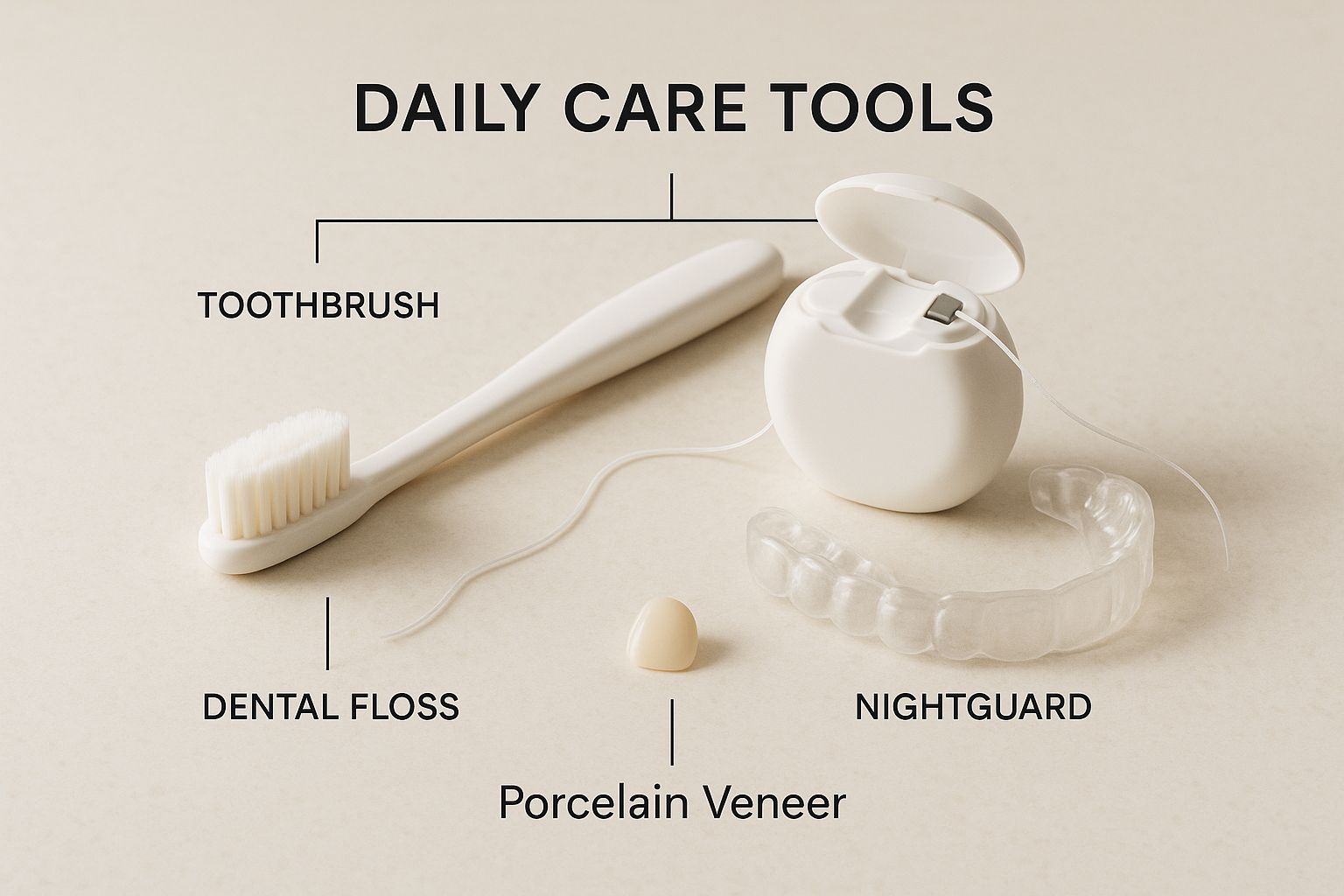
As you can see, simple tools like a soft toothbrush, floss, and a nightguard are your best friends for getting the most life out of your veneers.
Your Daily Oral Hygiene Routine
Once your veneers are in place, the care is up to you. A gentle, consistent oral hygiene routine is the most powerful thing you can do to protect your investment. The best part? Caring for veneers is not complicated. It’s almost the same as caring for your natural teeth.
The main goal is to keep your gums healthy and the edges where the veneers meet your teeth clean. Healthy gums create a tight seal around the veneer. If plaque builds up, you can get gum problems, which can expose the veneer's edge. To understand the problem better, you can learn more about what dental plaque is and why it's so important to control it.
Just follow these simple steps to keep your veneers in great shape:
- Brush Gently: Always use a soft-bristled toothbrush and a non-abrasive toothpaste. Brushing too hard can create tiny scratches on the porcelain over time.
- Floss Daily: This is a must. Flossing removes plaque from between your teeth and along the gumline, where the veneer meets your tooth.
- Keep Your Check-ups: Regular cleanings at Cedar Dental Group allow our hygienists to polish your veneers and let Dr. Chu check them to make sure everything is still perfect.
Lifestyle and Everyday Habits
Your daily habits have a big impact on how long your veneers last. Porcelain is very strong, but it's not indestructible. Certain habits can put too much stress on your veneers.
Your teeth—veneers or not—are meant for eating. They are not tools. Using them to open packages, bite your nails, or chew on pens can risk a chip or break.
Other habits can also be damaging over time. Smoking, for example, can shorten the life of your veneers. Learning about the health risks of smoking cigarettes shows why quitting is good for your veneers and your overall health. Smoking can cause staining along the veneer edges and harm your gums.
If you grind your teeth at night (called bruxism), the constant pressure can wear down or damage a veneer. A custom-fitted nightguard from Dr. Chu is an easy and effective solution. It acts as a cushion for your smile while you sleep. Being mindful of these habits can help your veneers have a long and happy life.
Protecting Your Investment With Proven Aftercare Tips
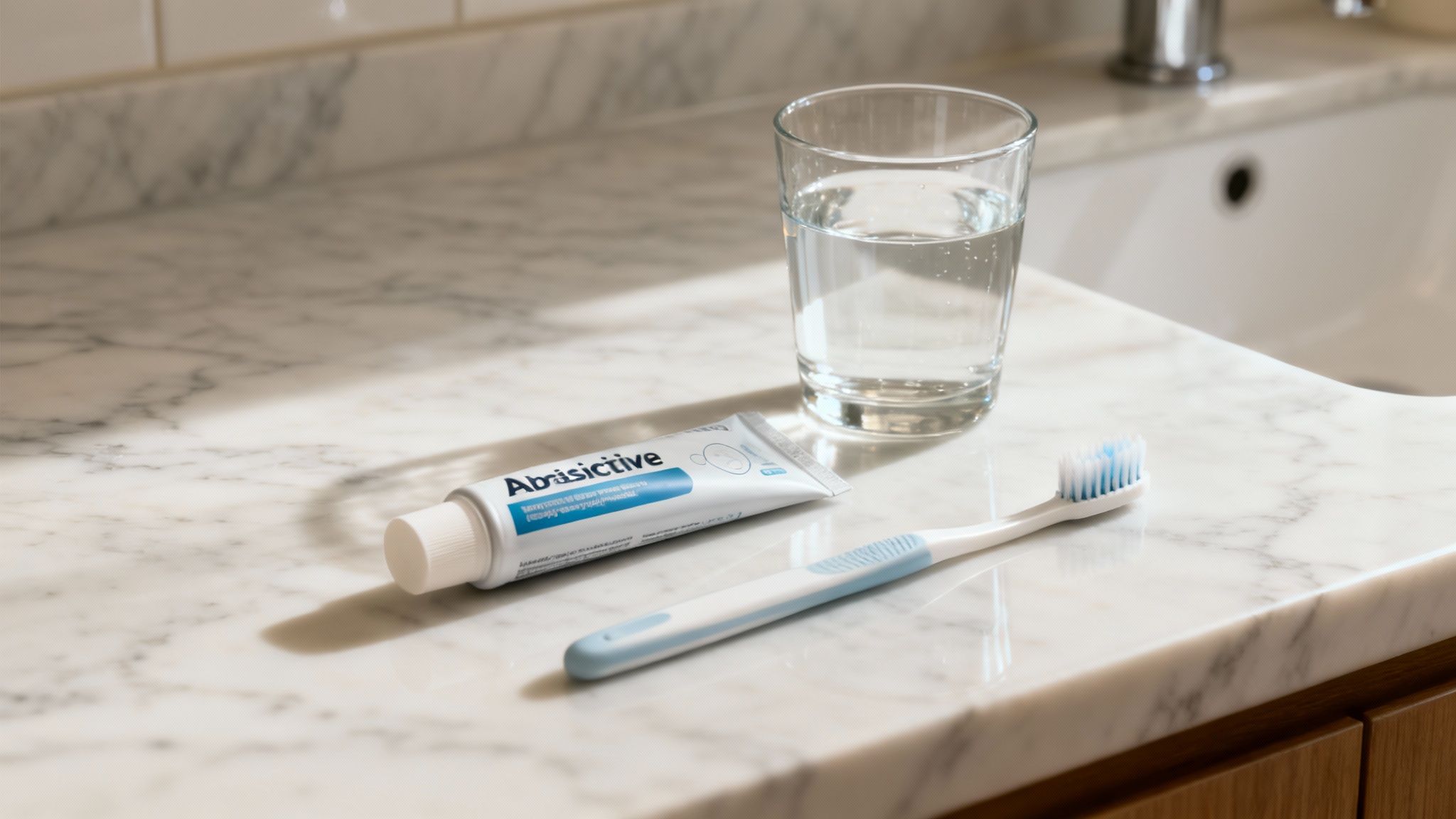
Once your beautiful new veneers are in place, you become the main guardian of your new smile. The great news is that caring for them is simple and fits into your normal daily routine. These are mindful habits that will protect your investment for years to come.
At Cedar Dental Group, we want you to feel confident about maintaining your veneers. By following a few simple tips, you can keep them as brilliant as the day they were placed. This isn't about changing your lifestyle; it's about smart, everyday choices.
The Right Tools for Daily Care
The foundation of long-lasting veneers starts with the right products. Using the right tools is important to avoid damaging the porcelain surface. Abrasive materials can create tiny scratches that dull their shine.
Here’s what you need for your daily routine:
- A Soft-Bristled Toothbrush: A soft brush is tough on plaque but gentle on your veneers and gums.
- Non-Abrasive Toothpaste: Look for gel-based or low-abrasion toothpaste. Avoid whitening toothpastes with harsh particles that can wear down the glaze on your veneers.
- Daily Flossing: Flossing is key for cleaning the space where the veneer meets your tooth and gum line. This prevents plaque buildup that could lead to decay.
This simple toolkit is your first line of defense. It helps keep your veneers polished and the teeth underneath them healthy.
Protecting Your Veneers From Unnecessary Stress
Porcelain is strong, but it isn't indestructible. Just like natural teeth, veneers can chip if they are put under extreme pressure. Often, the biggest problems come from habits you might not realize are harmful.
A custom-fitted nightguard from Dr. Chu is a great way to protect your smile. This is especially true if you clench or grind your teeth at night (bruxism). This soft cushion absorbs the forces of grinding, preventing chips or cracks while you sleep.
It's also worth remembering that your teeth are for chewing food—not for opening packages or biting nails. Using them as tools can easily cause damage.
Mindful Eating and Drinking Habits
You can still enjoy your favorite foods and drinks with veneers. One of the best things about porcelain is that it resists staining. However, a little care can go a long way in keeping them looking their best.
You don't have to give up coffee, tea, or red wine. But it’s a good habit to rinse your mouth with water afterward. This simple step helps wash away staining agents before they can settle along the edges of the veneer.
Also, be careful with extremely hard foods. Biting down on things like ice cubes or nutshells can be a risk for both veneers and natural teeth. It’s all about using common sense. These habits support overall good oral health, which you can learn more about in our guide to preventive dental care.
Do's and Don'ts for Veneer Aftercare
| Do These Things | Don't Do These Things |
|---|---|
| Brush twice daily with a soft brush and non-abrasive paste. | Use your teeth to open packages or bite non-food items. |
| Floss every single day to clean between teeth. | Bite directly into extremely hard foods like ice or nutshells. |
| Wear a custom nightguard if you grind your teeth. | Skip your regular dental check-ups and cleanings. |
| Rinse with water after consuming staining foods or drinks. | Use abrasive or harsh whitening toothpastes. |
Following these simple guidelines will keep your smile looking fantastic for years. With the right care, veneers are a very durable solution.
Recognizing When It's Time for a Replacement
Porcelain veneers are very strong, but they don't last forever. After 15 or 20 years of giving you a great smile, you might see signs that they are getting old. Knowing what to look for helps you stay ahead and keep your smile healthy.
Think of it like the tires on your car. They work perfectly for a long time, but eventually, you see the wear and know it's time for a change. The same logic applies to your veneers. Catching the signs early means no surprises, just a simple way to maintain the smile you love.
Here are the main things to watch for that might mean it's time to schedule a visit with Dr. Chu.
Visible Wear and Damage
The most obvious clue is visible damage. After years of chewing and talking, even the toughest porcelain can start to show its age.
Keep an eye out for these changes:
- Small Chips or Cracks: You might feel a rough edge with your tongue or notice tiny cracks, especially along the biting edge. A small chip can sometimes be smoothed out, but bigger damage means a replacement is needed.
- A Dull or Worn Appearance: Your veneers started with a bright shine. If they now look flat or have lost their shine, it means the protective surface has worn away.
These issues are usually not urgent, but they are clear signs that the material is getting tired.
Changes Around the Edges of the Veneer
Pay close attention to where the veneer meets your tooth and gum line. This area is very important. Changes here can affect both the look and health of your smile.
You might see a faint dark line or stain where the veneer ends. This can happen because the bonding cement underneath has changed color over time. It can also happen if a tiny gap has formed, letting in stains.
A Note on Gum Health: If your gums recede, the top edge of the veneer can be exposed. This creates a line between the veneer and your tooth root. This isn't a failure of the veneer, but a change in your gum health. Understanding what causes receding gums is important for long-term oral care for everyone.
A Loose or Unstable Feeling
Your veneer should feel like a solid part of your tooth. If you notice any movement at all, that's a red flag. It means the bond that holds it in place has weakened.
This is the one sign you need to act on right away.
If a veneer feels loose, call us at Cedar Dental Group immediately. A weak bond can let bacteria get in between the veneer and your tooth, which can cause decay. Getting it checked quickly allows Dr. Chu to protect your natural tooth from damage.
Seeing these signs isn't a reason to worry—it’s just a normal part of the veneer lifecycle. It means you’ve enjoyed a great smile for a long time, and it's time for a refresh.
Your Top Questions About Living with Veneers
Choosing to get veneers is a big decision. It’s smart to have questions about what life will be like with them. We understand. To help you feel completely comfortable, we’ve answered the most common questions we hear from our patients at Cedar Dental Group.
Will veneers ruin my real teeth?
This is the number one concern we hear. When placed by an expert dentist, veneers are perfectly safe for your natural teeth. To get a perfect fit, a very thin layer of enamel is removed from the front of the tooth. This is usually less than half a millimeter. This step ensures the veneer doesn’t look bulky. The tooth underneath stays strong and healthy. The bonded veneer acts like a new, strong shield for your tooth.
Can I still get cavities if I have veneers?
Yes, you can. This is an important point for making them last. The veneer itself is made of porcelain and cannot decay. But the natural tooth it's attached to can still get cavities. A cavity can form along the edges where the veneer meets the tooth, especially at the gum line. This is why your daily hygiene routine is so important. Brushing, flossing, and regular cleanings are your best defense.
What do I do if a veneer chips or falls off?
Even though modern porcelain is very tough, accidents can happen. If a veneer chips or falls off, the first rule is not to panic. If it came off, try to find it and put it in a safe container. Do not try to glue it back on yourself. This can damage both the veneer and your tooth. Your next step should be to call our Renton office. Dr. Chu will want to see you right away. For a tiny chip, it can often be smoothed down. If it falls off, it can often be bonded back on. If it's badly damaged, a new one will need to be made.
Are there foods I have to avoid forever?
For the most part, you can enjoy all the foods you already love. It just comes down to using the same common sense you would to protect your natural teeth. We advise against biting directly into extremely hard things like ice cubes, hard candies, or nutshells with your front teeth. It’s also a good idea to stop using your teeth as tools to open packages or bite nails.
How is replacing a veneer different from getting it the first time?
Replacing an old veneer is usually a simpler and quicker process than getting your first one. The foundation is already there, since your tooth is already prepared. Dr. Chu will carefully remove the old veneer and clean the tooth. Then, we’ll take a new digital scan to create your new veneer. We will place a temporary veneer while the new one is being made. Patients often find the replacement process to be a smooth and easy experience. It’s just a normal step in keeping your smile beautiful for a lifetime.
Ready to improve your smile with a solution built to last? The team at Cedar Dental Group is here to answer all your questions and help you explore your options for cosmetic dentistry in Renton, WA.
Contact us today to schedule your personal consultation with Dr. Chu. Let's start the journey to your most confident smile together. Visit us at https://cedardentalgroup.com.
