

Having a tooth removed is a common dental procedure, but what you do afterward is key to healing well. The main goal is to avoid a painful problem called dry socket. This happens if the blood clot that forms in the empty tooth socket gets knocked out or dissolves too early, leaving sensitive bone and nerves exposed.
Dry socket doesn't happen to everyone. It affects about 2-5% of people after a simple tooth removal, but the risk can be higher for wisdom teeth (Source: Journal of Oral and Maxillofacial Surgery). At Cedar Dental Group, we know you might feel a little anxious about recovery, so we created this guide to help you feel confident and prepared.
This guide shares simple, expert tips for avoiding dry socket, based on the advice Dr. Chu gives our Renton patients every day. We'll cover eight easy steps to protect the healing area, manage discomfort, and make your recovery as smooth as possible.
1. Bite on Gauze to Help the Clot Form
The first step to a great recovery starts right after your procedure. Your dentist will put a small piece of gauze over the empty socket. Your job is to bite down on it gently but firmly.
Holding steady pressure for about 30 to 45 minutes helps stop the bleeding. More importantly, it helps a healthy blood clot form. This blood clot is like a natural bandage that protects the bone and nerves underneath, which is exactly what you need for smooth healing.

How to Use Gauze the Right Way
To help the best possible clot form, follow these simple tips we share with our patients at Cedar Dental Group.
- Keep Pressure Steady: Don’t chew on the gauze. Just apply constant, firm pressure. This helps the blood clot form without being disturbed.
- Change It Only If Needed: You only need to change the gauze if it gets completely soaked with blood. After the first 30-45 minutes, if it’s still bleeding, you can put a new piece in for another 30 minutes. If bleeding continues after that, please give us a call.
- Limit Talking: Try to rest and avoid talking too much for the first hour. Moving your jaw can shift the gauze and bother the clot.
2. Avoid Smoking and Tobacco
If you do one thing to lower your risk of dry socket, make it this: stay away from all tobacco products. Smoking is a top cause of this painful problem because the chemicals in cigarettes harm your body's ability to heal.
The act of smoking or vaping is also a problem. Sucking in creates pressure in your mouth that can easily pull the fragile blood clot out of place. Losing this clot is what causes dry socket, so avoiding tobacco for a few days is a must for a healthy recovery.
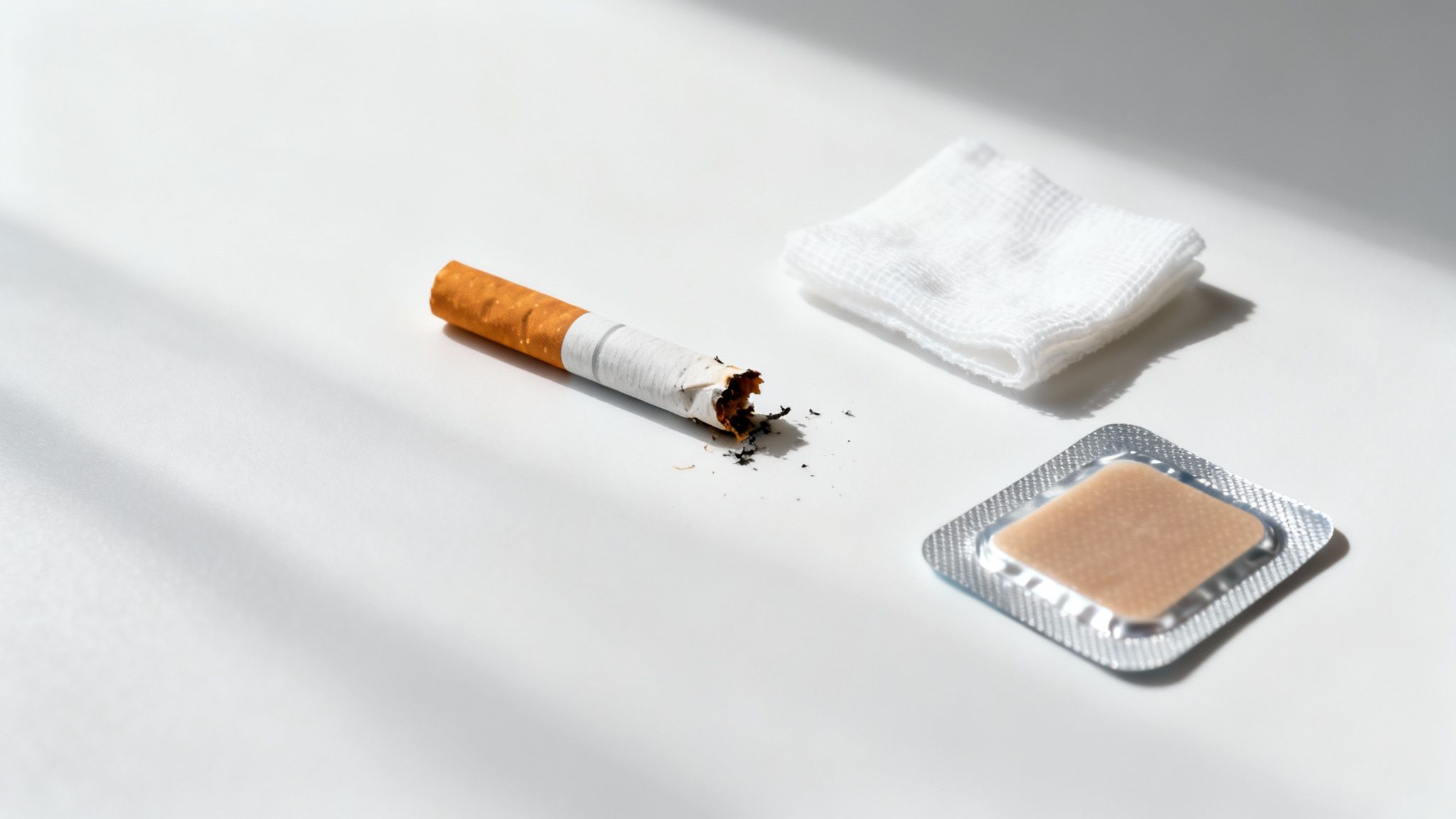
How to Stay Tobacco-Free While Healing
Avoiding tobacco for a few days is one of the most important recovery tips we can offer. Here are the steps our team at Cedar Dental Group recommends.
- Wait at Least 72 Hours: We strongly advise you to avoid all tobacco and nicotine for at least three days after your procedure. For the best result, aim for a full week.
- Plan Ahead with a Patch: If you're a regular smoker, consider using a nicotine patch to help with cravings. Avoid nicotine gum or lozenges, since chewing can also disturb the clot.
- Avoid Secondhand Smoke: Being around others who are smoking can also slow down your healing. Ask friends and family not to smoke near you while you recover. Thinking about the long-term health benefits of quitting smoking can also be a great motivator.
3. Don't Rinse or Spit Forcefully
Keeping your mouth clean is important, but you have to be gentle for the first couple of days. Rinsing too hard or spitting forcefully can create suction in your mouth that pulls the blood clot out of the socket.
Protecting that clot is your main job. When it comes out, the bone and nerves are exposed, which leads to the intense pain of dry socket. Being gentle when you clean your mouth is a simple but powerful way to ensure a smooth recovery.
How to Keep Your Mouth Clean Safely
At Cedar Dental Group, we give our patients specific instructions to keep the area clean without risking the clot.
- No Rinsing for 24 Hours: For the first full day, don't rinse your mouth with anything. This gives the clot the best chance to become strong and stable.
- Start Gentle Salt Water Rinses Later: After 24 hours, you can start cleaning the area. Mix half a teaspoon of salt in a glass of warm water. Gently tilt your head to let the water flow over the socket. Do not swish hard or spit.
- Let Liquid Fall Out of Your Mouth: When you need to get rid of the rinse, just open your mouth and let the liquid fall into the sink. Avoid any strong spitting motion.
- Don't Use a Straw: Using a straw creates the same kind of suction that can dislodge a clot. Avoid straws completely for at least one week.
4. Use Ice Packs for the First 24 Hours
One of the best ways to feel better and help your mouth heal is to use an ice pack. Applying a cold pack to your cheek right after your procedure helps reduce swelling and numb the pain.
The cold helps shrink the blood vessels, which means less swelling around the extraction site. By keeping swelling down, you help protect the blood clot from extra pressure, creating a better environment for healing.

How to Use Ice Packs Correctly
To get the best results from cold therapy, it's important to do it the right way. Our team at Cedar Dental Group shares these tips for a comfortable recovery.
- Use the 20/20 Rule: Apply the ice pack for 20 minutes, then take it off for 20 minutes. This cycle prevents any damage to your skin from the cold.
- Wrap the Ice Pack: Never put ice directly on your skin. Always wrap it in a thin towel first to protect your cheek.
- Target the Right Spot: Place the pack on the outside of your cheek, right over the area where the tooth was removed.
- Be Consistent for the First Day: Using the ice pack on and off for the first 24 hours is the best way to control swelling and feel more comfortable. For extra convenience, you might consider a dedicated large ice bag with a strap.
5. Keep Your Head Elevated
One of the easiest recovery tips is also one of the most effective: keep your head propped up. Using an extra pillow to keep your head elevated helps manage swelling and bleeding, especially for the first few days.
When your head is higher than your heart, it reduces blood pressure at the extraction site. This means less throbbing pain and swelling. Keeping pressure low gives the blood clot a much better chance to stay put, which is key to avoiding dry socket.
How to Use Elevation to Your Advantage
At Cedar Dental Group, we tell patients to be mindful of their posture for the first 72 hours. Here are a few simple tips.
- Use Extra Pillows: When you're lying down or sleeping, use two or three pillows to prop up your head and upper body. The goal is to keep your head comfortably above your heart.
- Sleep on Your Back: For the first few nights, try to sleep on your back. If you sleep on your side, choose the side opposite from the extraction site to avoid putting pressure on it.
- Stay Elevated While Resting: This tip isn’t just for sleeping. Keep your head up while resting on the couch or reading. Lying flat can increase pressure and swelling.
6. Follow Your Medication Plan
Taking your prescribed medication is about more than just managing pain—it's an important part of preventing problems like dry socket. The medicines your dentist gives you work to create a healthy healing environment free from infection and swelling.
Antibiotics help prevent bacteria from getting into the empty socket, while pain relievers like ibuprofen help control swelling that could put pressure on the clot. Think of it as a team effort to protect the healing area. Following your dentist's instructions is a key part of avoiding dry socket.
How to Manage Your Medications Correctly
To get the full benefit of your prescriptions, it's important to take them exactly as directed. Here are the tips we share with our patients at Cedar Dental Group.
- Finish All Your Antibiotics: Even if you start feeling better, you must finish the entire course of antibiotics. Stopping early could let an infection come back and harm the blood clot.
- Stay Ahead of the Pain: Take anti-inflammatory medicine like ibuprofen on a schedule, not just when you feel pain. This helps control swelling before it starts.
- Take with Food: Pain relievers can sometimes upset your stomach. Taking them with a soft snack like yogurt or applesauce can help.
- Avoid Alcohol: Alcohol can interfere with your medications and slow down healing. It's best to avoid it completely until you've finished your medicine and feel recovered.
7. Eat Soft, Cool Foods and Drink Water
What you eat and drink after your procedure can help you heal faster and avoid dry socket. Soft, cool foods give your body the nutrients it needs to repair itself without bothering the fragile blood clot.
Foods like yogurt, smoothies, and applesauce can soothe the area and reduce swelling. Sticking to soft foods also means you won't get hard or crunchy bits stuck in the socket, which could knock the clot out. Staying hydrated by drinking plenty of water is also important for healing.
How to Eat for a Faster Recovery
To make smart food choices that protect your blood clot, follow these tips from Dr. Chu and our team at Cedar Dental Group.
- Choose Healthy Options: Focus on foods that are rich in protein and vitamins. Good choices include scrambled eggs, mashed potatoes, and protein shakes.
- Keep It Cool: For the first day or two, stick to cool or lukewarm foods. Hot foods can increase blood flow to the area and may disturb the clot.
- Drink Plenty of Water: Sip on water throughout the day to stay hydrated. Avoid sugary or fizzy drinks, as they aren't great for healing.
- Slowly Add Other Foods: After a few days, you can start adding semi-soft foods like oatmeal or pasta. Wait at least a week before trying anything crunchy, like chips or nuts.
8. Avoid Heavy Lifting and Exercise
Resting after your tooth is removed is one of the most important things you can do to avoid dry socket. Any activity that gets your heart pumping and raises your blood pressure can dislodge the blood clot that your body needs to heal.
Higher blood pressure can make the area start to bleed again, which can wash the clot away. It's best to take it easy for the first 5 to 7 days to give your body a chance to heal properly. Rushing back to the gym or heavy work can lead to setbacks.
How to Rest for a Smooth Recovery
Here are some tips from our team at Cedar Dental Group to help you balance rest with your daily life.
- Plan for Downtime: Before your appointment, try to arrange your schedule so you can take it easy for at least 2-3 days. The first 48 hours are the most important.
- Avoid Strenuous Activity: This includes jogging, lifting weights, and even heavy housework. Anything that makes you breathe hard is too much for now.
- Listen to Your Body: If you feel any throbbing or see more bleeding after moving around, it's a sign that you need to stop and rest.
- Return to Activity Slowly: After the first week, you can slowly get back to your normal routine. Start with light activities like walking and see how you feel before doing more.
FAQs About Avoiding Dry Socket
1. What is a dry socket?
A dry socket, also called alveolar osteitis, is a painful condition that can happen after a tooth is pulled. It occurs when the blood clot that should form in the empty socket fails to develop, gets dislodged, or dissolves before the wound has healed. This leaves the underlying bone and nerves exposed.
2. How do I know if I have a dry socket?
The main sign of a dry socket is severe, throbbing pain that starts a few days after your tooth extraction. The pain may radiate to your ear, eye, or neck on the same side of your face. You might also notice a bad taste or smell from your mouth and see that the socket looks empty or has visible bone.
3. How long should I wait to smoke after a tooth extraction?
To best avoid dry socket, you should wait at least 72 hours (3 days) before smoking. However, waiting a full week is even better for healing. The sucking motion and the chemicals in smoke are major risk factors for dislodging the blood clot.
4. When can I stop worrying about getting a dry socket?
The risk of developing a dry socket is highest in the first 3 to 5 days after an extraction. After the first week, your risk decreases significantly as the socket begins to heal and fill in with new tissue. By two weeks, the risk is very low.
5. What should I do if I think I have a dry socket?
If you suspect you have a dry socket, contact your dentist or oral surgeon right away. Do not try to treat it yourself. Your dentist will clean the socket and may place a medicated dressing inside to soothe the pain and promote healing.
Your Partner in a Healthy Recovery
Recovering from a tooth extraction is the final step of your procedure, and you play a big part in it. The tips in this guide, from biting on gauze to getting enough rest, are your roadmap to a smooth and comfortable healing process. By following this advice, you can protect the blood clot and greatly lower your risk of dry socket.
Think of your recovery as a team effort between you and your body. Your job is to create the best environment for healing to happen.
- Protect the Clot: This is your #1 priority. Avoiding straws, not smoking, and eating soft foods are all meant to keep the blood clot safe.
- Control Swelling: Using ice packs and keeping your head elevated are simple ways to reduce swelling and discomfort.
- Listen to Your Body: Rest is key. Pushing yourself too soon can cause problems. Give yourself time to heal properly.
Understanding why these steps matter, as Dr. Chu explains to our patients, helps you make choices that lead to a better outcome. Following these tips on avoiding dry socket is your best bet for preventing pain and helping your mouth heal right the first time.
At Cedar Dental Group, we believe that when patients are well-informed, they have better recoveries. Our team is here to give you clear, compassionate guidance every step of the way. If you are looking for a dentist in Renton, WA, who puts your comfort first, contact Cedar Dental Group today to schedule your consultation.
