

When your dentist says you have a "cavity," your next thought is probably about the filling. But what are tooth fillings made out of? The most common materials are composite resin (a tooth-colored mix of plastic and glass), amalgam (a classic silver-colored metal), and even premium options like gold and ceramic.
Choosing the right material depends on where the cavity is, how you want it to look, and your budget. At Cedar Dental Group, we believe in patient-centered care, which means helping you understand your options so you feel confident and comfortable with your treatment.
A Quick Guide To Dental Filling Materials
Finding out you have a cavity can be a little worrying, but it’s one of the most common dental issues people face. In fact, over 90% of adults have had at least one cavity in their lifetime (Source: National Institutes of Health). The good news is that getting a filling is a routine, straightforward procedure that stops decay and restores your tooth’s strength.
Think of filling materials as different tools in a toolbox. Each one is designed for a specific job, and your dentist will recommend the best one for your unique situation.
The Most Common Players
Here are the main materials you'll see in modern dentistry:
- Composite Resin: This is the top choice for a natural look. It's a tooth-colored material that blends right in, making it perfect for teeth that show when you smile.
- Amalgam: You might know this as a "silver filling." It's a very strong and durable metal that dentists have trusted for over a century, especially for back teeth that do a lot of chewing.
- Ceramic: Usually made from porcelain, ceramic fillings are another great cosmetic choice. They match your tooth color and are excellent at resisting stains.
- Gold: While less common today, gold is the undisputed champion of durability. A gold filling can last for decades, making it a high-quality, long-term investment in your oral health.
The choice often comes down to balancing strength with appearance, and we're here to help you navigate that decision.
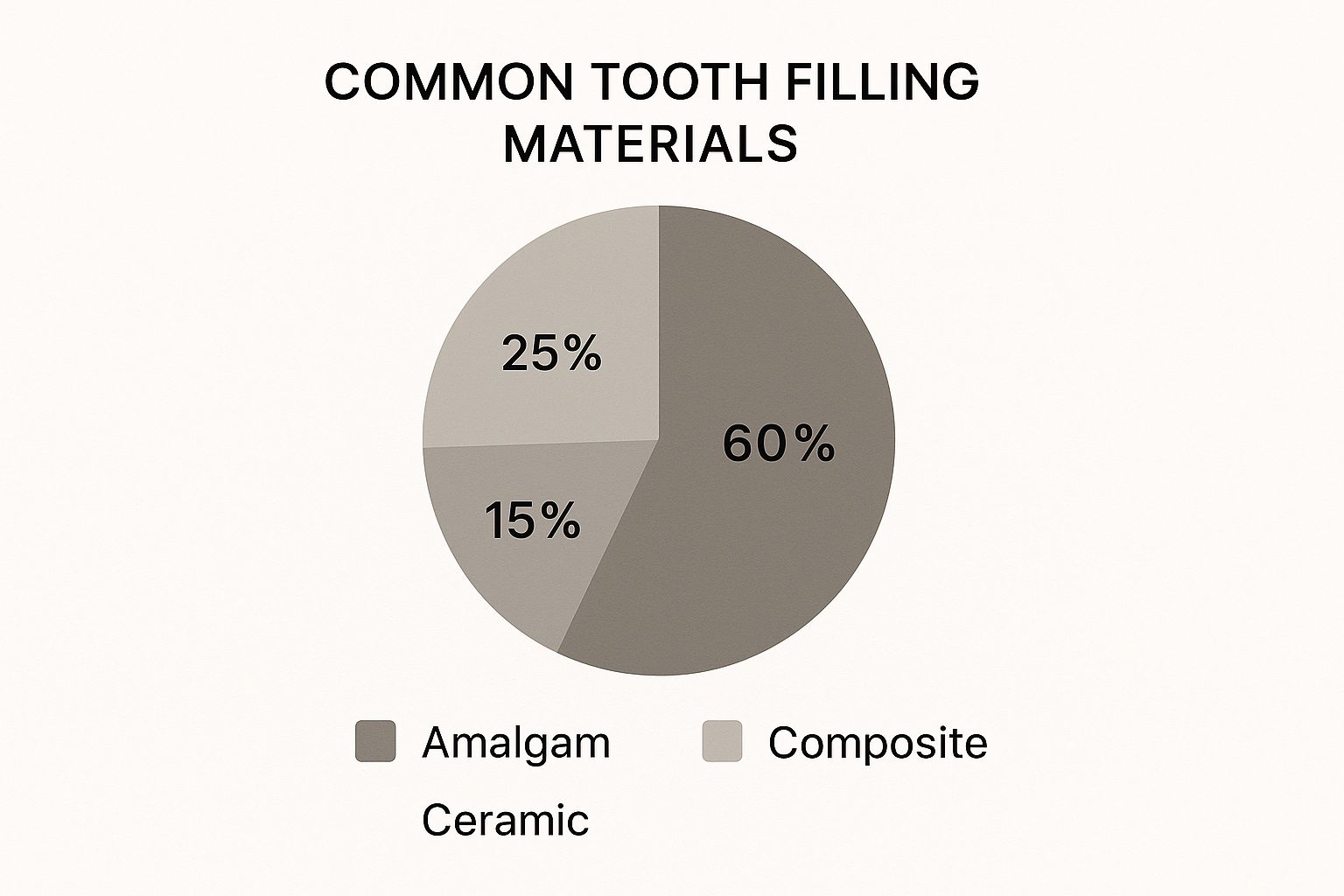
As you can see, traditional amalgam is still a workhorse in dentistry, but aesthetic options like composite resin are incredibly popular for visible teeth.
Dental Filling Materials At A Glance
To make it easier to compare, here’s a quick chart of the most common filling types.
| Material | Appearance | Best For | Average Lifespan |
|---|---|---|---|
| Composite Resin | Tooth-colored | Front teeth, small-to-mid-sized cavities | 5-10 years |
| Amalgam (Silver) | Metallic silver | Back molars, large cavities | 10-15 years |
| Ceramic (Porcelain) | Tooth-colored | Visible teeth, inlays and onlays | 10+ years |
| Gold | Yellow gold | Back molars, patients who grind teeth | 15-30+ years |
Understanding these options is the first step toward making an informed choice for your smile. If you want to dive deeper, you can learn more about the different types of tooth fillings in Renton and have a confident conversation with your dentist about what’s best for you.
The Surprising History of Filling Cavities
The idea of filling a cavity might seem modern, but it’s a practice with a history stretching back thousands of years. Looking at this long history shows just how far dentistry has come, especially in making treatments both comfortable and safe for patients.
The earliest known attempts were surprisingly creative. Archaeologists have found evidence that nearly 13,000 years ago, people used bitumen—a type of natural tar—to patch up holes in their teeth. Later on, beeswax became another early filling material. These were simple fixes, but they show that humans have always understood the importance of trying to save a damaged tooth.
The Rise of Metal Fillings
For centuries, people experimented with all sorts of materials. The big breakthrough came with the introduction of metal. The idea of using a mercury-based mixture to fill teeth was first recorded in Chinese medical texts way back in the Tang dynasty in 659 AD. This early innovation set the stage for what would come next.
Fast forward to the 19th century, and silver amalgam—a mix of mercury, silver, tin, and copper—became the standard. It was tough, reliable, and more durable than anything else available. While we have many more advanced options today, amalgam's legacy is undeniable and paved the way for modern restorative dentistry.
A Note on Modern Dentistry: The journey from beeswax and tar to high-tech composite resins is incredible. Today, our focus isn't just on patching a hole; it's about restoring the tooth with materials that are safe, durable, and look completely natural. Your comfort and confidence are our top priorities.
Of course, the best filling is no filling at all. Preventing decay in the first place is always the goal. You can learn more by understanding what causes tooth decay and how to keep your smile healthy.
Composite Resin: The Natural-Looking Filling
If you've ever worried about a filling standing out when you smile, composite resin is the solution you're looking for. This tooth-colored material is the top choice in modern dentistry because it blends in so perfectly that it's nearly impossible to spot. It's an ideal choice for cavities, especially on front teeth where looks matter.
Unlike old metal fillings that are packed into a cavity, composite resin actually bonds directly to your tooth. This is a game-changer. It means your dentist can remove only the decayed part of the tooth and save more of your healthy tooth structure. The result is a seamless repair that also strengthens the tooth.
What's Inside a Composite Filling?
So, what is this chameleon-like material made of? It’s a smart blend of ingredients designed to look and feel like a natural tooth.
- Plastic Resin: This is the base—a moldable material that lets your dentist sculpt the filling to fit the exact shape of your tooth.
- Fine Glass Particles: Tiny glass particles are mixed into the resin. This is what gives the filling its strength, durability, and the subtle, natural look of tooth enamel.
This combination creates a restoration that's tough enough for everyday use while also looking completely natural.
The Art of the Perfect Match: One of the best things about composite resin is how we can customize the color. We have a wide range of shades to work with, allowing us to find the perfect tone that disappears into your smile.
More Than Just a Cavity Fix
The versatility of composite resin is one of its biggest strengths. Because it bonds so well and looks so good, we also use it for cosmetic improvements.
We can use it to repair small chips or cracks, close minor gaps between teeth, or even reshape a tooth that's slightly out of line. It’s a fast, simple way to make a big impact on your smile, often in just one visit. With good home care—like regular brushing and flossing—that beautiful composite restoration will keep you smiling for years to come.
Amalgam Fillings: A Time-Tested and Durable Option

When you think of a traditional dental filling, you’re probably picturing amalgam. Often called "silver fillings," these have been a trusted solution for over 150 years. Their long history is built on one core quality: exceptional strength.
This incredible durability makes amalgam a fantastic choice for molars. Those back teeth handle all the heavy chewing, and amalgam is designed to withstand that constant pressure for years.
The material itself is a tough alloy, which is a mix of metals. It’s made from liquid mercury (about 50%) mixed with a powder of silver, tin, and copper. This combination creates a stable, rock-solid material that was the top choice in dentistry for decades. While newer tooth-colored options have become more popular, amalgam remains a reliable and affordable solution. You can read more about the evolution of dental fillings from PilchuckDentistry.com to see how far we've come.
Weighing the Pros and Cons of Amalgam
Like any dental material, amalgam fillings have their own benefits and drawbacks. It’s always best to understand both sides before making a decision with your dentist.
The Upsides to Amalgam:
- Built to Last: Amalgam fillings are very tough. With good care, they can easily last 10 to 15 years, and sometimes much longer.
- Budget-Friendly: They are generally the most affordable filling material, making dental care more accessible.
- Proven Performance: With over a century of use, their reliability and safety are very well-documented.
A Quick Word on Safety: Some people have concerns about the mercury in amalgam fillings. However, major health organizations, including the American Dental Association (ADA), have reviewed the evidence and consider dental amalgam to be a safe and effective material. The mercury forms a chemical bond with the other metals, creating a stable material where the potential for mercury release is extremely low and not considered a health risk.
The most obvious downside is its appearance. The metallic color stands out, which is why amalgam is almost never used for visible front teeth. But for a powerful, long-lasting fix on a back molar, amalgam is still a very dependable choice.
Gold And Ceramic: The Premium Filling Choices

When the goal is top-tier durability or a perfectly seamless look, gold and ceramic fillings are in a class of their own. You can think of them as a long-term investment in your smile, offering benefits that standard fillings can't match.
Gold has been a dental material for centuries, and for good reason. It's incredibly tough, gentle on your gums, and can last for decades—it's not uncommon for a gold filling to last 15 years or more. While its metallic shine isn't for everyone, its sheer strength makes it a fantastic option for back molars that do all the heavy chewing.
The Beauty And Brawn Of Ceramic
For patients who want both strength and a beautiful appearance, ceramic is the clear winner. Usually crafted from high-grade porcelain, ceramic fillings are a popular answer for what are tooth fillings made out of when looks are a top priority.
It's easy to see why people love them:
- Flawless Color Matching: Porcelain can be custom-tinted to the exact shade of your surrounding teeth, making the filling practically invisible.
- Stain-Resistant Surface: Unlike some materials that can yellow over time, ceramic resists stains from coffee, tea, and red wine.
- Impressive Durability: Modern porcelain is remarkably strong and holds up well under daily chewing pressure, giving you a reliable restoration for years.
Getting a gold or ceramic filling is typically a two-visit process. At the first appointment, we prepare the tooth and take a detailed impression. That impression goes to a dental lab where your custom filling is made. On your second visit, we bond the finished piece securely into place for a perfect fit.
These premium materials aren’t just for small cavities; they're often the best choice for larger repairs like inlays, onlays, and even full crowns. You can see how these options rebuild a tooth’s function by checking out our page on dental crowns and bridges in Renton.
While they cost more upfront, their long lifespan and beautiful results provide fantastic long-term value for your smile.
How To Choose The Right Filling For Your Needs
With a few great materials to choose from, picking the right one might feel like a big decision. Don't worry, we are here to walk you through it. At Cedar Dental Group, our job is to explain your options clearly so you can feel confident in your choice.
The best filling for you comes down to a few key factors.
Location, Location, Location
First, where is the cavity? A molar in the back of your mouth does all the heavy chewing, so you'll want something very durable like amalgam or gold. But for a front tooth that everyone sees, looks are the priority. That's where tooth-colored composite resin or ceramic really shine.
Your Priorities And Budget
Next, we'll talk about what matters most to you.
- Appearance: If you want the repair to be invisible, composite or porcelain are the way to go. They blend seamlessly with your natural tooth enamel.
- Longevity and Cost: If you're focused on getting the most durable, cost-effective fix for a tooth that isn't in your smile line, amalgam is a very reliable option.
The goal is always to find the sweet spot where strength, looks, and cost all line up with your needs. We're here to help you weigh the pros and cons, with no pressure.
To help you see how this works, here’s a quick guide based on common situations.
Which Filling Is Right For You?
| Patient Priority | Best Material Choice | Why It Works |
|---|---|---|
| "I want my front tooth fixed, and it has to look perfect." | Composite Resin or Porcelain | These materials are tooth-colored and can be perfectly matched to your natural shade, making the repair virtually invisible. |
| "I need a filling for a back molar and want it to last forever." | Gold or Amalgam | Both offer exceptional durability and can withstand the intense chewing forces in the back of the mouth for 15+ years. |
| "I'm on a tight budget but need a strong filling for a molar." | Amalgam | This is the most cost-effective and durable option, providing a long-lasting restoration without a higher price tag. |
| "I have a small cavity and want to save as much tooth as possible." | Composite Resin | Composite bonding requires less removal of healthy tooth structure than amalgam, preserving more of your natural tooth. |
Choosing a filling isn't just about patching a hole. It's about restoring your tooth's health and function for years to come.
This process is a key part of restorative dentistry, a field focused on repairing damage and getting your smile back to its best. Your dentist in Renton, WA, will be your partner, helping you choose the material that fits your health and smile goals.
Frequently Asked Questions About Tooth Fillings
It’s completely normal to have questions before getting a filling. Here are answers to some of the most common ones we hear at Cedar Dental Group.
Is getting a filling painful?
No, it shouldn’t be. Your comfort is our top priority, so the first thing we do is numb the area with a local anesthetic. You won't feel any pain during the procedure. It's common to have some mild sensitivity for a day or two afterward, but this fades quickly.
How long do dental fillings last?
The lifespan of a filling depends on the material used and your oral hygiene. Here’s a general guide:
- Composite resin fillings typically last 5 to 10 years.
- Amalgam (silver) fillings are more durable, often lasting 10 to 15 years.
- Gold and ceramic are the most long-lasting, often lasting well over 15 years with proper care.
Can I replace my old metal fillings?
Yes, you can. Many patients choose to replace old, dark amalgam fillings with newer, tooth-colored options. This might be for cosmetic reasons or because an old filling has started to wear down. Your dentist can look at your existing fillings and let you know if replacement is a good idea.
Are silver (amalgam) fillings safe?
Yes. Major health organizations, including the American Dental Association (ADA), have confirmed that dental amalgam is a safe and effective filling material. The mercury is chemically locked into the other metals, creating a stable material that is a reliable choice for restorations.
How do I take care of a new filling?
Caring for a new filling is easy—just treat it like your other teeth. Stick to a great routine of brushing twice a day, flossing daily, and visiting us for regular check-ups. Good preventive dental care will help protect all your teeth, filled or not, for years to come.
Ready to restore your smile? The caring and professional team at Cedar Dental Group is here to help. Contact us today to schedule your consultation in Renton, WA.
