

Your tooth enamel is the hardest material in your body, but it isn't indestructible. This strong outer layer is a shield, protecting your teeth from daily wear, extreme temperatures, and harmful bacteria that cause cavities. However, a process called enamel erosion can slowly wear away this protective layer. This can lead to tooth sensitivity, yellowing, and a higher risk of dental problems.
The good news is that you can prevent most enamel erosion with the right habits and professional care. This guide will show you the best ways to prevent enamel erosion and protect your smile. We will cover simple, powerful changes you can make to your daily routine, from what you eat to how you brush. Think of this as your guide to keeping your smile bright and healthy for a lifetime. Let’s dive into how you can defend your enamel.
What Is Enamel Erosion and Why It Matters
Tooth enamel is the hard, visible outer layer of your teeth. Its main job is to protect the softer, more sensitive layer underneath, called dentin. When enamel erodes, this protective shield thins out, leaving your teeth vulnerable.
Acids from foods, drinks, and even your own stomach are the primary cause of erosion. These acids soften the enamel, and over time, it can be worn away by chewing or brushing. Unlike a broken bone that can heal, once enamel is gone, your body cannot regrow it. This is why prevention is so important for your long-term dental health.
Losing enamel can lead to several problems:
- Tooth Sensitivity: As the dentin becomes exposed, you may feel pain when consuming hot, cold, or sweet foods and drinks.
- Discoloration: Dentin is naturally more yellow than enamel. As enamel thins, this yellow layer shows through, making your teeth appear discolored.
- Increased Risk of Cavities: A thinner enamel shield makes it easier for bacteria to create cavities.
- Chips and Cracks: Weakened teeth are more likely to chip or crack.
Everyday Habits That Help Protect Enel
1. Limit Acidic Foods and Beverages
One of the most effective ways to protect your smile is to be mindful of what you eat and drink. Your enamel's biggest enemy is acid. When you consume acidic foods and drinks, they soften the enamel, making it easier to wear away.
This process is measured on the pH scale. Anything with a pH level below 5.5 can start to dissolve your enamel (Source: Journal of the American Dental Association). Limiting how often you expose your teeth to high-acid items is key. For instance, studies show that simply replacing a daily soda with water can dramatically reduce enamel loss.
You don't have to give up all your favorite acidic foods, but eating them smartly makes a big difference. Try to have acidic items with a main meal instead of snacking on them all day. This limits the time your teeth are under an acid attack.
Here are a few tips:
- Use a straw when drinking acidic beverages like soda, sports drinks, or fruit juice. This helps the liquid bypass your front teeth.
- Pair with neutralizing foods. Follow an acidic item with a piece of cheese or a glass of milk to help balance the acids in your mouth.
- Rinse with water right after consuming something acidic to wash away the harmful substances.
The chart below shows how common drinks compare to the pH level where enamel starts to break down.
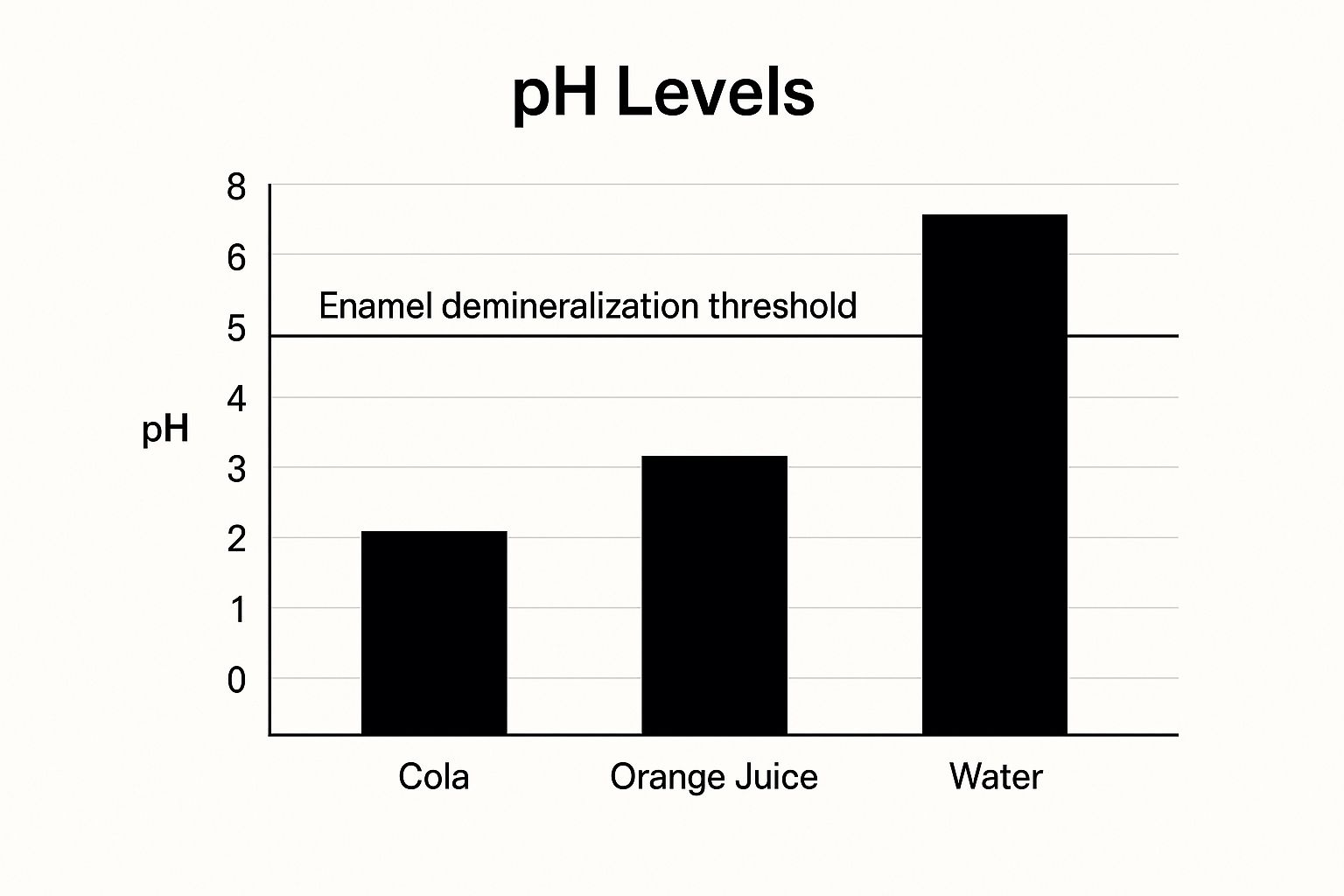
As you can see, drinks like cola and orange juice are well below the critical pH 5.5 level. This puts your enamel at risk. Understanding these differences helps you make better choices for your dental health. You can learn more about how to prevent cavities on cedardentalgroup.com for a deeper look at this topic.
2. Wait to Brush After an Acidic Meal
It may sound strange, but one of the best ways to prevent enamel erosion is to avoid brushing your teeth right after eating or drinking something acidic. Your first thought might be to scrub away the acid, but your enamel is actually at its weakest right after an acid attack. The acid softens the enamel, and brushing can scrape away this weakened layer.
Waiting allows your saliva, your body’s natural defense, time to work. Saliva helps neutralize the acids and starts to re-harden the enamel surface. Studies from dental researchers have shown this simple pause can significantly reduce enamel loss.
Give your enamel a 30 to 60-minute recovery window after exposure to acids from foods like citrus fruits or drinks like coffee. This simple delay is a key way to protect your smile from extra wear.
Here’s how to make this a habit:
- Rinse with water. Instead of brushing, swish plain water in your mouth right after an acidic meal or drink to help wash away the acids.
- Chew sugar-free gum. This helps you produce more saliva, which speeds up the acid-neutralizing process.
- Set a timer. Use your phone to set a 30-minute timer as a reminder to wait before you brush.
By waiting, you let your mouth’s natural defenses work. This ensures that when you do brush, you are cleaning and strengthening your enamel, not accidentally harming it.
3. Stay Hydrated with Water
Staying hydrated with water is one of the simplest and most powerful ways to prevent enamel erosion. Good hydration is essential for producing enough saliva, which is your mouth’s first line of defense against acid. Saliva washes away food particles, neutralizes acids, and contains minerals like calcium that help strengthen your enamel.
When you are dehydrated, your saliva flow decreases. This creates a dry environment where acids can do more damage. Research from the American Dental Association shows a clear link between good hydration and better oral health.
 oral health.” />
Drinking enough water throughout the day helps keep your saliva levels optimal. This is especially important after meals when acid levels are highest.
Here are some tips to make hydration a priority:
- Drink water after eating acidic foods or drinks to quickly rinse away harmful residues.
- Carry a reusable water bottle as a reminder to sip water all day, not just when you feel thirsty.
- Choose tap water when you can. Most tap water contains fluoride, a mineral that helps harden weakened tooth enamel.
By making water your main drink, you avoid the direct acid damage from other beverages and support your mouth’s natural protective systems. This simple change is one of the most effective ways to protect your enamel for the long term.
4. Use Fluoride Toothpaste
Using fluoride is one of the most powerful, science-backed ways to prevent enamel erosion. Fluoride is a natural mineral that strengthens your teeth and makes them more resistant to acid attacks. It helps rebuild weakened tooth enamel in a process called remineralization.
When you use fluoride, it becomes part of your enamel's structure, making the surface harder and more resistant to acid. The American Dental Association has long recommended fluoride. Studies show that communities with fluoridated water have up to 25% less tooth decay (Source: Centers for Disease Control and Prevention).
To get the most out of this protective mineral, it’s important to use it correctly and consistently. Here are some tips:
- Choose the right toothpaste. Use a toothpaste with fluoride. Most adult formulas have the right amount.
- Don't rinse right away. After brushing, spit out the extra toothpaste but avoid rinsing with water immediately. This lets the fluoride stay on your teeth longer.
- Consider a fluoride mouthwash. For extra protection, use a fluoride mouthwash once a day, but not right after brushing.
5. Practice Proper Brushing Technique
How you brush your teeth is just as important as how often you do it. Brushing is key for removing plaque, but brushing too hard can damage your enamel. This is called toothbrush abrasion, and it can wear down the enamel over time, exposing the sensitive layer underneath.
The goal is to gently clean your teeth, not scrub them aggressively. One of the best ways to protect your smile is to use a technique that keeps your tooth structure safe while removing harmful bacteria.
Here are some tips for proper brushing:
- Use a soft-bristled brush. Always choose a toothbrush with soft bristles to be gentle on your enamel and gums.
- Apply gentle pressure. Use just enough force to feel the bristles on your teeth. Many electric toothbrushes now have pressure sensors to help.
- Angle the brush. Hold your toothbrush at a 45-degree angle to your gum line and use short, gentle, circular strokes.
- Replace your brush regularly. Get a new toothbrush every 3-4 months, or sooner if the bristles look frayed.
Brushing too hard is a common cause of tooth sensitivity. Worn enamel can no longer protect the delicate nerves inside the tooth. You can learn more about what causes tooth sensitivity on cedardentalgroup.com to understand this connection better.
When to See a Dentist About Enamel Loss
While good daily habits are your first line of defense, it's important to know when to seek professional help. Your dentist can spot the early signs of enamel loss that you might miss. Catching it early can stop the problem from getting worse.
Look for these early warning signs:
- Sensitivity: A new or worsening sensitivity to hot, cold, or sweet things.
- Discoloration: A yellowish tint to your teeth as the underlying dentin shows through.
- Rounded or Smooth Edges: The edges of your teeth may look smooth, shiny, or rounded.
- Small Dents: You might notice small dents, known as cupping, on the chewing surfaces of your teeth.
If you notice any of these signs, it's time to schedule a dental visit. Early action can make a huge difference in preserving your natural teeth and preventing the need for more complex treatments.
Cedar Dental Group’s Preventive Care Approach
At Cedar Dental Group, we focus on preventing problems before they start. Our warm and professional team is dedicated to helping you protect your enamel for the long run. We believe that patient-centered care and education are the keys to a lifetime of healthy smiles.
Routine Exams and Cleanings
Regular dental checkups are about more than just cleaning your teeth. They are a critical part of preventing enamel erosion. During your visit, we remove tough plaque and tartar that you can't get rid of at home. Dr. Susan Chu will also carefully check for any early signs of enamel wear.
This proactive approach allows us to catch issues before they become serious. We can provide personalized advice to address the root cause of any erosion, whether it’s related to your diet or a condition like acid reflux.
Personalized Oral Hygiene Plans
We understand that every patient is unique. That's why we don't believe in one-size-fits-all advice. Dr. Susan Chu takes the time to provide personalized education, helping you understand your specific risk factors.
Based on your needs, we can recommend the best products and techniques to protect your teeth. Whether it’s a specific type of fluoride toothpaste, a custom night guard for teeth grinding, or tips for managing acid exposure, we create a plan just for you. Our goal is to empower you with the knowledge and tools to maintain your dental health for years to come.
At our convenient Renton, WA office, we make getting the care you need easy and comfortable. We accept most PPO insurance plans and offer flexible financing through Cherry for any restorative treatments. Your health and comfort are our top priorities.
Frequently Asked Questions (FAQs)
1. Can you reverse enamel erosion?
Once tooth enamel is completely gone, it cannot be regrown. However, if the enamel is only weakened, it can be strengthened and remineralized with fluoride treatments and proper oral hygiene.
2. What are the worst foods for enamel erosion?
The worst foods and drinks are highly acidic. This includes sodas, sports drinks, citrus fruits (like lemons and oranges), and sour candies. Limiting these is a great way to protect your teeth.
3. Does an electric toothbrush cause more enamel erosion?
Not necessarily. When used correctly, an electric toothbrush can be very effective and safe. Many models have built-in pressure sensors that alert you if you are brushing too hard, which can actually help prevent erosion.
4. How can I tell if my enamel is eroding?
Common signs include increased tooth sensitivity, a yellowish appearance of the teeth, and a smooth, shiny surface on the teeth. If you notice these symptoms, it's best to see a dentist.
5. How often should I get a dental checkup to monitor my enamel?
Most adults should see their dentist for a checkup and cleaning every six months. This allows your dental team to monitor the health of your enamel and catch any signs of erosion early.
Ready to take control of your dental health and master the best ways to prevent enamel erosion and protect your smile? Partner with a team that puts your long-term wellness first. Schedule your comprehensive consultation with Dr. Susan Chu at Cedar Dental Group in Renton, WA, today and let us help you keep your smile strong and beautiful for years to come.
