
Direct Answer: In Washington, PPO plans often pay part of a gum graft when the chart documents recession depth, root exposure, or sensitivity. Grafts requested mainly for appearance are usually denied.
The first question I hear on the phone almost every day is some version of “do you take my insurance?” Roughly one in five of our calls starts there, and Delta Dental PPO is the plan people name most often in Renton and around South King County.
The second question, usually right behind it, is harder to answer in ten seconds: will my plan pay for a gum graft? The honest answer is that it depends less on your plan and more on what your chart says about why you need one.
That surprises people. Two patients with the same insurance card and the same receding gums can get two different answers, and the difference usually comes down to documentation and coding. Here is how that actually works, and what you can ask before treatment starts.
Why Gum Graft Insurance Coverage in Washington Is Not a Simple Yes or No
Most dental benefits are built around categories. Cleanings and exams are preventive. Fillings and extractions are basic. Crowns, implants, and periodontal surgery usually land in the major category, which typically pays a smaller share after a deductible.
Gum grafting sits in a spot that confuses people because it can be read two different ways. Insurers separate treatment that protects the tooth from treatment that improves how the gumline looks.
When the record shows measurable recession, exposed root surface, sensitivity, or a pattern of the recession getting worse over time, plans commonly pay a portion. When the record is thin, or it reads as an aesthetic request, the claim is far more likely to come back denied.
The procedure in the chair can be identical. What changes is the story the paperwork tells. We wrote more about that split in Is a Gum Graft Cosmetic, Medical, or Both?, and it is worth reading before you agree to anything.
Most patients have no idea this distinction exists. They assume the plan either covers grafting or it does not, and they find out otherwise when the explanation of benefits shows up.
What an Insurer Actually Looks For in the Record
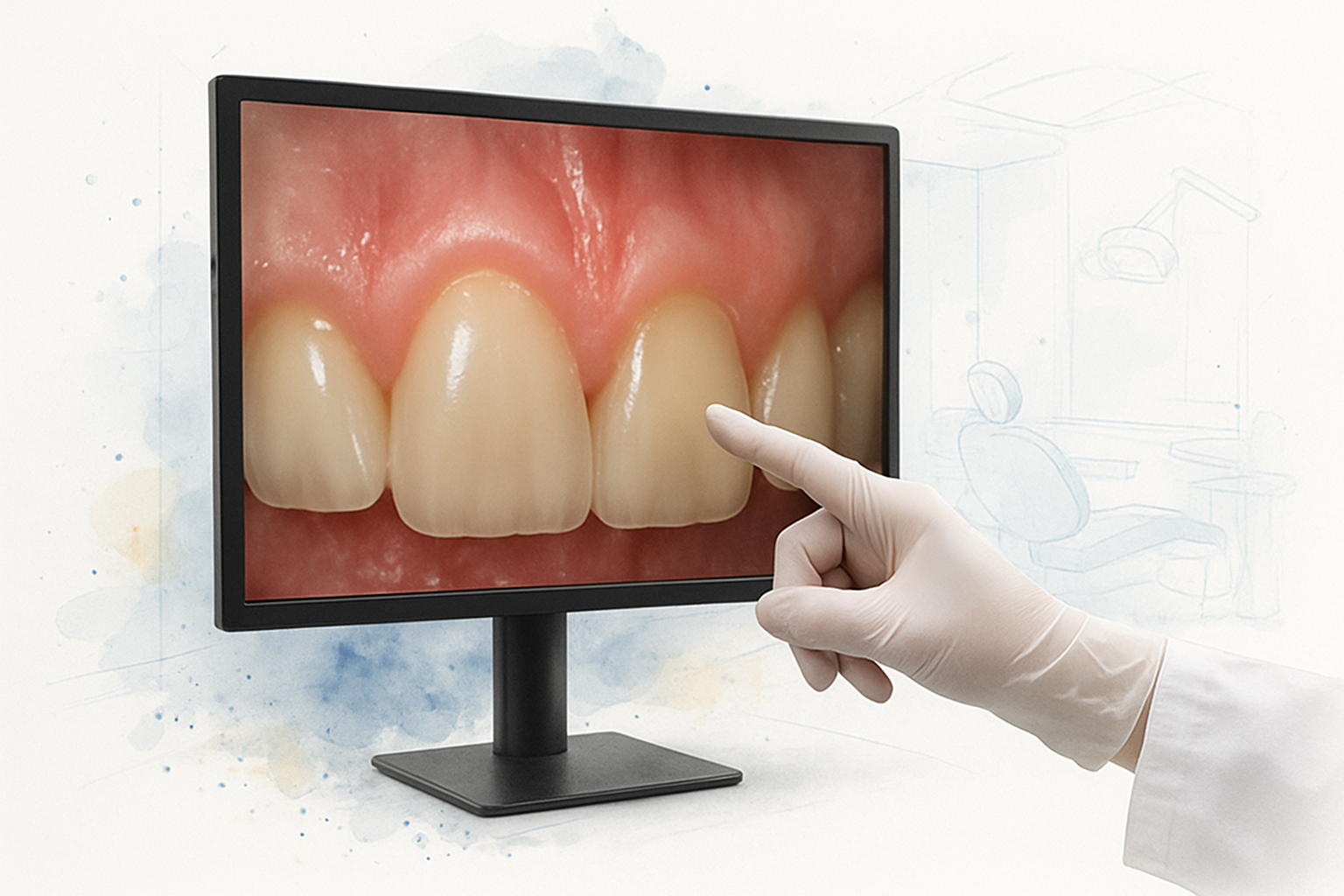
A periodontist does not just write “patient has recession” and send it in. The claim reviewer is looking for specific, measurable findings that support treating the site.
The items that carry the most weight are usually:
- Recession depth in millimeters, measured at each affected tooth with a periodontal probe
- Documented root exposure, meaning the root surface is uncovered and no longer protected by enamel
- Reported sensitivity, especially to cold, air, or brushing
- Evidence of progression, such as a comparison to measurements from an earlier visit
- Thin or missing attached gum tissue, which makes the site fragile and harder to keep clean
- Radiographs and intraoral photos of the affected teeth
If you have had cold sensitivity for a while, that detail matters more than most people realize. It is a clinical symptom, not a complaint, and it belongs in the chart. Our post on cold sensitivity and exposed roots walks through why.
This is also why a rushed exam works against you. Measurements from a single site with no history behind them give the reviewer very little to approve.
Coverage Outcomes You Are Likely to See
This is general market context, not a promise about your specific plan. Every policy is written differently, and your benefits are the final word.
| Situation | How It Is Usually Read | Typical Coverage Outcome |
|---|---|---|
| Recession measured at 3mm or more with root exposure and cold sensitivity | Treatment of an active clinical problem | Often partially covered under major services |
| Recession that has clearly deepened between visits | Documented progression | Commonly approved with strong records |
| Graft placed to build tissue around a planned implant site | Depends on plan language and implant coverage | Mixed, pre-authorization matters most |
| Even gumline requested with no measurable recession or symptoms | Aesthetic request | Usually denied |
| Recession noted but no probe depths, photos, or history submitted | Insufficient documentation | Frequently denied or delayed for more information |
The Billing Code Signals Intent to the Insurer
Soft tissue grafting is not one code. There is a small family of CDT codes, and the one selected describes the kind of graft performed and how many teeth are involved.
You may see codes like these on a treatment plan:
- D4270 for a pedicle soft tissue graft, where nearby tissue is moved over the exposed area
- D4273 for an autogenous connective tissue graft, using tissue from beneath the surface of your own palate
- D4277 for a free soft tissue graft at the first tooth or position in a graft site
- D4278 for each additional neighboring tooth in that same site
The code has to match the procedure and the diagnosis behind it. When the code, the probe depths, and the narrative all line up, the claim reads as one consistent story. When they do not, it gets kicked back.
This is a practical thing you can ask about. Before treatment, ask which code will be submitted and whether a pre-authorization will be sent first. Researchers by nature, the patients we see from Renton, Kent, and Newcastle tend to appreciate knowing that the answer exists before the drill ever comes out.
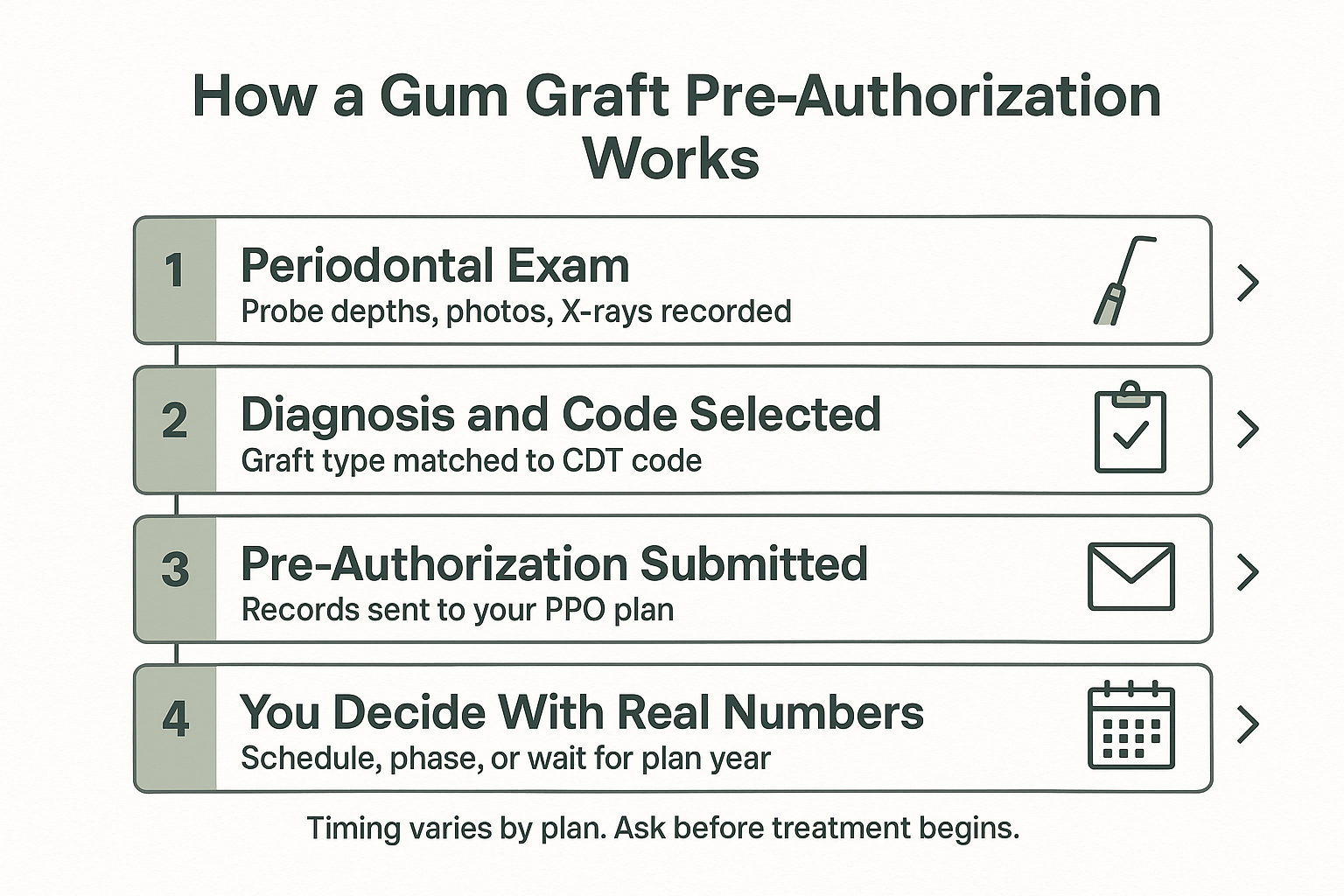
How a Gum Graft Pre-Authorization Usually Moves
Pre-authorization is a written estimate from your plan based on the records submitted. Here is the sequence most patients go through.
What to Ask Before Treatment Begins
You do not need to be an expert on benefits. You just need to ask a handful of pointed questions and get the answers in writing.
- Will you send a pre-authorization before we schedule the graft?
- What CDT code will be submitted, and how many teeth are included?
- Are the probe depths and photos going in with the claim?
- What is my remaining annual maximum, and when does my plan year reset?
- Does my plan have a waiting period for major services?
- If the plan denies it, what is my out of pocket estimate?
On cost, I will not quote you a number I cannot stand behind. Fees vary by how many teeth are grafted, which graft technique is right for the site, and whether the work is done in one visit or phased.
What I can tell you is that PPO annual maximums in Washington are often modest, and a graft can absorb a good share of one. Splitting treatment across two plan years is a real option when the recession is stable enough to allow it. How Dental Insurance Works in Washington, and Where It Falls Short covers that timing question in more detail.
For an exact figure, call the office with your plan information. We verify benefits before treatment, not after.
If the Claim Comes Back Denied
A denial is not always the end of the conversation. Plans sometimes deny for missing information rather than for the procedure itself.
When that happens, the usual next step is a resubmission with additional documentation, such as clearer photos, updated probe measurements, or a narrative explaining why the site needs treatment. That second submission succeeds more often than people expect.
If you believe a denial was handled unfairly, Washington residents can review their appeal rights through the Washington State Office of the Insurance Commissioner. Knowing the process exists takes some of the pressure off the decision.
And if coverage simply is not there, you still have choices. Phasing treatment, financing, or monitoring stable recession with closer follow-up are all reasonable paths depending on what the exam shows.
Frequently Asked Questions About Gum Graft Insurance Coverage
Does Delta Dental PPO cover gum grafting in Washington?
Many Delta Dental PPO plans include coverage for periodontal surgical procedures, and gum grafting can qualify when the records document recession depth, root exposure, or sensitivity. The specific percentage, deductible, and annual maximum vary by employer group, so a benefits check plus a pre-authorization gives you a real number instead of a guess.
How long does pre-authorization take?
It depends on the plan, but a written response commonly takes a few weeks. If your recession is stable, that wait costs you nothing and tells you exactly what you are looking at.
Can the same procedure really be covered for one person and denied for another?
Yes, and that is the part that frustrates people most. The deciding factor is usually the clinical record. Measurable recession, documented sensitivity, and photos of exposed roots read very differently to a reviewer than a chart note that only mentions how the gumline looks.
Do I need a referral to a separate periodontist first?
Not with us. A board-certified periodontist handles gum grafting, periodontal surgery, and bone grafting in our office, so the exam, the documentation, and the pre-authorization all happen in one place. Fewer handoffs usually means fewer gaps in the paperwork.
If insurance denies it, is a gum graft still worth doing?
That is a clinical question, not a billing one. Exposed roots can be sensitive and are more vulnerable to decay and further tissue loss, so the decision depends on how much recession is present and whether it is progressing. Our guide on how to know if recession is serious enough to need a graft walks through the thresholds we use.
Want to Know Where Your Plan Actually Stands?
If you are in Renton or anywhere across South King County and you have been told a gum graft is on the table, a benefits check and pre-authorization will tell you far more than a phone estimate ever could. Our team at Cedar Dental Group verifies coverage and submits documentation in-house, with the periodontist who would be performing the procedure. You can reach us at 425-430-0400 or read more at cedardentalgroup.com whenever you are ready.
