

When you're standing at the crossroads of orthodontic treatment, the choice between clear aligners and traditional braces can feel overwhelming. You might be wondering: what do you value more? Is it the convenience and near-invisibility of a modern solution, or the proven effectiveness of a classic approach?
Ultimately, there isn't one single "best" answer. The right path depends entirely on your unique dental situation, your lifestyle, and what you prioritize for your smile journey. At Cedar Dental Group, we understand that this is a big decision, and we're here to provide the warm, professional guidance you deserve.
Your Guide to Modern Teeth Straightening
Deciding to straighten your teeth is a fantastic first step—one that boosts your confidence and sets you up for better long-term oral health. We know the number of options can feel a bit daunting, and it's normal to feel a little anxious about the process. That’s why we created this guide: to give you a straightforward, compassionate comparison.
You’re not alone in considering clear aligners. The global market was valued at around USD 6.49 billion and is expected to skyrocket to USD 32.35 billion by 2030 (Source: Grand View Research). This incredible growth shows that people everywhere are looking for effective treatments that fit comfortably into their lives.
Let's break down how these two excellent treatments really stack up.
| Feature | Clear Aligners | Traditional Braces |
|---|---|---|
| Appearance | Nearly invisible plastic trays | Visible metal or ceramic brackets |
| Comfort | Smooth plastic, less irritation | Brackets can irritate cheeks/lips |
| Removability | Removable for eating & cleaning | Fixed to teeth for treatment |
| Maintenance | Easy to clean teeth normally | Requires special tools for hygiene |
| Best For | Mild to moderate cases | Mild, moderate, and complex cases |
Our mission at Cedar Dental Group in Renton, WA goes beyond a simple pros-and-cons list. We want to help you understand our clear aligner solutions in the context of your own life, so you can feel confident and empowered in your decision.
Comparing Aligners and Braces in Daily Life
When you're thinking about orthodontic treatment, your biggest questions usually circle back to your daily routine. How will this change my life? What will it really feel like? Understanding the day-to-day realities of clear aligners versus braces is key to choosing the path that fits your lifestyle.
Let's look past a simple feature list and dive into the practical, real-world impact of each choice. We’ll compare them across the things that actually matter: how they look, how they feel, how you keep them clean, and what the overall experience is like.
Aesthetics: The Confidence Factor
For many adults, the look of their orthodontic treatment is a major consideration. This is one area where clear aligners have a distinct advantage.
- Clear Aligners: Made from a transparent, medical-grade plastic, these trays are molded to fit snugly over your teeth. This makes them almost completely unnoticeable, allowing you to straighten your teeth discreetly without feeling self-conscious in professional or social settings.
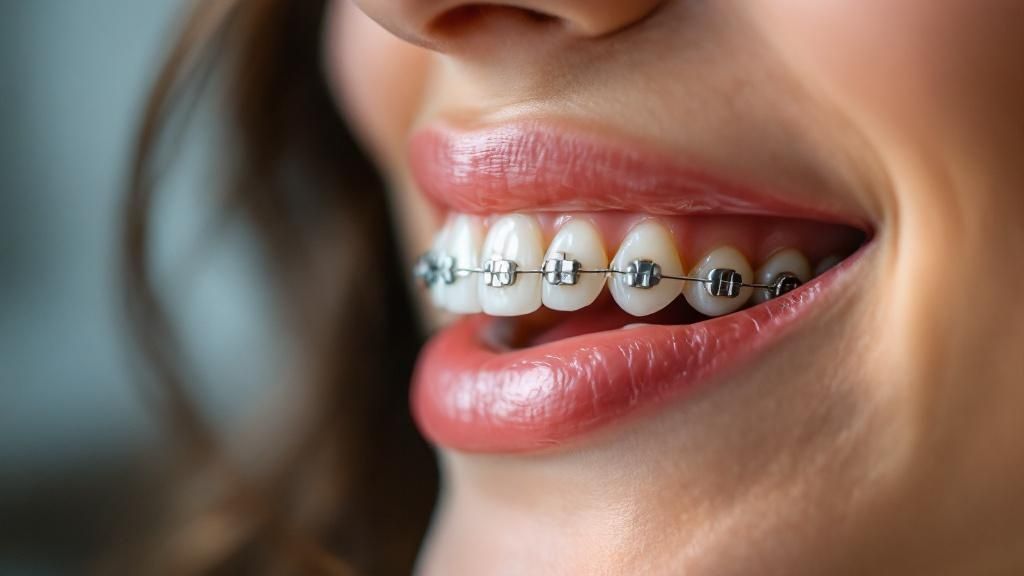
- Traditional Braces: While modern metal braces are smaller than they once were, the metal brackets and wires are still visible when you talk or smile. This can be a concern for some adults who prefer a more subtle approach.
The core appeal of clear aligners is their subtlety. You can undergo a major smile transformation without broadcasting it to the world, which is a huge confidence booster.
Daily Comfort and Wearability
Your comfort during treatment is incredibly important, and we want to ensure your experience is as pleasant as possible. Both systems use gentle, consistent pressure to shift your teeth, but they feel very different.
Clear aligners are custom-made from a smooth plastic, so you don't have to worry about sharp edges scraping your cheeks or tongue. You may feel some pressure when you switch to a new set of trays, but this discomfort is usually minor and fades quickly.
Braces have metal brackets and wires that can rub against the soft tissues in your mouth, which can lead to soreness. While orthodontic wax can help, there is an adjustment period as your mouth gets used to them.
Maintenance and Oral Hygiene
Keeping your teeth clean during orthodontic treatment is absolutely essential for preventing cavities and gum disease. This is where the two options couldn't be more different.
With clear aligners, oral hygiene is simple. You just pop the trays out to brush and floss your teeth exactly as you always have. You'll also need to clean the aligners themselves, but this is a quick and easy task.
Keeping your teeth clean with braces takes more effort. Food particles can easily get stuck around the brackets and wires, so you’ll need special tools like floss threaders or interdental brushes to maintain good hygiene.
A Quick Look at Aligners vs Braces
This table offers a direct side-by-side comparison to help you see the main trade-offs at a glance.
| Factor | Clear Aligners | Traditional Braces |
|---|---|---|
| Visibility | Nearly invisible; made of clear plastic. | Very noticeable; metal or ceramic brackets and wires. |
| Comfort | Smooth plastic, minimal irritation. Pressure with new trays. | Brackets can irritate cheeks and lips. Discomfort after adjustments. |
| Oral Hygiene | Removable for easy brushing and flossing. | Requires special tools and techniques to clean around brackets. |
| Diet | No restrictions; you remove them to eat. | Must avoid hard, sticky, or chewy foods to prevent damage. |
| Responsibility | High patient compliance needed (wear 20-22 hours/day). | Patient must maintain hygiene and attend regular appointments. |
| Treatment Time | Often faster for mild to moderate cases (average 12-18 months). | Can handle more complex cases; may take longer (average 18-24 months). |
This comparison shows that the "best" option really depends on your personal priorities, from aesthetics to your daily discipline.
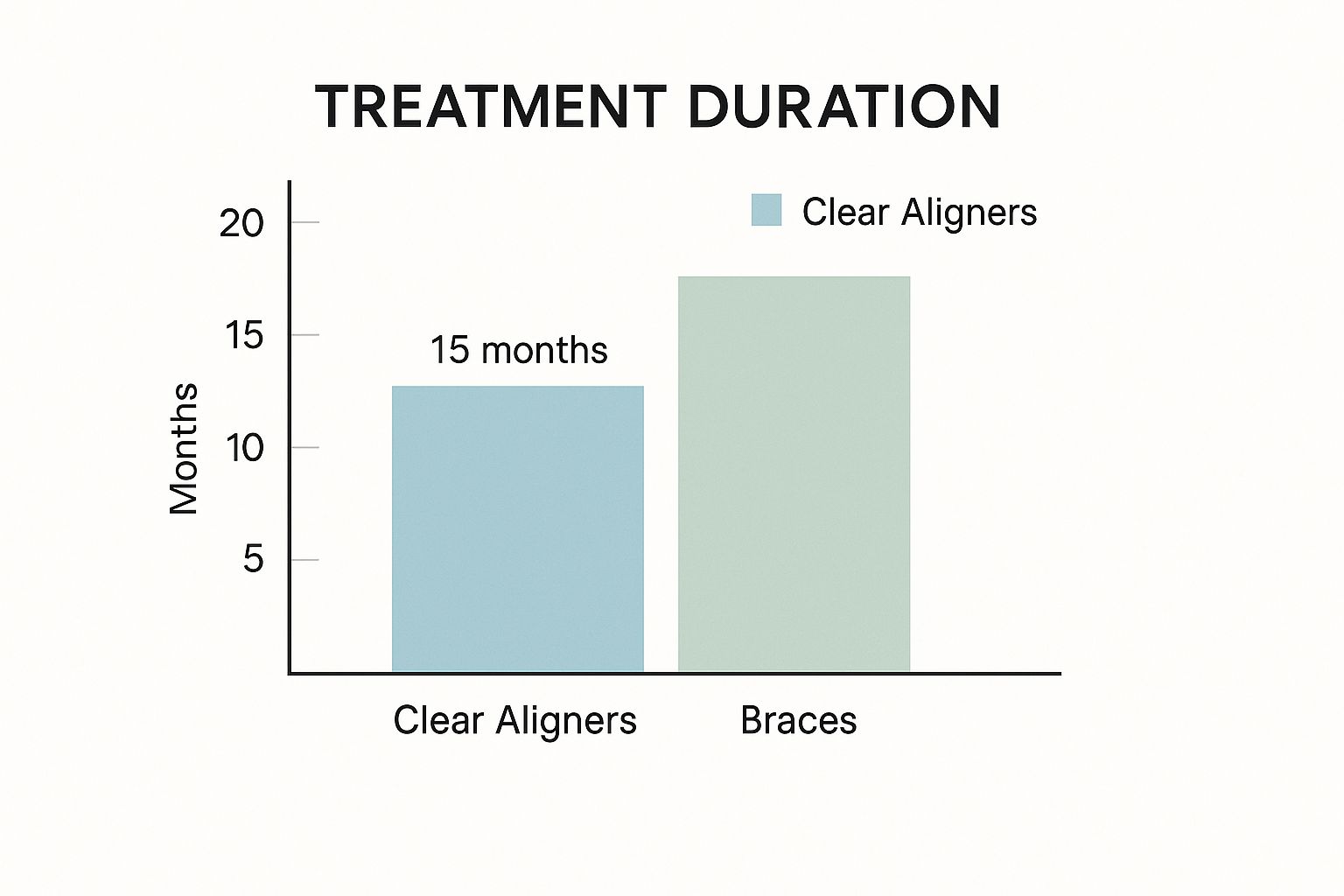
The data shows that while braces might be needed for longer, more complex treatments, clear aligners can often achieve the desired results in an average of 15 months, compared to 20 months for braces for comparable cases.
The Treatment Process and Your Commitment
Your journey with either treatment requires discipline, just in different ways.
- Clear Aligners: Your success depends on patient compliance. You must wear your aligners for 20-22 hours a day, taking them out only to eat, drink anything but water, and clean your teeth. Forgetting to wear them can slow down your progress.
- Traditional Braces: Here, success is driven by professional adjustments. Since the braces are attached to your teeth, they’re working around the clock. Your main job is to attend your regular appointments at our Renton office and be diligent about your oral hygiene.
Ultimately, choosing between them comes down to which routine and level of responsibility you feel more comfortable managing.
Which Treatment Can Solve Your Orthodontic Needs?
The most important question isn't about looks or convenience—it's about results. What really matters is which option can deliver the smile you're hoping for. The answer comes down to the complexity of your specific case, because braces and aligners are engineered to solve different types of problems.
Think of it less as a personal preference and more like our dentists choosing the right tool for a specific job, always with your best outcome in mind.
The Power of Clear Aligners for Common Issues
Clear aligners are incredibly popular because they are a fantastic and highly effective solution for a wide range of common orthodontic issues. Their design is particularly well-suited for patients needing mild to moderate corrections.
If you’re looking to straighten slight overcrowding, close small gaps, or fix minor bite misalignments, clear aligners are often the ideal choice. They work by applying gentle, controlled pressure, which is perfect for these kinds of adjustments.
When Braces Are the Unbeatable Choice
While aligners are versatile, traditional braces reign supreme when it comes to tackling more severe and complex orthodontic challenges. The fixed system of brackets and wires gives your dentist a degree of control that aligners simply can't match for certain tooth movements.
Braces are often the necessary choice for more demanding situations, such as:
- Severe Crowding: When teeth are badly overlapped or rotated.
- Large Gaps: Closing significant spaces between teeth requires consistent pulling power.
- Complex Bite Problems: Severe overbites, underbites, or crossbites often require the mechanical efficiency of braces.
- Tooth Extrusions/Intrusions: Moving a tooth up or down in the jawbone is a movement best achieved with the force of traditional braces.
When our dentists recommend braces, it's not because they are "old-fashioned," but because they possess the strength required to solve complex biomechanical problems safely and effectively. At Cedar Dental Group, we offer a full range of orthodontic and cosmetic dental services in Renton, WA, ensuring you get the most appropriate care for your unique smile.
The Financial Side: Investing in Your Smile
Let's talk about the bottom line. When deciding between clear aligners and braces, cost is a significant part of the conversation. It's an investment not just in your appearance but in your long-term dental health.
The final price tag for either option isn't one-size-fits-all. It's tailored to the unique needs of your smile.
What Determines the Final Cost?
The biggest factor influencing the cost is the complexity of your case. A few slightly crooked teeth will take less time and fewer resources to fix than a major bite correction.
Other things that play a role include:
- Treatment Duration: Longer treatments require more appointments and materials.
- Specific Materials Used: For example, clear or ceramic braces usually cost more than traditional metal.
- Your Orthodontic Goals: The scope of the changes you want will shape the treatment plan and its price.
We encourage patients to see this as a long-term health investment. A well-aligned bite can help prevent future problems like jaw pain and uneven wear on your teeth.
Comparing Typical Cost Ranges
Most people are surprised to learn that clear aligners and braces often fall into a similar price range. The cost for both treatments typically ranges from $3,000 to $7,000, depending on the case. For a deeper dive into market trends, you can review these teeth straightening statistics.
Of course, the price for braces can also swing widely depending on how complex your treatment is and which type of brackets you choose. The only way to know for sure is with a professional consultation.
Making Your New Smile Affordable at Cedar Dental Group
We firmly believe that finances shouldn't stand in the way of a healthy, confident smile. Here at Cedar Dental Group, we're dedicated to making orthodontic care accessible for everyone in our Renton, WA community.
Our team is fantastic at helping you understand and maximize your dental insurance benefits. Many PPO plans offer partial coverage for orthodontics, which can make a huge difference.
We also offer flexible financing options to break the cost down into manageable monthly payments. You can find all the details on our payment and financing information page. Our goal is to create a transparent financial plan you're comfortable with, so you can focus on the exciting journey ahead.
How Each Treatment Integrates With Your Lifestyle

Orthodontic treatment weaves itself into the fabric of your daily life. It's crucial to consider the real-world impact of living with clear aligners versus braces—how each option will fit into your schedule, social life, and eating habits.
Ultimately, the choice often boils down to a trade-off: the freedom of removability versus the convenience of a fixed appliance.
The Aligner Advantage: Flexibility and Freedom
For adults juggling busy careers and active social lives, the flexibility of clear aligners is a massive draw. You can simply take your trays out for an important meeting, a special dinner, or a social event.
With aligners, you can eat whatever you want without worrying about food getting stuck in wires or breaking a bracket. Afterward, you just need a moment to brush your teeth before popping the aligners back in.
However, this freedom comes with a serious responsibility. For aligners to work, your discipline is non-negotiable—you must wear them for at least 20-22 hours a day.
The Braces Advantage: Set It and Forget It
Traditional braces demand a different kind of adaptation. Because they're bonded to your teeth, they’re working 24/7. You never have to think about wear-time, which can be a relief if you'd struggle with the self-discipline aligners require.
The main lifestyle shift with braces centers on your diet and oral hygiene. You have to become very conscious of what you eat, steering clear of anything hard, sticky, or chewy. Cleaning also becomes a more involved task, requiring new techniques to keep your teeth and gums healthy. These changes become routine over time and are a constant part of your daily life for the duration of your treatment.
Both paths lead to a straighter, healthier smile and are a cornerstone of modern cosmetic dentistry in Renton. The best choice depends on whether you value the disciplined freedom of aligners or the passive diligence of braces.
So, What’s the Right Choice for Your Smile?
We’ve walked through the ins and outs of clear aligners and traditional braces. At the end of the day, there’s no single "winner." The best treatment is the one that fits you—your teeth, your lifestyle, and your smile goals.
Think of it as a balance of three key areas:
- Your Orthodontic Needs: Are you dealing with minor crowding or more significant bite problems? Our clinical assessment will determine which tool is right for the job.
- Your Daily Life: Be honest with yourself. Are you disciplined enough for removable aligners, or does a fixed appliance like braces sound more manageable?
- Your Budget and Timeline: We can help you understand your insurance coverage and explore financing to make either option a comfortable fit for your finances.
Your first and most important step is choosing a compassionate, expert dental team to guide you. That's where true clarity begins. A professional consultation allows us to listen to your goals and give you a recommendation grounded in years of experience, all in a comfortable and reassuring environment.
Here at Cedar Dental Group, our job is to give you that professional, straightforward guidance. We’re committed to making sure you have all the information you need to feel confident moving forward.
Frequently Asked Questions About Orthodontic Treatment
It's completely normal to have questions when you're considering straightening your teeth. Getting clear, honest answers is the best way to feel confident about your decision. Here are the answers to some of the most common questions our patients in Renton ask.
1. Does orthodontic treatment hurt?
You will likely feel some discomfort, but it is manageable. With both braces and aligners, you may feel a dull pressure for a day or two after an adjustment or when switching to a new tray. This is a positive sign that your teeth are moving! This temporary sensation is easily managed with over-the-counter pain relievers.
2. How long will my treatment take?
Every patient's timeline is unique. On average, clear aligner therapy for adults can take 12 to 18 months, while traditional braces may take closer to 18 to 24 months. Minor corrections can be much faster. The only way to get an accurate timeline is with a personalized consultation at Cedar Dental Group.
3. Do I have to wear a retainer forever?
Yes, and this is crucial for protecting your investment. After treatment, teeth have a natural tendency to shift back to their original positions. Wearing your retainer as prescribed is the single most important step to ensure your beautiful new smile lasts a lifetime. For more tips on maintaining your oral health, feel free to explore the Cedar Dental Group blog.
4. Can adults get braces or aligners?
Absolutely! It is never too late to achieve the smile you’ve always wanted. We see many adults at our Renton practice seeking orthodontic treatment. Modern options like clear aligners are designed to fit into busy adult lives, offering the discretion and flexibility you need.
5. Will my insurance cover braces or aligners?
Many dental insurance plans provide some level of orthodontic coverage for adults. Our team at Cedar Dental Group is experienced in working with insurance providers and will help you understand and maximize your benefits. We are committed to making your treatment as affordable as possible.
Ready to improve your smile? Contact Cedar Dental Group in Renton, WA today to schedule your personal consultation. We look forward to helping you achieve a smile you'll love with comfort and confidence.
