

Worrying about the cost of a trip to the dentist is common, but getting affordable dental care is absolutely possible. You just need to know the right strategies. Let’s walk through some practical ways to get the quality care you need without the financial stress.
Why Quality Dental Care Is an Investment
First, it helps to understand why dental work costs what it does. The global dental service market is a large industry valued at around $483.15 billion and growing. (Source: Coherent Market Insights). High costs are often due to the specialized professionals, advanced equipment, and top-tier materials needed for every procedure. Get the full dental service market report here.
This investment from your dentist ensures every treatment is safe, effective, and built to last. For example, modern treatments like same-day crowns require advanced technology and a highly skilled team. Understanding this helps you see the true value you're getting.
Prevention is always the most affordable option. Routine care costs much less than fixing problems that have been ignored.
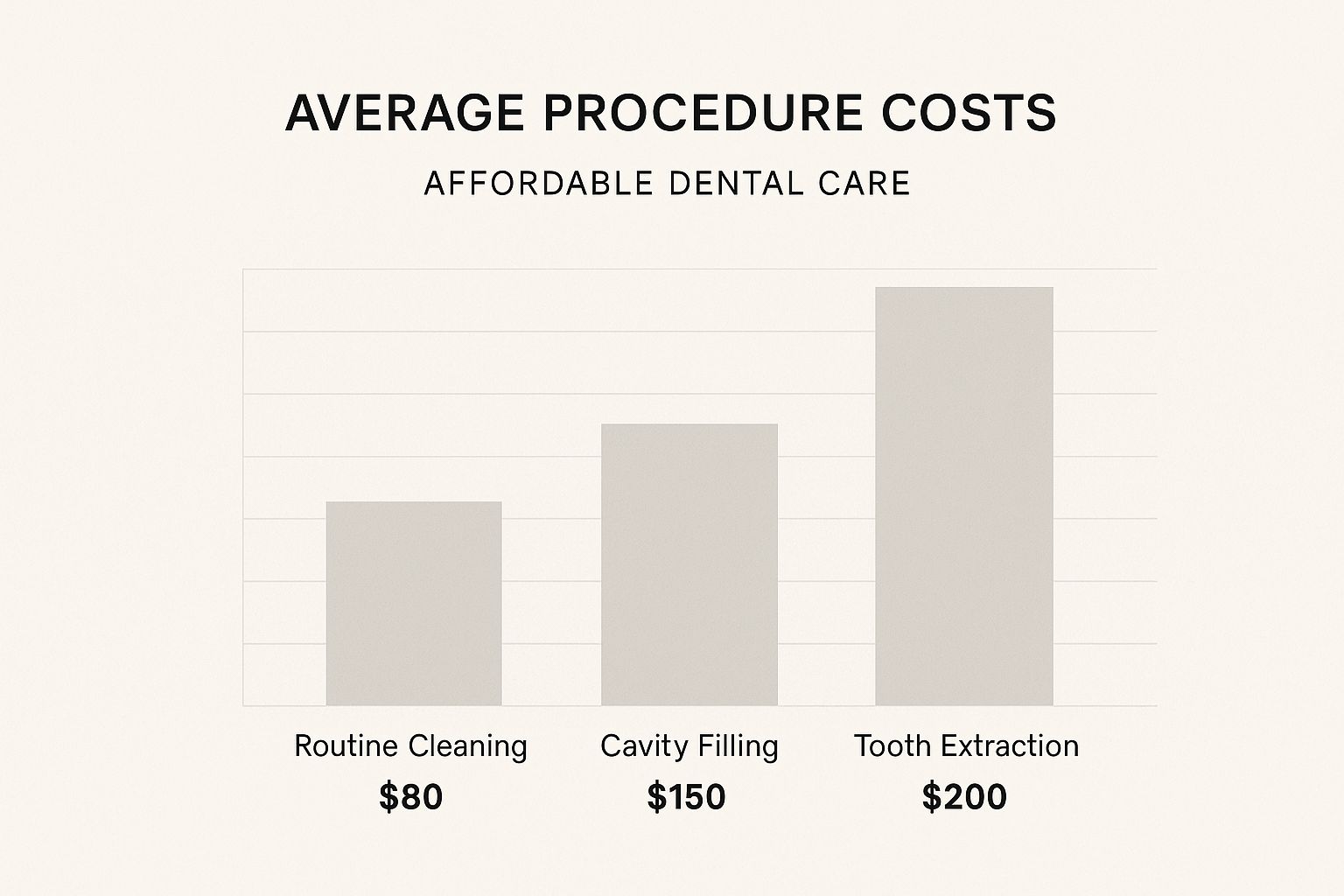
As you can see, regular, preventive care is dramatically less expensive than the treatments needed to fix bigger issues.
The smartest way to manage dental expenses is by preventing major issues before they start. Regular check-ups are not just about cleaning; they are your first line of defense against costly and complex treatments down the road.
How to Maximize Your Dental Insurance Benefits
Dental insurance can feel confusing, but it’s a powerful tool for managing your health and your budget. Once you understand the basics, you can use your plan to keep your smile healthy without breaking the bank.

You don’t have to be an expert to make your plan work for you. Most policies are based on a few key ideas that determine what you pay.
Know Your Plan Inside and Out
Before scheduling major work, it’s important to understand these three terms. They are the foundation of your coverage.
- Deductible: This is the amount you pay first, before your insurance company starts to help. If you have a $50 deductible, you'll cover the first $50 of a filling, and then your benefits will apply to the rest.
- Annual Maximum: This is the total amount your plan will pay for your dental care within one year. Knowing this number helps you and your dentist plan bigger treatments so you don’t hit the limit unexpectedly.
- Coverage Levels: Insurance plans cover procedures at different rates. For example, preventive care like cleanings might be covered at 100%. Basic procedures like fillings may be covered at 80%, while major work like crowns is often covered at 50%.
Using your preventive care benefits is the best way to save money. When you come in for regular check-ups and cleanings, we can spot small issues before they become complex, expensive problems.
Make Your Policy Work for You
The global dental insurance market is expected to reach $253.72 billion by 2025. (Source: Towards Healthcare). This shows that more people are using insurance to prevent problems, not just fix them. You can read more about the dental insurance market's growth.
Here's a practical tip: before starting any treatment, ask our office to request a pre-treatment estimate from your insurance company. This document will show you exactly what your plan will cover and what your share of the cost will be. This simple step removes the guesswork and helps you move forward with confidence.
Navigating Dental Costs Without Insurance
Don't have dental insurance? That doesn't mean you have to skip taking care of your teeth. Many people find excellent, affordable dental care without traditional insurance.
An in-house membership plan, which we offer at Cedar Dental Group, is a great option. Instead of insurance, you pay a flat annual fee directly to our office. In return, you receive significant discounts on services, from regular cleanings to more complex procedures. This makes your dental costs predictable, without deductibles or yearly caps.
Finding Care in Your Community
Your local community can also be a great resource for budget-friendly dental care.
- Dental Savings Plans: You pay a membership fee to join a network. This gives you access to discounted rates from dentists within that network.
- Community Dental Clinics: Your local health department or non-profit organizations often run clinics. They may use a sliding scale, which adjusts the cost based on your income.
- Dental Schools: This is a fantastic option for affordable care. Dental students provide treatment under the close watch of experienced, licensed professors. The care is high-quality and costs much less than a typical private practice.
Be proactive in your search. A simple online search for "community dental clinics near me" or "dental schools in Washington" can reveal great local options you may not have known about.
Understanding the Need for Dental Access
The need for affordable dental care is a serious issue. In rural areas, 34% of adults lack dental insurance, compared to 24% in suburban areas. (Source: Curve Dental). This gap shows why it’s so important to know about all your options. You can discover insights on dental industry challenges to learn more.
Knowing your options is even more important during a dental emergency. When you're in pain, the last thing you want is to worry about the bill. Our guide on handling emergency dental services can help you prepare.
What About Payment Plans and Health Accounts?
Even with a good plan, a large dental bill can be a challenge. The good news is that you have options to break that cost into smaller, manageable payments. This makes affordable dental care much less stressful.
Many employers offer health accounts that let you use pre-tax money for dental work. This lowers your taxable income, saving you money from the start.
- Flexible Spending Account (FSA): This is a savings plan for healthcare. You decide how much pre-tax money to put in for the year. It's often "use-it-or-lose-it," so it's perfect for planned procedures like a new crown.
- Health Savings Account (HSA): If you have a high-deductible health plan, an HSA is a great tool. It’s a personal savings account for health costs. The money is pre-tax and rolls over every year, making it an investment in your future health.
Breaking Down Bigger Bills
Paying for major dental work all at once isn't realistic for most people. That's why we offer ways to spread the cost over several months or even years. The goal is to help you get the care you need without financial strain.
Third-party financing, like plans offered through Cherry, works like a personal loan for your dental care. The application is usually quick, and you can often find a repayment plan that fits your monthly budget. We also offer some in-house payment arrangements. You can learn about our flexible payment and financing options on our website.
Never hesitate to ask us about your options. We are your partners in health. We are here to work with you to find a payment solution that removes financial stress so you can focus on getting healthy.
The Smartest Investment? Preventing Problems
When we talk about affordable dental care, the best strategy is preventing problems before they begin. Your daily oral hygiene routine is the best financial decision you can make for your health.
Simple, consistent habits at home are your first line of defense. Every time you brush and floss correctly, you are actively saving yourself from future dental work. This greatly reduces your risk for needing treatments like root canals or crowns.
Small Habits, Big Savings
Building a solid oral health routine is easy. The key is consistency.
- Brush Like a Pro: Brush for two minutes, twice a day, with a soft-bristled brush. This removes the plaque that causes cavities. Angle the brush at 45 degrees toward your gumline to clean thoroughly without causing damage.
- Never Skip Flossing: Flossing cleans the tight spots your toothbrush can't reach, like between your teeth and under the gumline. It's one of the most important things you can do to prevent gum disease and cavities.
- Eat for Your Teeth: Cutting back on sugary snacks and acidic drinks is great for your tooth enamel. Foods rich in calcium and phosphorus, like dairy and leafy greens, help strengthen your teeth.
Taking just a few minutes each day for your oral health is an investment with huge returns. It's the difference between a lifetime of simple checkups and a future of expensive repairs.
For more helpful tips, check out our guide on how to prevent cavities.
Choosing a Dentist Who Respects Your Budget
Finding affordable dental care is much easier when your dentist is on your team. The right dental practice does more than fix teeth; they understand your financial situation and work with you to make treatment manageable.
This partnership is built on clear communication. A practice that cares about you will always be open to talking about the costs of your care.
Questions to Ask Your Potential Dental Office
Before you start any treatment, you should feel comfortable asking direct questions about the cost. A team that values you as a patient will welcome this conversation.
Here are a few questions we recommend asking:
- Can you provide a detailed treatment plan with all the costs listed before we start?
- Can we prioritize treatments? Let's focus on the most urgent issues first to spread out the cost.
- What are my payment options? Do you have an in-house membership plan or work with financing companies?
The goal is to find a dental home where you feel in control of your health and your finances. Knowing the costs upfront removes anxiety and lets you make confident decisions.
Finding the right provider is a critical step. For more advice, our guide on how to choose a dentist has more tips to help you find the perfect fit.
FAQs About Affordable Dental Care
It’s normal to have questions about dental costs. Here are some common concerns we hear from patients in Renton.
1. How do I know what my dental insurance will actually pay for?
The best way is to call the member services number on your insurance card. Ask about your deductible, annual maximum, and coverage levels for different services. Our office can also send a "pre-treatment estimate" to your insurance company. This gives you a clear breakdown of your costs before you begin treatment.
2. Is getting treatment at a dental school a safe option?
Yes, absolutely. Dental schools provide high-quality care at a lower cost. Students perform the procedures under the constant supervision of experienced, licensed dentists. Appointments may take longer, but the quality of care is very high.
3. What if I have a dental emergency and can't afford the treatment?
Do not delay treatment, as a dental emergency can worsen and become more expensive. Call a dental office like ours right away. Be open about your financial concerns. We can focus on relieving your pain first and then discuss manageable payment options.
4. What is an in-house membership plan?
An in-house membership plan is an alternative to traditional insurance. You pay a flat annual fee directly to our dental office. In return, you receive preventive care (like cleanings and exams) and significant discounts on other dental services. It's a simple way to make your dental care budget-friendly.
5. Can I use my FSA or HSA for dental work?
Yes, you can use funds from your Flexible Spending Account (FSA) or Health Savings Account (HSA) for most dental procedures. This includes everything from fillings and crowns to orthodontics. Using these pre-tax dollars is a smart way to save money on your dental care.
Ready to improve your smile? Contact Cedar Dental Group in Renton, WA today to schedule a consultation and discuss your options for affordable care.
