
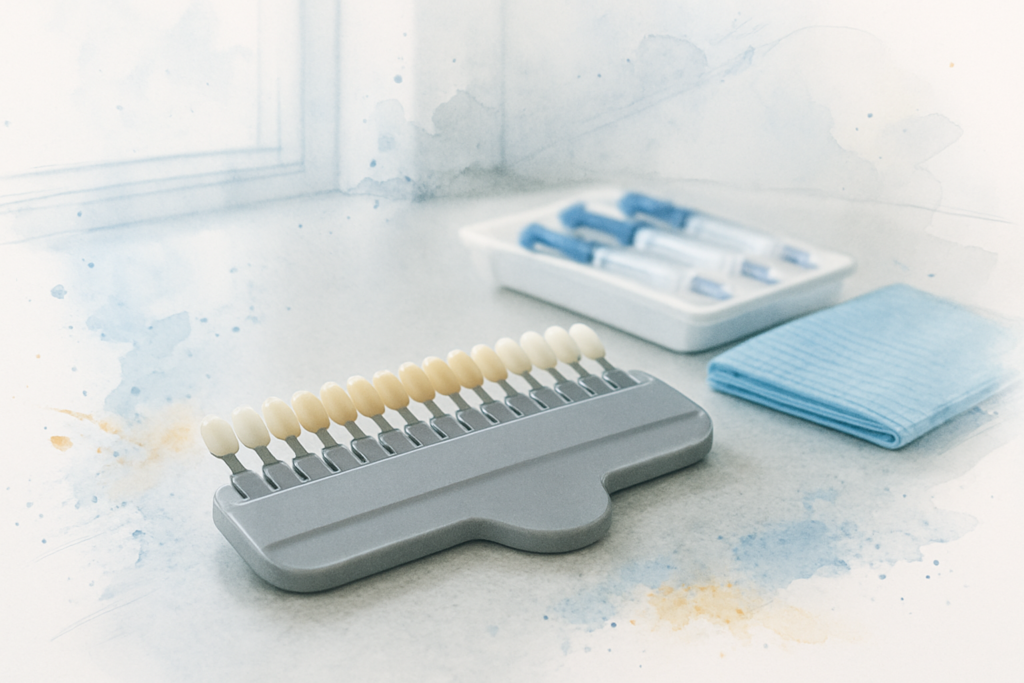
Direct Answer: In-office Zoom whitening lifts surface stains from coffee, tea, wine, and tobacco in one visit. Deeper stains from medication, fluorosis, or tooth trauma often change very little, no matter the gel strength.
Most people who ask me about whitening have already tried the drugstore strips. They used them for two weeks, saw a small change, and now they want to know if a single in-office appointment will do something the strips could not.
It is a fair question, and the honest answer depends almost entirely on why your teeth are the color they are. That one factor decides whether you walk out several shades lighter or barely different at all.
So this is the version of the conversation I have in the chair every week in our Renton office. What the gel actually does, who tends to get the best results, and what the sensitivity really feels like afterward.
What In-Office Zoom Whitening Actually Does
In-office whitening is not a coating or a paint. It is a concentrated hydrogen peroxide gel that soaks into the outer layer of the tooth and breaks apart the stain molecules trapped there.
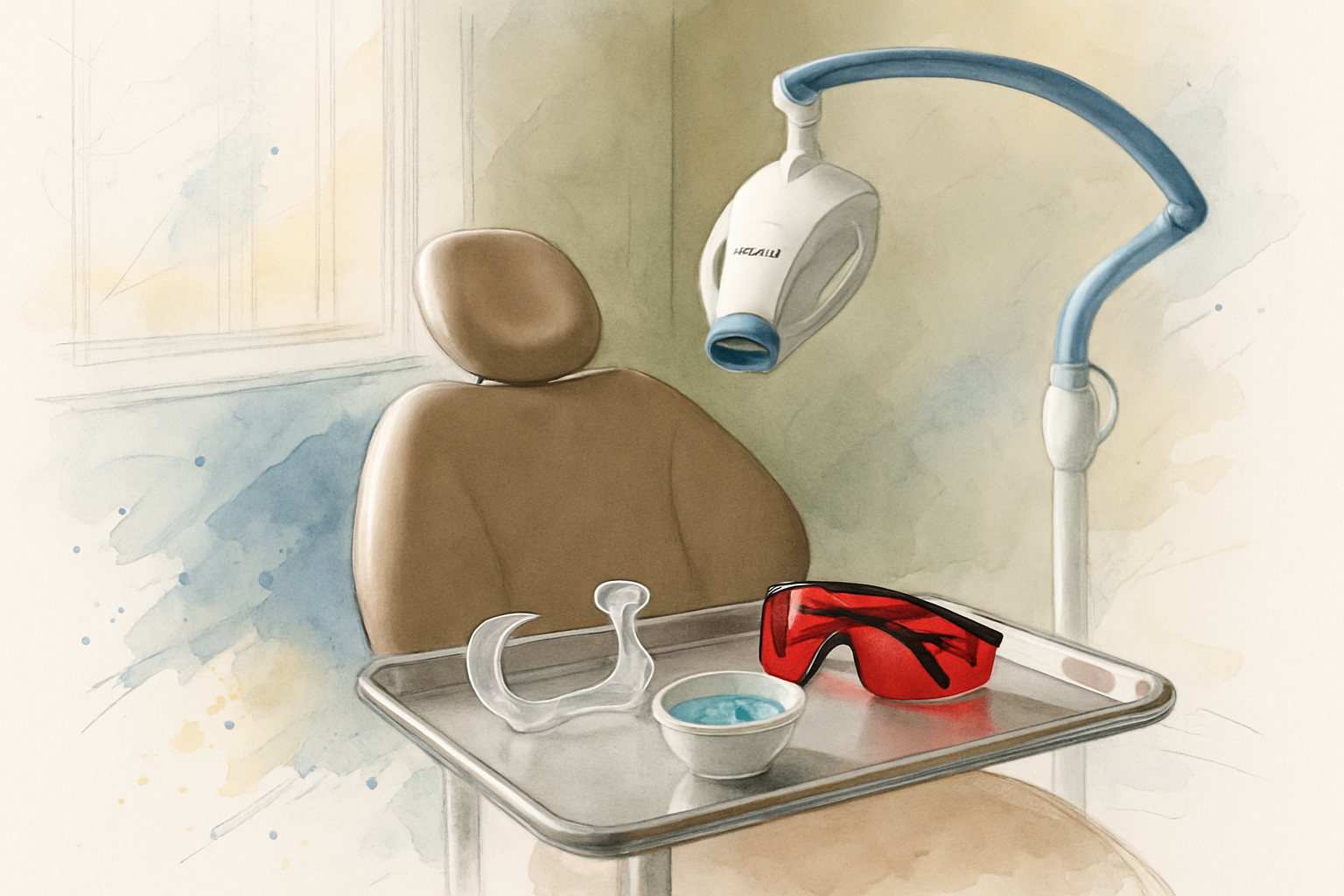
The Zoom system uses a light to speed that reaction up, which is why the whole thing fits into one appointment instead of two weeks of trays. A typical visit looks like this:
- Your lips, cheeks, and gums get isolated and protected so the gel only touches enamel
- Gel is applied and activated in timed cycles of roughly 15 minutes each
- Most patients go through three or four cycles in a single sitting
- Total chair time usually runs about an hour to 90 minutes
Compare that to strips, which use a much weaker peroxide and rely on you being consistent for 14 straight days. The strength and the isolation are the real difference, not the light on its own.
One practical note for people driving in from Kent, Tukwila, or Newcastle: this is a one-visit procedure, so you are not committing to a series of trips down Rainier Avenue.
What Your Zoom Whitening In-Office Results in Renton Really Depend On
Here is where expectations and reality tend to split. Whitening gel works on organic stain, meaning the pigment left behind by things you eat, drink, and smoke.
That kind of staining sits on and just inside the enamel surface, and it responds well. Coffee is the big one around here. Between the commute and the office pot, plenty of my patients are running four or five cups a day.
Stains that respond well:
- Coffee and black tea
- Red wine
- Tobacco
- Dark sodas, soy sauce, curry, berries
- General yellowing that comes with age
Stains that often change very little:
- Tetracycline staining from antibiotics taken during tooth development, which usually shows as gray or banded discoloration
- Fluorosis, the chalky white or brown mottling from too much fluoride while teeth were forming
- A single dark tooth after trauma, where the change comes from inside the tooth rather than the surface
With those, a stronger gel does not fix the problem, because the problem is not on the surface. I would rather tell you that before your appointment than after.
One more thing that catches people off guard: crowns, veneers, and tooth-colored fillings do not whiten. If you have a crown on a front tooth, your natural teeth can lighten around it and leave the crown looking dull by comparison. That is worth planning for, especially if you are already thinking about replacing an older crown.
How Different Stains Typically Respond
This is a general guide, not a promise. Your exam and shade assessment will tell us more than any chart can.
| Stain source | Where the color lives | Typical response to in-office whitening |
|---|---|---|
| Coffee, tea, red wine | Surface and outer enamel | Responds well, often the most noticeable change |
| Tobacco | Surface and outer enamel | Responds well, may need a longer session |
| Age-related yellowing | Enamel thinning over dentin | Moderate improvement |
| Tetracycline banding | Deep inside the tooth structure | Little to no change |
| Fluorosis mottling | Within the enamel itself | Unpredictable, sometimes more contrast |
| Single dark tooth after injury | Inside the tooth | No change from external whitening |
| Crowns, veneers, fillings | Restorative material | No change at all |
Who Tends to Get the Best Results
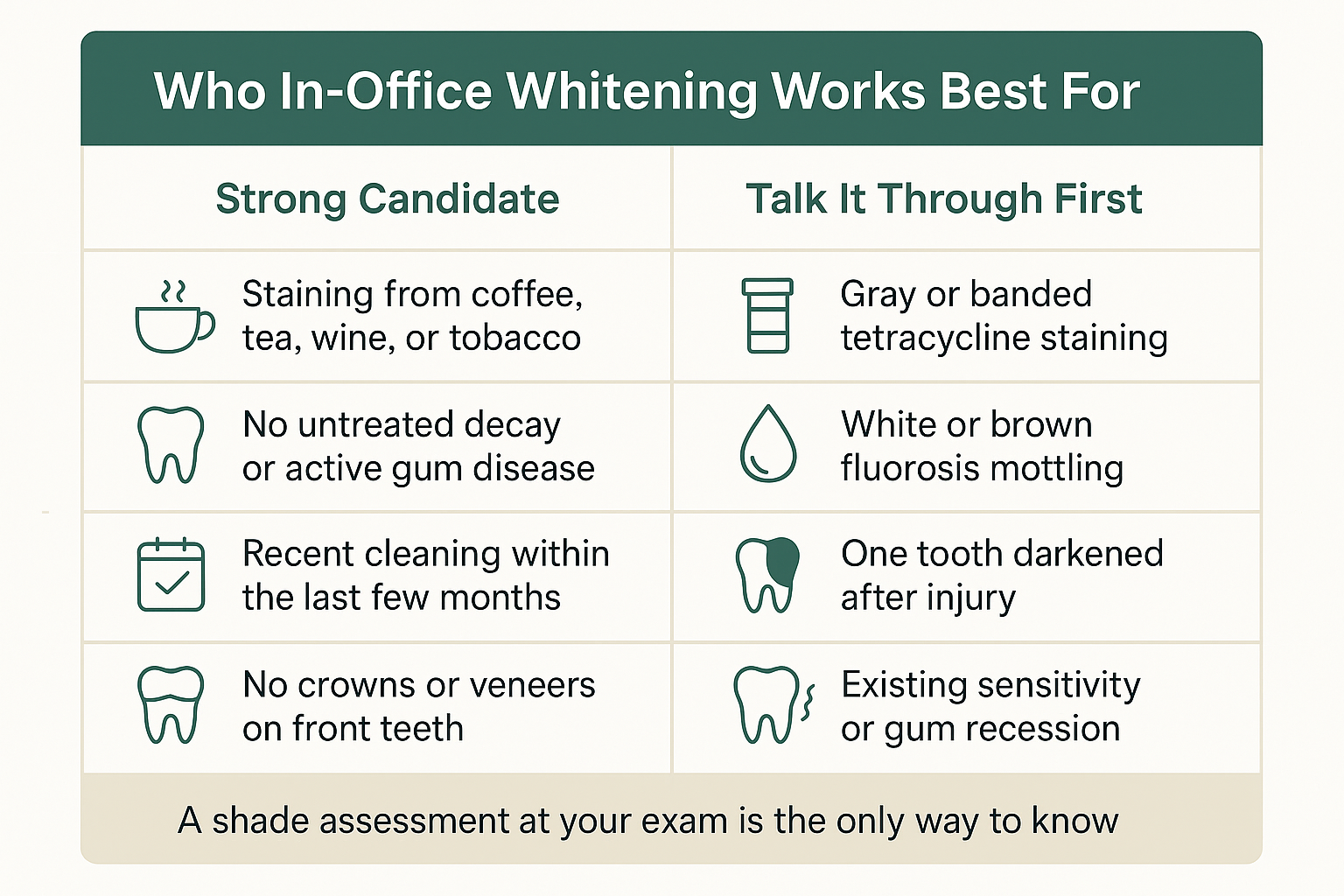
If you are trying to decide whether an in-office appointment is worth it, this is the short version of how I sort candidates.
The Sensitivity Question, Answered Straight
This is the number one thing patients ask before they commit, so I will not soften it. Tooth sensitivity is the most common side effect of in-office whitening, and most people feel at least some of it.
It usually shows up as short, sharp zings during the session or in the hours after. For most patients it fades within 24 to 48 hours.
A few things make it more likely:
- Gum recession with exposed root surfaces, which have no enamel to buffer the gel
- Teeth that already react to cold air or ice water
- Worn enamel from grinding or acidic drinks
- Recent dental work in the area
If any of that sounds like you, say so at the consultation. We can adjust the number of cycles, use a desensitizing agent, or decide that whitening is better done after your gum health is addressed. Sometimes the recession itself is the thing that needs attention first.
The American Dental Association notes that tooth sensitivity and gum irritation from whitening are typically temporary and resolve after treatment ends. That matches what I see, but temporary still means uncomfortable for a day, and you deserve to know that going in.
If dental anxiety is part of the picture for you, our guides on finding a gentle dentist in Renton and managing dental anxiety cover how we handle comfort during longer appointments.
Timing, Cost, and Why the Cleaning Comes First
Whitening gel works on enamel, not on plaque and tartar. If there is buildup on your teeth, the gel cannot reach the surface underneath evenly, and you get a patchy result.
So I almost always want the cleaning done first. Several people who contact us actually ask for both together, which is the right instinct, though the two usually work better as separate appointments a short time apart.
On cost, whitening is considered cosmetic, which means dental insurance generally does not cover it, including the Delta Dental PPO plans that most of our South King County patients carry. We walk through this in more detail in our guide on whether dental insurance covers teeth whitening.
Our office has listed an in-office Zoom whitening special at around $500, though promotional pricing changes and your own situation may shift what makes sense. Call for a current figure rather than relying on a number in an article.
And one last practical point. Whitening is not permanent. If you go back to the same four cups of coffee a day, expect gradual re-staining over the following year or two.
Frequently Asked Questions About In-Office Whitening
How many shades lighter will my teeth actually get?
It varies more than most marketing suggests. Patients with surface staining from coffee, tea, or tobacco tend to see the most noticeable change, while deeper discoloration may barely move. I would rather assess your starting shade in person than quote a number I cannot stand behind.
Is one in-office appointment better than two weeks of strips?
For most people with surface staining, yes, mainly because of the higher peroxide concentration and the protection placed over your gums. Strips can help maintain results, but they work slowly and unevenly, especially on crowded or rotated teeth.
Can I whiten if I have gum recession?
Sometimes, but it needs a conversation first. Exposed root surfaces have no enamel covering them, so they can react strongly to the gel. If recession is significant, addressing the gum health comes before the cosmetic step.
What if I have a crown on a front tooth?
The crown will stay exactly the shade it is. Your natural teeth can lighten around it and create a visible mismatch. If you already have crown concerns, our article on crown sensitivity and what to do about it is a useful companion read.
How long do the results last?
Usually one to two years, sometimes longer, depending heavily on your habits. Coffee, tea, red wine, and tobacco will bring the color back faster. Rinsing with water after those drinks helps more than people expect.
Want an Honest Read on Whether Whitening Will Work for You?
The only reliable way to predict your result is a shade assessment and a look at what is causing the color in the first place. Patients across Renton, Kent, Tukwila, and Newcastle come in for this conversation before deciding anything, and there is no obligation attached to it. You can reach our Renton office at 425-430-0400 or read more at cedardentalgroup.com.
