
Direct Answer: Some sensitivity after a crown is placed is normal and usually fades within a few weeks. If it’s getting worse, concentrated at the gumline, or happens without any trigger, call your dentist.
Getting a crown placed is supposed to be the end of the problem, the cracked tooth is covered, the pain from the decay is gone, and you can get back to eating normally. So when sensitivity shows up a week or two later, it’s confusing and, honestly, a little alarming.
I hear this concern regularly from patients in Renton and the surrounding South King County area. The question is almost always the same: Is this normal, or did something go wrong? Most of the time, there’s a straightforward explanation. But the answer depends on where the sensitivity is coming from and what it feels like.
This article walks through the most common causes of post-crown sensitivity, how long each one typically lasts, and the signs that tell you it’s time to come in rather than wait it out.
Is It Normal to Have Sensitivity After a Crown?
Yes, in most cases. Placing a crown requires preparing the tooth underneath, removing a portion of the enamel so the crown can fit securely. That process can leave the underlying tooth structure temporarily reactive, especially to temperature.
Mild sensitivity to cold drinks or cold air in the first two to four weeks after placement is common and usually fades on its own as the nerve settles. It does not mean the crown is failing or that anything was done incorrectly.
What’s less expected is sensitivity that:
– Is concentrated right at the gumline rather than across the tooth
– Gets worse instead of better over time
– Happens without any trigger, no food, no drink, no temperature change
– Feels like pressure or a dull throb that lingers
Those patterns point to something that deserves a follow-up, not just more waiting. Tooth pain that lingers without a clear trigger is always worth having evaluated rather than hoping it resolves.
The Three Most Common Causes, and Why They’re Different
Not all crown sensitivity comes from the same place. I find it helps patients to understand the three distinct causes, because each one has a different timeline and a different fix.
1. The bite is slightly off.
This is one of the most common causes. If the crown sits even a fraction of a millimeter too high, your teeth absorb uneven pressure every time they come together. You might feel this as soreness in the tooth itself, jaw fatigue, or sensitivity that’s hard to pin down. The good news: this is a quick fix at a follow-up appointment. We make a small adjustment to the crown’s surface, and most patients feel relief within a day or two.
2. The tooth nerve is still settling.
When a tooth has been significantly decayed, cracked, or damaged, the nerve inside has often been under stress for a while before the crown was even placed. The preparation process can add some additional irritation. Most nerves calm down within four to six weeks. If you had a root canal before your crown, this applies less, but for crowns placed on living teeth, some post-procedure nerve sensitivity is expected. You can read more about why a crown is often recommended after a root canal and how those two procedures interact.
3. Gumline irritation.
This one catches people off guard. If sensitivity is focused right where the crown meets the gum, especially when flossing or pressing on that area at a certain angle, the issue may not be the tooth itself at all. Cement residue left near the gumline, inflammation from the temporary crown, or early gum recession around the restoration can all create this kind of discomfort. It tends to feel different from tooth sensitivity: more like soreness or tenderness at the gum edge rather than a sharp reaction to temperature.
Post-Crown Sensitivity: What It Likely Means and What Happens Next
Use this as a rough guide for interpreting what you’re feeling. It is not a substitute for an exam, but it can help you decide whether to wait or call.
| What You’re Feeling | Most Likely Cause | Typical Next Step |
|---|---|---|
| Mild cold sensitivity, first 1-3 weeks | Nerve settling after tooth prep | Monitor, usually resolves on its own |
| Sensitivity when biting down | Crown sitting too high (bite issue) | Follow-up adjustment appointment |
| Soreness at gumline when flossing | Cement residue or gum inflammation | Follow-up exam to evaluate the margin |
| Sensitivity getting worse after 4+ weeks | Possible nerve involvement or fit issue | Call for an evaluation, do not wait |
| Spontaneous aching with no trigger | Potential pulp involvement | Call promptly, may need further treatment |
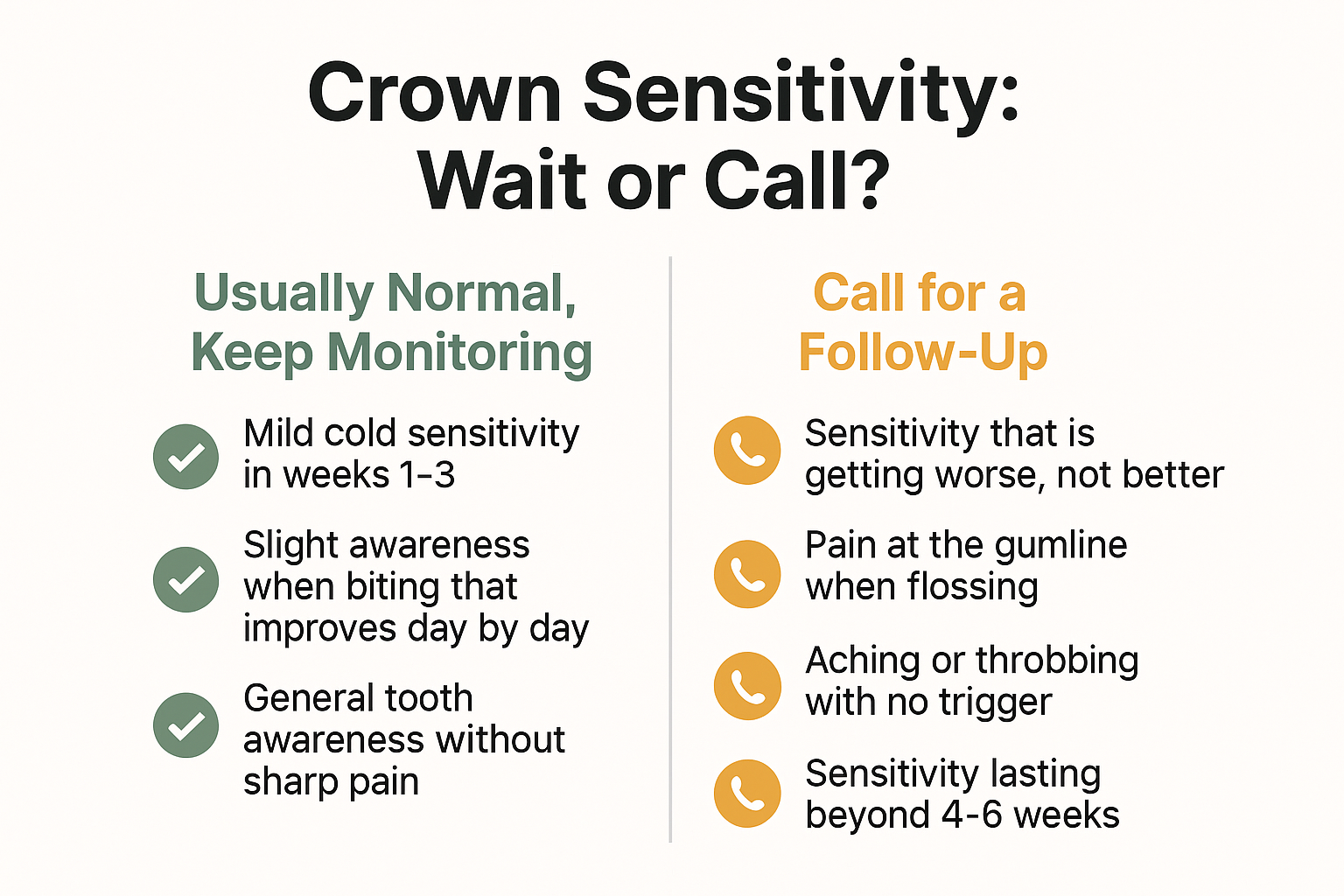
When to Wait vs. When to Call
This quick visual summarizes the key signals that help you decide whether your post-crown sensitivity is part of normal healing or something that needs attention sooner.
What Actually Happens at a Follow-Up Appointment?
Patients sometimes hesitate to call because they’re not sure a follow-up visit will accomplish anything, or they assume the answer will be something complicated. In most cases, it’s not.
For a bite adjustment, the visit is short. We check how your teeth come together using thin articulating paper, identify the high spot on the crown, and make a minor reshaping of the surface. You’ll usually feel the difference within a day or so.
For gumline sensitivity, we’ll look at the margin where the crown meets the gum tissue. If there’s residual cement or inflammation, we can address it directly. If early recession around the restoration is a factor, we’ll talk through what that means for your longer-term gum health. Our approach to gum health is part of the same care philosophy we apply across all restorative work.
For sensitivity suggesting the nerve may not be settling on its own, we’ll take a closer look, sometimes a cold test or gentle percussion exam tells us a lot about what the nerve is doing. In some cases, a crown placed on a tooth with longstanding damage may eventually need a root canal even after placement. That’s not common, but it does happen, and understanding what that decision involves can take some of the surprise out of it if it comes up.
The American Association of Endodontists notes that post-crown sensitivity involving the pulp is a recognized, documented outcome in a subset of crown cases, it is not a sign of poor treatment, but it does warrant evaluation.
Frequently Asked Questions About Crown Sensitivity After Placement
It’s been about a month and my crown still hurts when I floss near the gum. Is that normal at this point?
A month out, that kind of localized gumline discomfort is worth having looked at. Mild general sensitivity in the first few weeks is expected, but pain specifically when flossing, and only near the gum edge rather than the tooth itself, often points to something at the crown margin: leftover cement, gum inflammation, or irritation from the temporary crown that hasn’t fully resolved. It may be a simple fix, but it won’t answer itself. A brief follow-up exam is the right call.
Does sensitivity mean the crown failed?
Not at all. A crown can be well-made and well-fitted and still produce some sensitivity in the weeks after placement. The tooth underneath went through a preparation process, and nerves respond to that. Sensitivity alone is not a sign of failure, it’s the pattern of that sensitivity that tells us what’s going on.
My crown hurts when I bite down on certain foods but not others. What does that usually mean?
That pattern is a strong signal that the crown is sitting slightly high, meaning it’s making contact with the opposing tooth before your other teeth do. It’s one of the most common post-crown complaints and one of the easiest to address. A quick bite check and minor adjustment at a follow-up appointment usually resolves it. The discomfort from an uneven bite can worsen over time if left alone, so don’t wait too long on this one.
I’m nervous about calling in case it’s something serious. Should I just wait and see?
I understand that hesitation, a lot of patients feel it. But here’s a more useful frame: calling does not commit you to anything. It gets you information. Most post-crown sensitivity calls result in either reassurance that you’re in the normal healing window, or a short follow-up visit that solves the problem quickly. The cases where waiting causes real problems are the ones where something like nerve involvement goes unaddressed for months. If you have dental anxiety, this article on what actually helps anxious patients might be worth reading before you call.
Can I do anything at home to help with the sensitivity in the meantime?
For temperature sensitivity, sensitivity toothpaste used twice daily can help, it contains compounds that reduce nerve reactivity over time. Avoid very hot or very cold foods and drinks if they’re triggering discomfort. If the pain is tied to biting pressure, softer foods reduce the load on the tooth. These are reasonable short-term strategies while the nerve settles, but they’re not substitutes for a follow-up if the sensitivity is concentrated at the gumline, getting worse, or happening without a trigger.
I had a root canal before my crown was placed. Should I still expect sensitivity?
If the root canal was completed before the crown, the nerve inside the tooth has been removed, so you won’t feel hot or cold sensitivity through the tooth itself. What you might still feel is sensitivity in the surrounding gum tissue or from the periodontal ligament, the tissue that holds the tooth in the socket. That can feel like pressure sensitivity or a dull soreness when biting. It typically resolves within a few weeks. If it doesn’t, or if you notice gumline tenderness, a follow-up is worthwhile.
Still Not Sure What Your Sensitivity Means?
If you have a crown and something still feels off, a quick follow-up exam is the fastest way to get a clear answer. We see patients from Renton, Kent, Tukwila, and the broader South King County area who have questions just like this, and most of the time a short visit resolves the uncertainty quickly. You can reach Cedar Dental Group at 425-430-0400 or visit cedardentalgroup.com to request an appointment.